Does grinding speed change the result?
Does grinding speed change the result?
Yes, and not in one direction. Travel speed is the one setting on a grinding train that moves two things at once, and they move opposite ways. Raise it and each abrasive grain crosses a shorter contact arc, so a pass takes less metal; raise it far enough and the cut stops reaching the bottom of the defect while the surface still looks clean. Lower it and removal per pass climbs, but the heat delivered per metre of rail climbs with it, because the same contact patch sits over the same metal for longer. So the question is not fast or slow. It is which speed makes one pass at least as deep as the defect in front of it while keeping the finished surface out of the bluing range. That is a window, not a preference — and a speed figure means nothing until it is quoted with the power and the depth it was measured at.
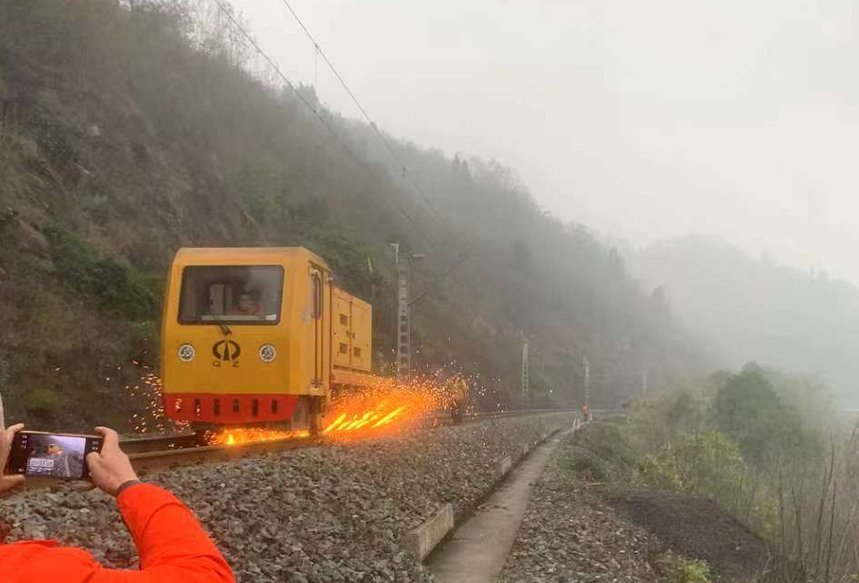
What a change of speed actually changes on the rail
| What moves | Setting speed higher | Setting speed lower | Where the limit comes from |
|---|---|---|---|
| Contact arc between wheel and rail | Shortens, so each grain cuts a shorter chip | Lengthens, so each grain cuts a longer chip | Geometry of wheel and head; no amount of pressure makes a fast pass cut like a slow one |
| Metal removed in one pass | Falls with the shorter chip | Rises | The floor is the defect's own depth — see what grinding depth is safe |
| Heat delivered per metre | Falls per metre of rail | Rises per metre, and the surface starts to colour | Bluing threshold and the roughness limit — see preventing rail burn |
| Pressure fluctuation at the head | Falls; the head rides more steadily over irregularity | Rises; the head works harder to hold a constant load | Simulated grinding pressure on real track irregularity, where excursion grows with irregularity amplitude and falls as travel speed rises |
| Possession consumed | Less per pass, so a fixed window covers more kilometres | More per pass, so the window covers fewer kilometres | The possession, not the grinder — and the trade is priced in cost per kilometre |
The mechanism is geometric rather than a matter of operator feel: as the train runs faster, the contact arc between wheel and rail shortens, and a shorter arc is a shorter cut per grain. A bench programme that varied wheel speed from 1,000 to 3,000 rpm makes the same point from the other end — and it is worth reading as a bench result, not as a travel-speed curve. Metal removal did not climb in step with the setting; it fell and then rose. Temperature rose continuously. Roughness went 6.6, 7.2, 8.4 µm. The white layer thickened from roughly 45 to roughly 320 µm, and at the top of the range the removal mechanism stopped being cutting and became cutting plus spalling. Pushing the parameter up buys damage faster than it buys depth.
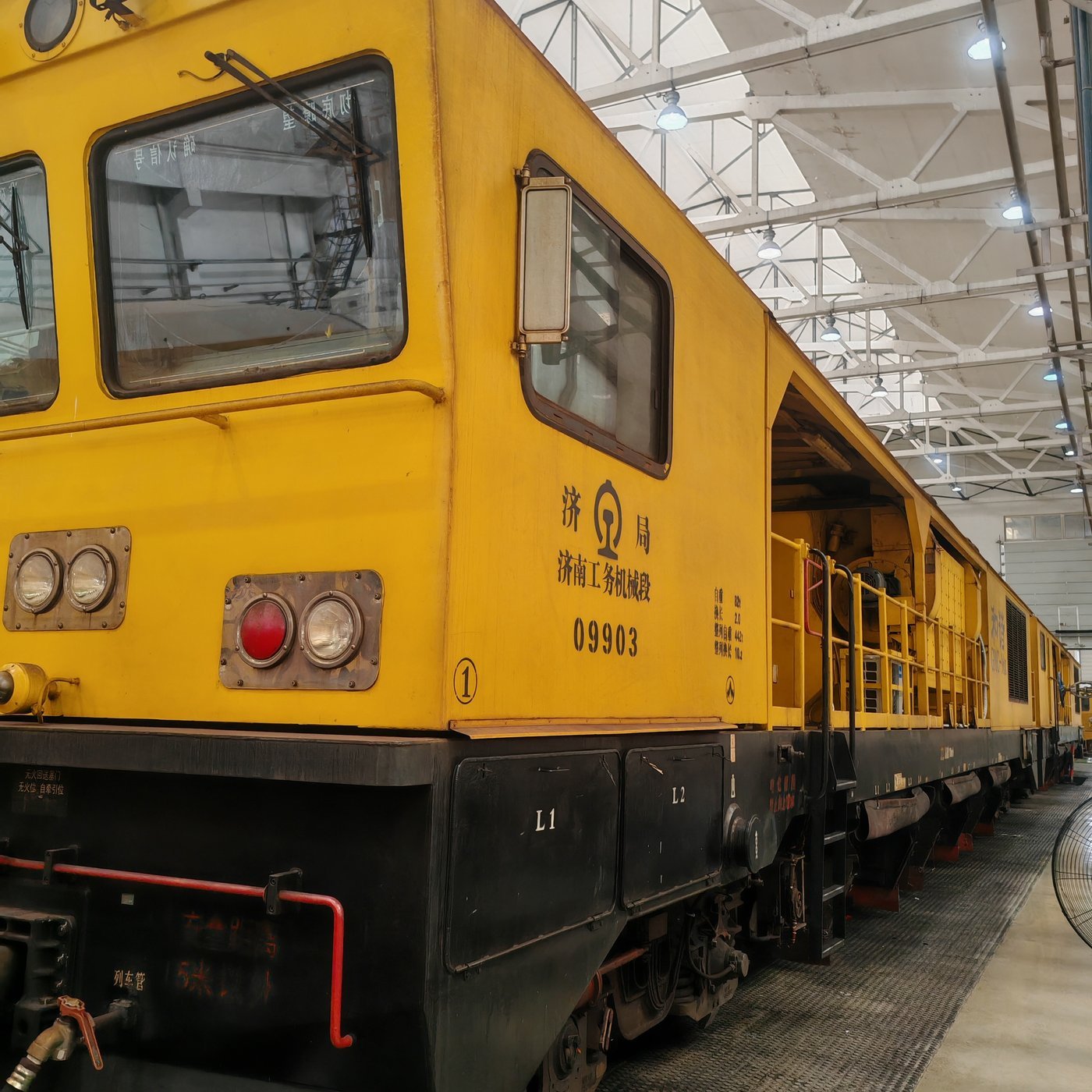
A speed number on its own proves nothing
| Record | Travel speed | Power or wheel speed at the time | What the same record states |
|---|---|---|---|
| Contract acceptance clause | 7 km/h | Not stated — speed was never meant to stand alone | Metal removal at the rail crown of at least 0.2 mm per pass, no burn, no bluing, Ra at or under 8 µm |
| Trial on a Loram-format grinding train, Jiangmen, 2026 | 7 km/h | 80% of available power | Profile-measured cut of 0.142-0.241 mm at the inner rail zone, 0.165-0.326 mm at the outer zone, 0.193-0.222 mm at the crown; no bluing |
| Half-train comparison trial, Urumqi, 2009 | 11 km/h | 18 kW | Reached 0.2 mm of depth in a single pass with no bluing |
| Production campaign, Yiyang line | 12 km/h | 15.6 kW | 145 pass-km at an average consumable loss of 25.45 mm — a wheel-life figure, not a rail figure |
| Production campaign, Shuohuang heavy-haul line | 15 km/h | 13.8 kW | 75 kg/m rail on one track, 60 kg/m on the other, in the same working |
| Preventive campaign, Changfu line | 15 km/h | 68% of power, about 20.4 kW, at 3,600 rpm | 48 wheels fitted on one side of the train for a controlled comparison |
| Preventive campaign, Hewu high-speed line, 2020 | 16 km/h | 68% of power, about 20.4 kW, at 3,600 rpm | No continuous bluing; the trial reported 4.28 against 3.27 pass-km per mm of wheel |
| Procurement acceptance for high-speed passive wheels | 25-55 km/h, set by line speed | Not applicable — the stones are free-rolling | One row of stones to grind 10-15 km continuously, Ra at or under 10 µm, no bluing |
Read the first three rows together and the trap shows: 7 km/h, 11 km/h and 16 km/h have all produced 0.2 mm-class removal, because the power behind them was not the same. A tender that asks for a speed without asking for the depth that speed must deliver has specified nothing. The last row is the honest exception: in passive grinding the stone rolls with the train, removal per pass is deliberately tiny, and the strategy is many light cycles rather than one deep cut — which is set out in the operating parameters of high-speed passive rail grinding. Its speed cannot be borrowed for an active campaign, and an active campaign's depth cannot be demanded of it.
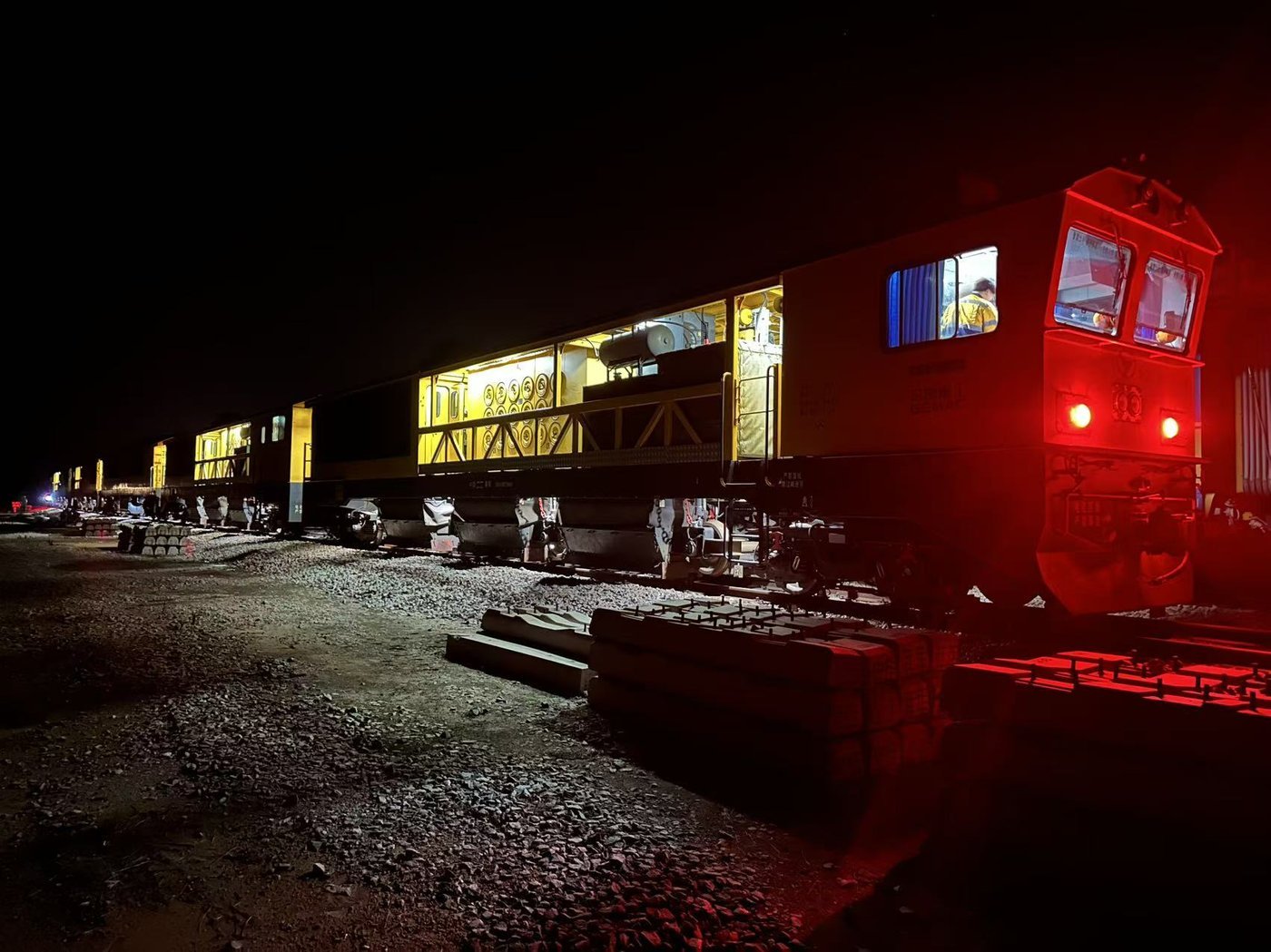
Choosing the speed from the defect, not from habit
| Job in front of the machine | Depth one pass must reach | Which side of the window to work | Why that side | What the wrong choice looks like |
|---|---|---|---|---|
| Rolling contact fatigue, crack depth within the 0.2 mm window | The crack's own depth, so typically a 0.2 mm-class cut | The slower side, to keep the contact arc long | Depth below the crack root leaves a bright surface over a live defect | A polished rail that reports the same cracks at the next inspection |
| Corrugation, peaks of 0.05-0.3 mm, remedial trigger at 0.3 mm | Enough at the peak to cut it down, not an average over the face | Moderate speed with the peak addressed deliberately | Speed alone does not differentiate peak from trough; the pattern does | Peaks knocked back, troughs untouched, amplitude unchanged — the failure mode in why grinding can make corrugation worse |
| Preventive grinding, planned depth from 0.1 mm | At least 0.1 mm | The faster side is available, provided the floor still holds | Light and frequent is the design intent of preventive work | Passes that polish rather than cut, so the next cycle has to be remedial |
| Remedial or pre-grinding, planned depth from 0.2 mm | At least 0.2 mm | The slower side, paired with enough power to reach it | Depth and speed are one decision; power is the third member of the set | Window hours saved on the first pass and spent again on a second one |
| Weld zone | About 0.2 mm per pass inside a capped parent-metal budget | Slow, over a short stroke | The zone already carries a geometry deviation and a heat history | A step at the stroke end, or a hollow beside a clean-looking weld — see planning grinding around welds |
| Turnout and restricted zone | Set by the local deviation, not by the main-line plan | Slow entry, short work blocks | The machine stops and starts far more often than on plain track | Minutes lost in setting and hand-back, not in grinding — covered in grinding a turnout without closing the line |
Two limits do the clamping, and both are already written down: the depth floor from the grinding mode, and the surface ceiling from burn and roughness. Anything between them is a legitimate speed for that job; anything outside is a trade someone else pays for. One boundary stays on the consumable side — which wheel can hold a 0.2 mm cut at the speed you need, and still take the full Molaton range, is a wheel question, and it is answered there. What the campaign should spend in total belongs to interval set by tonnage.
Related questions you may also ask
How many grinding passes does a rail need? How is a grinding pass pattern set, and why does the angle sequence matter? What grinding depth is safe before you over-grind a rail? How do you prevent rail burn during grinding? Operating parameters of high-speed passive rail grinding More answers on rail grinding strategy and equipmentWhich speed fits your defect, and at what depth?
Tell RailwayCare the defect type and measured depth on your section, the power available at the head and the possession you work in. We will set out the speed window that satisfies both limits, what a Molaton wheel holds at that speed, and where your current setting is spending metal it does not get back.
Set My Grinding Speed Window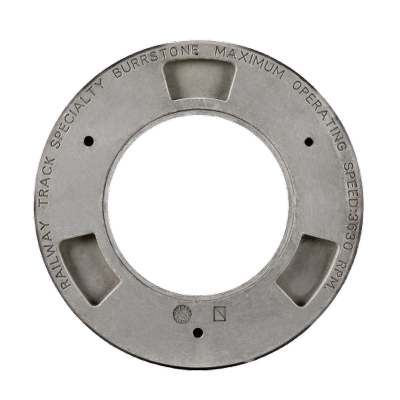
Are you looking for a reliable manufacturer of railway grinding and track maintenance equipment?
We can quickly provide customers with market analysis, technical support and customized services.
Safe Tracks Proven by China
- Name
- Phone
- *Title
- *Content