How do you grind a turnout without closing the line?
How do you grind a turnout without closing the line?
You do not need the whole turnout. You need one road, or one end, at a time. The job is planned as a series of short occupations — each one ground and given back before the next is asked for — with the point of switch taken last and shortest, because it is the only place where the machine itself, not just the rail, has to be checked before handback. The grinding is identical to open track. What changes is the size of the unit you ask the operator for, and the fact that the operator, not the grinding crew, puts the road back into service.
What actually sets the size of the occupation
| Constraint | What it fixes | How it changes the plan |
|---|---|---|
| How many roads the operator will withdraw | Whether a one-road-at-a-time sequence exists at all | If only one road can go, the layout is worked in two fronts with a re-index between them |
| Distance from point of switch to crossing | How far one machine setting reaches | A long layout buys an extra stop, not a faster pass |
| Passes the defect needs | The only quantity that scales with the damage | Passes come from profile deviation divided by per-pass removal at the working speed, rounded up |
| Re-index and re-clamp time | The number of stops, not the metres ground | Fewer stops beat faster grinding, every time |
| Handback check at the point of switch | The last block before the road returns | Cannot be compressed by working harder, so it must be planned, not squeezed |
The start signal is worth stating, because it decides how much of that list you need. Corrective turnout grinding is triggered on conventional lines when corrugation depth or flange build-up width passes 0.3 mm; on high-speed lines the triggers are ride quality, lateral acceleration alarms, a poor contact band, or fish-scale depth of 0.5 mm at turnout rails. Below those thresholds you are maintaining, not repairing — and a preventive occupation is a smaller unit to ask for than a corrective one.
Where the minutes in a turnout occupation go
| Block | What it consumes | What genuinely shortens it |
|---|---|---|
| Protection, access, isolation of the road | A fixed cost charged to every occupation, whatever its size | Fewer and larger occupations — not working faster |
| Baseline measurement and target setting | Measurement time, no metal removed | Record named positions once, then reuse exactly the same ones at acceptance |
| Grinding inside the road | The only block that changes the rail | Depth per pass and fewer re-index stops |
| Machine handling between zones | Handling inside a restricted space | Sequence the zones so the machine travels one way through the layout |
| Point-of-switch check and handback | The operator's own verification | Have the measurement record ready before the machine leaves the site |
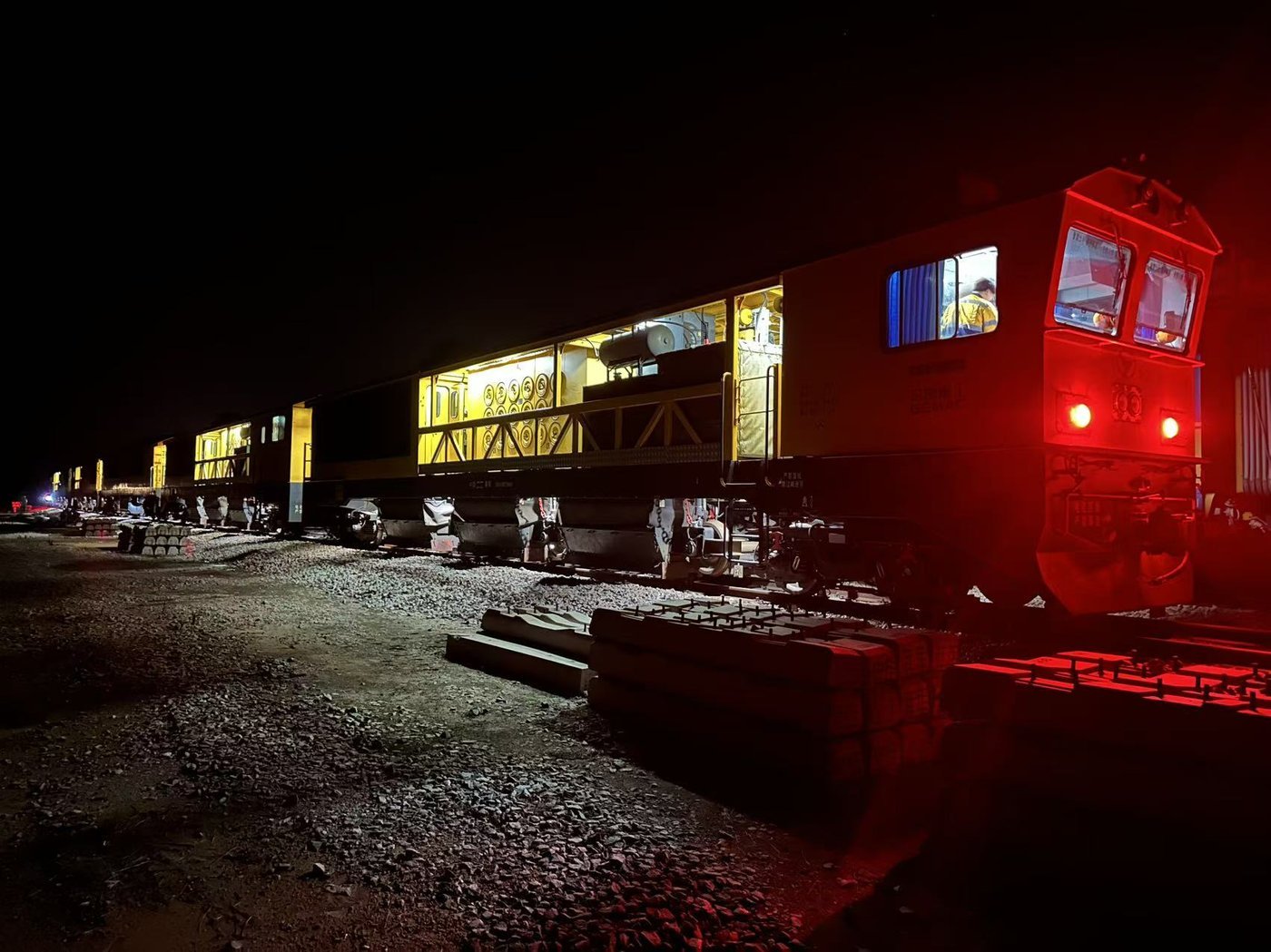
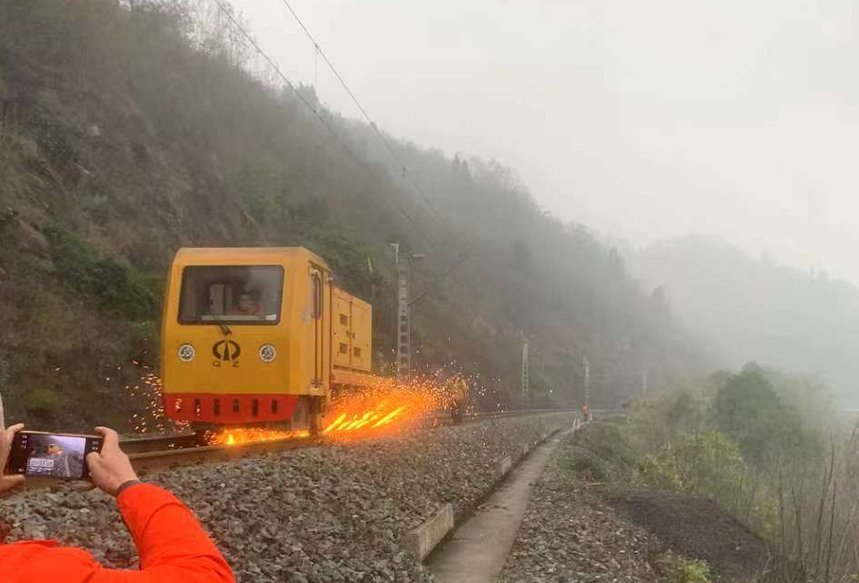
To see the scale: one machine on the Hengliu line produced 18.72 pass-kilometres inside a 2-hour night window. That is what a window is worth when the machine never stops moving. A turnout is worked in metres with the machine repeatedly stopping, so its governing arithmetic is setup and handback time — which is exactly why the job is split across several small occupations instead of one long one that the operator will not grant.
What must not happen is trading depth for time. If the passes the deviation requires will not fit the occupation you have been given, the answer is another occupation, not a shallower job. Per-pass depth is fixed by the mode of work and the acceptance ceiling is a ceiling, not a target — the depth rules do not bend because the window is short.
The last block: point-of-switch check and handback
| Item | What is checked | Who authorises it |
|---|---|---|
| Switch rail against stock rail | Seating and throw exactly as found before the work | Permanent way and signalling, per their rulebook |
| Point machine and locking | Untouched, still detecting and locking as designed | Signalling discipline |
| Insulated joints and track circuits | No bridging, no disturbance, no debris across the gap | Signalling discipline |
| Fastenings, baseplates, check rails | Sound, complete, correctly seated after grinding | Permanent way |
| Grinding debris and foreign objects | Cleared from switch, crossing and check-rail gap | Work party, then reported to the operator |
| Profile and contact band | Contact band 25-30 mm on high-speed turnouts, 35-40 mm on conventional and heavy-haul; zone tolerances held within ±0.2 mm on zones 2, 3 and 4 and +0.2 / −0.4 mm at the crown | Track owner or acceptance inspector |
Two limits here are absolute and are worth writing into the method statement. Grinding never adjusts switch throw, locking or track-circuit settings — those belong to the signalling discipline, not to a grinding plan. And no member of the grinding party declares a turnout fit for traffic: the crew presents its record, the operator authorises handback under its own rules, and if any item on the list cannot be confirmed the occupation ends with the road still withdrawn. A grinding crew that stays inside those limits stays invited back; one that does not creates a safety argument no quality result can win.
Get the organisation right and the result shows up where the passenger feels it: lateral acceleration through ground turnouts drops from about 0.20 m/s² to 0.04-0.08 m/s². That improvement is the reason to spend several short occupations on one layout instead of waiting for a blockade the timetable will not give you. The Molaton turnout wheel range exists for the same reason — a restricted zone needs a wheel that reaches into it, not a bigger machine. RailwayCare has run this work on switch and crossing maintenance in a working freight yard, where the roads could not be closed either.
Related questions you may also ask
Precision turnout grinding: safety, smoothness and longevity Why do rail grinder trains work at night? Removing flange build-up on switch rails How is a rail grinding interval set by tonnage? More answers on rail grinding strategy and equipmentTurnouts you cannot close?
Send us the layout, the roads you can withdraw and the length of window you can grant. RailwayCare will break the job into occupations that fit, name the zones each front covers, and match Molaton wheels to the machines that can actually reach them.
Plan the Possession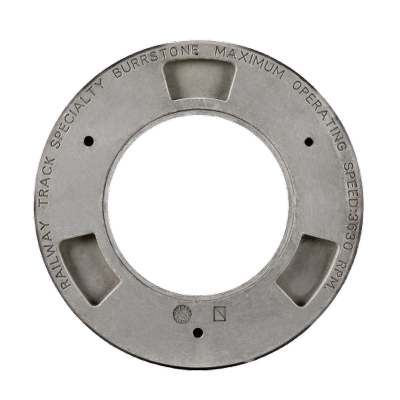
Are you looking for a reliable manufacturer of railway grinding and track maintenance equipment?
We can quickly provide customers with market analysis, technical support and customized services.
Safe Tracks Proven by China
- Name
- Phone
- *Title
- *Content