How is a rail grinding interval set by tonnage?
How is a rail grinding interval set by tonnage?
Treat the interval as a division, not as a number. The numerator is the rail-head section you are willing to spend over the life of that rail; the denominator is the rate at which your line actually consumes section per million gross tonnes. Divide one by the other and you get an interval expressed in tonnage — then convert it into months with your own annual tonnage, and only then compare it with the published bands. The bands are real but wide: high-speed lines are commonly planned in the 30–50 Mt range with no more than two years between interventions, conventional straight track and large-radius curves near 100 Mt per pass, and small-radius curves at 30–50 Mt. Lifting one of those figures and calling it your interval is how a line ends up either spending metal it did not need to lose, or finding corrugation one cycle late.
Four inputs, one division
| Input | Where the number comes from | What happens to the interval when it moves |
|---|---|---|
| Annual gross tonnage per track, per direction | Traffic statistics split by line and direction — not a network average, which mixes heavy-haul and branch traffic into one meaningless figure | Double it and the same tonnage interval arrives in half the time. This is why a heavy-haul line can need several interventions inside one year while a low-traffic branch needs one every few years |
| Removable envelope in millimetres | The target profile template plus the wear allowance the section was designed with. The achievable envelope is what is left after previous cycles, not the original figure | Halve it and the interval halves. A section already corrected for a decade has less to give than one just laid |
| Measured consumption rate in millimetres per 100 Mt | Profile measurement at the same fixed cross-sections before and after a known tonnage, per curve class, per rail. This is the one input that can only come from your own line | It is the denominator, so the interval moves inversely and in proportion. A rate 30 % higher than assumed means a cycle 30 % too long |
| Defect trigger | Corrugation depth or lipping width of 0.3 mm on conventional lines, rolling-contact-fatigue cracks around the 0.2 mm depth window, and the corrective thresholds that apply on high-speed lines | If any one of them fires before the tonnage does, the tonnage interval is overruled and the job is corrective rather than preventive |
The arithmetic then runs in one direction: interval in tonnage equals envelope divided by consumption rate; interval in months equals that tonnage divided by annual tonnage, multiplied by twelve. Take the smaller of the result and the defect clock. Keep the three millimetre figures apart while doing it — a planned depth of about 0.1 mm for preventive work and 0.2 mm for corrective work, 0.3 mm as the line that triggers intervention, and 0.5 mm as the acceptance cap for a single job. Mixing them is the most common reason an interval looks defensible on paper and collapses on track; the separation is set out in what grinding depth is safe.
Conditional bands, and why they are bands
| Line class | Common planning band | What pulls it to the short end | What pulls it to the long end |
|---|---|---|---|
| High-speed main line | 30–50 Mt per intervention, and not more than two years between them | Rolling-contact fatigue, squats, or measured roughness and profile drift | Clean tangent track with slow defect growth and stable geometry |
| Conventional main line, straight and radius above 1200 m | About 100 Mt per pass | Braking and traction zones, wet or dusty environment, mixed axle loads | Low axle loads and little gauge-corner work |
| Conventional line, radius below 1200 m | 30–50 Mt | Side wear and corrugation on the high leg, where the contact concentrates | A large radius sitting at the top of the band |
| Heavy haul | The same tonnage bands, on a far shorter calendar | Annual tonnage so high that the band returns within months | Axle load and curve mix, which move the rate rather than the band |
| New or relaid track, first pass | Before 10 Mt of accumulated traffic | Not a range: the decarburised layer, around 0.2 mm deep, has to come off before it becomes the surface that fails | Nothing — this is a deadline, not a cycle |
| A different network as a reference point | Curves around 15 Mt per pass, straight track around 45 Mt per pass (UK practice) | Not transferable as an absolute figure | What transfers is the ratio between curve and tangent — roughly three to one — not the number itself |
Read that table as a set of ranges to be narrowed, never as a standard to be adopted. The reason the bands are so wide is that tonnage alone does not describe damage: the same gross tonnage concentrated on one high leg of a 600 m curve wears the gauge corner several times faster than it does on tangent track, and a line carrying light passenger traffic accumulates tonnage without accumulating the contact pressure that starts fatigue. What does transfer between networks is the shape of the answer — the curve-to-tangent ratio, the two-year ceiling and the pre-grinding deadline all hold up; the absolute tonnage does not. The factors behind the variation are set out separately in what determines the rail grinding cycle.
Three clocks the tonnage figure cannot see
| Clock | What it measures | How it overrules tonnage |
|---|---|---|
| Calendar | Time since the last intervention, and the corrosion and surface damage that accumulate without traffic | A low-traffic line can sit comfortably inside its tonnage band and still be overdue, because the two-year ceiling has passed |
| Defect | Crack depth and corrugation amplitude, which are read from the rail rather than from the traffic book | The 0.2 mm crack window is where one pass still removes the crack layer; beyond it the surface comes off and the root stays. A 0.3 mm corrugation trigger ends the interval early whatever the tonnage says |
| Section | The envelope actually spent, measured zone by zone around the head | Removal is not even: on one recorded trial the inner zone gave up 0.142–0.241 mm while the outer zone gave up 0.165–0.326 mm. An average figure hides the zone that will end the rail's life first |
An interval set this way is still only a plan, and the plan is only as good as the evenness of each intervention. Where removal is concentrated, the last clock runs faster than the schedule assumed, so the plan has to carry a measurement loop back into itself — interval, execute, measure the zone-by-zone removal, revise the rate, revise the interval. That loop is also what makes the cost side legible: a shorter interval with small removal and a longer interval with heavy removal are not priced the same way at all, and the structure is set out in grinding cost per kilometre. On high-speed corridors the same logic governs the passive, high-frequency variant described in operating parameters of high-speed passive rail grinding, and on heavy haul the measured case for holding an interval under high annual tonnage is in the heavy-haul efficiency study.
Two things follow for anyone specifying the work. First, write the interval into the contract as a tonnage figure with its inputs stated, so that a change in annual tonnage or in measured rate reopens the number instead of quietly invalidating it. Second, insist that each intervention reports its zone-by-zone removal, because that is the only record from which next year's denominator can be calculated. A wheel that removes evenly is what makes the arithmetic hold in practice — Molaton wheels are specified against a stated removal and roughness outcome per zone rather than a dimensional sheet alone, which is the input this calculation actually needs. The programme-level view of how interval, depth and acceptance fit together is in rail grinding solutions.
Related questions you may also ask
What factors determine the rail grinding cycle? Preventive vs corrective rail grinding: what is the difference? How many grinding passes does a rail need? What grinding depth is safe before you over-grind a rail? What acceptance criteria decide whether a grinding job passed? More answers on rail grinding strategy and equipmentIs your interval a decision, or an inherited number?
Send your annual gross tonnage by line and direction, the curve classes you grind, and the last two profile surveys. We will run the division with you and tell you which input is currently doing the damage — and where a Molaton wheel set has to be specified to make the removal even enough for the interval to hold.
Ask About Grinding Intervals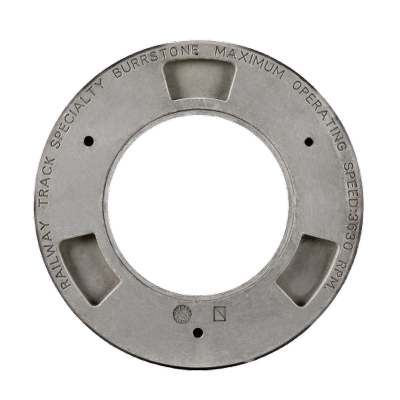
Are you looking for a reliable manufacturer of railway grinding and track maintenance equipment?
We can quickly provide customers with market analysis, technical support and customized services.
Safe Tracks Proven by China
- Name
- Phone
- *Title
- *Content