Rail grinding vs rail milling: which should you choose?
Rail grinding vs rail milling: which should you choose?
Choose from the defect, not from the brochure. Grinding is a compliant process: a set of small abrasive stones is loaded onto the rail and follows the shape that is already there, taking thin layers off pass after pass — which is what fits profile restoration and the shallow damage that has to be removed before it grows. Milling is a cutting process: a rigid head of carbide inserts establishes its own datum and brings the rail down to a geometry it defines, several times deeper in a single pass — which is what fits damage too deep to chase inside the window you have. Both restore the head. Neither adds steel. The common mistake is picking the process first and then hunting for a justification.
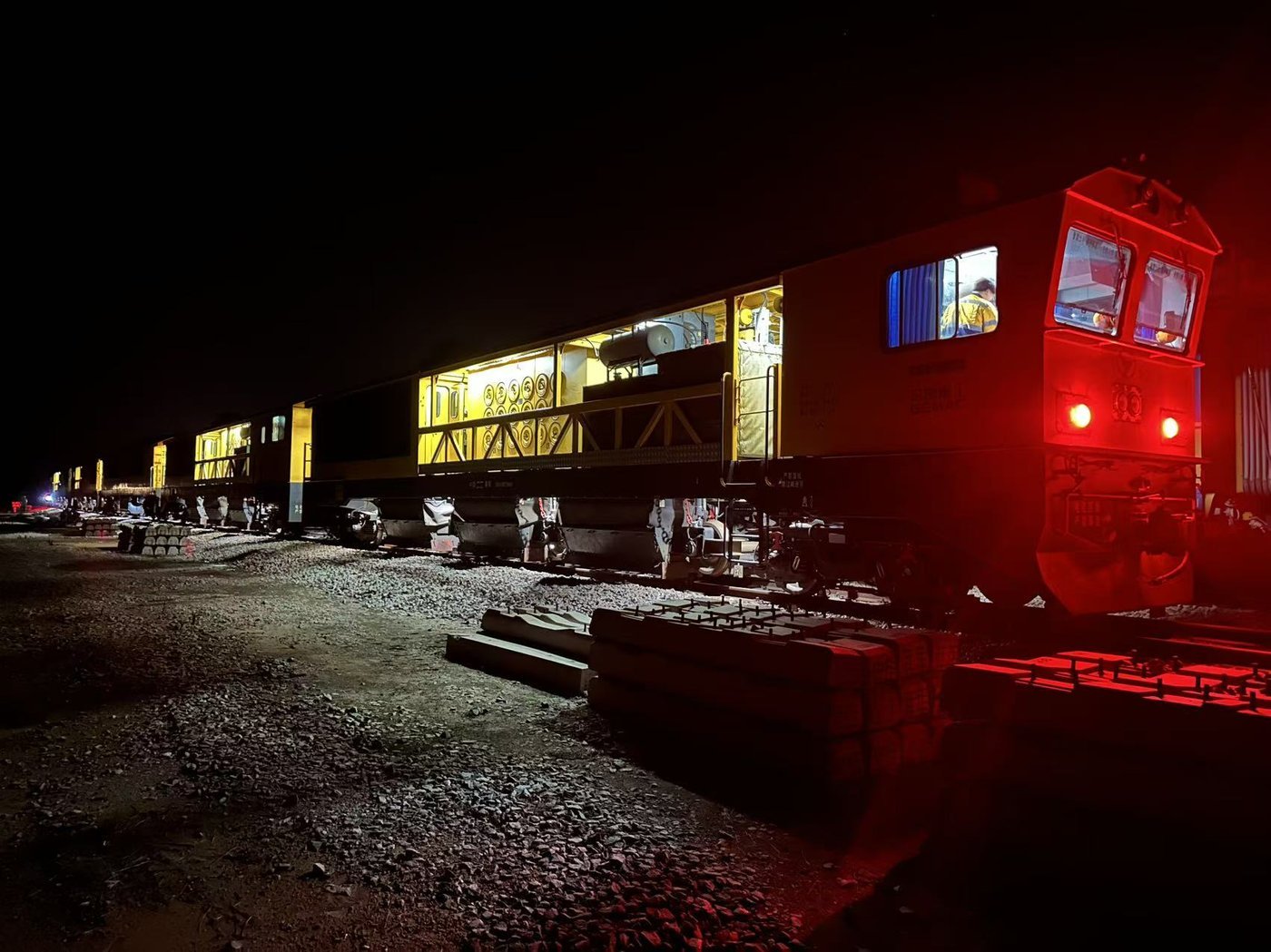
Two removal mechanisms, stated plainly
| Property | Grinding (compliant abrasive) | Milling (single-datum cut) |
|---|---|---|
| Cutting element | Many abrasive stones on independent heads | Carbide inserts on a rotating cutter head |
| What sets the resulting shape | Largely the shape already in the rail, corrected in steps toward a target template; the angle pattern determines which zone is reached | The machine's own guidance. The head cuts the geometry it has been set to, independent of the shape it finds |
| Depth per pass | Thin. Planned depths run around 0.1 mm for preventive work and 0.2 mm for corrective work, with 0.5 mm as the acceptance cap for a single job rather than a target | Deeper in one pass. The figure has to be quoted from the specific machine and cutter specification — a general article, this one included, has no business supplying it |
| Passes to reach the target | Several to many; the count follows from profile deviation divided by per-pass removal at the working speed | Few, because the depth per pass is larger |
| What failure looks like | Burn from dwell or too deep a cut for the cooling available (colour is a temperature record), a torn surface, lapping, a band that is bright but still out of tolerance | Cutter marks and burr at the edges of the cut, geometry error wherever the machine cannot hold its datum, insert impact damage |
| Debris | Sparks and dust, which need extraction and a fire watch | Chips, which need collection and dry-chip handling |
| Where it is strongest | Long running surfaces, gauge-corner work through an angle pattern, and repeated shallow cycles on a fixed interval | Concentrated deep damage, and windows too short to carry the number of passes grinding would need |
The acceptance criteria overlap only partly, and this is where tenders go wrong. Profile tolerance against the target template, roughness and depth all apply to either process. Burn does not: it is the signature of abrasive friction, so it belongs to grinding and means nothing on a milled surface. Milling brings its own signatures instead. Judging a milled rail against a grinding acceptance sheet therefore proves nothing either way — the shared criteria are set out in what acceptance criteria decide whether a job passed, and the process-specific parts have to be added by whoever specifies the work.
The two variables that actually decide it
| Window available | Defect within reach of a planned grinding depth | Defect beyond a single grinding pass |
|---|---|---|
| Long — enough time for several passes at working speed | Grinding. This is where preventive and corrective cycle work belongs; the interval decides the depth, not the damage | Grinding can still do it, but the pass count and the speed have to be shown to fit the window in writing before the job is committed to |
| Short — a single pass, or very few | Grinding with a tighter target and fewer passes, or the job is moved to a longer window. Cutting the target to fit the clock is a decision, and it should be recorded as one | Milling. A deep cut in one pass is the only realistic single-window answer, followed by a grinding pass if the acceptance calls for a ground finish |
The boundary is arithmetic rather than brand preference: passes needed equals deviation divided by per-pass removal, and passes multiplied by speed gives the time the job consumes. If that time does not fit the possession, the process question has already been answered — no amount of specification writing changes it. That logic is the same one that governs how many grinding passes a rail needs, and it is why turnouts and crossings behave differently from plain line: there the geometry is complex and the usable window is short, so the work is usually split between large and small machines rather than handed to one process, as described in rail turnout grinding solutions.
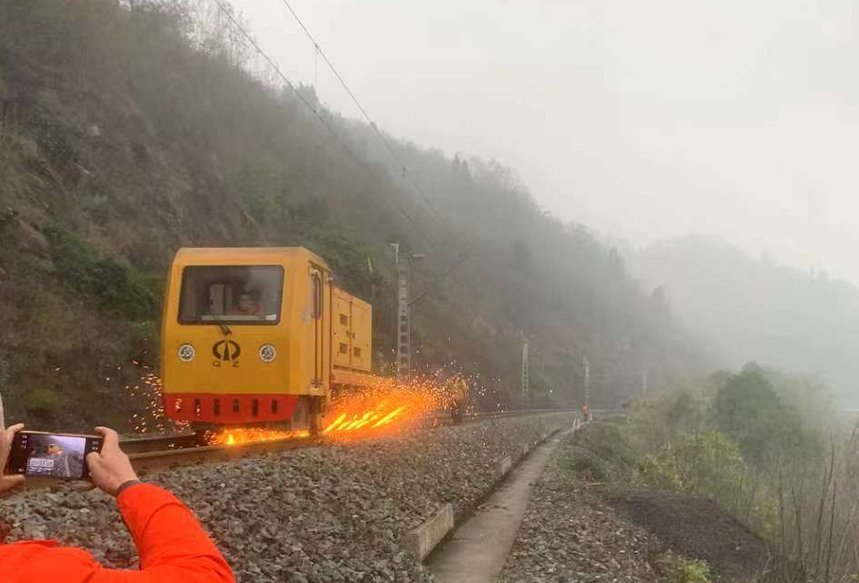
The order to decide in
| Step | Question to answer | Output that makes the next step possible |
|---|---|---|
| 1. Name the defect | Is this corrugation, side wear, lipping, a squat, spalling or fatigue cracking — and how deep does it go, measured rather than estimated? | A depth and an extent, per zone. Without the depth, every process comparison afterwards is an opinion |
| 2. Check what the section can give up | How much of the removable envelope is left after previous cycles, and what does the target profile require at each zone? | An allowable removal, which may be smaller than the defect depth — in which case no process removes the defect and the conversation moves to renewal |
| 3. Convert to passes | Deviation divided by per-pass removal for the process being considered, at the speed it can work on this track | A pass count per process. For grinding this uses the planned depths above; for milling, the machine's own quoted figure |
| 4. Convert passes to time | Do the passes fit the possession, including the approach, the setup and the measurement before and after? | A yes or no. A no ends the comparison for that process on that window |
| 5. Then choose | Grinding, milling, or a milling pass followed by a grinding pass where the damage is concentrated and the finish still has to be ground | A named process with a stated reason, rather than a preferred supplier with a retrofitted reason |
| 6. Agree acceptance before the contract | Which criteria apply to this process, on which zones, measured how, against which baseline? | An acceptance sheet that can actually fail a bad job. The baseline half of this is covered in what grinding depth is safe |
Two honest limits on the comparison. Milling's advantage is depth per pass, not a better surface: a milled rail still has to satisfy the profile and roughness criteria, and the cutter marks are its own signature rather than a defect. Grinding's advantage is compliance and repetition, not depth: a section that needs more metal removed than its envelope allows cannot be rescued by grinding harder. Where the damage is genuinely deep and the rail is still worth keeping, choosing between them is not the real choice — grinding or renewing is.
For the grinding side of any such comparison, the consumable sets the achievable outcome per pass: Molaton wheels are specified against a stated removal and roughness result rather than a dimensional sheet alone, which is what makes the pass arithmetic in step three mean something when it is applied to a real window. How grinding and milling contracts are written, priced and signed off is covered in rail grinding services, contracts and acceptance, and the interval that decides how often either process returns is in what determines the rail grinding cycle.
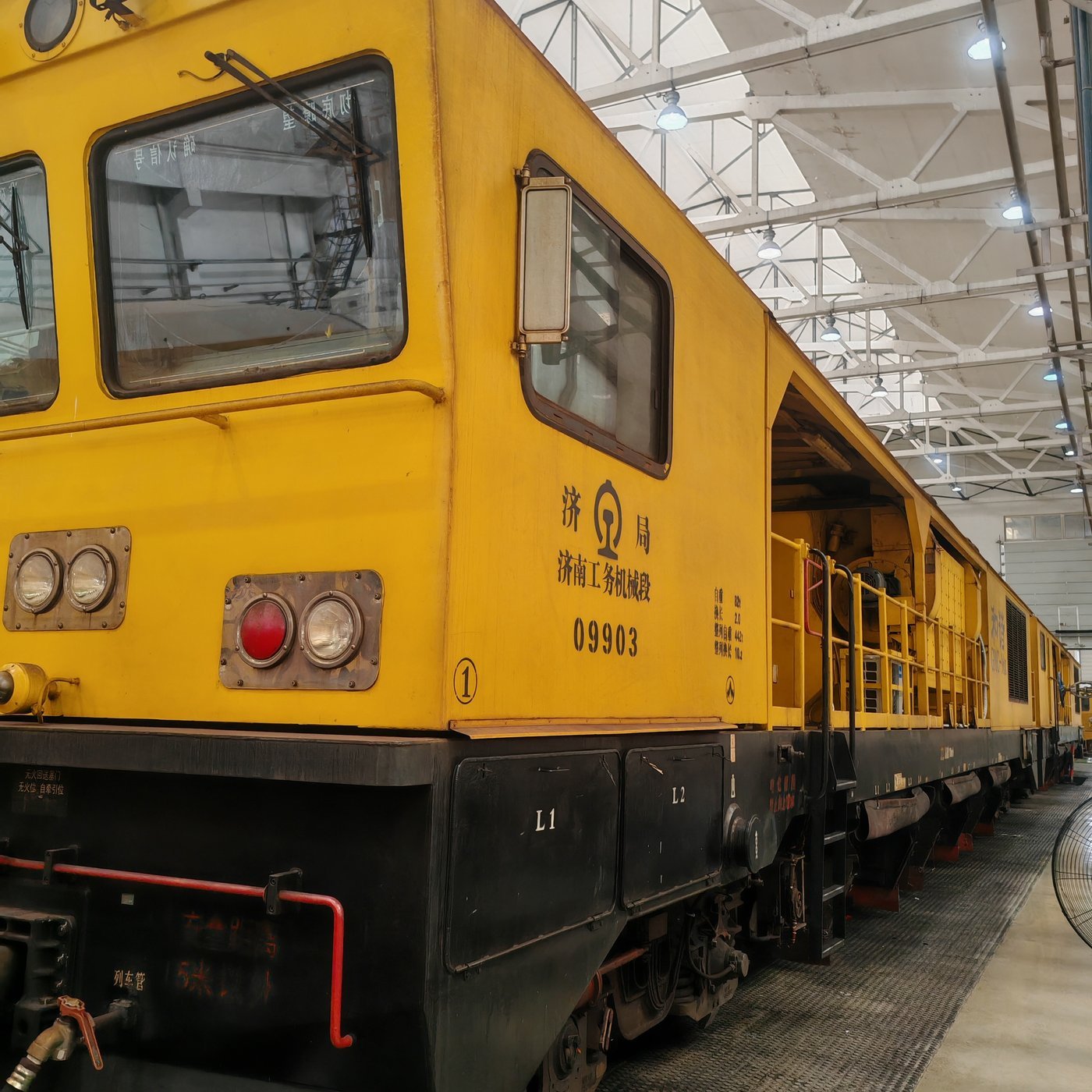
Related questions you may also ask
How many grinding passes does a rail need? What acceptance criteria decide whether a grinding job passed? What grinding depth is safe before you over-grind a rail? When should you grind a rail instead of replacing it? Preventive vs corrective rail grinding: what is the difference? More answers on rail grinding strategy and equipmentWorking out whether your window can carry the job?
Send the defect depth by zone, the possession length you can actually get, and the target profile. We will run the pass arithmetic with you, tell you where the window becomes the constraint, and what a Molaton wheel set has to deliver per pass for the grinding option to stay open.
Ask About Process Selection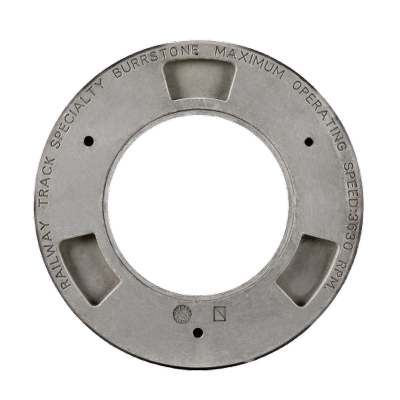
Are you looking for a reliable manufacturer of railway grinding and track maintenance equipment?
We can quickly provide customers with market analysis, technical support and customized services.
Safe Tracks Proven by China
- Name
- Phone
- *Title
- *Content