Rail Grinding Services: A Full Guide to Providers, Contracts and Acceptance
Every network faces the same question eventually: buy a grinding train, or buy rail grinding services? A 96-stone train is a capital asset that only earns its keep when it is grinding; a service contract turns that arithmetic into somebody else's problem - at a price, and with a scope that has to be written precisely or the price means nothing.
This guide explains what rail grinding services actually cover, the three commercial models, the clauses and KPIs that decide whether the work is acceptable, how the market is structured, what drives price, and how to verify results with measured data. It is written from the consumable side of the business: we supply the wheels that grinding services run on, across heavy-haul, high-speed and metro programmes.
What a Grinding Service Contract Actually Covers
The scope of a modern grinding contract is broader than "grind the plain line". A published example makes the point: the Public Transport Authority of Western Australia's rail grinding contract (reference PTA250034, ~500 km of urban network, ~420 turnouts) requires the contractor to grind and to report on:
- Plain line and complex trackwork - turnouts, level crossings, on-track pads and special trackwork including expansion joints, catch points, diamond crossings, guard rails and check rails;
- Multiple gauges and rail weights in one network - narrow, standard and dual gauge, and rail sections from 41 kg/m to 60 kg/m;
- Electrified and non-electrified sections, plus constrained locations: tunnels, viaducts, bridges, stations, and residential noise-sensitive areas;
- Both correction and prevention - removing existing surface defects and re-installing transverse profiles, and maintaining those profiles preventively, including transitional strategies when profiles are introduced on new rail;
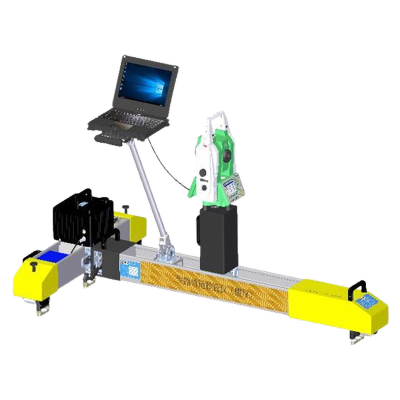
- Measurement and reporting - pre- and post-grind condition, recorded with calibrated profile and surface measurement systems;
- All the supporting work - pre-grind scoping inspections, site preparation and cleaning of metal fillings and slag, clearing insulated joints and flangeways, traffic and pedestrian management, and qualified safeworking staff.
Two lessons follow for anyone writing a specification. First, the consumable and profile responsibilities have to be allocated explicitly - who selects the target profile, who supplies the wheels, who carries the risk if a campaign runs short. Second, the reporting obligation is what turns a grinding job into a maintainable asset programme; without it, you buy metal removal by the hour and learn nothing for the next cycle.
The Three Commercial Models for Buying Rail Grinding Services
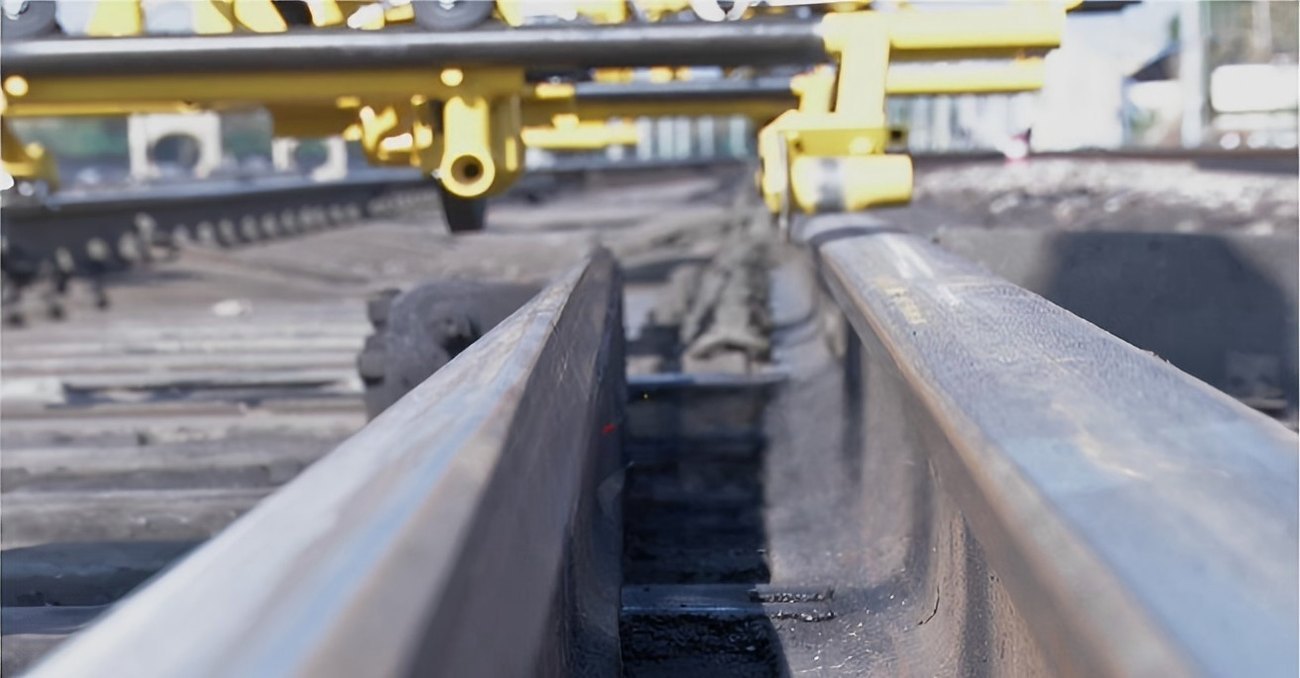
1. Full-service contractor. The provider supplies the machine, the crew, the profiles, the measurement, the consumables and the reporting. You buy an outcome. This is the standard model on networks that do not own a fleet - and it is how the biggest public contracts in the market are structured.
2. Machine plus operator, consumables by the owner. You hire the train and crew; you buy the wheels yourself and issue them to the contractor. This model gives the owner direct control of consumable cost and lets it compare wheels on its own rails - but it requires the owner to hold stock, manage specification and understand wheel life.
3. Own machine, contracted technical support. Large administrations with enough annual grinding volume run their own trains and buy profiles, technical support and consumables. Once utilisation passes the point where a train is busy most of the season, this is usually the lowest cost per pass-kilometre, because the machine is not paying a contractor's margin on idle days.
There is no universally correct choice - the decision is a utilisation calculation. Below roughly a full season of work, service contracts win; above it, ownership does. The intermediate options exist precisely because most networks sit in between.
What a Rail Grinding Service Contract Should Contain
Acceptance criteria are the difference between a contract and a conversation. The following clauses are the ones that decide whether the work is accepted, and they belong in the specification, not in an annexe agreed later:
| Clause | What it should state |
|---|---|
| Scope by location | Plain line, S&C, special trackwork, gauges, rail sections, electrified/non-electrified, restricted locations |
| Target profile | The design profile per rail (including asymmetric profiles on curves), by chainage and rail |
| Metal removal | Minimum removal by zone, and a maximum to protect the crown and the gauge corner |
| Profile acceptance | GQI or equivalent profile-fit score, with zone tolerances (e.g. ±0.2 mm; +0.2/-0.4 mm at the rail top centre) |
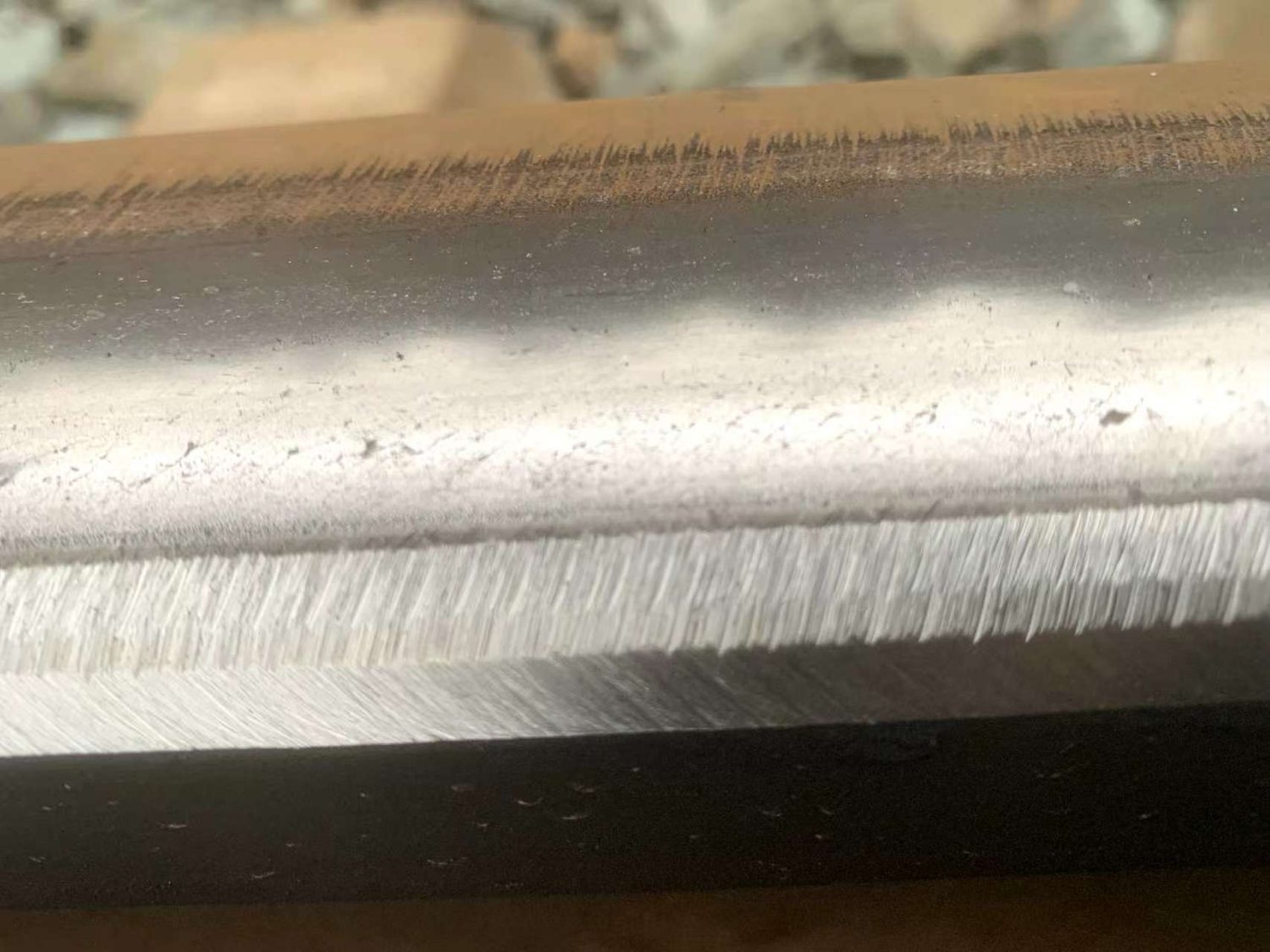
| Surface acceptance | Ra ≤10 μm, no continuous blue bands, contact band width and position |
| Reporting | Pre- and post-grind profiles at named chainages, roughness, band, removal by zone, wheel consumption, anomalies |
| Possession discipline | Pass-km per hour of possession, start-up and handback times, cleaning standard |
| Consumables | Who supplies, to what specification, spares held on site, rejected-wheel procedure |
| Safety and competence | Safeworking roles, electrical safety qualification, protection staff, machine certification |
A contractor's own measurement system should always be cross-checked. Independent verification of a sample of profiles, and of the roughness readings, is cheap relative to the cost of a campaign that has to be repeated. Our guide to how to evaluate and select rail grinding companies sets out the wider assessment framework, and the material in grinding acceptance standards explains why operators now specify acceptance numerically.
Preventive and Corrective Rail Grinding Services
Service providers generally offer, and price, two distinct products:
- Preventive rail grinding services. Light, frequent passes, designed to keep the profile close to design and to remove incipient rolling contact fatigue while it is still shallow. Metal removal is deliberately small - in our field work, a preventive campaign removed 0.142-0.326 mm depending on the rail head zone. The value is in the sequence: many cheap passes that never let a defect grow.
- Corrective rail grinding services. Heavier passes aimed at existing damage: corrugation, head checks, spalling, edge lipping, weld protrusions. Corrective work is where a contractor's profile expertise pays off, because on curves and at turnouts the target profile has to be derived from the measured wear, not copied from a template.
Many contracts also specify a transitional programme, where profiles are progressively introduced to a network - typically starting on new rail, then on the worst sections, so that the fleet wears into the design geometry over several cycles instead of in one disruptive season.
Which mix you buy drives the price as much as the network size does. A preventive programme moves more possession hours and fewer millimetres; a corrective programme does the opposite.
How the Rail Grinding Services Market Is Structured
Global grinding services are concentrated in a small number of companies with their own fleets: Speno International (Switzerland), Loram and Harsco Rail (USA), Salcef (Italy), Schweerbau and Vossloh (Germany), plus national contractors such as NRL Rail in the UK and regional specialists elsewhere. Chinese volume is handled mainly by the railway administrations' own large-machine depots, with equipment and consumable suppliers in support.
Public procurement records give a sense of scale. In March 2026 Network Rail (High Speed) awarded a rail grinding services contract for the HS1 infrastructure - a framework running from January 2027 to December 2028 with an option to extend to 2032 - at a contract value of £7.54 million excluding VAT. Two tenders were received (Salcef S.p.A. and Speno International SA) and one was awarded. It is a useful reference point for what a mid-sized high-speed grinding service programme costs an infrastructure manager, and for how long such frameworks run.
For the supplier side of the same question - who builds the trains, who services them, and what wheel formats they run - see our global directory of rail grinding machine manufacturers.
What Drives the Price of a Grinding Service
Service pricing is usually expressed in one of three units: per possession or machine-day, per track kilometre, or per pass-kilometre. Whichever unit is used, the same cost drivers sit underneath:
- Possession hours and access constraints. A service that has to work in a 2-hour night window, in tunnels and over viaducts, in electrified areas, will cost more per kilometre than daytime plain-line work. This is not a contractor's mark-up - it is the arithmetic of what can be ground in the window. In our own consumable-side work a GMC-96X train ground 18.72 pass-km in a 2-hour possession on the Hengliu line.
- Grinding speed and removal depth. Typical heavy-haul campaigns run at 12-15 km/h of travel speed with modest power; the deeper the removal, the more passes, and passes multiply possession cost.
- Consumable life. This is where two apparently similar quotes diverge. Wheel consumption per pass-kilometre differs by more than 30 per cent between wheels in the same format - we have measured 5.7 pass-km/mm on the Yiyang heavy-haul line and 4.98 pass-km/mm on Shuohuang. If the wheels are provided by the owner, the variability appears on the owner's invoice instead of the contractor's.
- Profile complexity. Standard straight profiles are cheap; asymmetric curve profiles, turnout work and restricted-zone grinding need more expertise and more machine time per metre.
- Reporting and measurement scope. Profile measurement at named chainages, roughness, band width, and a full pre/post data pack add cost - and are usually worth it.
For the full cost build-up per kilometre, including how per-kilometre figures are constructed and where consumables sit in them, see rail grinding cost per kilometre.
The Deliverable You Should Demand: Data, Not Just Ground Rail
A grinding service is only as good as the record it leaves behind. Insist on:
- Pre-grind profile at named chainages on both rails, with the measured wear that justified the target profile.
- Post-grind profile at the same chainages, with the deviation against the design profile by zone.
- Metal removal by zone, so the crown and the gauge corner can be checked separately.
- Surface roughness (Ra) and the measurement device used.
- Contact band (light band) width and position - profile compliance alone does not prove the contact patch is in the right place.
- Wheel consumption in millimetres per wheel against pass-kilometres ground, so the next campaign can be costed and compared.
- Anomaly log - burns, grinding marks, restricted zones the machine could not reach, and the follow-up planned with smaller machines.
Items 6 and 7 are the ones most often missing, and the ones that determine whether the next tender is cheaper. Restricted-zone work in particular needs planning across machine classes: our articles on turnout grinding with large machines and large and small machine synergy in high-speed turnout grinding cover the handover between them.
How to Verify a Rail Grinding Service: Acceptance in Practice
Acceptance rests on a small number of measurements, and they are the same whether the work is preventive or corrective:
| Measure | Target | Note |
|---|---|---|
| Profile fit (GQI) | Excellent ≥85, pass ≥70 | Four zones, deviations ±0.2 mm; +0.2/-0.4 mm at top centre |
| Roughness | Ra ≤10 μm | TB 10413-2018 and equivalent operator standards |
| Burn | No continuous blue band | Visual inspection after the pass |
| Contact band | 25-30 mm high-speed, 35-40 mm conventional/heavy-haul | Width and position |
| Removal by zone | Within the specified min/max | Protects the crown and the gauge corner |
Our own measurements, taken the same way, are the benchmark we publish: in a Loram-machine trial at Jiangmen (April-June 2026) roughness across all ground rails was 1.05-9.0 μm with most readings 2-4 μm and no blue bands; in a metro trial acceptance, Molaton stones scored 90/100 against TB 10413-2018 with the restored heads passing both roughness and light-band checks. On the consumable side, a half-car comparison on a GMC-96X train - 48 of our wheels on one side against 48 imported wheels on the other, same machine, same window - produced roughly 1.5× the durability with comparable quality, no end-face cracks and less fume.
Six Questions to Ask Before You Award a Rail Grinding Service Contract
- What exactly is measured, by whom, and when? If the contractor measures its own work with no independent check, the acceptance criteria are decorative.
- Who carries consumable risk? A fixed price with owner-supplied wheels is a different risk profile from an all-in scope - particularly if the target profile turns out to need more passes.
- How is the target profile derived? Answers that describe a template rather than a measurement process are a warning sign, especially on curves and turnouts.
- What pass-km per possession hour is being assumed? This single figure drives both programme duration and the risk of unfinished campaigns; compare it against your own records.
- What happens in restricted zones? Tunnels, crossovers, diamond crossings and fouling points limit machine reach. Confirm whether small machines are included in the scope or billed extra.
- What data pack do you receive at handback? Profiles, roughness, band, removal by zone, wheel consumption. It is the input to your next budget.
Where Molaton Wheels Fit Into a Grinding Service
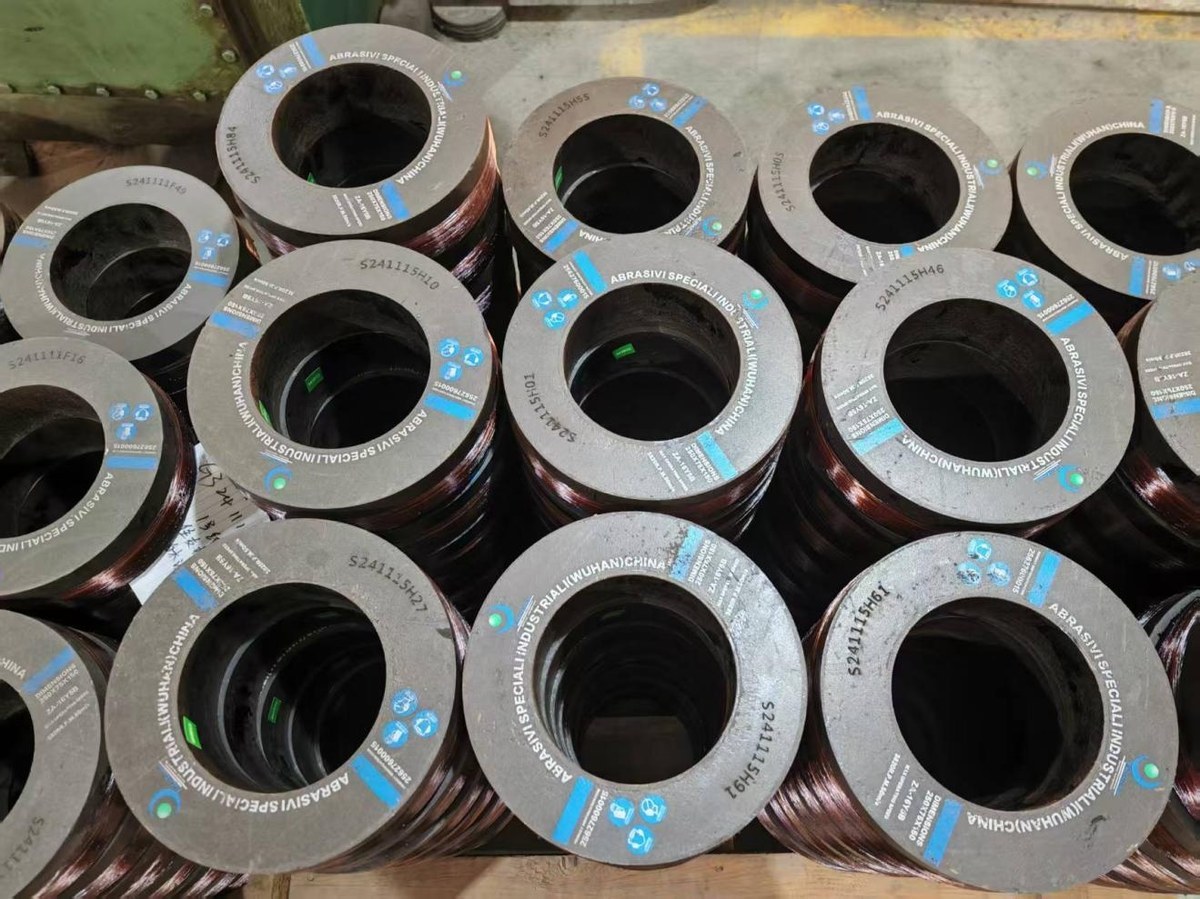
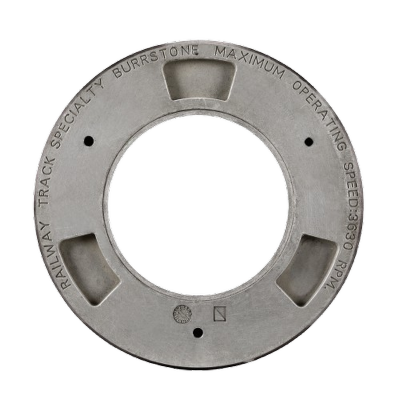
Whichever model a network chooses, the wheel is the part of the service that touches the rail. Molaton rail grinding wheels are made by RailwayCare (Wuhan Huatie Ruijie Rail Transit Technology Co., Ltd.) at 500,000 wheels per year, in every format used by the main grinding-train families and turnout grinders, and are supplied both to fleet operators and to service providers running campaigns on their behalf.
- Specified per machine and per duty. Format, grain blend, hardness and bond are set by vehicle speed, motor power, grinding-head geometry and rail grade - a 260 mm wheel for a 96-stone train and one for a turnout grinder are not the same product.
- Zirconia alumina, 16 grit, resin bond with glass-fibre wrapping, rated 50 m/s, M10 mounts at ≥17 mm engagement.
- Certified for procurement. ISO 9001:2015 and ISO 45001:2018, CRCC, technical review by the China Academy of Railway Sciences (TKTJ-19-0007-ST), a report from the Zhengzhou National Abrasives Quality Inspection Centre, JB/T 11431-2020, EN 12413 and EAC/GOST 33174-2014 for 1,520 mm gauge markets.
- Evidence, not claims. ≥100 pass-km in the G1 test outline, plus the heavy-haul, high-speed and metro field results quoted above.
If you are drafting a service specification or comparing consumable options inside one, our guide to getting and comparing rail grinding wheel quotes sets out the data pack to request before prices can be compared meaningfully.
What is included in a rail grinding service?
A full-service contract normally covers the grinding machine and crew, the target profiles, preventive and corrective passes, pre- and post-grind measurement and reporting, site cleaning, and the supporting safety and possession staff. Consumables may be included or supplied by the owner - the allocation has to be explicit, because it decides who carries the risk if a campaign needs more passes than planned.
How much does rail grinding cost per kilometre?
Published contract values put a mid-sized high-speed grinding framework at around £7.5 million excluding VAT over two years with a four-year extension option (Network Rail High Speed award, March 2026). Per-kilometre cost depends on possession hours, grinding speed, removal depth, profile complexity and how many passes are required - the build-up is set out in our rail grinding cost per kilometre analysis.
Should we buy a grinding machine or contract the service?
It depends on utilisation. If a train can be kept busy for most of the grinding season and you have the depot, crews and profile expertise, ownership usually produces the lowest cost per pass-kilometre. Below that utilisation level, a service contract converts a capital asset into a variable cost and transfers profile and crew risk to the contractor. Many networks use a hybrid: own the train, contract the technical support.
How is the quality of a grinding service verified?
With four measurements: profile fit against the design profile (GQI or equivalent, with zone tolerances), surface roughness (Ra ≤10 μm), contact band width and position (25-30 mm high-speed, 35-40 mm conventional and heavy-haul), and metal removal by zone against the specification. Independent re-measurement of a sample of chainages is the cheapest insurance in the contract.
Can a service provider supply the grinding wheels as well?
Yes - and on many networks the contractor supplies the consumables as part of an all-in scope. If the owner supplies wheels instead, the owner keeps direct control of consumable cost and can benchmark wheels on its own rail, but it must hold stock, manage the specification and understand wheel life in pass-km per millimetre. Ask which model the tender price assumes; the difference between the two can exceed the margin being negotiated.
Get a Rail Grinding Consumable Partner for Your Next Campaign
Send us your programme outline - network length, machine classes, annual tonnage, rail sections and grades, number of possessions and the profiles you are working to - and we will come back with the wheel specification for each machine, expected pass-km per wheel with its test basis, and a commercial frame you can compare against any other supplier.
- WhatsApp: +86 15072332788
- Email: simon.wang@railwaycare.com
RailwayCare (Wuhan Huatie Ruijie Rail Transit Technology Co., Ltd.) – your professional partner in rail grinding, with Molaton grinding wheels field-proven on high-speed, heavy-haul and metro lines since 2004.
RailwayCare (Wuhan Huatie Ruijie Rail Transit Technology Co., Ltd.) – your professional partner in rail grinding, with Molaton grinding wheels field-proven on high-speed, heavy-haul and metro lines since 2004.