Large Machine Turnout Grinding: Target Profiles, Restricted Zones and Railway Grinder Wheel Selection
When a large grinding vehicle enters a high-speed railway turnout, every railway grinder wheel on that machine faces a unique set of constraints: limited working angles, restricted access zones, variable rail hardness, and sub-millimeter profile tolerances. The Beijing Railway Bureau's comprehensive study across Cangzhou West, Dezhou East, and Dujiaqian Interlocking documented exactly how these constraints interact — and what wheel characteristics determine success or failure in this demanding application.
Target Profile Design: The Foundation of Every Railway Grinder Wheel Selection
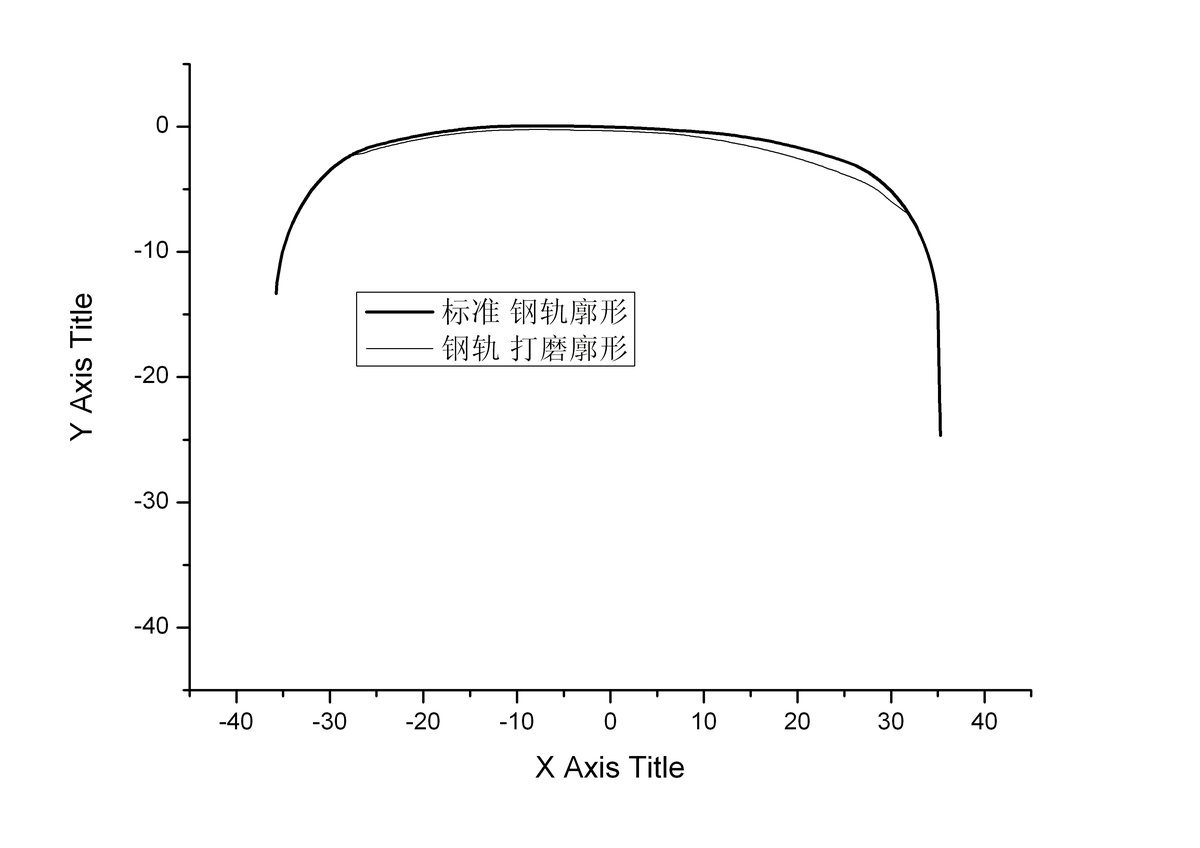
Every large-machine turnout grinding operation begins with a target profile — a precisely engineered rail cross-section that defines the desired final geometry. The Beijing Bureau adopted the China Academy of Railway Sciences (CARS) high-speed rail design profile as its standard, which optimizes wheel-rail contact stress distribution for trains traveling at 250–350 km/h.
The target profile is not just a shape on paper — it is the specification against which every railway grinder wheel pass is measured. Each pass must remove material progressively closer to this target without overshooting. This is where wheel selection becomes critical: a wheel that removes material too aggressively will overshoot the target in fewer passes than expected, while a wheel that cuts too slowly will consume valuable track possession time.
The Grinding Restriction Zones That Define Railway Grinder Wheel Requirements
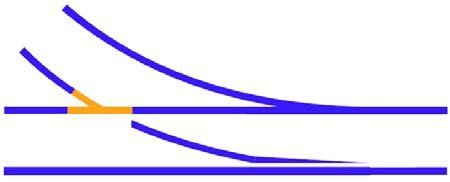
High-speed turnouts contain areas where physical clearance prevents full-angle grinding. The most critical restriction zone is the movable point rail frog section , where structural components are packed into minimal space. The Beijing Bureau's specifications define three distinct restriction categories:
Zone A: Frog Core
From 200 mm ahead of wing rail bend to 500 mm behind point rail tip. Only Y−5 to Y−33 mm grindable. Angles +3° to +40° only.
Zone B: Narrow Gap
Where wing rail-to-point rail spacing <100 mm. Inner-side only. Angles +3° to +70°. ~7.2m total length.
Zone C: Short Point Rail
Curved short heart rail section. Limited to +3° to +40° angles. Requires precise wheel positioning.
The 24-Pass Grinding Protocol: How Speed Control Protects Both Rail and Wheel
The Beijing Bureau's large-machine grinding protocol calls for approximately 20–24 passes through each turnout at speeds between 4–10 km/h. But speed is not constant throughout the process — it follows a carefully calibrated progression:
- Passes 1–5 (Segmental correction): Left and right rails ground separately to eliminate pre-existing profile deviations between turnout front/back sections. Speed: 4–5 km/h.
- Passes 6–10 (Profile shaping): Focus on rail head sides for maximum material removal. Speed held at 4–5 km/h. After pass 10, profilometer measurements compare actual vs. target to determine remaining stock removal needs.
- Passes 11–12 (Adjustment phase): Measurement frequency increases. Grinding program and speed are adjusted based on deviation data. Single-rail passes may be used for localized corrections.
- Passes 13–20 (Precision finishing): Speed increased to 4–10 km/h to control cutting depth per pass. Final profile conformity achieved.
- Final 3 passes (Through-grinding): Full-profile coverage at 10 km/h. Angles limited to +3° to +40°. Overlaps with adjacent line track by 5–10 m.
This speed progression directly impacts railway grinder wheel performance. At low speed (4 km/h), the wheel spends more time per unit length of rail, generating higher heat input per unit area. Molaton's hot-pressed zirconia alumina wheels maintain stable grain exposure under prolonged contact, preventing glazing and thermal damage that would occur with inferior wheels.
Straight Track vs. Curved Track Grinding: Different Demands on Each Railway Grinder Wheel
When a turnout has both straight and curved routes, the grinding strategy must account for different geometric demands:
- Straight track grinding: Full 20–24 pass protocol as described above. The overlap with line track grinding extends 5–10 m beyond the turnout boundary, selecting the best existing light band zone as the connection point.
- Curved track grinding: Follows the same methodology but with additional constraints. The short heart rail section allows only +3° to +40° grinding. The stop position for curved switch rail profiling is sleeper #19; for full-profile coverage it is sleeper #16. Curved stock rail profiling stops at #19, with coverage range #5–#19.
For curved track grinding, the railway grinder wheel must handle asymmetric load distribution caused by centrifugal force effects on the outer rail. Molaton adjusts bond hardness and porosity for curved-track applications to compensate for this asymmetry.
Overlap and Joint Management Between Consecutive Grinding Operations
When turnouts require multiple night-time possessions , consecutive grinding operations must be coordinated precisely. The Beijing Bureau specifies that the overlap zone between two operations must be controlled within a 5-meter range. The previous operation's profile stop position becomes the center point of the overlap zone — but this central 2.5 m range does NOT receive full-profile coverage during the first operation. During the second operation, the profile stop position returns to this center point, and full-profile coverage grinding includes the entire overlap zone.
This overlap strategy ensures no "dead zones" exist between grinding sessions — areas where neither operation fully addressed the surface condition. For the railway grinder wheel, this means consistent performance must be maintained across all passes, regardless of whether they occur during the first or second session. Molaton's quality-controlled manufacturing process ensures batch-to-batch consistency that makes this kind of multi-session coordination reliable.
Why Bond Hardness Matters More Than Abrasive Grit Alone in Turnout Applications
Many operators focus primarily on abrasive grit type when selecting a railway grinder wheel, but in turnout applications, bond hardness is often the more decisive factor. Here is why:
In open-line grinding, the contact angle between wheel and rail remains relatively constant throughout the pass. In turnout grinding, however, the wheel must transition through varying angles as it moves through the frog, switch, and closure rail sections. If the bond is too hard, the abrasive grains become dull before fresh grains are exposed — the wheel glazes and loses cutting efficiency. If the bond is too soft, grains are released prematurely, causing rapid wheel wear and inconsistent surface finish.
Molaton's hot-pressed bonding system creates a controlled erosion rate that matches the angle-changing dynamics of turnout grinding. Unlike cold-pressed alternatives where bond strength varies unpredictably across the wheel face, our hot-pressed process delivers uniform bond density that responds consistently to the changing pressure vectors encountered in turnout work.
Railway Grinder Wheel Heat Management in High-Density Pass Sequences
With 20+ passes over the same rail section within a single possession window, heat accumulation becomes a serious concern. Each railway grinder wheel contact generates frictional heat that conducts into the rail subsurface. Excessive temperature rise causes:
- Tempering: Softening of the hardened rail head surface
- White layer formation: Brittle martensitic transformation
- Residual tensile stress: Promotes crack initiation
The Beijing Bureau's experience confirms that proper wheel selection is the primary defense against thermal damage. Molaton wheels feature optimized porosity that provides two heat-dissipation pathways: (1) air cooling through exposed pores at the wheel surface, and (2) reduced friction coefficient due to the self-lubricating effect of zirconia alumina grain micro-fracturing.
Selecting Your Railway Grinder Wheel for Turnout Applications: Key Decision Factors
Based on the Beijing Bureau's documented experience, here are the key factors to consider when specifying a railway grinder wheel for turnout grinding:
| Factor | Impact | Molaton Solution |
|---|---|---|
| Pass Count | 20-24 passes demand consistent wear rate | Hot-pressed uniform bond density |
| Speed Range | 4-10 km/h requires wide operating window | Zirconia alumina adaptive grain structure |
| Angle Variation | +3° to +70° demands multi-angle capability | Full-face grain distribution |
| Heat Load | Dense pass sequence risks thermal damage | Optimized porosity for dissipation |
| Profile Precision | ±0.2mm tolerance requires predictable cut | Controlled bond erosion rate |
Molaton's Turnout-Specific Railway Grinder Wheel Series
Molaton offers dedicated turnout grinding wheel formulations optimized for the exact conditions described in this article. Whether your fleet uses Loram, Harsco, or Speno large machines combined with Geismar or Robel small machines, we have a matched wheel solution that addresses the specific challenges of high-speed railway turnout grinding.
Our engineering team works with customers to analyze their specific turnout types (CN series, Kezhuanxian series, or custom profiles), grinding protocols, and acceptance standards to recommend the optimal wheel specification. Every recommendation is backed by field data from real turnout grinding programs.
FAQ
What is a restricted grinding zone in a railway turnout?
It is a section where physical clearance prevents full-angle grinding, so both the permissible angle range and the grindable band are limited. In the movable point rail frog section the Beijing Railway Bureau defines three categories: Zone A frog core (only Y−5 to Y−33 mm grindable, angles +3° to +40°), Zone B narrow gap where wing rail to point rail spacing is under 100 mm (inner side only, +3° to +70°, about 7.2 m long), and Zone C short point rail (curved, +3° to +40°). The wheel has to cut cleanly inside those limits without touching adjacent surfaces.
How many passes does large machine turnout grinding need?
Typically 20 to 24 passes through each turnout at 4–10 km/h, run as a staged sequence rather than a single setting: segmental correction, profile shaping, adjustment, precision finishing, and a final through-grinding pass. Because speed and depth change at each stage, the wheel is asked to do different jobs within one campaign — the protocol is described in detail in our guide to high-speed turnout grinding.
Which railway grinder wheel suits turnout grinding?
One that holds a controlled wear rate at the working angle rather than simply cutting fast. Bond hardness matters more than grit alone in turnout work, because variable contact angles and hardened switch rail steel punish a wheel that cannot clear its own swarf. Our turnout-specific formulation and the geometry it is built for are covered in precision turnout grinding, and the vehicle-matching criteria in wheel selection by grinding vehicle.
How is the target profile verified after turnout grinding?
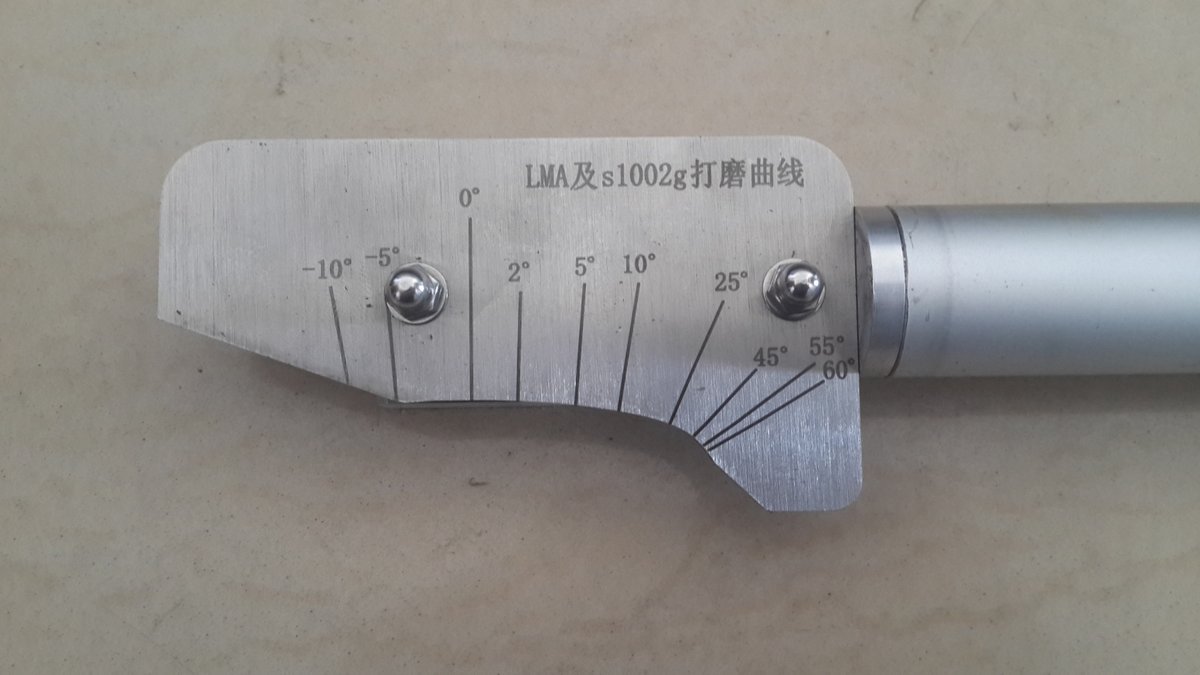
With profile template rulers cut to the target cross-section — usually at 25 mm, 35 mm and 40 mm from the rail centreline — checked continuously during the finishing passes, followed by profilometer verification. Acceptance in the Beijing Bureau programme required positive deviation within 0.2 mm in the −25 mm to +25 mm band and within 0.3 mm out to the gauge corner. The measurement and verification method is shared with general profile work, covered in rail profile grinding.
Why does grinding speed have to climb through the pass sequence?
At 4 km/h the wheel spends more time per unit length of rail, so heat input per unit area rises; at the finishing and through-grinding stages the speed is raised to 10 km/h specifically to limit depth of cut per pass. The risk if that progression is ignored is thermal damage — the mechanism and how to avoid it are set out in rail burning prevention.
Get Your Turnout Grinding Wheel Specification Today
Contact Molaton with your turnout model list and grinding vehicle details. We will prepare a customized railway grinder wheel matching proposal at no cost.
Request Free Technical Consultation →WhatsApp: +86 15072332788 | Email: simon.wang@railwaycare.com