Home / Rail Grinding Wheel Light Customization Solutions
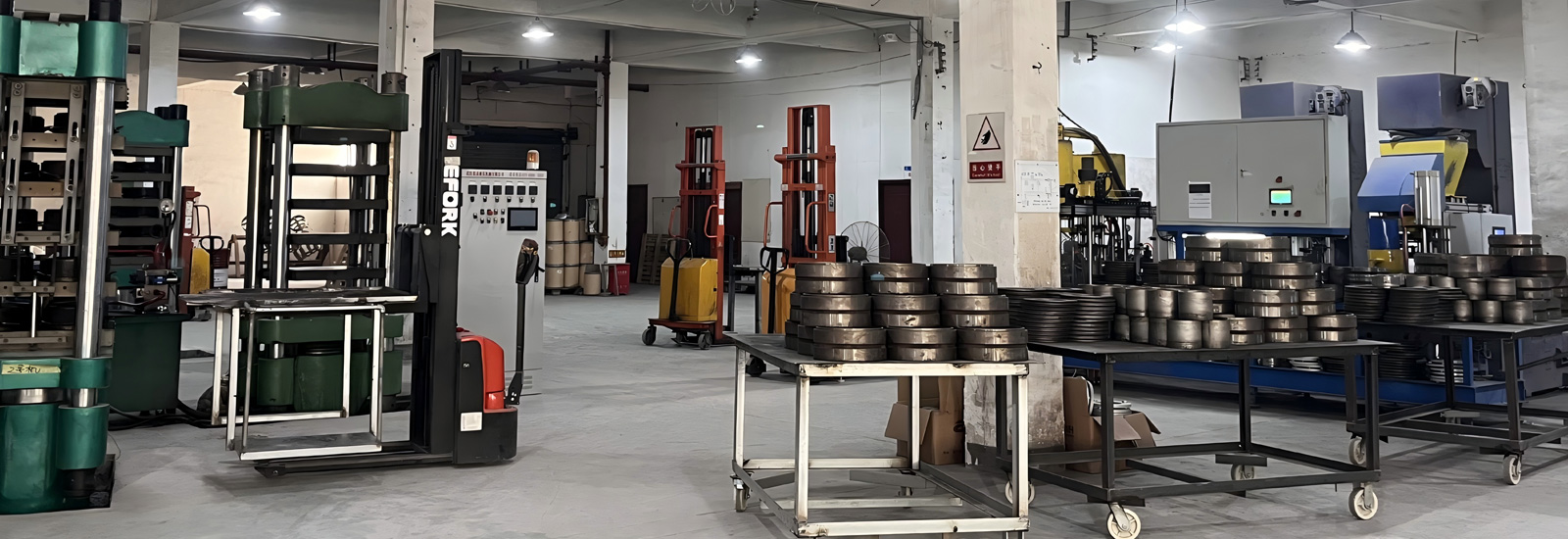
Most rail grinding wheels sold today are cold-pressed. Every wheel we make is hot-pressed – whatever abrasive goes inside it. Tell us your machine and your grinding task, and we adjust the layer that actually matters: abrasive formulation, wheel thickness, or the full interface on OEM builds.
Customization Capabilities
Three Layers We Adjust – And One We Do Not
The flange interface on a mainline grinding machine is standardised: bore, bolt circle and keyway follow the machine maker’s drawing. That is not a customisation point. Below is what genuinely changes.
Layer 1 – Abrasive Formulation
The Process Is Always Hot Pressing
Cold pressing is how most rail grinding wheels in the market are made. It is faster and cheaper to produce, and for many buyers it is simply what is available – the alternative is rarely on the table.
ZA / A BlendsTrade cutting speed against wheel life
Every wheel we make is hot-pressed, whatever abrasive sits inside it. Compacting abrasive and bond under heat and pressure gives higher density and stronger grain retention than cold pressing, so the wheel holds its grain under load instead of shedding it early and glazing over. Grit size and bond hardness are then set against the hardness of the rail steel you are grinding. You choose the abrasive; the hot-press process is the same either way.
Layer 2 – Wheel Thickness
What Actually Changes on a Mainline Grinder
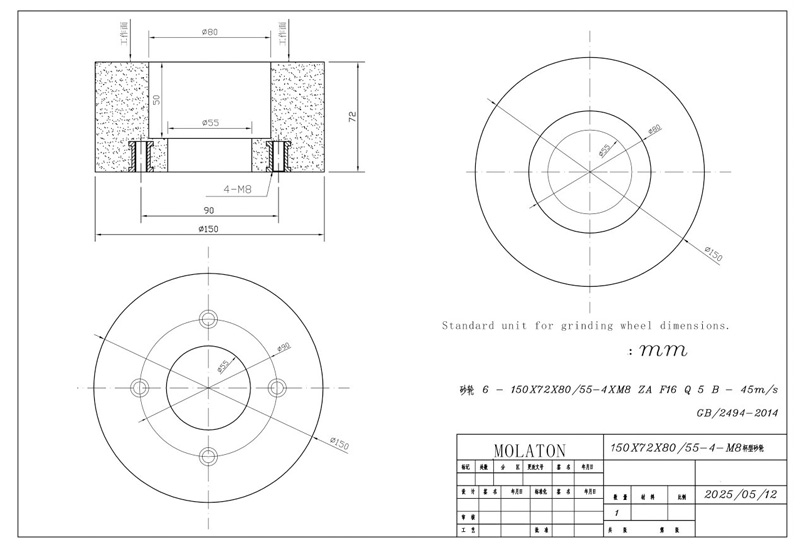
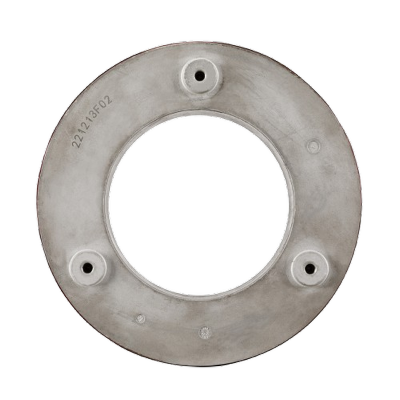
On machines from Loram, Harsco, Geismar, Robel and Speno, the flange interface is fixed by the machine maker. Bore diameter, bolt circle and keyway are not a customisation point – a supplier offering to change them is describing something the machine will not accept. What genuinely changes is thickness – the one dimension a rail grinding wheel manufacturer can move for rail maintenance work. We cut to your thickness against the OEM drawing and leave the interface untouched.
ThinnerLight passes, tight switch geometry
StandardGeneral mainline grinding
ThickerHeavy corrective grinding
Layer 3 – Full Interface and Dimension Build
For Grinder Manufacturers and OEM Programmes
If you build grinding machines rather than operate them, thickness is not your limit. We cut new tooling to your drawing, with nothing constrained to an existing standard because the interface does not exist yet. Tooling development takes about 4 weeks; seven sample wheels then take 3 days to produce when the line is not running a volume batch.
Outer DiameterAny size to your drawing
Bore & KeywayCut to your interface
ThicknessUnconstrained by OEM standard
BrandingLaser etch or stamp, plus packaging
Customization-Ready Wheels
Start From a Standard Fit, Then Adjust What You Need
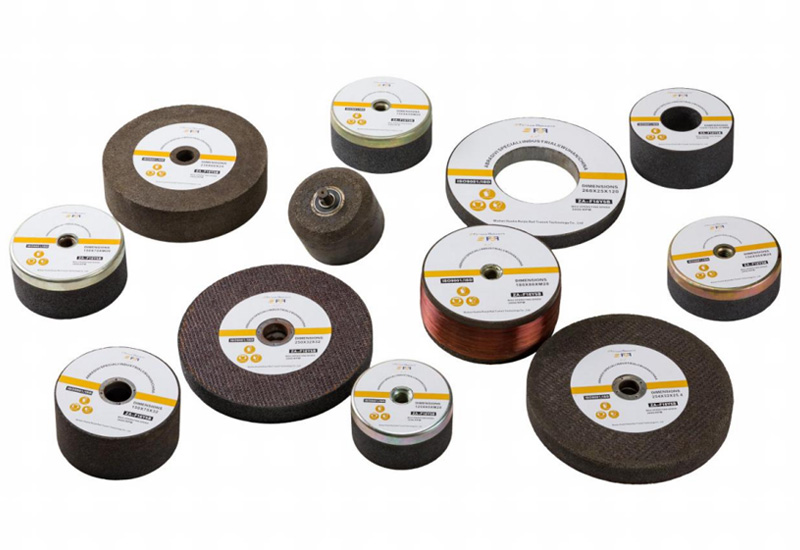
These wheels already match the flange interface of mainstream grinders. What we adjust is thickness, bore, and branding – the parts that decide whether the wheel actually fits your machine and your track maintenance programme.
Send the machine model or the flange drawing. We reply with the thickness and abrasive we would start with, and what a 7-wheel trial costs.
Machine not in the list?
Send us the flange drawing or the model number and we will tell you which thickness and abrasive to start with – usually within one working day. Minimum order is 7 wheels, so a trial does not mean a container.
Our main line. Zirconia alumina grain is tougher and self-sharpening – it fractures progressively instead of glazing over, so the wheel keeps cutting instead of polishing the rail surface and building heat. Suits heavy stock removal, corrugated rail and work-hardened surfaces on high-axle-load track. Hot-pressed for higher density and stronger grain retention.
Hot-Pressed Brown Alumina (A) and Blends
The conventional abrasive system, made with the same hot-press process rather than the cold pressing most of the market uses. Brown alumina suits lighter finishing passes, weld dressing and buyers working to a tighter unit budget. We also blend brown and zirconia alumina to balance cutting speed against wheel life and surface finish.
Partnership Process
From Drawing to Delivery in Six Steps
Each step has a defined output, so you always know what you receive next and what is still open.
01
Requirement Analysis & Technical Validation
You send equipment parameters, operating conditions, drawings or a worn sample. Our engineers confirm every customisation detail and the technical standard it will be built to.
02
Solution Development & Agreement
We return a technical proposal with custom drawings, the specification and commercial terms. On mutual confirmation, a formal cooperation agreement is signed.
03
Prototype & Performance Verification
Custom prototypes are produced for fitment on your machine and validation under real operating conditions. Volume production starts only after confirmed performance.
04
Batch Production & Process Control
Batch runs to the standardised quality management system, with process control at every stage so the fiftieth batch matches the first.
05
Final Inspection & Documentation
Each batch is tested for physical and chemical performance and dimensionally inspected before shipment, with an inspection report for full data traceability.
06
Branded Packaging & Delivery
Wheels are packed to the agreed branding specification, with international logistics arranged to your site.
Our Track Record
Why Partner with Us
01
Industry Standard Setter
We are one of the drafting organisations behind the Chinese industry standard for rail grinding wheels. The specification other suppliers are measured against is one we helped write.
02
Standardised Production
Hot pressing, bonding and curing run to fixed process parameters, so the wheel in batch fifty behaves like the wheel in batch one. Customisation changes the specification, not the discipline behind it.
03
20 Years of On-Track Data
Two decades of fitting wheels to customer machines and tracking every grinding pass in service. That record is what tells us which formulation still cuts after thirty-tonne axle loads have work-hardened the rail.
04
Batch Consistency, Documented
Every batch is tested against the Chinese national standard before it ships – dimension, hardness, strength and dynamic balance – with the inspection records to show it. Consistency you can audit, not just trust.
Order Parameters
What You Need Before Sending an Enquiry
Fixed starting points, not ranges. Volume orders are scheduled case by case.
Minimum order
7 wheels – also the fastest batch size we can run
Tooling / mould development
About 4 weeks, only when a new profile or interface has to be cut
Sample production
3 days for 7 wheels, when the line is not committed to a volume run
Sample delivery
About 10 days by air
Volume orders
Production and shipping schedule agreed case by case
Branding
Laser etching or stamping on the wheel body, plus printed outer packaging
Common Questions
Before You Send a Drawing
The questions buyers ask most before sending a drawing – machine compatibility, minimum order and how to read a wheel specification.
What is the lead time for your main products and equipment?
For standard specification products, our typical lead time is within 1–2 months from order confirmation. These items are manufactured based on established designs and tested processes, allowing us to ensure consistent quality and timely delivery.
However, for customized products—such as those requiring integration with specific rail systems or tailored performance parameters—the lead time varies significantly. Custom solutions often involve detailed technical consultations, design iterations, compatibility assessments, and multiple rounds of repetitive testing to validate performance under real-world operating conditions. This rigorous development cycle ensures that the final product meets both safety standards and the unique operational requirements of each client’s infrastructure (e.g., track gauge, signaling systems, load capacity, environmental conditions, etc.). As a result, delivery timelines for bespoke equipment are determined on a case-by-case basis and typically require close collaboration between our engineering team and the customer throughout the project lifecycle.
We always strive to provide an accurate and realistic schedule during the initial quotation phase, and we keep clients informed of progress at every stage to ensure transparency and alignment.
What grit size and abrasive should I use for rail grinding?
What grit size and abrasive should I use for rail grinding?
For rail grinding you need zirconia alumina (ZA) abrasive at 16 grit (coarse) as the working standard — this is the combination Molaton fits to PGM-48/96C-class grinding trains (260x90x154 mm, ZA F16, 50 m/s) because it removes corrugation and profile defects fastest while holding the finish. Step down to a finer grit only for finish-critical passes on portables and weld dressing. Match the wheel size, bore and rpm rating to your machine, then verify with a small field trial before full roll-out.
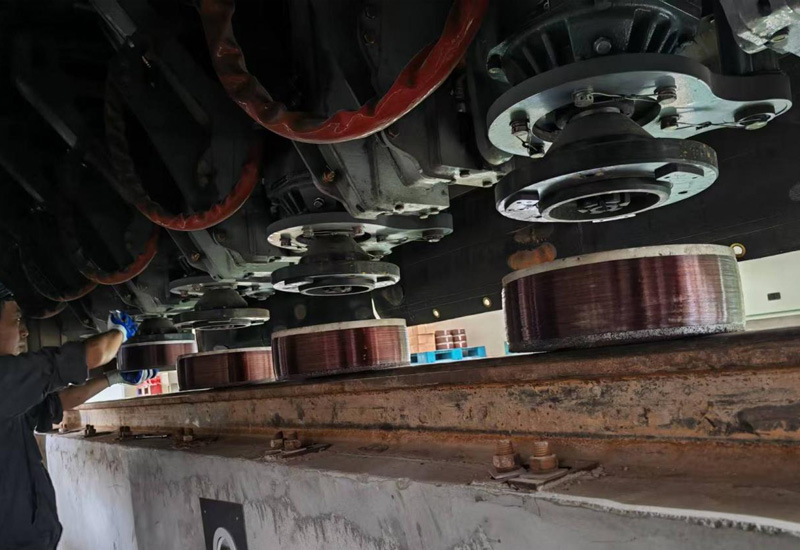
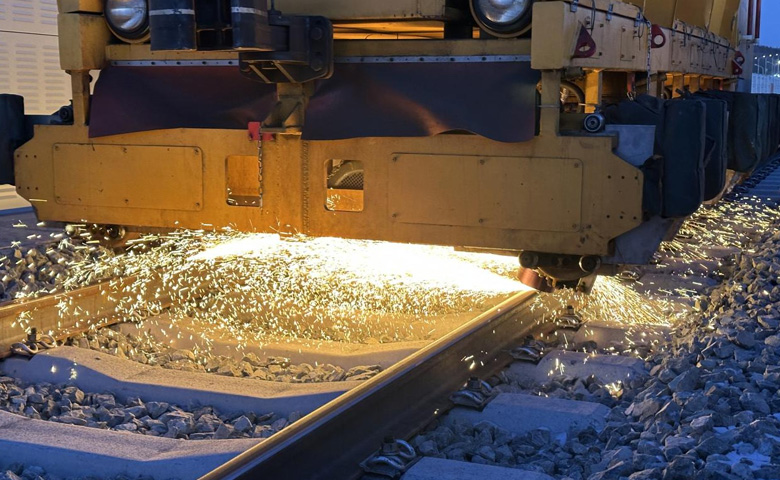
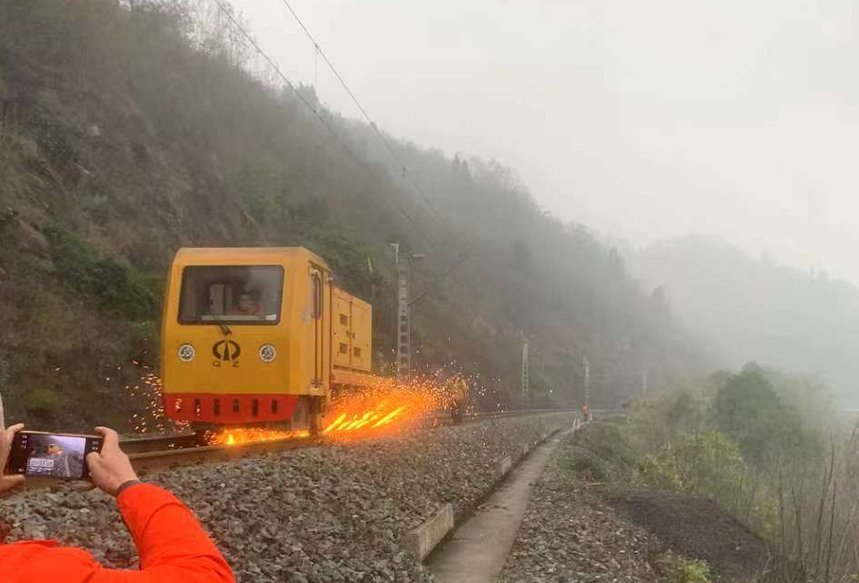
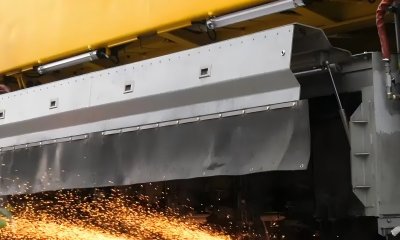
12-head rail grinding vehicle at work — coarse ZA wheels remove the defect, and acceptance still meets Ra ≤10 μm
16 grit (coarse) for trains; finer grit only for final finish passes
Bond
Wheel life, fracture resistance, holding grit under load
Resin bond with glass-fibre reinforcement (Y5B-class bonds in train wheels)
Speed rating
Safe operating window on the head
Minimum 50 m/s per GB 2494; tested to 4775 rpm for 30 s without rupture
Balance
Chatter, burning, uneven wear
Batch-balanced to ≤30 g per GB/T 2492
Why zirconia alumina? Measured grain strength puts ZA at 308.0 MPa, versus 124.0 MPa for calcined brown fused alumina and 103.2 MPa for white fused alumina; in the Shenhua project the grinding ratio ran 41.0 against 22.4 and 11.9 for the other two. Molaton builds wheels from Saint-Gobain Abrasives grain and SI Group resin — the same input discipline every batch, documented for ISO 9001 traceability.
Match grit and abrasive to the machine
Machine class
Typical Molaton wheel
Grit guidance
PGM-48 / PGM-96C-class grinding trains
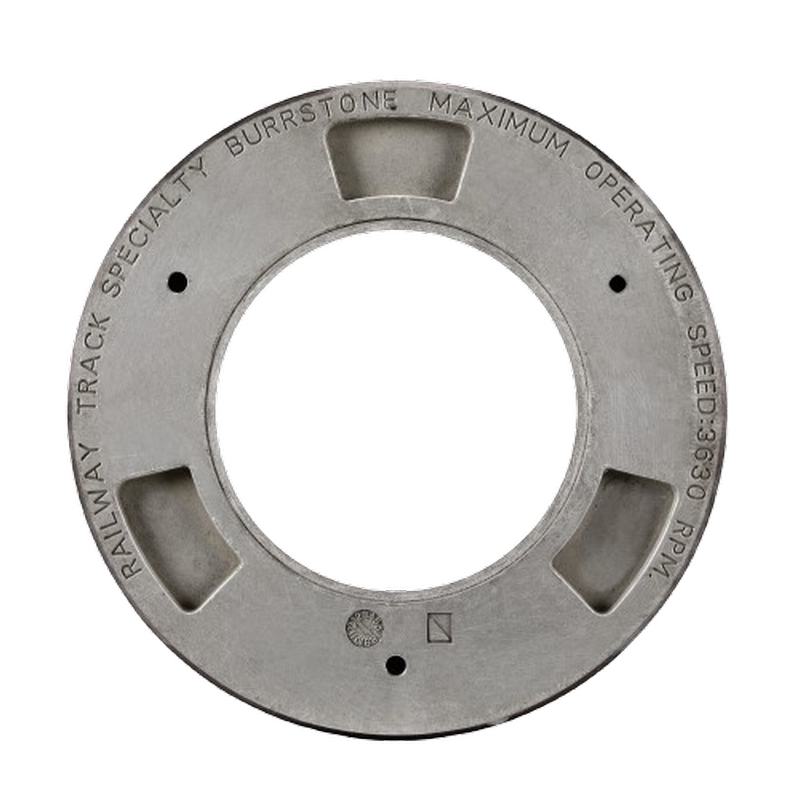
260x90x154 mm, ZA F16, 50 m/s, 3630 rpm
16 grit — corrugation removal and continuous main-line grinding
GMC96B-class vehicles
180x105x90 mm, 6000 rpm
16-grit family for stock removal; confirm with our engineers for light defect mixes
Loram-class grinders
250x75x150 mm (G3), 3280 rpm
Coarse ZA for profiling; validated on Loram-type heads
Handheld / portable (MRC-S 150/125 class)
150x70xM20 and related bores, 6000-7500 rpm
Coarse for weld reshaping, finer grit for final surface finish
Finish rules stay the same across machines: after grinding the rail must meet Ra ≤10 μm, profile tolerance ≤0.3 mm over a 1 m straightedge, grinding depth ≤0.5 mm per pass, and show no blueing. If your acceptance is tighter, keep 16 grit for removal and add one finer finishing pass — don't start fine, or you will burn time and wheels. See the Molaton rail grinding wheel range and the rail grinding solution for typical pass sequences.
Proven on track — why 16-grit ZA is the field standard
On the Liuzhou GMC-96X campaign (2022), Molaton 16-grit ZA wheels ground 18.72 km·passes in a 2-hour night window with 20-30 mm wheel wear versus 43.5-59 mm for the imported reference — about twice the life at equal finish. The Shenhua project accepted a 600-piece batch through a full wear cycle. Laboratory rotation tests (2024, national abrasive testing institute) saw the 260x90x153 mm wheel survive 4775 rpm for 30 s with no rupture, burst only above 6354 rpm, and carry a measured unbalance of 21 g — inside the ≤30 g requirement. Yiyang line and Shuohuang heavy-haul fleets averaged 5.7 and 4.98 km·passes per mm of wheel wear respectively.
Why trust this answer — RailwayCare (product brand Molaton) has manufactured rail grinding wheels since 2004 — the first dedicated producer in China, born from the friction-materials laboratory of Wuhan University of Technology. We drafted the industry standard JB/T 11431 for rail grinding wheels, are certified to ISO 9001 / ISO 45001 / CRCC, and every claim below is backed by on-track tests on high-speed, heavy-haul and metro networks.
Send your grinder model, rail condition, defect photos and current part number. Our engineers will confirm the right Molaton grit-abrasive combination within 24 hours.
What does a rail grinding wheel specification like 260x90x154mm mean?
What does a rail grinding wheel specification like 260x90x154mm mean?
260x90x154 mm means outside diameter 260 mm, thickness 90 mm, bore (centre hole) 154 mm. Those three numbers describe only how the wheel mounts on the machine. What the wheel actually does is set by four further fields that are always printed with it: the abrasive, the grit, the bond, and the maximum working speed together with the balance grade. A full catalogue entry reads, for example: 260x90x154 mm, zirconia alumina, 16 grit, resin bond, 50 m/s, 3,630 rpm.
Diameter, thickness and bore must match the machine's mounting pattern exactly before any other specification matters.
The three mounting numbers
Field
Value in 260x90x154
Why it must match
Outside diameter
260 mm
Sets the surface speed at a given spindle rpm and must stay inside the machine's rated maximum diameter. As the wheel wears, diameter falls and surface speed drops with it.
Thickness
90 mm
Thickness is wear reserve. Train wheels are thick so one wheel grinds many kilometres before it is changed; portable-machine wheels are thin because the machine is light.
Bore
154 mm
The centre hole must match the hub or arbor exactly. A bore mismatch cannot be shimmed out — it destroys balance and is a safety issue.
Compare that with the other families in the Molaton catalogue: 350x60x127 mm and 180x105x90 mm for 96-head class and compact train units, 250x75x150 mm and 260x83x154 mm for Loram-class vehicles, 150x70xM20 for portable machines where the bore is a thread rather than a plain hole, and 356x4x25.4 mm for cut-off wheels, where a 4 mm thickness is the point.
The four fields the size does not tell you
Field
Typical rail specification
What it controls
Abrasive
Zirconia alumina (ZA)
Cutting ability and life. Measured compressive strength is 308.0 MPa for zirconia alumina against 124.0 MPa for calcined brown alumina and 103.2 MPa for white alumina; in the Shenhua project the grinding ratios were 41.0, 22.4 and 11.9 respectively.
Grit
16 grit for train wheels, 20 for turnout and portable wheels, 30 for cut-off wheels
Stock removal rate versus finish. Coarse grit cuts faster; surface roughness must still finish inside the acceptance limit of Ra 10 μm.
Bond and reinforcement
Resin bond with glass-fibre wrap, rated 50 m/s
Survival under impact and heat. The 50 m/s rating follows GB 2494; the cut-off range is rated 100 m/s.
Balance grade
GB/T 2492: G1 ≤ 30 g, G3 ≤ 34 g
Vibration and chatter. An unbalanced wheel burns the rail surface and shortens its own life.
Tolerances — the part of a specification nobody reads
Two wheels stamped 260x90x154 mm are not automatically interchangeable. Dimensional tolerance decides whether the wheel runs true, and it is specified under JB/T 7992 and JB/T 11431 — the rail grinding wheel standard RailwayCare drafted. The limits are outside diameter ±2.0 mm, thickness ±1.5 mm, parallelism ≤0.4 mm and concentricity ≤0.5 mm.
Why reading the specification correctly pays
Type testing of a 260x90x153 mm wheel rated 50 m/s at the Zhengzhou Research Institute for Abrasives & Grinding recorded 4,775 rpm for 30 seconds without rupture, a burst test held to 6,354 rpm without rupture, and 21 g unbalance — inside the G1 limit.
On track, the same nominal size can behave very differently. On Liuzhou GMC-96X in 2022, wheels of the same specification class ground 18.72 km·passes in a single 2-hour night window with 20-30 mm of wear against 43.5-59 mm for the imported wheel. On the Hewu high-speed line the figure was 4.28 km·passes per mm against 3.27. In the 2026 Loram DM01 trial at Jiangmen, surface roughness after grinding measured 1.05-9.0 μm, mostly 2-4 μm, against an acceptance limit of Ra 10 μm, with no burning on either side.
The practical rule: read the size for the machine, read the abrasive, grit, bond, speed rating and balance for the job. Ordering on 260x90x154 mm alone tells you the wheel will fit — not that it will grind economically.
Why trust this answer — RailwayCare (product brand Molaton) has manufactured rail grinding wheels since 2004 — the first dedicated producer in China, born from the friction-materials laboratory of Wuhan University of Technology. We drafted the industry standard JB/T 11431 for rail grinding wheels, are certified to ISO 9001 / ISO 45001 / CRCC, and every claim below is backed by on-track tests on high-speed, heavy-haul and metro networks.
Send the machine model and the size currently on it. Molaton engineers will confirm diameter, thickness, bore, abrasive, grit, speed rating and balance grade — so the wheel that arrives is the wheel the job needs.
Can one rail grinding wheel fit different grinding machines?
Can one rail grinding wheel fit different grinding machines?
Yes, and in practice it usually does — a rail grinding wheel is matched to the grinding head, not to the machine brand on the cab. The same 250×75×150 mm format is listed for Speno GMC-48 / GMC-96 and for CRRC Taiyuan vehicles. The same 260×90×154 mm format serves Harsco PGM48/96C, CRRC Baoji GMC-48 and Jinying GMC-96. What changes between machines is four numbers: the bore, the head's maximum diameter, the maximum spindle speed, and the required bond type. Get those four right and the wheel is interchangeable; get one wrong and it is scrap — or a safety incident.
Different builders often share hub geometry, so one wheel format can cover several machines in a mixed fleet — the nameplate is not the deciding factor.
The formats that already cross machine brands
These are the formats we hold as standard inventory, with the vehicle families each one is built for. Note how often one line covers two or three builders.
Geismar / Robel 150-class turnout and portable machines
125-series (125×65×20, bore 54×47 or 36×18)
—
50 m/s (7,500 rpm)
Geismar / Robel 125-class light machines
All six lines are zirconia-alumina grain in a glass-fibre-reinforced resin bond — that construction is what makes a 1.5× safety factor at 50 m/s achievable. Passive high-speed machines are covered by the same logic: the Vossloh HSG-2 wheel is a small M20-thread format, 4.06 kg, also rated 50 m/s. See the full Molaton rail grinding wheel range.
The five checks before a wheel moves between machines
Bore and mounting. A 154 mm bore, a 150 mm bore, a 90 mm bore, an M20 thread and a 54×47 mm cup are five different spindles. The hub register and flange must match exactly; this cannot be adapted in the field with a shim.
Rated speed above spindle speed. The wheel's maximum working speed has to exceed the machine's marked maximum spindle speed — not equal it. This is the condition written into the portable-machine manuals, and it is the one that gets ignored when a wheel is borrowed from a slower machine.
Diameter limit and clearance. The outside diameter must not exceed the head's marked maximum (230 / 250 / 254 / 260 mm on the common portable heads). A larger wheel also means a larger rotating mass and a different guard clearance.
Bond type. Rail grinding needs a resinoid bond with a glass-fibre wrap. A vitrified wheel on a rail head will not survive the impact of a dipped weld or a frog point.
Balance and tolerances. Our rail range is balanced to G1, within the 30 g limit of GB/T 2492, and holds ±2.0 mm on outside diameter, ±1.5 mm on thickness, ≤0.4 mm parallelism and ≤0.5 mm concentricity under JB/T 7992 and JB/T 11431. On a 96-head train, one out-of-tolerance wheel shows up as vibration across the whole unit.
Two half-vehicle comparison trials show what "fits" means in practice. On the Jingha line, a GMC-16 class vehicle ran at 12 km/h and 13 kW over five passes (37.5 km per pass) with our wheels on one side: the mounting dimensions were correct, there was no damage and no burning, and the imported wheel consumed 1.027× as much material as ours. On the Liu Zhou GMC-96X in 2022, a two-hour possession produced 18.72 pass-kilometres, where our wheels wore 20-30 mm against 43.5-59 mm for the imported wheel — roughly a two-fold difference in wear for the same track.
On the Loram DM01 vehicle at Jiangmen in 2026, our wheels ran at 80% power and 7 km/h with no burning on either side, surface roughness of 1.05-9.0 μm (mostly 2-4 μm) against an acceptance limit of Ra 10 μm, and consumption of 0.079-0.151 mm per 100 m·pass. Type testing held 4,775 rpm for 30 seconds without rupture against a design speed of 3,000 rpm. That margin is the reason a wheel can be interchanged between machines at all.
Why trust this answer — RailwayCare (product brand Molaton) has manufactured rail grinding wheels since 2004 — the first dedicated producer in China, born from the friction-materials laboratory of Wuhan University of Technology. We drafted the industry standard JB/T 11431 for rail grinding wheels, are certified to ISO 9001 / ISO 45001 / CRCC, and every claim below is backed by on-track tests on high-speed, heavy-haul and metro networks.
One wheel, several machines — check it before you buy
Send us the machine model, the format currently fitted, and a photo of the hub or flange. Molaton will confirm the bore, diameter limit and speed rating, and quote the format that covers every vehicle in your fleet.
What MOQ should I expect when buying rail grinding wheels?
What MOQ should I expect when buying rail grinding wheels?
Expect the minimum order quantity to be set by three things, not by a published figure: whether the size and mount are standard catalogue items, whether the order needs new tooling, and whether you are buying a whole-machine set. For a standard size you can start small — the smallest quantity our own programme has delivered for on-track validation is 4 pieces, a pilot batch has been 100 pieces and a series batch 600 pieces. If instead you are replacing a full grinding train set, the natural unit is 48 pieces (half car) or 96 pieces (full car), because wheels wear as a set. Ask any supplier to state the MOQ with the size, the mount and the inspection regime attached; an MOQ quoted on its own tells you nothing.
Wheels are bought in sets because they wear as a set — the head count on the machine is often the real minimum order quantity.
The three things that actually set an MOQ
Driver
Keeps MOQ low
Pushes MOQ up
Size and mount
A standard size with a core, bore and thread already in tooling — for example 260×90×154 mm, 250×75×150 mm, 180×105×90 mm or a 150×70×M20 portable wheel
A new core, a non-standard bore, or a thread or slot form the supplier has not made before: tooling setup means a minimum production batch
Compound and grade
The standard zirconia-alumina, F16-grade, resin-bonded system
A formulation developed for one line only — that is a development batch plus type testing before any volume
Purchase pattern
A set for one machine, bought to validate on your own track
A line's rolling annual requirement, where the supplier schedules a campaign and holds stock for you
There is no single number because the first column and the third column describe genuinely different pieces of work. A standard wheel taken off an existing production line and a bespoke wheel opening new tooling are not the same purchase, and pricing them as if they were is how buyers get surprised.
What our own delivery record shows
The clearest answer to "how small can an order be?" is the ladder we have actually shipped on our heavy-haul programme:
Order
Purpose
Quantity
First-stage single-trolley validation (Shuohuang, September 2023)
Four formulations, run side by side against the original wheel on the same train
4 pieces
Half-car trial
One side of the machine converted
48 pieces
Full-car trial
Both sides converted
96 pieces
Second-stage pilot batch (Shuohuang, October 2023)
The two formulations selected from stage one
100 pieces
Third-stage series batch (Sancha depot, April 2024)
Series validation, 48 wheels per half car
600 pieces
Cumulatively, 808 wheels of the composite design have been fitted and tracked on this programme, with the largest single batch at 600 pieces. The pattern is worth copying whatever supplier you use: validate on a small quantity against your own incumbent wheel, then scale to the batch size that matches your possession cycle. That is also the fastest route to a defensible internal justification, because the comparison is made on your track, on your machine, in your windows.
What does not change when the order is small
This is the part buyers most often assume is negotiable in their favour — and it is not, for reasons that are written into the product standard.
Every wheel is inspected individually, not by sampling.Q/CR 1-2014 §6.2.2 requires appearance, fit dimensions and geometry, static balance and rotation strength to be checked wheel by wheel. Our own test outline goes further: because of the duty these wheels see, routine testing is carried out at type-test level on every rail grinding wheel we dispatch. Four wheels and four hundred wheels go through the same regime.
Every wheel carries permanent marking — model, manufacturer name or code, month of manufacture, wheel code, and a wear-limit marker that identifies the wheel as spent.
Every wheel is traceable to a batch. Our batches are numbered and recorded — examples from this programme include WHFL230829, CYF230930, CYF240130, SH240412 and SH240708 — so a wheel in service can be traced back to the batch and its inspection record.
The practical consequence: you do not lose quality protection by ordering a trial quantity. What a small order does not buy is a lower unit price per piece or a compound developed for one line — both of those follow volume.
Five answers that decide your real minimum
Size and mount — outside diameter, thickness and bore or thread. Send the drawing or the marking from your current wheel.
Machine and head count — is your order a whole set, a half set, or a top-up? Twelve to sixteen heads on a light unit and 48 or 96 on a production train give very different sets.
Annual consumption — one grinding car has historically consumed on the order of 3,000 wheels a year (2010 Chinese network figure), which is why routine reorders are counted in the hundreds. Your first order does not have to be.
Defect mix and line condition — corrugation, spalling and fatigue cracks drive different grades and different pass counts.
Documents required — type-test report, batch inspection record, third-party test report, and whether your procurement rules require a particular marking or standard reference.
For freight planning, unit weights of the main classes are useful early: 260×90×154 mm = 9 kg, 250×75×150 mm = 7.48 kg and 180×105×90 mm = 6.2 kg per wheel. A 48-piece set of the 9 kg class is therefore about 432 kg before packaging — relevant to how you schedule receipt as well as to cost.
An RFQ that produces a real number, first time, contains: wheel size and mount, machine make and head count, working speed and power, annual volume or trial volume, the defect mix, and the documents you need. Two further details save a round trip — whether you want the wheels shipped with the wear-limit marker in your own numbering, and whether you need the delivery schedule phased to match your possession plan.
Expect a supplier to answer in bands, not in a single figure: a trial band (a small trolley set), a set band (48 or 96), and a volume band with price breaks. If you want to compare suppliers on something other than price, the evaluation criteria are set out in how to choose a rail grinding company and in how to get a rail grinding quote. Everything we have shipped starts from the same specification family, described in the Molaton rail grinding wheel range.
Why trust this answer — RailwayCare (product brand Molaton) has manufactured rail grinding wheels since 2004 — the first dedicated producer in China, born from the friction-materials laboratory of Wuhan University of Technology. We drafted the industry standard JB/T 11431 for rail grinding wheels, are certified to ISO 9001 / ISO 45001 / CRCC, and every claim below is backed by on-track tests on high-speed, heavy-haul and metro networks.
Send Molaton your wheel size or mount drawing, machine make and head count, and whether you are planning a trial or a full set. We will come back with the minimum quantity for that specific item, the price bands, the inspection documents supplied with it, and the delivery schedule.
Live trials, listed as they are. No result is claimed until the data is in.
ValeBrazil – heavy-haul mining railway
Sample wheels supplied for a Loram grinding machine
Trial in progress
NetherlandsUrban transit operator
Three abrasive formulations compared side by side on a Loram grinding machine
Trial in progress
SNIMMauritania – iron ore railway
Sample wheels supplied
Awaiting results
SiemensQatar
100 mm diameter hot-pressed zirconia alumina wheel on newly developed tooling
Trial in progress
These trials are running now. We list them as they are – no result is claimed until the test data is in. If you operate a grinding machine and want to compare formulations on your own track, we supply sample sets the same way.
Related Reading
Technical Background on Wheel Selection
Deeper material on price structure, abrasive choice and machine compatibility.
Molaton hot-pressed zirconia alumina railway grinder wheels match Norton in wear resistance and cutting efficiency at lower cost - compatible with Loram, Harsco, Speno, Geismar and Robel grinders.
Beijing Railway Bureau's 24-pass large machine turnout grinding protocol: target profiles, restricted grinding zones and how Molaton hot-pressed wheels hold ±0.2 mm tolerance.
RailwayCare is developing grinding wheels specifically for R65/R75 rails and invites EAEU railway authorities and research institutes to co-validate performance under real operating conditions.
How to choose a rail grinder machine: machine types, the specifications that matter, matching to rail profile and steel grade, wheel formats, and the buying checklist.
Please share your specific requirements with us. You may provide equipment model numbers, technical drawings, or directly describe the compatibility challenge you need to solve. Our technical sales team will provide you with a professional preliminary assessment and solution proposal.