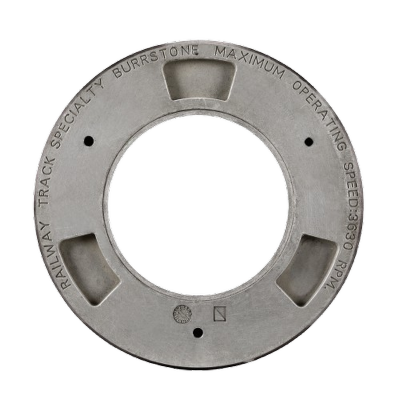
Molaton Railway Grinder Wheel: Engineered for Your Grinding Vehicle, Not Just Your Track
In rail grinding, the performance of a railway grinder wheel is not determined by the wheel alone — it is determined by how well the wheel matches the grinding vehicle, the operating conditions, and the rail itself. Molaton has built its entire product development process around this principle: a superior railway grinder wheel is one that is engineered for the specific machine it runs on.
Rail grinding is a precision operation. Every grinding vehicle — whether a Loram, Harsco, Speno, or a smaller Geismar or Robel unit — has its own mechanical profile. Motor power, spindle speed, grinding pressure, and feed rate all vary. A railway grinder wheel that works well on one machine may underperform, overheat, or cause rail surface damage on another.
The real problem is that many wheel manufacturers treat grinding wheels as commodity products. They produce standard formulations and expect them to perform across all vehicles and all track conditions. In reality, the interaction between the wheel and the machine is what defines the outcome. If the wheel density, abrasive grain size, and bond hardness are not matched to the vehicle's dynamics, the result is inconsistent grinding quality, premature wheel wear, and in the worst case, thermal damage to the rail surface.
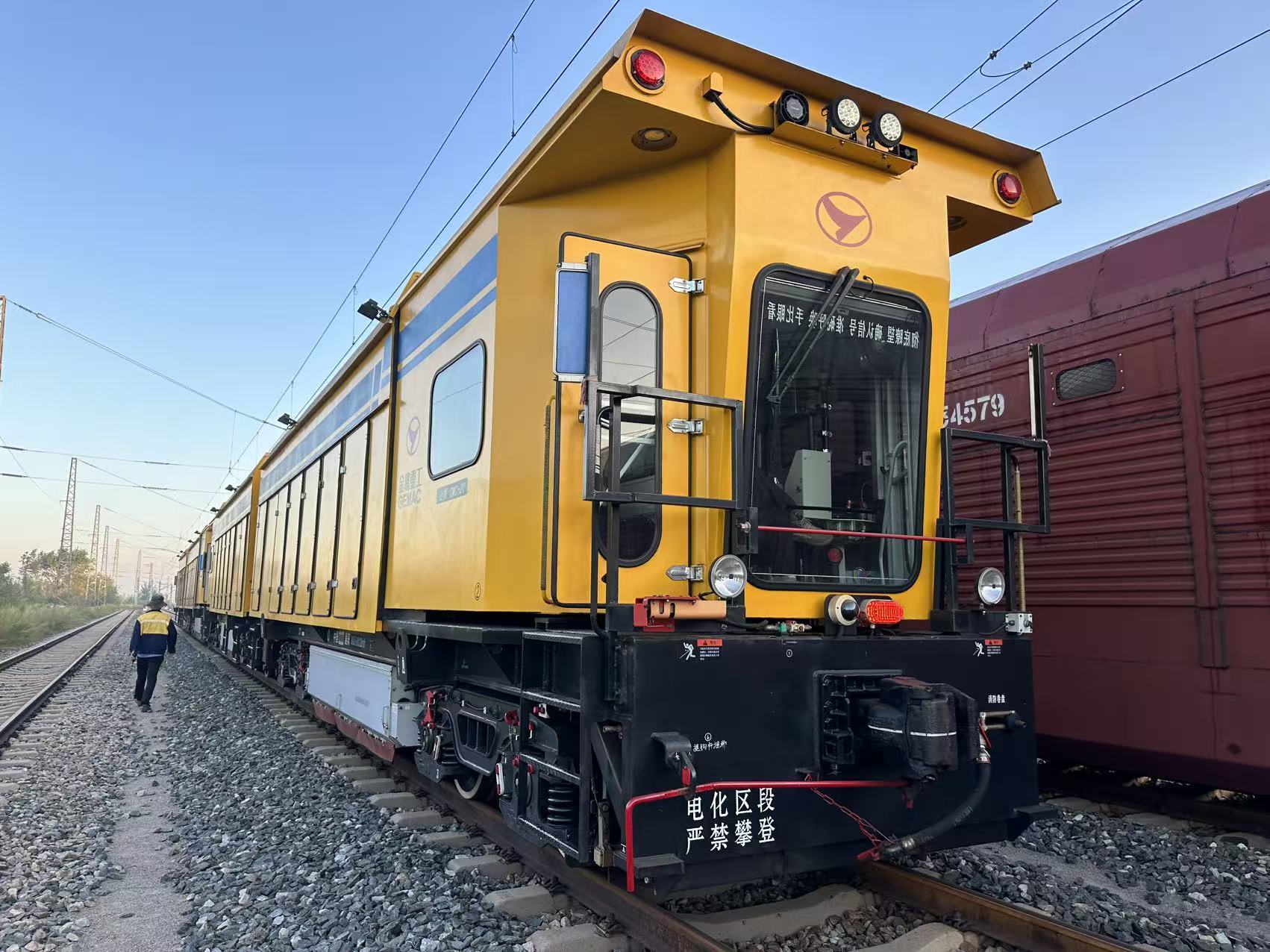
A rail grinding vehicle in operation — the compatibility between the machine and the railway grinder wheel is the critical factor for grinding success.
When a generic railway grinder wheel is installed on a grinding vehicle without proper vehicle-specific calibration, the consequences compound quickly:
For rail operators, these costs are real and measurable. The price of a cheap, off-the-shelf railway grinder wheel can be dwarfed by the operational penalties it creates. That is why Molaton takes a different approach.
Molaton's manufacturing philosophy is built on a single premise: the best railway grinder wheel is one that is designed around the vehicle it serves, the track it grinds, and the rail profile it must restore. This is where Molaton diverges from conventional suppliers like Norton.
While Norton produces excellent standard-grade wheels, Molaton goes further. We collect and analyze critical operational data from our customers and use that data to refine the wheel formulation. Four key parameters drive every Molaton railway grinder wheel design:
The grinding vehicle's travel speed directly affects the contact time between the wheel and the rail. A slower pass requires a different density and cutting rate than a high-speed pass. The spindle motor's applied pressure determines the force per unit area. Matching the wheel hardness to the motor's power curve prevents overload and optimizes material removal. Heavy-haul freight lines, high-speed passenger tracks, and switch/crossing zones each place different demands on the wheel. The scene dictates the optimal abrasive grain and bond system. 60 kg/m, 75 kg/m, and other rail profiles have different cross-sectional geometries and metallurgical compositions. The wheel must be calibrated to the specific rail grade and hardness.
By systematically collecting and responding to these four variables, Molaton produces a railway grinder wheel that is not just "good" — it is purpose-built for the exact machine and mission it will face.
Grinding vehicle speed is one of the most overlooked variables in wheel selection. When a vehicle moves slowly — as is often required in switch maintenance or defect removal — the wheel spends more time in contact with any given point on the rail. This extended contact time generates more heat and requires a wheel with controlled cutting aggressiveness to avoid overheating.
Conversely, when a vehicle operates at cruising speed on a long straight mainline, the wheel must cut efficiently within a much shorter contact window. A wheel that is too soft will glaze under the rapid load. A wheel that is too hard will not cut aggressively enough, leaving surface defects unaddressed.
Molaton addresses this by adjusting the wheel density and bond formulation based on the customer's typical operating speed range. For low-speed applications, we specify wheels with higher porosity and a more friable bond to enhance self-sharpening and heat dissipation. For high-speed applications, we increase the wheel density and use a tougher zirconia alumina grain structure to maintain cutting efficiency under rapid load cycling.
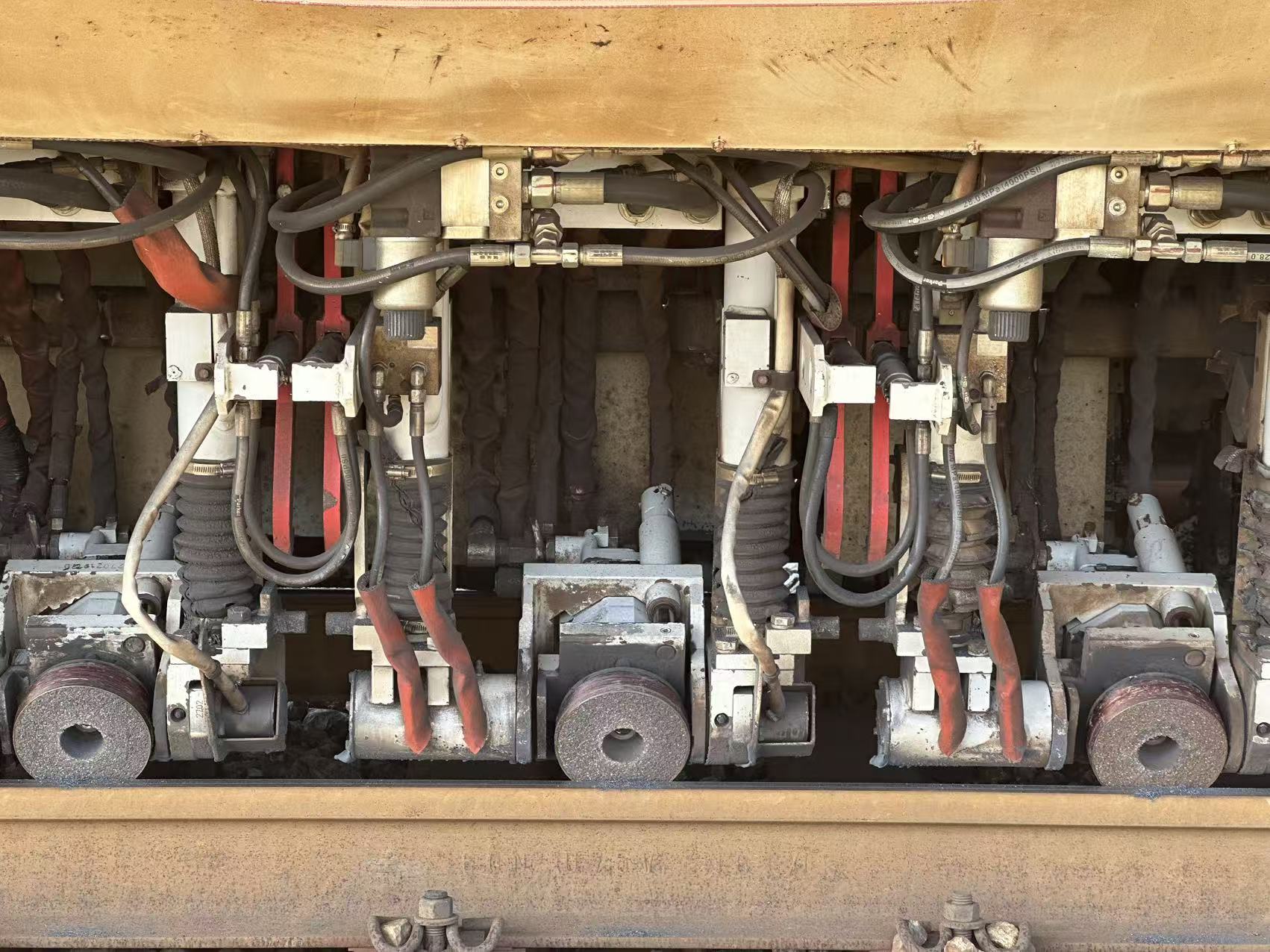
Multiple railway grinder wheels mounted on a grinding vehicle — each wheel must be matched to the vehicle's operating speed and pressure parameters.
Every grinding vehicle has a defined motor pressure curve. The Harsco 96, for example, delivers a specific spindle force per grinding head. If the wheel is too hard for this pressure level, the motor will struggle to maintain RPM, causing vibration, uneven wear patterns, and poor surface finish. If the wheel is too soft, the motor will overdrive the wheel, causing rapid wear and increased consumption.
Molaton's approach is to map the customer's motor specifications to the wheel's hardness grade. We use the hot-pressed manufacturing process to achieve precise density control — something that cold-pressed wheels cannot match with the same consistency. This allows us to produce a railway grinder wheel that sits exactly in the optimal load window for the vehicle's motor system.
The result is smoother operation, longer wheel life, and a more predictable cost per meter of rail ground. For fleet operators managing multiple vehicle types, this level of calibration is a significant operational advantage.
Not all track is the same, and not all grinding missions are the same. A railway grinder wheel that is ideal for a heavy-haul freight line may be entirely unsuitable for a high-speed passenger line or a switch grinding operation. Molaton recognizes three primary construction scenarios and calibrates wheel formulations accordingly.
Heavy-haul lines carry the highest axle loads, and the rail surface is subject to severe plastic deformation, rolling contact fatigue, and corrugation. The grinding wheel must be aggressive enough to remove significant material while maintaining a controlled surface finish. Molaton uses a high-density, zirconia-alumina-rich formulation for these applications, with a bond system designed to withstand the sustained high-pressure contact typical of heavy-haul grinding programs.
High-speed rails require extremely smooth surface finishes to minimize wheel-rail noise and vibration. The grinding wheel must be capable of producing a very fine surface roughness — typically below 10μm Ra — while removing minimal material. Molaton specifies finer abrasive grain sizes and a more resilient bond for these applications, ensuring the wheel polishes as much as it cuts.
Switches and crossings have complex rail geometries, varying hardness zones, and restricted access for large grinding vehicles. Small grinding machines like the Geismar and Robel are often used here. Molaton produces smaller-diameter wheels with specialized profiles and density grades optimized for these confined, high-variability zones.
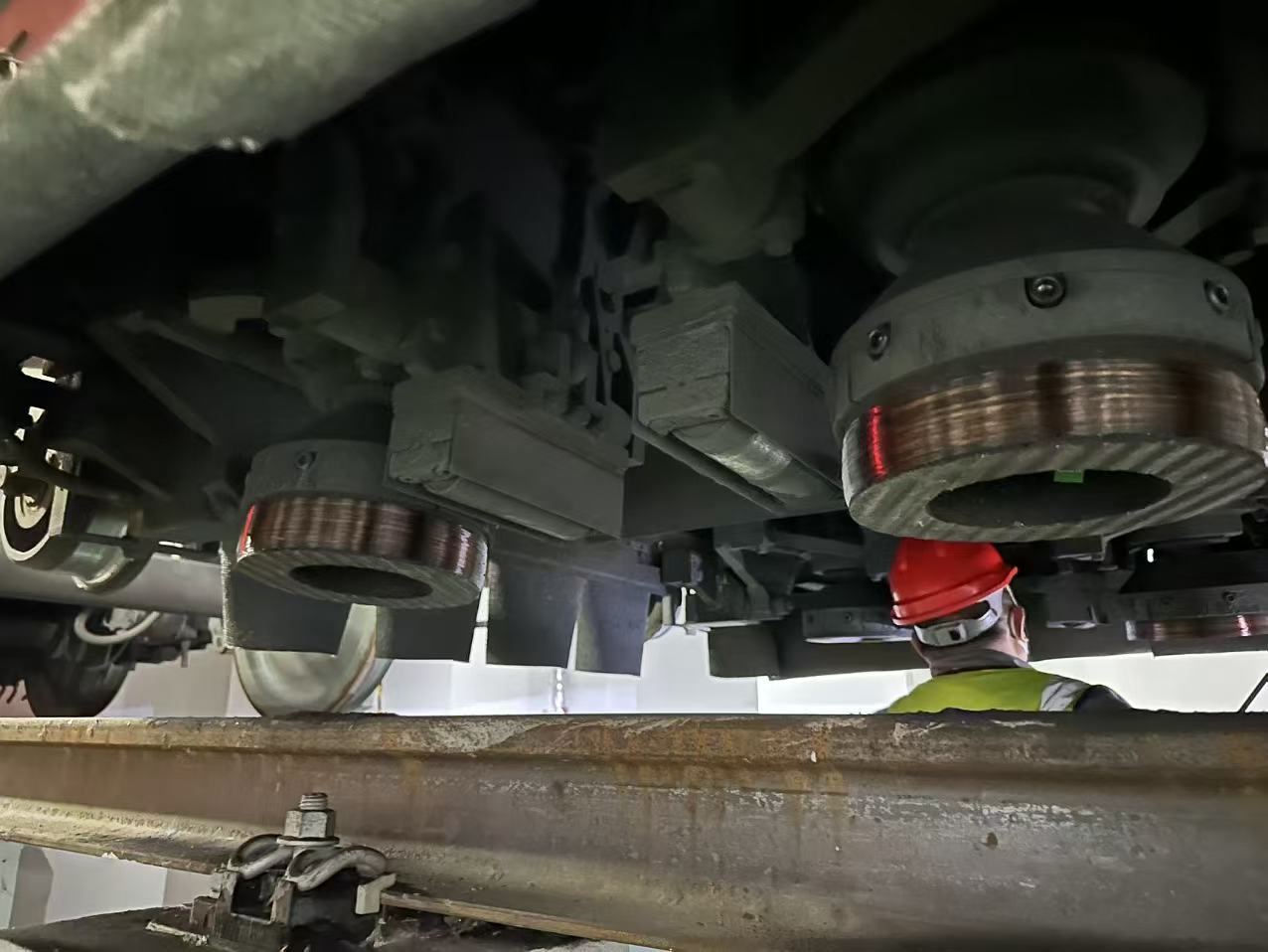
Close-up of railway grinder wheels mounted on a grinding vehicle — precision mounting ensures optimal alignment for consistent grinding results.
Rail profile and metallurgy are not afterthoughts — they are primary inputs to wheel design. The Chinese 60 kg/m rail, the 75 kg/m rail used on some heavy-haul lines, and the various European and American rail profiles each have different head geometries, carbon content, and hardness levels. A wheel that is calibrated for one rail type may underperform on another.
Molaton's technical team collects rail specification data from each customer and cross-references it with the wheel formulation. For harder rail grades (higher carbon content or head-hardened rails), we specify a more aggressive abrasive grain and a tougher bond to maintain cutting efficiency. For softer rail grades, we use a more friable grain to prevent excessive material removal and ensure the target profile is achieved without overgrinding.
This level of rail-specific calibration is rarely offered by standard manufacturers. It is a key differentiator that allows Molaton to deliver results that consistently exceed customer expectations.
The most compelling evidence of Molaton's approach is found in the field. In China, a major heavy-haul operator deployed Molaton railway grinder wheels on their Harsco 96 grinding vehicles for a scheduled maintenance program on a high-tonnage freight corridor.
The track conditions were challenging: high axle loads, significant rail surface fatigue, and a tight possession window. The operator needed a wheel that could restore the rail profile, remove surface defects, and deliver a finish that would meet the strictest acceptance criteria — all in a single pass.
Molaton's engineering team analyzed the Harsco 96's operating parameters: vehicle speed, motor pressure per head, rail grade (60 kg/m with head-hardened surface), and the target surface roughness. Based on this data, we adjusted the wheel density to a higher-than-standard grade, optimized the zirconia alumina grain distribution for the heavy-haul cutting rate, and fine-tuned the bond porosity to manage heat dissipation.
The results exceeded every specification:
This was not a lucky outcome. It was the result of a wheel that was specifically engineered for the Harsco 96, the heavy-haul track, and the 60 kg/m rail it was grinding. The same standard wheel, applied without this level of calibration, would not have produced the same result. This is the difference between a commodity wheel and a Molaton railway grinder wheel.
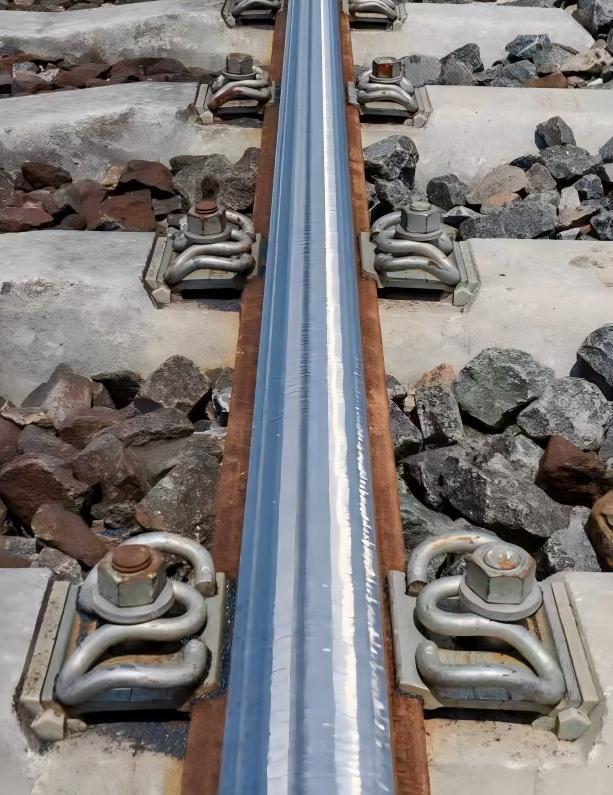
The finished rail surface after grinding with a Molaton railway grinder wheel — 6μm Ra roughness, zero burn, exceeding all acceptance standards.
Norton is a respected name in the abrasives industry, and their railway grinder wheels are technically sound. Molaton does not claim to surpass Norton on raw material quality — we use the same class of zirconia alumina abrasive, the same resin bond technology, and the same hot-pressing manufacturing process. In terms of base material performance, Molaton and Norton are on par.
The difference lies in adaptability. Norton's strength is standardization: producing a consistent, high-quality wheel that performs reliably across a broad range of conditions. Molaton's strength is customization: engineering the wheel formulation to match the specific vehicle, track, and rail parameters of each customer.
For operators who run a single vehicle type on a single track profile, a standard wheel may be sufficient. But for operators who manage diverse fleets, mixed rail grades, and varying maintenance programs, the ability to tailor the wheel to each scenario is a decisive advantage. Molaton offers that advantage at a more competitive price point.
A railway grinder wheel is not a standalone product. It is a system component, and its performance is defined by the system it operates within. Molaton understands this better than most. By collecting real vehicle data, analyzing operational parameters, and engineering the wheel formulation to match, we deliver grinding results that consistently exceed acceptance standards. The Harsco 96 case is proof: 6μm Ra, zero burn, and a surface finish that sets a new benchmark for the industry. For operators who demand more than "good enough," Molaton is the railway grinder wheel partner that delivers.
Ready to optimize your rail grinding program with a wheel engineered for your exact vehicle and track conditions? Reach out to our technical team. Visit www.railwaycare.com for full product specifications and case studies.Why the Right Railway Grinder Wheel Vehicle Match Determines Grinding Quality
The Cost of Using Generic Railway Grinder Wheels That Ignore Real Vehicle Parameters
Molaton Railway Grinder Wheel: Formula-Tailored for Every Grinding Vehicle
Vehicle Speed
Motor Pressure
Construction Scene
Rail Model
Railway Grinder Wheel Speed Matching: From Crawl to Cruise Without Compromise
Railway Grinder Wheel Motor Pressure Optimization: The Hidden Power Variable
Railway Grinder Wheel Scene Calibration: Heavy-Haul, High-Speed, and Switch Grinding
Heavy-Haul Freight Lines
High-Speed Passenger Lines
Switch and Crossing Zones
Railway Grinder Wheel Rail Model Compatibility: From 60kg/m to 75kg/m and Beyond
Railway Grinder Wheel in Action: Harsco 96 on Heavy-Haul Track, 6μm Ra, Zero Burn
Molaton vs Norton Railway Grinder Wheel: Two Paths to Quality, One Clear Difference in Adaptability
Capability
Norton
Molaton
Base material quality
Excellent
Excellent
Standard wheel range
Extensive
Comprehensive
Vehicle-specific formulation
Limited
Full customization
Speed/pressure calibration
Standard
Data-driven
Rail model matching
Generic
Grade-specific
Heavy-haul performance
Good
Proven (6μm Ra)
Price competitiveness
Premium
Competitive
Contact Molaton — Your Railway Grinder Wheel Partner
Product Solutions
Engineering Support