Rail Grinding Machine Manufacturers: Global Directory
A rail grinding train costs millions and stays on your network for decades - but the machine is only half the system. The other half is the grinding wheel bolted to each of its 12, 48 or 96 grinding heads, and every machine manufacturer has strong opinions about which wheels are allowed on it. For maintenance managers and procurement teams, understanding the landscape of rail grinding machine manufacturers is the first step to a grinding programme that is reliable, measurable and affordable. This directory maps the major manufacturers worldwide - grinding train builders, hand-machine makers and specialty machine suppliers - and explains how to match each machine family with the right grinding wheels.
Why the Manufacturer Landscape Matters
Rail grinding is no longer a niche operation. Industry market research estimates the global rail grinding machine market at roughly USD 482 million in 2024, growing at around 3.3% a year to about USD 628 million by 2031. China is the largest consumer by volume (about 39% of units sold in 2024), followed by Europe (24%) and North America (15%), with Europe and China the two main production bases. Underlying those numbers is a simple fact: as networks age and axle loads rise, grinding machines - and the consumables that feed them - become recurring, budgeted purchases.
The manufacturer you choose matters at three levels:
- Machine level. Active grinding trains, high-speed passive systems and hand machines remove metal in completely different ways; one manufacturer rarely covers all of them well.
- Consumable level. Each machine family uses specific wheel dimensions, speeds and bond types. A wheel that fits one Harsco-class machine will not fit a Speno-class or Loram-class machine.
- Service level. Machines are bought once; wheels, service and technical support are bought for the machine's whole life - which is why this guide spends as much time on wheels as on machines.
The Major Grinding Train Manufacturers
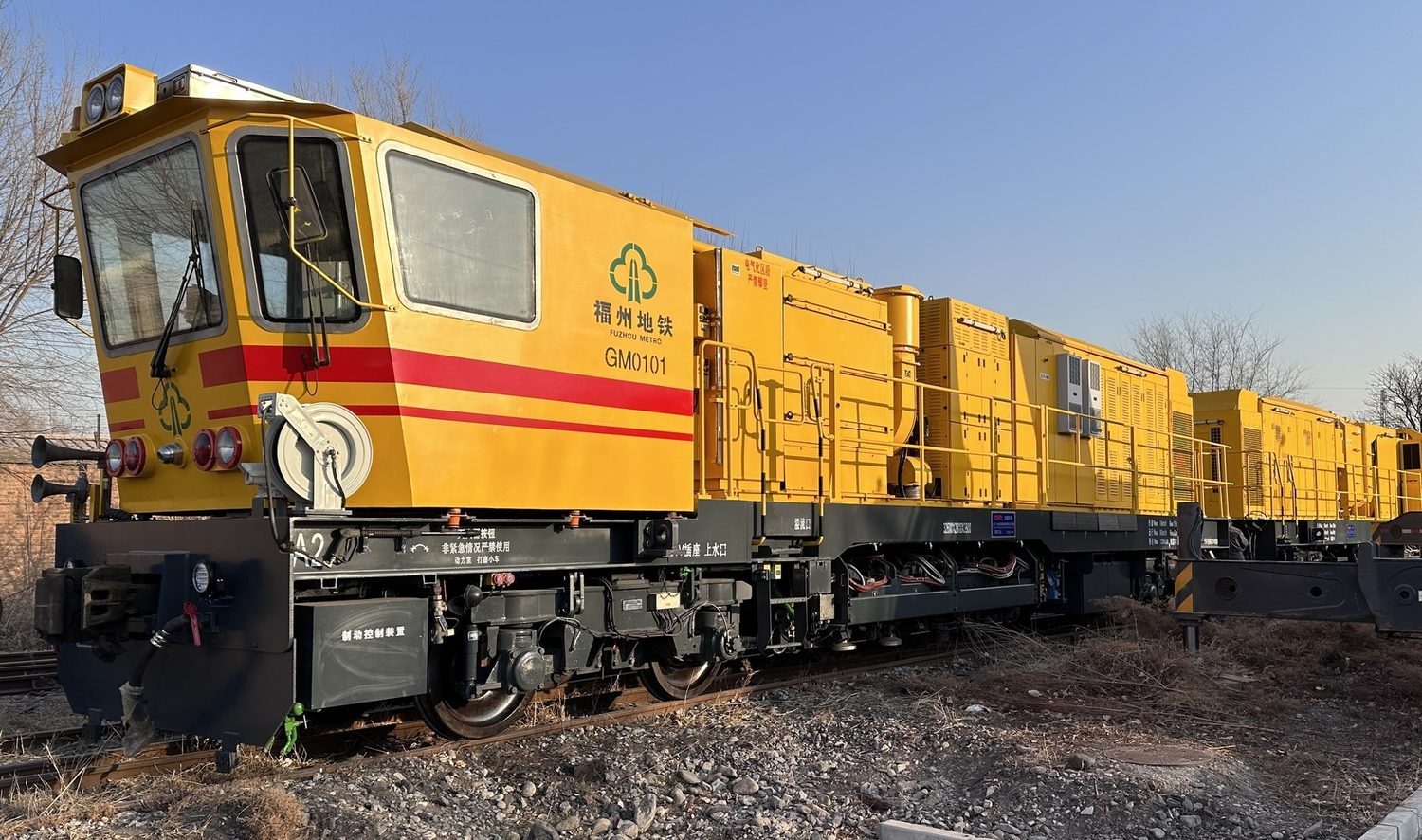
The world's grinding-train business is concentrated in a small number of specialists. The table below reflects publicly available market information and typical machine families - use it as a starting point, not as an endorsement of any single supplier.
| Manufacturer | Country | Typical machine families | Main applications |
|---|---|---|---|
| Loram | USA | RG-class grinding trains (RG300/RG400 family) | Heavy-haul, freight and mainline |
| Harsco Rail | USA | RGH-class (RGH10C/RGH20C), PGM-48/PGM-96C lineage | Heavy freight, transit, mainline |
| Speno International | Switzerland | RR-class grinding trains (RR16/RR24 family) | Mainline, high-speed, metro |
| Vossloh High Speed Grinding | Germany | HSG-city / HSG-2 high-speed passive systems | High-speed line preventive grinding |
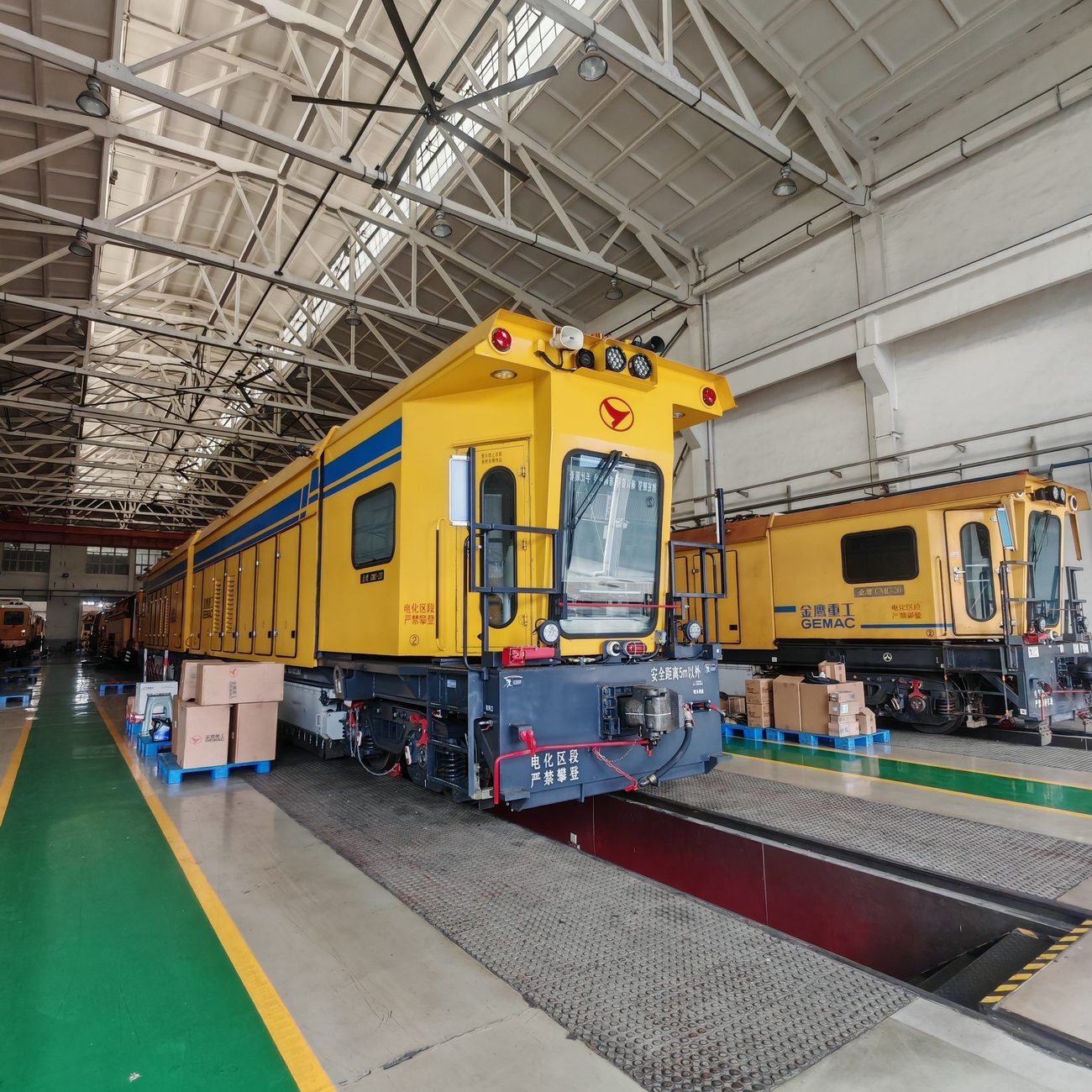
| CRRC group (China) | China | GMC-series trains (e.g. the 96-head GMC96, developed with SPENO technical cooperation) | High-speed, heavy-haul, metro |
| CRCC High-Tech Equipment (China) | China | GMC-class grinding trains | Metro, mainline, turnouts |
| Autech AG | Switzerland | VM-series rail weld grinding machines | Turnouts, weld finishing |
Other names active in the market include Germany's Windhoff, Schweerbau and Goldschmidt; Italy's Mecno Service; and Austria's Plasser & Theurer and Linsinger (rail milling rather than grinding). On high-speed networks, the practical rule is simple: active grinding trains (Harsco-class and GMC-class machines, which press driven wheels into the rail) dominate preventive and corrective work, while high-speed passive systems such as the HSG grind at line speed with free-rolling stones - a different physics, covered in our article on high-speed passive rail grinding.
Hand-Held and Specialty Machines: The Other Half of the Market
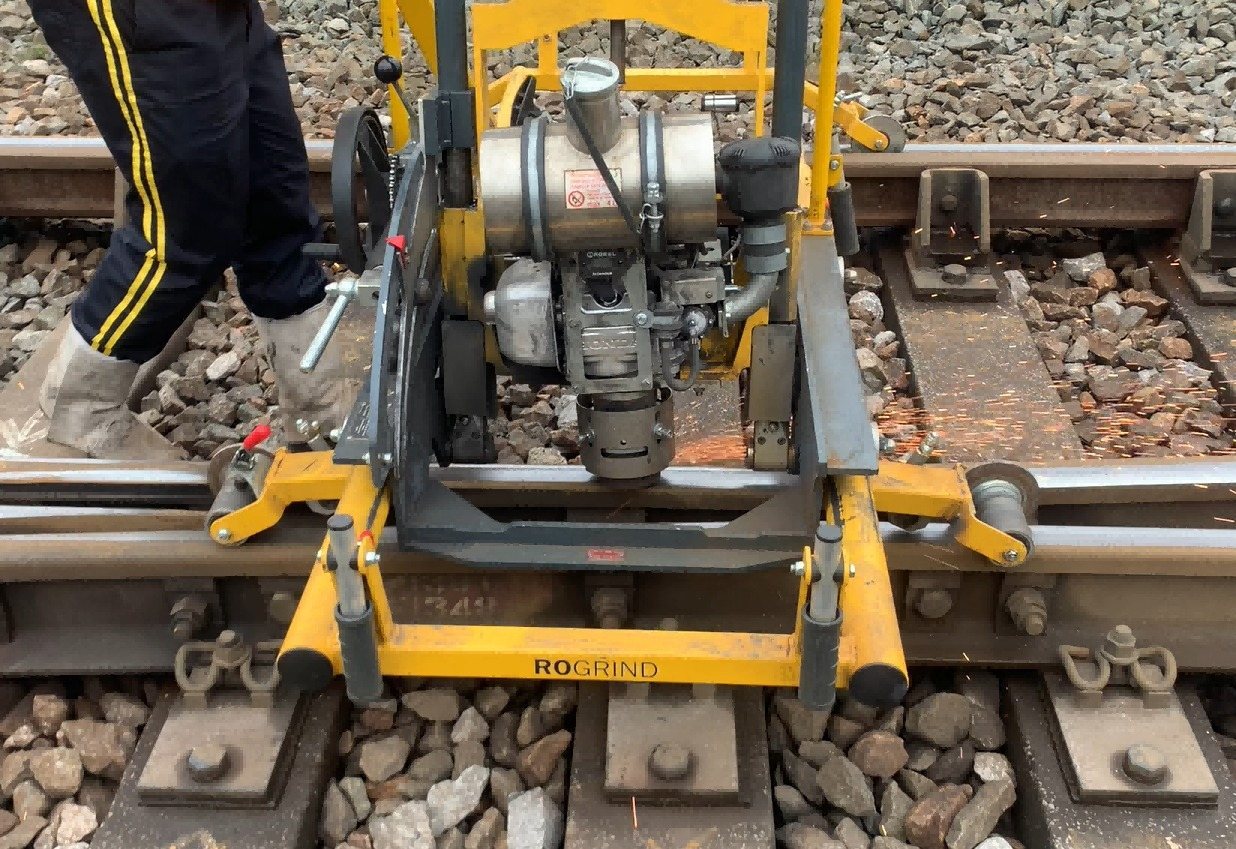
Grinding trains solve corridor problems. The other half of rail grinding - weld finishing, turnouts, small defects and isolated corrections - is done with machines small enough to fit in a work site:
- Hand-held rail grinders from Geismar (France) and Robel (Germany) are the universal tools for weld and turnout finishing. They take compact wheels - typically 125 mm or 150 mm diameter with M20 or M8 mounts - running at 6,000-7,500 rpm.
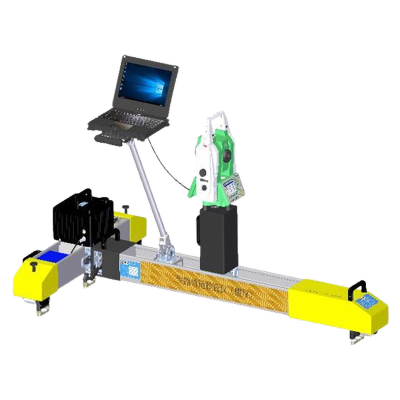
- Specialty weld grinding machines take over where hand work is too slow. A good example is Autech's VM8000 12E: 12 spindles at 12 kW each, 4,000-6,500 rpm, angle coverage from -72° to +20°, around 300 m/h working efficiency, 0.2-0.3 mm metal removal per pass, 5,000 m³/h dust extraction, and roughly 1,000 m of weld finishing per set of 12 wheels.
- Turnout (switch) grinding vehicles such as the RGH20C class handle the tight geometry of switches and crossings with dedicated, thinner wheels.
The Wheel Is the Consumable That Defines the Result
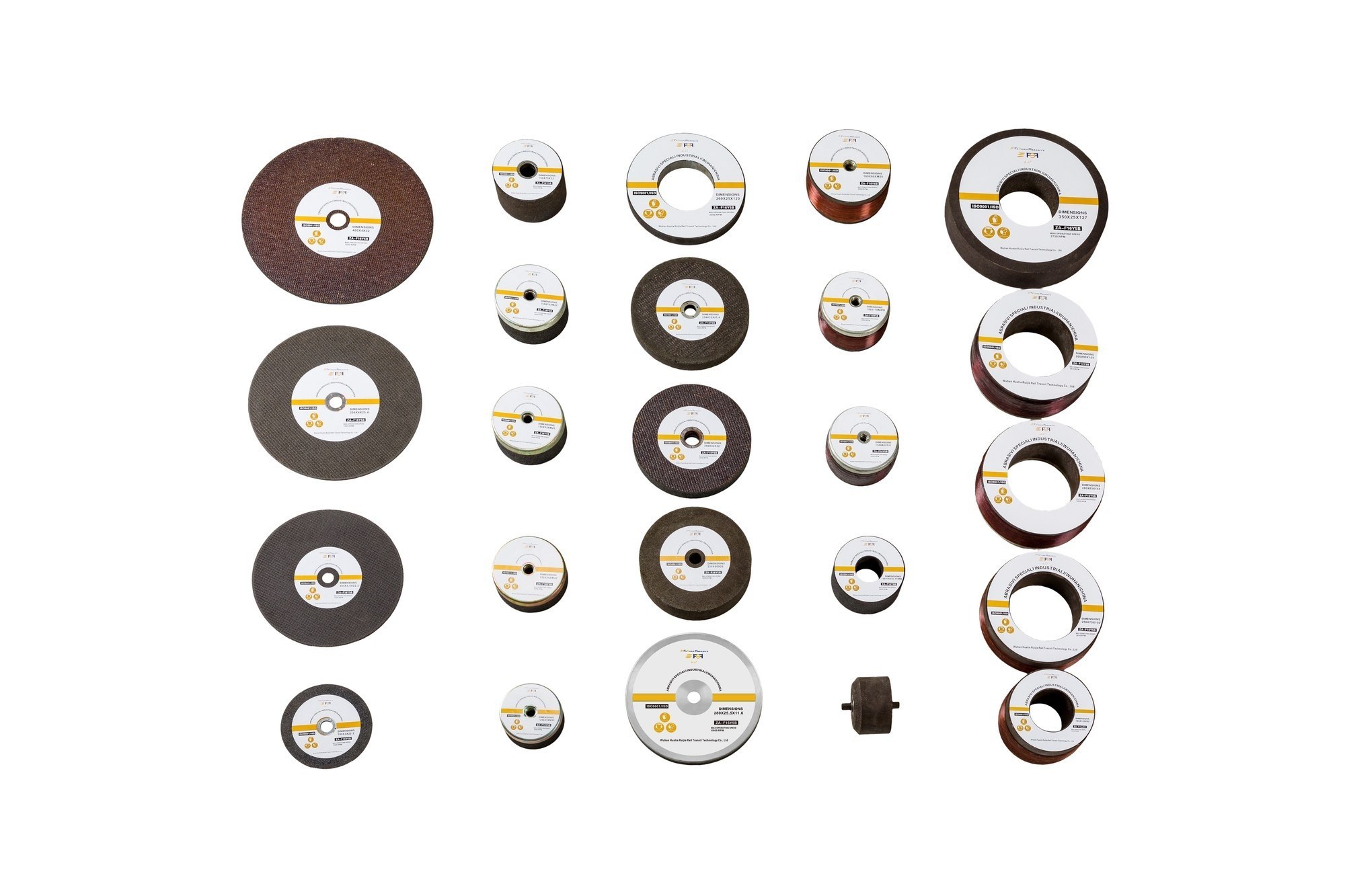
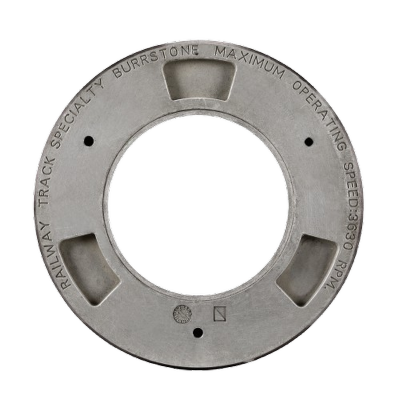
Whatever machine you choose, the wheel determines whether the pass is cool, clean and on-profile. Machine builders specify wheels by dimension, speed rating and abrasive; the numbers below are the standard grinding-train wheel formats RailwayCare supplies against real fleets:
| Machine family | Typical wheel format (mm) |
|---|---|
| Harsco PGM-48 / PGM-96C (GMC-96X class) | 260×90×154, 50 m/s |
| GMC-96B class | 250×75×150 |
| RGH20C turnout grinder | 280×25.5×116; 150×80/150×77 (M20) |
| Speno GMC16A class | 180×105×90 |
| Loram | 260×83×152 |
| Mecno machines | 350 mm series (350×60/50/35/25×127) |
| HSG high-speed systems | Ø119-122.5×71.5-74.5 |
| Hand machines (Geismar/Robel compatible) | 150×70×M20, 150×65×M20, 125 mm series |
Fit the wrong format and the machine cannot work; fit the wrong abrasive and it works badly. Grinding research on a heavy-haul project measured the difference abrasive quality makes: zirconia alumina achieved a grinding ratio of 41.0 against 22.4 for calcined brown fused alumina and 11.9 for white fused alumina, and compressive strength of 308 MPa versus 103-124 MPa for the fused aluminas. The same machine, the same profile target - and three times the metal removed per millimetre of wheel wear.
Active vs Passive Grinding: Architecture Determines Everything
Choosing a "rail grinding machine manufacturer" without first choosing a grinding philosophy is backwards. The two dominant architectures:
- Active (motor-driven) grinding. Wheels are driven by motors and pressed hydraulically into the rail; metal removal is high and controllable, power per head is significant (in RailwayCare's GMC-96X trials, grinding power ran around 20 kW at 68% of maximum, with motors at 3,600 rpm and train speeds of 12-16 km/h). This is the standard for preventive and corrective profile work on mainline and heavy-haul track.
- High-speed passive grinding. Free-rolling stones grind at traffic speed with low removal per pass - effective for stopping corrugation from growing on long high-speed corridors. Machine and wheel operate at different speeds and pressures, and the stones are a different product family entirely (zirconia alumina, Ø119-122.5 mm, up to 40 m/s).
Each philosophy brings its own machine manufacturers, its own wheel formats and its own acceptance criteria. Buying decisions should start with the architecture, not the brand.
What to Ask Any Rail Grinding Machine Manufacturer
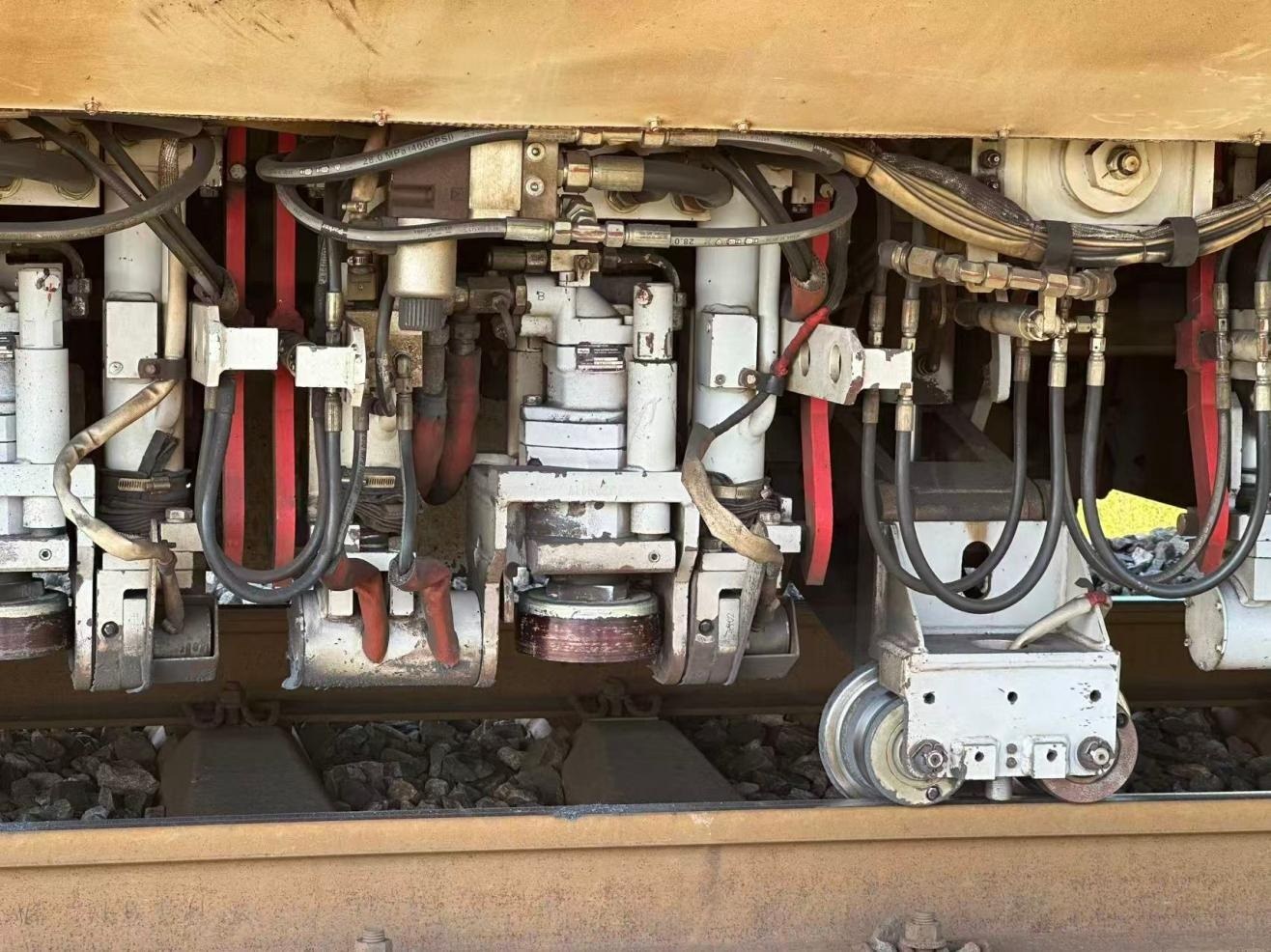
Before signing for a machine - or choosing between a machine purchase and a grinding service - put the manufacturer through this checklist:
- Does the machine match your dominant defects? Corrugation, head checks, side wear and turnout damage each respond to different grinding architectures and patterns.
- What is the real output in a possession window? Ask for pass-km per night, passes to clear a defined defect, and power available per head.
- What wheel formats and speeds does it accept, and who supplies them? Lock this down before purchase: proprietary wheel supply can become a long-term cost trap.
- How is quality measured and recorded? Profile scanning before and after, roughness measurement, and data export for acceptance records.
- What is the local service and training footprint? Machines are only as good as the crews and support around them.
- Dust and fire management. Grinding produces sparks and particulate; check the extraction and fire-protection specification against your operating rules.
The Consumables Question: Who Makes Your Wheels?
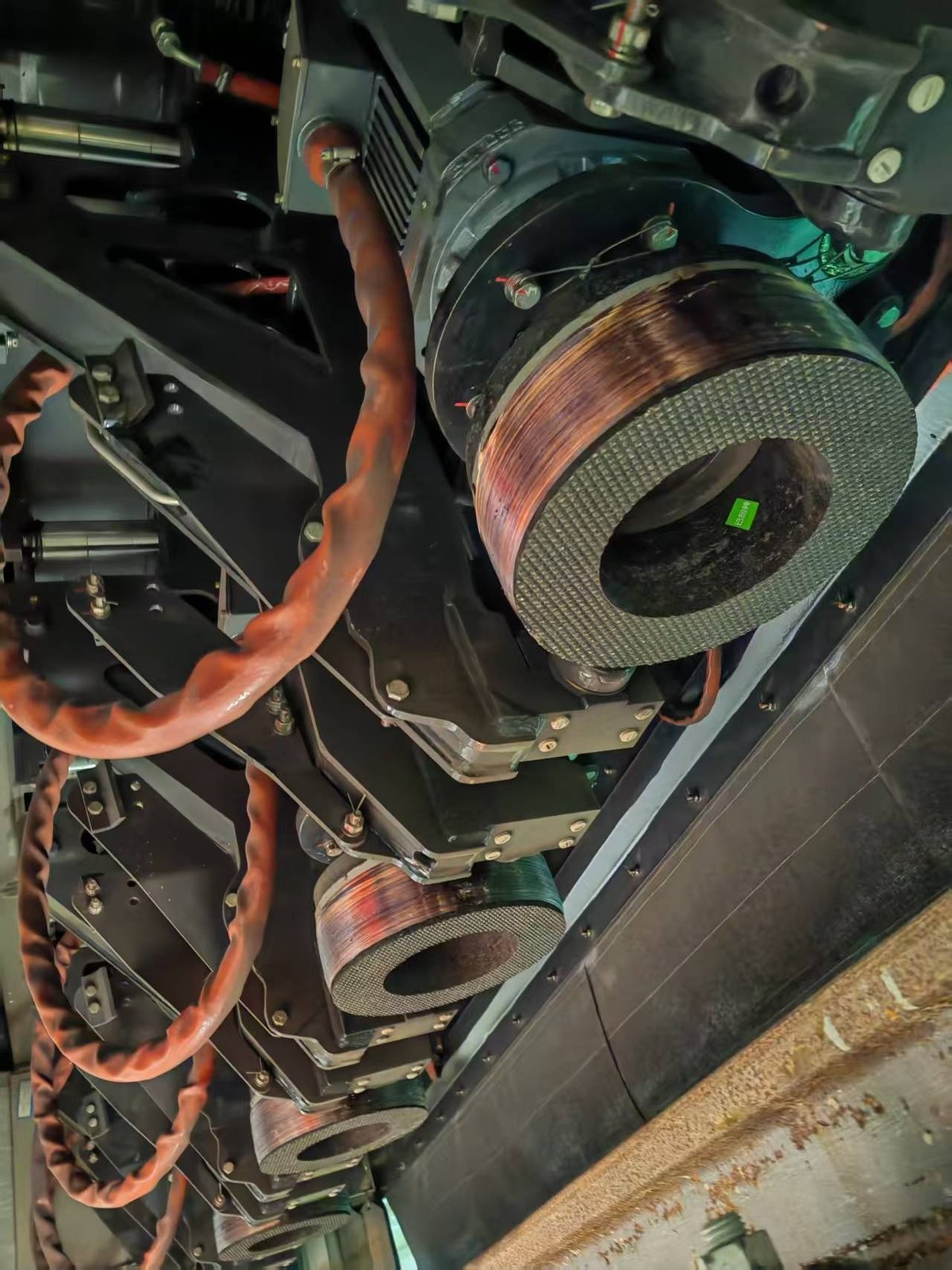
Most grinding machine manufacturers do not make the grinding wheels themselves - they buy them from abrasive specialists. The global names in rail grinding wheels include Norton (Saint-Gobain), Weiler, and Noritake, and in many markets operators historically imported wheels for their machines. That dependence is changing, which matters for two reasons:
- Cost. Imported wheels carry long lead times, freight and certification overhead; local manufacturing shortens both.
- Compatibility and certification. Wheels for export markets need documented conformity - in the Eurasian market, for example, EAC certification under GOST 33174-2014 is a real requirement, which we have covered separately.
When a machine supplier insists on a single wheel brand, ask whether that restriction is technical or commercial. Grinding wheels are engineered to machine specifications, not to brand loyalty - and a wheel maker that publishes its formats, speeds and test data against your machine make and model is easier to audit than one that does not.
Molaton: One Wheel Supplier Across Every Major Machine
RailwayCare (Wuhan Feelow Friction Material / Wuhan Huatie Ruijie Rail Transit Technology) has manufactured rail grinding wheels since 2004, when it became China's first company dedicated to grinding machine wheels. The company co-drafted the Chinese industry standard JB/T 11431 (current edition 2020), holds CRCC certification, operates under ISO 9001 and ISO 45001, and passed the China Academy of Railway Sciences technical review for grinding machine accessories. Its Molaton wheels cover every format in the table above - from hand-machine wheels for Geismar and Robel machines to grinding-train wheels for Harsco, GMC, Speno, Loram and Mecno fleets - at a production scale of 500,000 wheels per year.
Molaton wheels are engineered to the machine, not just to the rail. Vehicle speed, motor pressure, work site and rail grade all go into the wheel formulation - the approach behind our vehicle-matched wheel guide. The results are documented in field trials quoted across this website: double the durability of imported comparison wheels in a GMC-96X half-car test, 4.28 pass-km per mm of wheel wear on a high-speed line, and 6 µm Ra surface finish with zero rail burn in a Harsco 96 application. For a directory of machines, the practical takeaway is this: whatever machine family your network runs, the consumables side of the market is global, competitive and auditable - and it is worth a second quote.
FAQ
Who are the main rail grinding machine manufacturers?
The grinding-train market is led by Loram and Harsco Rail (USA), Speno International (Switzerland) and Vossloh (Germany), with Chinese groups (CRRC and CRCC High-Tech Equipment) increasingly active; hand and specialty machines come from Geismar, Robel and Autech, among others.
Do different manufacturers use the same grinding wheels?
No. Each machine family specifies its own wheel dimensions, speeds and mounts - for example 260×90×154 mm on PGM/GMC-96X-class trains, 180×105×90 mm on Speno GMC16A-class machines, 250×75×150 mm on GMC-96B-class trains, 350 mm series on Mecno machines, and 260×83×152 mm on Loram machines. Always fit the format the machine builder specifies.
Should we buy a grinding machine or hire a grinding service?
It depends on utilisation and line length. Networks with large grinding volumes and regular preventive programmes typically justify their own machines; smaller operators often hire specialist services. The wheel data in this guide applies either way - services buy wheels too.
Can we source wheels locally instead of from the machine manufacturer?
Usually yes, provided the wheel maker can document formats, speed ratings, testing and any certification (such as EAC/GOST for Eurasian markets) against your machine model. A technical spec sheet is worth more than a brand name.
How do I know a wheel is right for my machine?
Check the three numbers: dimension (diameter × thickness × bore), maximum operating speed, and the abrasive/bond type recommended by the machine builder - then verify with a documented field trial before committing large orders.
Get Grinding Wheels for Your Machine Make and Model
- WhatsApp: +86 15072332788
- Email: simon.wang@railwaycare.com
RailwayCare (Wuhan Huatie Ruijie Rail Transit Technology Co., Ltd.) – your professional partner in rail grinding, with Molaton grinding wheels field-proven on high-speed, heavy-haul and metro lines since 2004.