When should you grind a rail instead of replacing it?
When should you grind a rail instead of replacing it?
Grind when two things are both still true: the deepest defect lies inside the layer grinding can physically remove, and the head still has enough section left to keep carrying traffic inside its profile envelope. Replace — or program a replacement — as soon as either one fails. Grinding restores geometry and takes away surface damage; it never puts steel back. A rail whose section is gone, or whose damage starts below the depth the machine can reach, will not be rescued by another pass, and every extra pass spends service life you cannot recover.
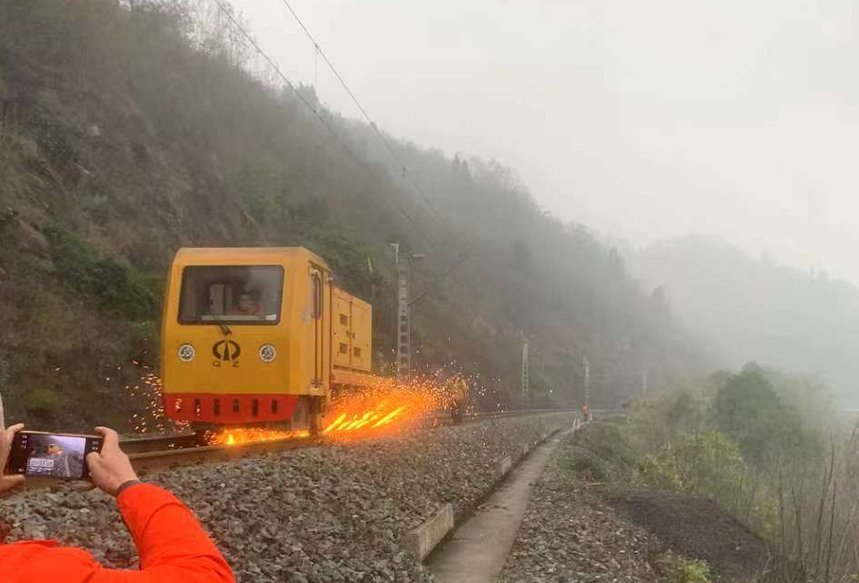
Two questions, asked in this order
| Dimension | The question to answer | If it passes | If it fails |
|---|---|---|---|
| Remaining section | Is there still enough head section above the wear limit this line is managed to, on this rail section and this curve class? | Grinding is worth doing today — and the section record becomes the baseline for the next decision | No amount of grinding adds metal. The rail is a renewal candidate whatever its surface looks like |
| Defect depth | Is the deepest defect still inside the layer one grinding cycle can remove, judged against what the last job actually reached rather than what was ordered? | Grinding removes the source of the damage, not just the symptom | Grinding leaves the crack root or the deformation zone in place; the defect returns sooner than the interval and the next job costs more |
| Defect location | Is the damage on the running surface, or inside the head? | Surface damage is a grinding question | An internal flaw is not reachable by a grinding wheel at any depth — it belongs to inspection and renewal |
In practice the second question is the one that gets skipped, because a profile measurement shows how far the head has moved from target but says nothing about how deep the damage goes. Corrugation depth, lipping width and crack depth have to be recorded separately for the decision to hold up.
Three cases that still grind, three that do not
| Grinding still wins when… | Programme a replacement when… |
|---|---|
| 1. The damage is a surface layer. Corrugation, a shallow fatigue layer, lipping or a decarburised skin left by rolling — all of it sits within the depth a grinding cycle removes | 1. Section is the problem. The head has worn down to the limit the line is managed to, so the geometry can be improved but the rail can no longer carry the load it was bought for |
| 2. The profile has drifted but the head is still full. A curve has flattened its high rail or pushed the contact band towards the field side, and the target template is still reachable inside the envelope | 2. Damage is deeper than the wheel can reach. Deep spalling, a squat with a crack network below the removable layer, or a transverse defect — a pass will clean the surface and hide the damage |
| 3. It is cheaper to hold the shape than to renew. A short interval keeps the rail inside envelope and takes off less metal per visit than a long one takes off per recovery job | 3. The rail is already at the end of its planned life. When the renewal date is close, grinding buys weeks of smooth running while spending a life that is about to be replaced anyway |
Case 3 on the left is the economic heart of the matter and it is measurable: reported defect probabilities on rail surfaces are around 15% with no grinding, 8% with corrective grinding and 4% with preventive grinding, and preventive work removes a thinner layer each time. Fewer, thinner passes over a life beat fewer, deeper recovery jobs — the strategy comparison is set out in preventive versus corrective grinding.
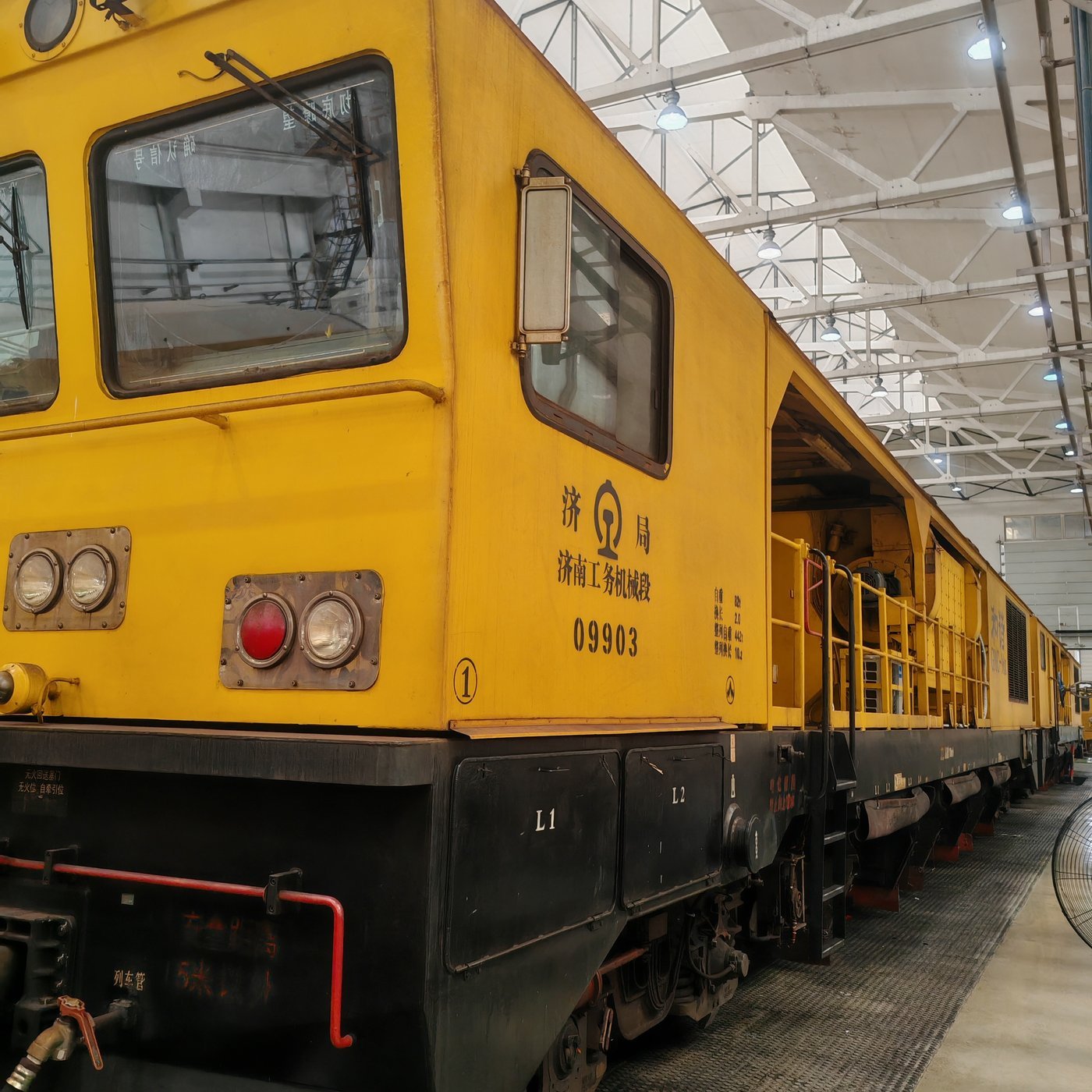
What grinding gives back, and what it never does
| Grinding can | Grinding cannot |
|---|---|
| Remove a decarburised skin of about 0.2 mm on new rail before the line opens, or before 10 Mt of traffic on a line already in service | Replace metal already lost to wear — the head only gets smaller |
| Clear rolling contact fatigue while the crack is still under about 0.2 mm, which is the window where one cycle removes it completely | Reach a crack that has already propagated below that layer, however many passes are added |
| Restore the target profile so the wheel runs where it was designed to run, and hold the contact band at the width the line calls for | Correct a rail whose section is below the limit, or restore stiffness, support or fastening condition |
| Delay the onset of corrugation, squatting and spalling by keeping contact stress down | Undo the amount of head it has removed over the years — every pass is a withdrawal, not a deposit |
This is why the wear figures in the rulebook are always stated per section rather than as one number: even a clause about mounting equipment on existing rail spells out allowed head wear of not more than 9 mm vertical and 15 mm side on 43 kg/m rail, and 10 mm and 17 mm on 50 kg/m rail. Every other limit is written the same way — by section, by line class, set by the infrastructure manager. There is no universal “worn out” millimetre to compare against, which is also why the decision needs the section record and not only a profile trace.
Where the two dimensions collide most often is on curves, where side wear eats section far faster than the running surface wears down. Grinding can move contact back towards the head of the rail but it cannot put the worn flank back; the boundary between managing and renewing a curve is covered in managing side wear on curved track.
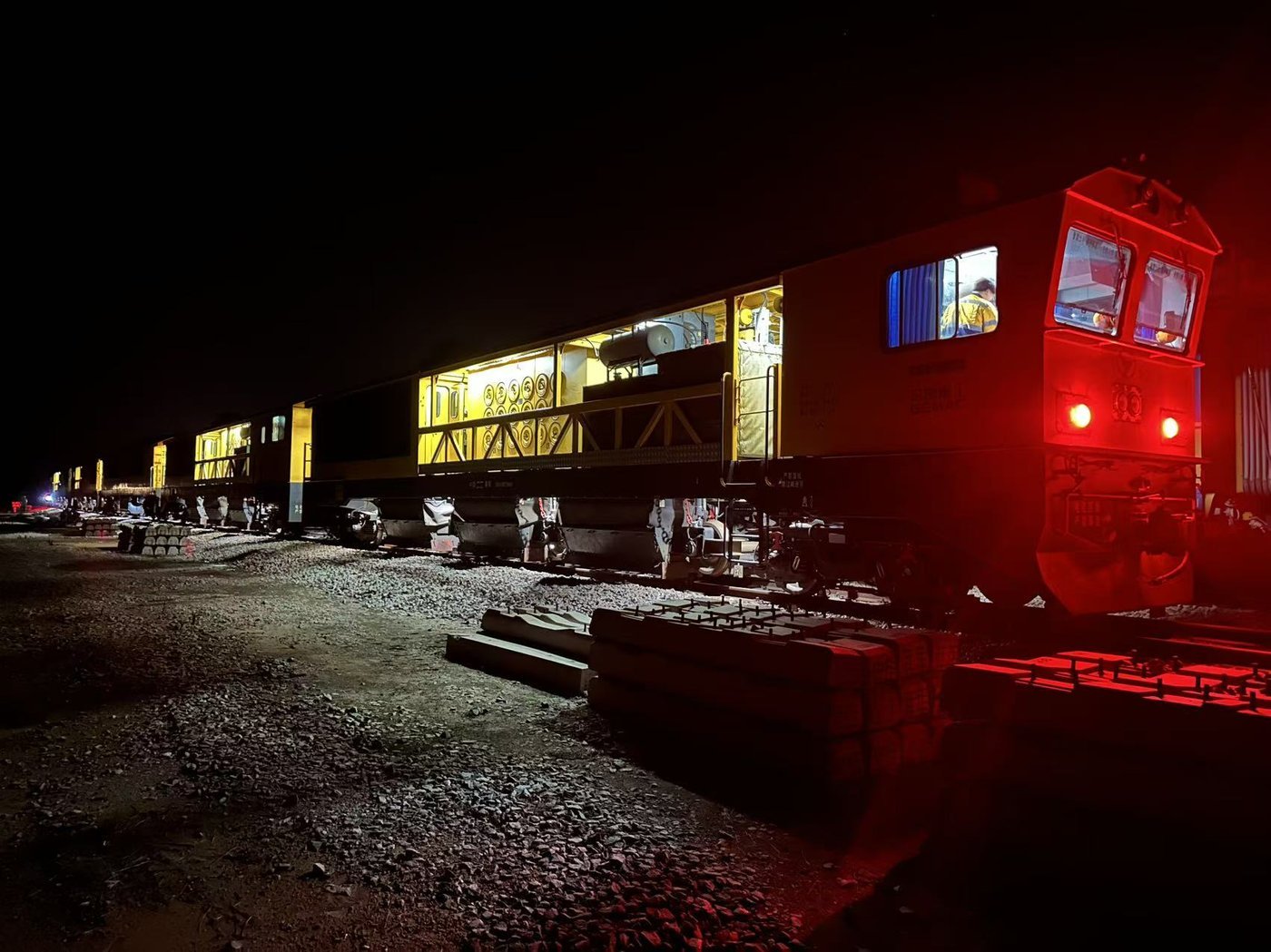
How to run the decision on a real network
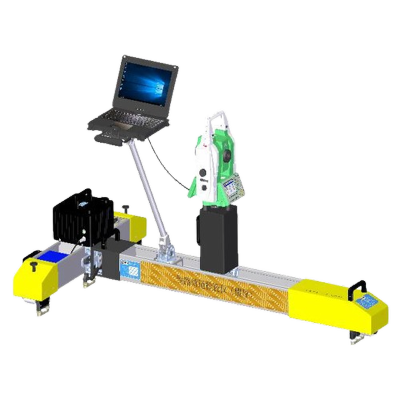
- Record section, not just profile. Head loss and side loss at fixed cross-sections, against the limit for that rail section and curve class. Measurement method is covered in how to measure rail wear.
- Record defect depth separately. A rail can be at 0.3 mm of corrugation and still be structurally healthy; it can also look smooth and have a crack network underneath.
- Rank by consequence, not by appearance. Small-radius curves and turnout areas usually reach the decision first, because three wear mechanisms act on them at once. The same logic drives strategy on heavy-haul and mining lines.
- Write the trigger into the plan. Conventional lines in China organise corrective grinding once corrugation depth or lipping width passes 0.3 mm; high-speed lines use a different set — train shaking, lateral acceleration alarms, a poor contact band, turnout fish-scale depth at 0.5 mm, or defects reaching the remediation limit. Those are triggers for acting, and each one has a matching “stop grinding, review renewal” condition that belongs in the same document.
- Keep a rolling verdict per section. Grind, grind with a shortened interval, or renew. Reviewed every cycle, it prevents the most expensive outcome: repeated recovery grinding on rail that should have been scheduled for replacement.
Whether the pass itself is delivered by your own machine or a contractor changes the cost line but not the decision. Molaton covers the consumable side of that work, on a plant that has been making rail grinding wheels since 2004; the wider programme view is in the complete guide for track operators and the service scope in rail grinding solutions.
Related questions you may also ask
What does rail grinding actually remove from the rail head? Preventive vs corrective rail grinding: what is the difference? How does rail grinding prevent rolling contact fatigue? Rail wear measurement and when to grind or replace More answers on rail grinding strategy and equipmentGrind, shorten the interval, or renew?
Send the section and defect records for the sections you are unsure about. We will tell you which of the three verdicts the data supports, and whether a Molaton grinding plan can hold that rail inside envelope for another cycle.
Ask About a Grind-or-Replace Decision
Are you looking for a reliable manufacturer of railway grinding and track maintenance equipment?
We can quickly provide customers with market analysis, technical support and customized services.
Safe Tracks Proven by China
- Name
- Phone
- *Title
- *Content