Mining Rail Grinding: Track Care for Heavy Haul and Mining Railways
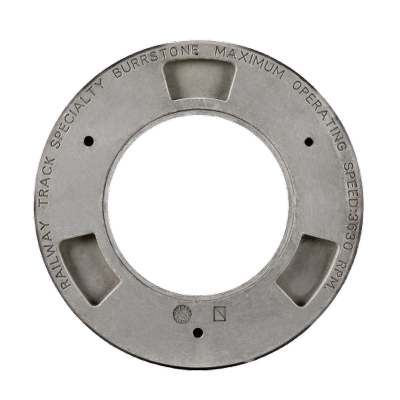
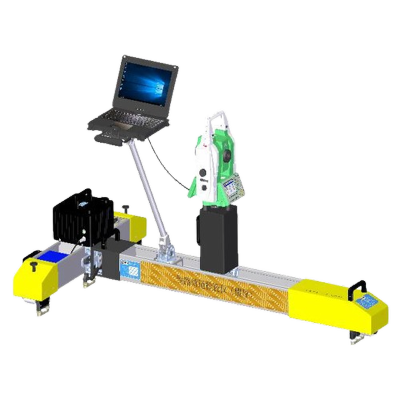
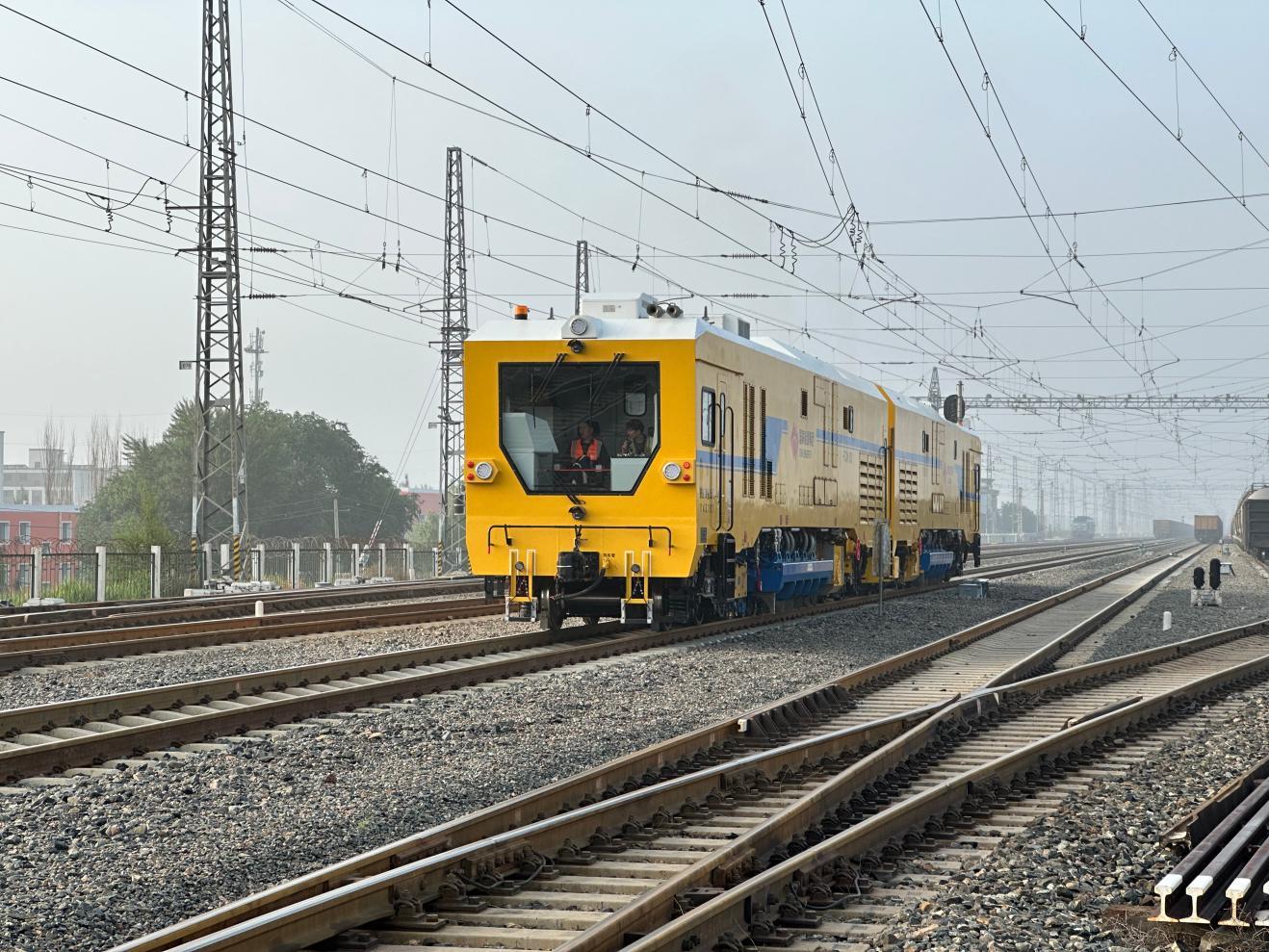
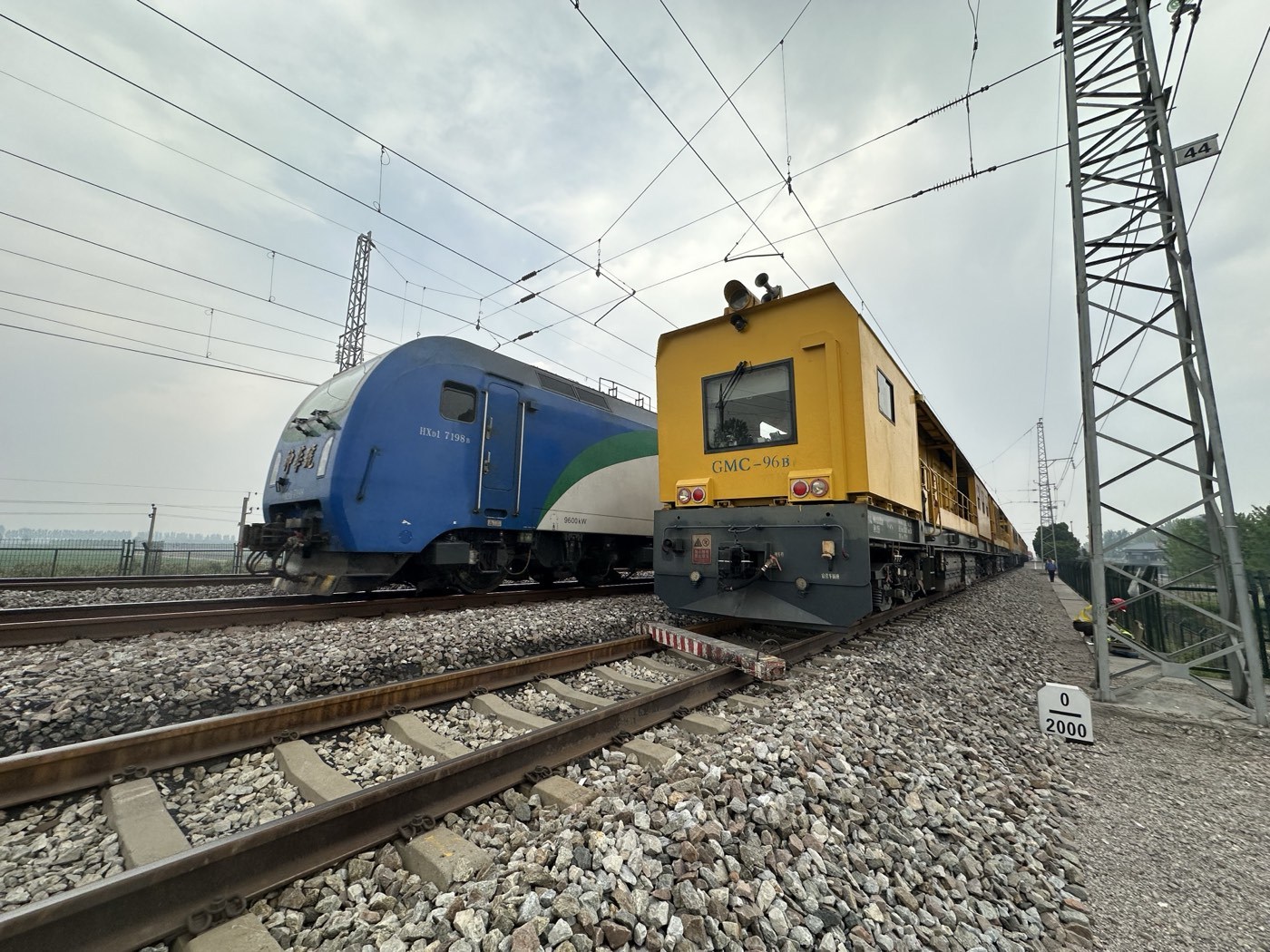
A mining rail network is not a small version of a public railway. It carries far heavier axle loads, it usually belongs to the mine rather than to a state operator, and every hour the track is out of service costs production rather than a timetable slot. Those three facts change almost every decision about grinding. This guide sets out what is genuinely different about maintaining mining rail — the wear mechanisms, the section and hardness choices, how to set a grinding interval in tonnage instead of calendar time, and the over-grinding trap that has caught operators on some of the world's highest axle load lines. It is written for the engineers and buyers who own or supply the work. Most grinding guidance is written for a mixed-traffic public network — our own guide to what rail grinding is is a case in point. On that kind of railway the track serves passenger trains, freight and possibly light locomotives, the axle loads sit in a moderate band, and the grinding programme is judged against a published standard the regulator can audit. A mine railway is different on nearly every one of those points. The first difference is ownership. A mining railway is usually private infrastructure built to move one commodity from a pit or a loading point to a port, a steelworks or a power station. The owner is not required to publish a track standard, and often does not. That means the grinding specification has to be built from the owner's own economics — rail replacement cost, wheel maintenance cost, and the value of an hour of lost haulage — rather than adopted from a national rule book. The second difference is the loading. Mine lines routinely run at axle loads that public mixed-traffic railways do not see. Sweden's Malmbanan iron ore line has historically run at around 25 tonnes per axle. The Fortescue line in the Pilbara moved from 25.6 tonnes to 40 tonnes per axle within about eighteen months of revenue service starting, and has run at around 42 tonnes since. At those loads the rail is not simply wearing faster in a linear way; the damage mechanism itself shifts toward surface fatigue and plastic flow. The third difference is the duty cycle. A mine railway usually runs as a single line with passing loops, carrying loaded unit trains one way and empties the other. That means the loaded direction accumulates almost all of the severe contact damage while the empty direction accumulates very little. A grinding plan that treats both directions the same is spending passes where they are not needed. Read that table as a warning. A grinding programme copied from a public-network standard will usually be too shallow where the mine line needs metal removed, and too frequent where it does not. On a public line, the dominant rail damage story is rolling contact fatigue and corrugation. On an abrasive mine line there is a second story running in parallel, because the commodity itself ends up on the rail head. Three mechanisms act at the same time on abrasive mine track. Two-body abrasion happens when hard particles are trapped between wheel and rail and scratch the head. The particle is harder than the rail surface, it is held against it by the wheel load, and it cuts a groove. This is the mechanism most closely tied to iron ore, quartz-bearing rock and slag. Three-body abrasion happens when a layer of debris rolls between the two surfaces. Instead of cutting clean grooves, the particles indent and roll, producing pitting and spalling alongside wear. Coal, which is comparatively soft, mainly promotes this rolling contact rather than direct cutting. Impact abrasion happens where spillage falls onto the rail head and is then crushed at the contact patch, and where wheels pass over fouled ballast that no longer distributes load evenly. This is the mechanism that concentrates damage around loading points, transfer chutes and stockpile areas rather than distributing it along the line. The practical consequence is that two mine lines carrying different commodities wear differently even at identical tonnage and identical axle load. A coal line and an iron ore line with the same annual gross tonnage will not produce the same rail head condition, because coal mainly rolls and iron ore mainly cuts. A grinding programme tuned on one will be wrong for the other. It also means that grinding on an abrasive mine line is doing two jobs at once. It is removing the fatigued and work-hardened surface layer, which is the classical grinding task, and it is removing or reshaping the damage left by abrasive particles. The second job needs metal removal, not just profile correction. Rail section and rail hardness are the first levers an owner has, and they have to be settled before grinding can be specified, because a grinding programme cannot compensate for a section that is too light for the load. The AREMA recommendation for 39-tonne axle loads calls for at least 136RE rail, which corresponds to roughly 67.6 kg/m, and heavier sections still where curves and gradients are adverse. On severe mine lines, sections of 68 kg/m and above are common. The reasoning is straightforward: section mass raises bending stiffness and lowers bending stress under high axle loads, which limits how much metal has to be sacrificed to wear before the rail has to be renewed. Hardness then governs how fast the surface is lost. The table below sets out the grades that matter in mine and heavy haul work. A hardness change of this size is not a marginal improvement. Brazilian iron ore operator MRS Logistica runs 370 HBW premium rail on its loaded ore routes and found that when it trialled intermediate 320 HBW rail, the degradation rate was completely different and would have disrupted the grinding intervals to the point of being unworkable. That is a useful caution: hardness is not a continuous dial you can turn down to save money on rail purchase. Below a certain level the whole maintenance cycle stops being predictable. One more point belongs here. The grinding wheel has to be matched to the grinding vehicle, not only to the rail. Heavy rail on a mine line is often mixed within the same network — a Chinese heavy-haul coal line may run 75 kg/m rail in one direction and 60 kg/m in the other, as the Shuohuang line does. Grinding wheels and settings therefore have to work across a range of head sections on the same campaign, which is a wheel specification problem as much as a machine problem. This is the single most useful change most mine operators can make. A grinding interval expressed in months assumes traffic is constant. On a mine railway it rarely is: a new pit, a new customer or a ramp-up in production shifts tonnage far faster than any calendar schedule can follow. The correct basis is cumulative gross tonnage, usually expressed in million gross tonnes, or MGT. Express the interval as metal removed per MGT and the schedule becomes a measurement rather than an assumption. A well documented reference point comes from the Malmbanan iron ore line in Sweden, where the rate of metal removal by grinding in a preventive regime was around 0.2 mm per 25 MGT. That is a thin, frequent cut. It does not try to restore a rail that has already deteriorated; it keeps the rail from deteriorating. The clearest demonstration of tonnage-based intervals comes from MRS Logistica's 2004 programme, which set a different preventive cycle for each section according to the tonnage that section actually carried. All sections were ground at 10 km/h in a single pass. The grid was not uniform, and deliberately so: the section carrying 9 MGT a month was ground every three months, while the section carrying 3 MGT a month was ground every five. The result over the first years of the programme was that average expected rail life on the loaded ore routes moved from 750 MGT in 2002 to 1,200 MGT in 2004, with 1,500 MGT expected in 2005. Two lessons follow. First, the interval should be derived per section from that section's tonnage, not from a network average. Second, the interval has to be written in the same unit the mine already tracks in — gross tonnes moved — so that the grinding plan and the production report can be compared without conversion. The instinct on high-axle-load track is to grind harder. That instinct has cost at least one major operator a great deal of money in wheel maintenance. The Fortescue line in Western Australia began revenue service in April 2008 at 25.6-tonne axle loads and had transitioned to 40-tonne axle loads by January 2010. Reviews of its rail grinding strategy between 2009 and 2013 found significant over-grinding of the rail to produce the two target profiles used across the track. The consequence was narrow wheel-rail contact bands — and because the rolling stock was running on a single narrow contact band in tangent track, the fleet maintenance teams were carrying out premature machining of wheels due to hollowing. That is the trap stated plainly. Over-grinding narrows the contact band. A narrow contact band concentrates contact stress on the wheel as well as on the rail, and the wheel becomes the component that fails first. The rail looked well maintained; the wheel shop paid for it. The reviews also identified a lack of grinding capacity to hold the profiles on both mainline and switches. In July 2013 the operator commissioned five new target profiles engineered for its own operations, and implemented them with a preventive-gradual strategy using two new high production grinders — one 16-stone switch grinder and one 60-stone mainline grinder. Audits in August 2014 and January 2015 confirmed that the strategy achieved the target profiles, brought severe rolling contact fatigue back under control, and moved the rail into a preventive state. Three things are worth carrying away from that case. The target profile has to be designed against the wheels that actually run on the line, not adopted from a standard. Grinding capacity has to cover switches as well as plain line, or the profile you establish on the mainline will be destroyed at every turnout. And the success measure is contact band width and wheel condition, not metal removed. A target profile is a description of the rail head shape the track should be ground back to, and the mechanics of rail profile grinding apply on a mine line as much as anywhere else. On a public network with mixed traffic there is usually one design profile, sometimes two, applied network-wide. A mine railway is unlikely to be that simple. There are three reasons. The wheel profiles on mine rolling stock may be non-standard, particularly where the fleet is captive and has been re-profiled over time. The curve radii may be unusually sharp, which pulls the contact toward the gauge face on the high rail. And the loading pattern is directional, so the loaded and empty directions want different treatment. The Fortescue experience is instructive precisely because the first profile set was not wrong in itself — it was wrong for the wheels. Two profiles, heavily ground, produced narrow contact bands. Five profiles designed around the actual fleet, ground preventively, brought the line back under control. For a mine line, the profile design work should therefore start from three inputs: measured wheel profiles across the fleet, measured rail profiles by section and by direction, and the measured contact band position. Where a portable profile measuring device is available, the third input is cheap to collect and is the fastest way to find out whether the current profile is loading the rail in the place you think it is. It is also worth stating what the profile is for. On mine track the objective is usually not a cosmetic "correct" shape but a contact band wide enough to spread load, a gauge face angle that survives the lateral forces on your worst curves, and a running surface that does not initiate fatigue. Those three objectives can conflict, and resolving them is engineering judgement, not a standard. On a heavily curved mine line, gauge face wear is frequently the defect that ends rail life on the high rail, ahead of anything on the running surface — the mechanics of managing side wear on curved track apply directly here. Two separate controls address it, and they are not alternatives. Gauge face lubrication applies lubricant to the gauge face of the high rail in curves, reducing the friction between the wheel flange and the rail side. It directly attacks side wear and the lateral forces that drive it. Top-of-rail friction management applies a material to the running surface to control the friction coefficient there — high enough to keep traction and braking, low enough to reduce lateral forces and abrasive damage through the contact patch. It is a different target on a different part of the head. Both are normally applied together, with defined application rates and inspection intervals, because they address different parts of the same problem. Lubricant applied to the running surface would defeat traction; friction modifier applied to the gauge face would not address flange contact. There is a measurement discipline attached to this. Side wear has to be measured at a fixed height below the rail head so readings are comparable across inspections, and expressed as metal loss against cumulative tonnage so that the wear rate can be compared between sections. Without the tonnage denominator, a side wear figure tells you the condition of a rail but not the health of the track. Grinding and friction management interact here as well. A ground profile that puts the contact band too far toward the gauge face will accelerate side wear regardless of lubrication. That is one more reason to measure the contact band after a pass rather than assume the profile did what the drawing said. The commodity that pays for the railway is also the thing that damages it. Spillage at loading points, transfer chutes and stockpile areas puts abrasive material directly onto the rail head, where the next wheel crushes it into the surface. There are three places to act. The first is the loading arrangement itself: designing load-out points and transfer chutes to minimise spill onto the track is cheaper than any downstream remedy. The second is track cleaning, scheduled so that debris is removed before it is compacted into the ballast and around the rail foot. The third is protective hardware — sacrificial wear plates and guarded fastenings — where spillage is heavy and cannot be eliminated. Ballast fouling is the slower and more expensive consequence. Fouled ballast from ore and coal fines, subgrade pumping and wind-blown material loses both its ability to distribute load and its ability to drain. Two things follow. The rail foot and the fastening system start to see higher dynamic loads, which accelerates pad compression set and loss of clip toe load. And drainage failure in wet weather softens the support further, which is when track geometry problems start to appear. This matters to a grinding programme because grinding cannot fix a support problem. If the rail head is showing damage in a pattern that repeats at sleeper spacing, or if geometry is deteriorating faster than wear alone would explain, the next investigation should be into ballast condition rather than into more grinding passes. Grinding is a rail head intervention; it does not restore the foundation. The machine decision on a mine railway is usually made by access rather than by capability, and the rail grinder selection criteria that apply on a public network apply here with a shorter window. Our rail grinder range and railway maintenance tools cover the portable end of that spread. A high production mainline grinder needs a possession, a support train and a rail network that can take it. A mine line may offer none of those in the required combination, particularly where track layout is tight, clearances are restricted, or the grinding window is a production gap measured in hours. The practical split is between three platforms. Production grinders, including the large stone-count mainline machines, deliver the metal removal rate and profile accuracy needed for a full-section preventive programme and are the right answer where access allows. Switch and turnout grinders handle the geometry a mainline machine cannot reach — see our turnout grinding solution — and on a mine line with many turnouts these may be doing a disproportionate share of the useful work. Hand-guided and portable machines cover the locations neither can reach, and are also the standard tool for spot correction around loading points. Whichever platform is used, the wheel specification has to match the machine and the duty. Three parameters do most of the work. Diameter, thickness and bore have to match the machine's mounting and the manufacturer's fitment. A wheel that does not fit correctly cannot be run safely at rated speed, regardless of its abrasive specification. Rated peripheral speed has to meet or exceed what the machine will actually run. Grinding wheels for rail work are rated at 50 m/s or 63 m/s depending on the application and machine, and the rating is a hard limit, not a target. Abrasive specification should match the duty. Our rail grinding wheel range is specified this way, by vehicle and by duty rather than by a single universal grade. A heavy-haul line removing plastic flow and surface fatigue in a deep cut needs a different bond and grit from a line taking a thin preventive pass. This is where a programme built around 0.2 mm per 25 MGT and a programme built around restoring a badly deteriorated profile diverge — the same wheel will not do both well. Because mine lines often mix rail sections and mix defect severities within one campaign, the wheel order is best specified as a set of combinations matched to the sections on the route, rather than as a single part number for the whole network. That is what our light customisation programme exists for. That is a conversation with the wheel manufacturer, not a catalogue selection. Where the grinding is done by a contractor rather than in house — the options are set out in our guide to rail grinding services, contracts and acceptance — the wheel specification and the acceptance criteria should be part of the service contract, so that the metal removal rate, the profile tolerance and the pass count are agreed before the campaign starts rather than argued over afterwards. A mining rail grinding programme is expensive enough that it will be questioned. The way to answer the question is to have the measurements agreed before the first pass. Four measurements carry most of the argument. Rail profile before and after, taken at fixed locations, so that the change in head shape can be shown and the contact band position can be verified. Permanent measurement points, marked and recorded, are worth more than a large number of unlocated readings. Metal removed, expressed in depth and converted to metal removed per MGT. This is the number that links the grinding programme to rail life, and it is the number that lets you compare a campaign against the target rate. Wear and defect rates against tonnage, not against calendar. The measurement method itself is covered in our guide to measuring rail wear and when to grind or replace. Vertical head loss, side wear and gauge widening all belong on the same cumulative tonnage axis, so that the trend is visible before a limit is reached. Wheel condition. This is the measurement most often left out and, on high-axle-load track, the one that reveals over-grinding. If the contact band has narrowed and wheels are being machined prematurely, the grinding programme is the cause, not the cure. Where a programme can be measured this way, the case for it makes itself. On the Swedish iron ore line the cost of grinding plus rail replacements fell by almost 40 per cent within the first two years of the preventive regime, with rail and track quality both improving. On the Brazilian ore network, four grinding cycles were enough for the changed rail shape to reduce fuel consumption by about 3 per cent through better steering, before every surface defect had been removed. Fuel is a legitimate line item on a mine railway and it belongs in the business case. Acceptance on a mine railway should be written around what the owner is actually buying: a rail head in a defined condition, over a defined length, for a defined tonnage interval. The general shape of grinding acceptance standards carries over, with the tonnage interval added. A workable acceptance specification covers the following. Profile tolerance against the target profile, stated as a deviation band rather than a single number, and measured at recorded locations. Surface condition after grinding — no continuous blueing, no visible periodic wheel marks, roughness within an agreed limit. Metal removal depth, both as a minimum where defects had to be removed and as a maximum to prevent over-grinding. And coverage, meaning every metre of the specified section was actually ground. Records matter as much as the acceptance numbers. Each campaign should leave behind the target profile used, the wheel specification and part numbers, the machine and settings, the pass count and speed, the measurement locations and results, and the tonnage interval the next campaign is planned against. Without those records the next programme starts from nothing, and the tonnage-rate calibration has to be rebuilt every time. One caution on acceptance. A deviation band that is tighter than the machine and the measurement method can actually deliver generates disputes rather than quality. It is better to agree a band the process can hold and measure honestly than to specify a number that looks impressive and cannot be verified in the field. We supply the consumable side of this work: rail grinding wheels for grinding trains and for hand-held and portable machines, matched to the machine platform, the rail section and the duty. We also run grinding training for track teams and work through project cooperation on campaigns that need more than wheel supply. Where a mine line runs mixed sections in one campaign, we specify the wheel set as combinations against the route rather than as a single part number. We work across high-speed, heavy-haul, metro and industrial and mining railways, and the specification work behind that is described in about us. Our grinding wheels hold an EN 12413:2019 conformity certificate issued by UDEM (certificate M.2026.206.C147949), and our heavy-haul field record includes the Shuohuang coal line, where 75 kg/m rail in one direction and 60 kg/m in the other were ground at 15 km/h, with wheel consumption averaging 34.67 mm over 172.8 accumulated pass-kilometres — about 4.98 pass-kilometres per millimetre of wheel. On the Yiyang line, 68 km carrying 40 million tonnes a year, the figure was 5.7 pass-kilometres per millimetre with corrugation and lipping as the dominant defects. Those numbers are useful to a buyer for one reason: they let you estimate how many wheels a campaign will consume before you order, rather than after. If you are setting up a grinding programme on a mine or heavy-haul railway, send us the machine model, the rail sections on the route, the annual tonnage per section and the defect types you are seeing. We will come back with a wheel specification and an expected consumption rate you can plan against. Contact us at simon.wang@railwaycare.com or +86 15072332788 to discuss a mining rail grinding wheel specification. It is rail head maintenance on a mine or heavy-haul railway, using grinding to remove surface fatigue and abrasive damage and to restore a profile that spreads wheel load. It differs from public-network grinding mainly in axle load, in the abrasive debris present on the rail head, and in how the interval is set. Set the interval in cumulative gross tonnage rather than in months. A frequently cited preventive reference is around 0.2 mm of metal removed per 25 MGT. Because tonnage per section varies widely on a mine network, each section should carry its own interval — in one documented iron ore programme, sections carrying 9 MGT a month were ground every three months while sections carrying 3 MGT a month were ground every five. Yes, and it is a recognised failure mode. Grinding too hard to hold a profile narrows the wheel-rail contact band, which raises contact stress and can force premature wheel machining. One 40-tonne axle load iron ore line had to redesign its target profiles and move to a preventive-gradual strategy after over-grinding produced exactly that outcome. No. Coal is comparatively soft and mainly produces three-body rolling contact, which shows up as pitting and spalling. Iron ore, quartz-bearing rock and slag are harder and cut the running surface directly. A programme tuned on a coal line will be wrong for an ore line even at the same tonnage. Wheels matched to three things: the machine's fitment and rated peripheral speed, the rail sections actually present on the route, and the duty — a thin preventive pass needs a different specification from a deep corrective cut. Where a route mixes sections, specify a wheel set against the route rather than one part number for everything. Only if the rail head is the problem. Spillage, fouled ballast and lost drainage are support problems, and grinding cannot restore them. If damage repeats at sleeper spacing or geometry is deteriorating faster than wear explains, investigate ballast and drainage before adding passes.What Makes Mining Rail a Different Grinding Problem
Characteristic Public mixed-traffic network Mining rail Ownership State operator or infrastructure manager Mine owner, often private Governing standard Published national or regional standard Owner's own specification Typical axle load Moderate, mixed High to very high, uniform Traffic pattern Two-directional, mixed speeds Loaded one way, empties the other Main defect driver Rolling contact fatigue, corrugation Surface fatigue, plastic flow, abrasive debris Cost of downtime Timetable and contractual penalties Lost production tonnage Grinding access Scheduled possessions Production windows, often short The Three Wear Mechanisms Acting on a Mine Railway
Axle Load, Rail Section and What the Track Can Absorb
Rail grade Tensile strength Surface hardness Typical use R260 to EN 13674-1 880–1030 MPa 260–300 HBW Standard track, mixed traffic R350HT to EN 13674-1 min. 1175 MPa 350–390 HBW Curves, heavy haul, high wear U75V (Chinese practice) Head-hardened pearlitic C 0.71–0.80 % with V 0.04–0.12 % Heat treated head for wear resistance Premium 370 HBW (mine practice) — approx. 370 HBW Loaded iron ore lines Setting Grinding Intervals in Tonnage, Not Calendar
Section Monthly tonnage (MGT) Preventive cycle (months) Typical cycle (MGT) Central Line North 3 5 15 Steel Line North 4 6 25 Steel Line South 9 3 30 Serra do Mar 7 2 15 Saudade à Barra do Piraí 8 3 25 Ramal Brisamar 5 3 15 The Over-Grinding Trap on High-Axle-Load Track
Target Profiles and Why One Profile Does Not Fit a Mine
Gauge Face Wear, Lubrication and Top-of-Rail Friction
Spillage, Debris and Ballast Fouling
Choosing Machines and Wheels for a Mine Site
Proving the Programme Works: What to Measure
Acceptance Criteria and Record Keeping
Working with RailwayCare on Mining Rail Grinding Wheels
FAQ
What does mining rail grinding actually involve?
How often should a mine railway be ground?
Can you over-grind a heavy-haul line?
Does coal wear rail the same way as iron ore?
Which grinding wheels does a mine line need?
Is grinding enough to fix a mine line in poor condition?