What is the difference between large-machine and small-machine grinding?
What is the difference between large-machine and small-machine grinding?
They are not two sizes of the same job. A mainline grinding train removes metal along a length of track: it works in kilometres, presents one angle set across a long chassis, and its output is measured in pass-kilometres per possession. A small machine removes metal at a place: it works in metres, at a turnout, a crossing or a weld, where the target geometry can change within a few hundred millimetres. Reach decides the split — and whatever the train cannot physically enter must be handed to a small machine inside the same possession, or it simply does not get ground.
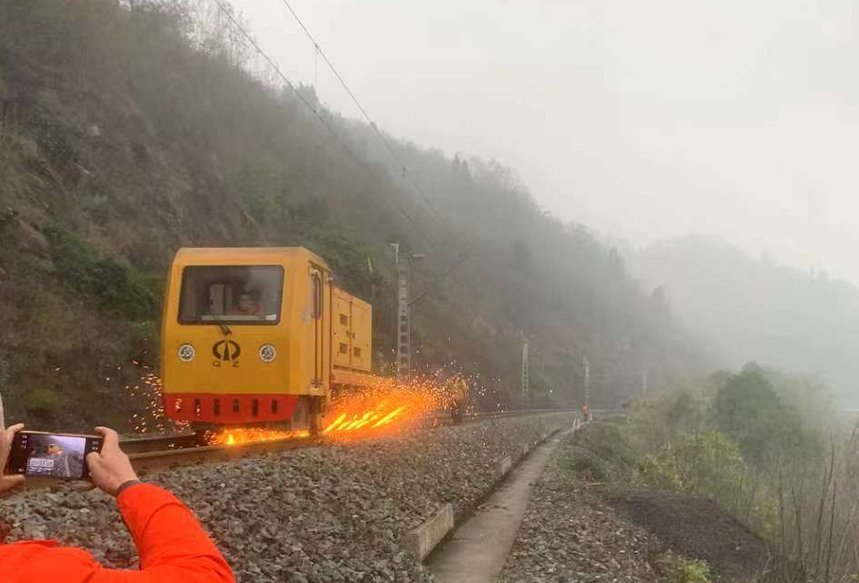
Where the boundary actually falls inside one turnout
| Zone | Who works it | Why the other cannot | Handover point |
|---|---|---|---|
| Running line between turnouts | Grinding train | A small machine produces no kilometres; the window would be spent moving, not grinding | Last profile record before the turnout |
| Turnout approach on open track | Train, if it is scheduled there | Nothing yet restricts the head array; the profile is still repetitive | Where the head array starts to foul the switch |
| Stock rail beside the switch rail | Small machine | The running surface is interrupted and lies at a diverging angle a running-line head set cannot follow | Free edge of the stock rail |
| Switch rail, point of switch to heel | Small machine | Target geometry changes over a short distance, while a long chassis presents one angle to every head | Heel block |
| Crossing nose and wing rails | Small machine | Deep, narrow, discontinuous geometry at the nose | Wing rail end |
| Check rails | Small machine | The check-rail gap is a restricted zone no train-mounted head can enter | End post |
| Insulated joints | Small machine | Metal removal has to stop at the joint without loading the insulated assembly | Joint bar |
That list is the practical content of large-machine / small-machine synergy: the small machine is not a backup for a train that did not turn up, and the train is not a bigger version of the small machine. One buys passes over distance; the other buys millimetres at a place. Confirm the real reach of your own machine against the manufacturer's restriction drawing before you write the sequence — the zone list above is generic, the foul points are machine-specific. The restricted-zone geometry behind those foul points is what makes the train stop where it stops.
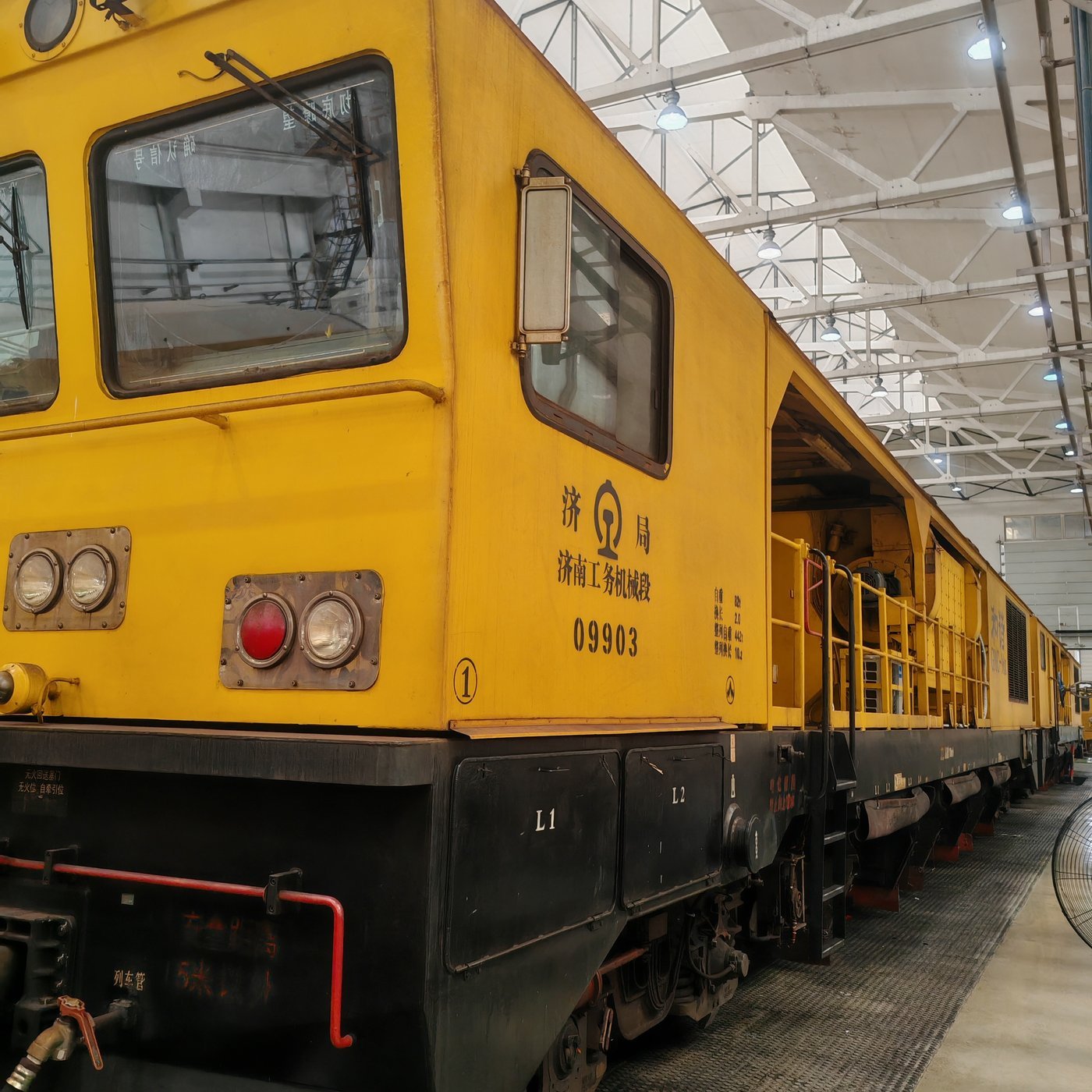
The handover: five decisions, in this order
| Order | Decision | Who owns it | What breaks if it is skipped |
|---|---|---|---|
| 1 | Baseline: both machines record the same measurement positions before any metal is removed | Survey / acceptance party | No baseline, no acceptance — the job cannot be judged afterwards |
| 2 | Target profile: the operator's template, not whatever the machine last stored | Track owner | The two machines aim at different shapes and leave a visible step at the boundary |
| 3 | Sequence: train first along the running line, small machine second inside the restricted zones | Work planner | Turnout ground first is re-cut by the train running through it afterwards |
| 4 | Depth budget: one shared envelope, spent by both | Both parties, in writing | Each machine spends the allowance and the total runs past the acceptance cap |
| 5 | Acceptance: same positions, before against after | Track owner / inspector | One job gets two verdicts that cannot be compared |
The depth side is where handovers quietly fail. Per-pass depth is set by the mode: pre-grinding and corrective work take ≥ 0.2 mm per pass, preventive work ≥ 0.1 mm, and the acceptance ceiling on the rail head is 0.5 mm. Those are three different numbers, and they belong to one envelope. If the train spends 0.3 mm on the approach and the small machine then works the switch to its own 0.3 mm target, the two of them together have taken 0.6 mm of a section that only had 0.5 mm to give.
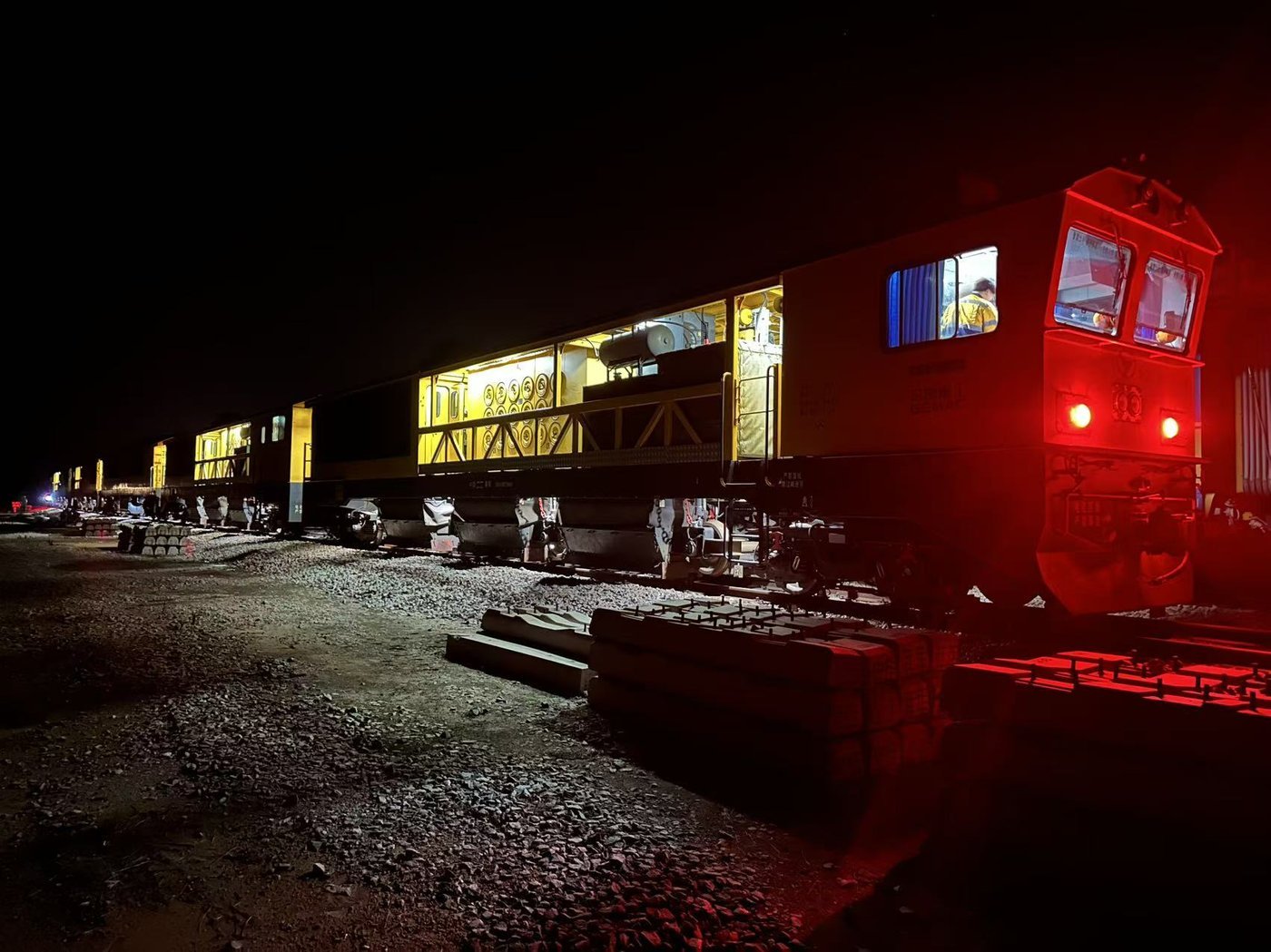
Where the division goes wrong in practice
| Failure | What it looks like on the rail | What to do instead |
|---|---|---|
| Handing over by pass count | One side of a curve ground far deeper than the other, boundary unblended | Hand over by residual profile deviation at named positions |
| Leaving the restricted zone for next time | A transit trough through the switch that the next train pass cannot reach either | Same possession, second front, small machine |
| Pushing the train into the restricted zone | Switch rail and crossing untouched, angle sequence dragged off the running line | Stop the train at the foul point; accept that these metres need another machine |
| Sending a small machine onto the open line | Plenty of wheel wear, very few kilometres | Accept that output per possession is the train's job |
The pass-count failure is easy to demonstrate. On the Yiyang R=800 m curve, six passes at 12 km/h removed up to 0.3 mm on the high side and up to 1.8 mm on the low side of the same alignment — a six-fold spread inside one pass plan. Two machines can be given the same pass count and still remove very different amounts, which is why the handover has to be a number on a profile record, not a number in a work order.
Why bother sequencing at all? Because possession time is the scarce resource and its unit price is measurable. One machine on the Hengliu line produced 18.72 pass-kilometres inside a 2-hour night window. Every minute the train spends crawling through a switch it cannot grind is a minute bought at that rate and thrown away. On the other side of the same ledger, turnout grinding shows up in ride quality: lateral acceleration through turnouts falls from about 0.20 m/s² to 0.04-0.08 m/s² once the profile and the contact band are right.
The wheels are where the two fronts physically differ, because a train head and a portable head do not share a wheel. Molaton builds both families from one plant founded in 2004 and drafted the industry standard JB/T 11431, so a single possession is not split across two supply chains — the wheel families and the machine range are on the Molaton range page and the rail grinding machines page.
Related questions you may also ask
High-speed turnout grinding: large-machine and small-machine synergy What acceptance criteria decide whether a grinding job passed? Should you buy a grinder or contract the grinding out? Turnout grinding solutions More answers on rail grinding strategy and equipmentSplitting one possession between two machines?
Send us the turnout layout, your possession limit and the target profile you are working to. RailwayCare will set out which metres the train can take, where it must stop, what the small machine has to cover, and the Molaton wheels for both fronts.
Plan the Grinding Split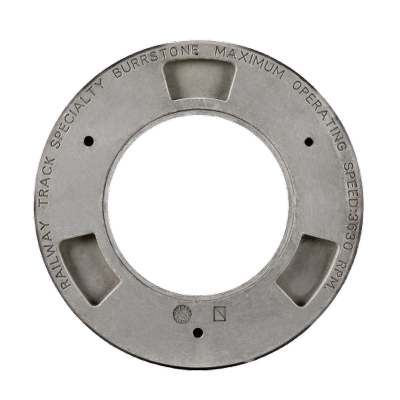
Are you looking for a reliable manufacturer of railway grinding and track maintenance equipment?
We can quickly provide customers with market analysis, technical support and customized services.
Safe Tracks Proven by China
- Name
- Phone
- *Title
- *Content