Should you buy a grinder or contract the grinding out?
Should you buy a grinder or contract the grinding out?
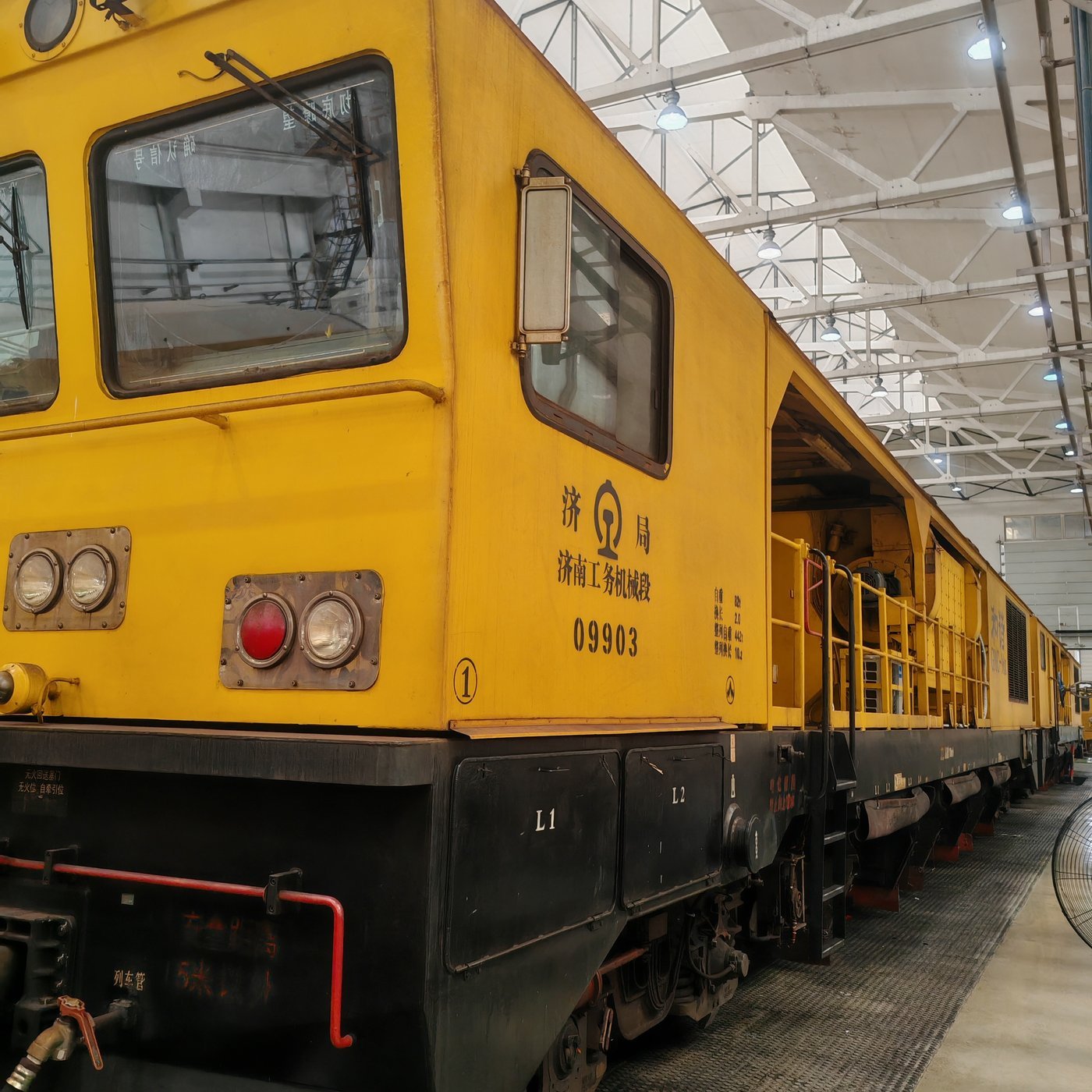
Not on price per pass, because the two options are not the same kind of cost. Buying turns grinding into a fixed cost: capital, a crew roster, wheel stock and a workshop bay that you carry whether or not the machine works. Contracting turns it into a variable cost priced per unit of work delivered. So the decision turns on one thing — whether your network can keep a machine and a crew busy enough for that fixed cost to spread over real work — and four questions settle it.
1. The four questions, in the order that matters
| Variable | When you own | When you contract | What actually tips it |
|---|---|---|---|
| Annual work volume | The machine has to earn its keep on your own track, so the volume must be large and predictable enough to plan a season of possessions around it | The volume is the invoice. A small or episodic programme pays a mobilisation premium instead of carrying an idle asset | Total pass-kilometres per year, and its shape — one long campaign on a main line, or forty scattered short nights |
| Capital tied up | Spent before the first metre is ground: the machine, the handling equipment, the wheel stock, the bay that must exist for it | No capital outlay, but the rate you pay carries the contractor's own capital recovery. You fund a machine either way; the question is when, and how much | Whether the same money has a higher-value use on your network, and whether replacement at end of life can be funded without a fight |
| Crew and competence | Not one trained operator. A depth of people: someone who can run the angle pattern, someone who can diagnose a head that has stopped cutting, someone who can read a profile trace and say what is wrong with it | The contractor carries that depth. You keep one person whose job is to verify the result rather than to operate the machine | Whether you can hold that roster through leave, sickness and retirement — or whether the capability walks out of the door with one person |
| Equipment utilisation | The machine earns only on the nights it works. A cancelled possession is a standing cost, not a saving | The contractor spreads the machine across several customers, so a cancelled night can be re-planned onto someone else's track | Possession reliability rather than track length. A short network with dependable night possessions beats a long one that loses them |
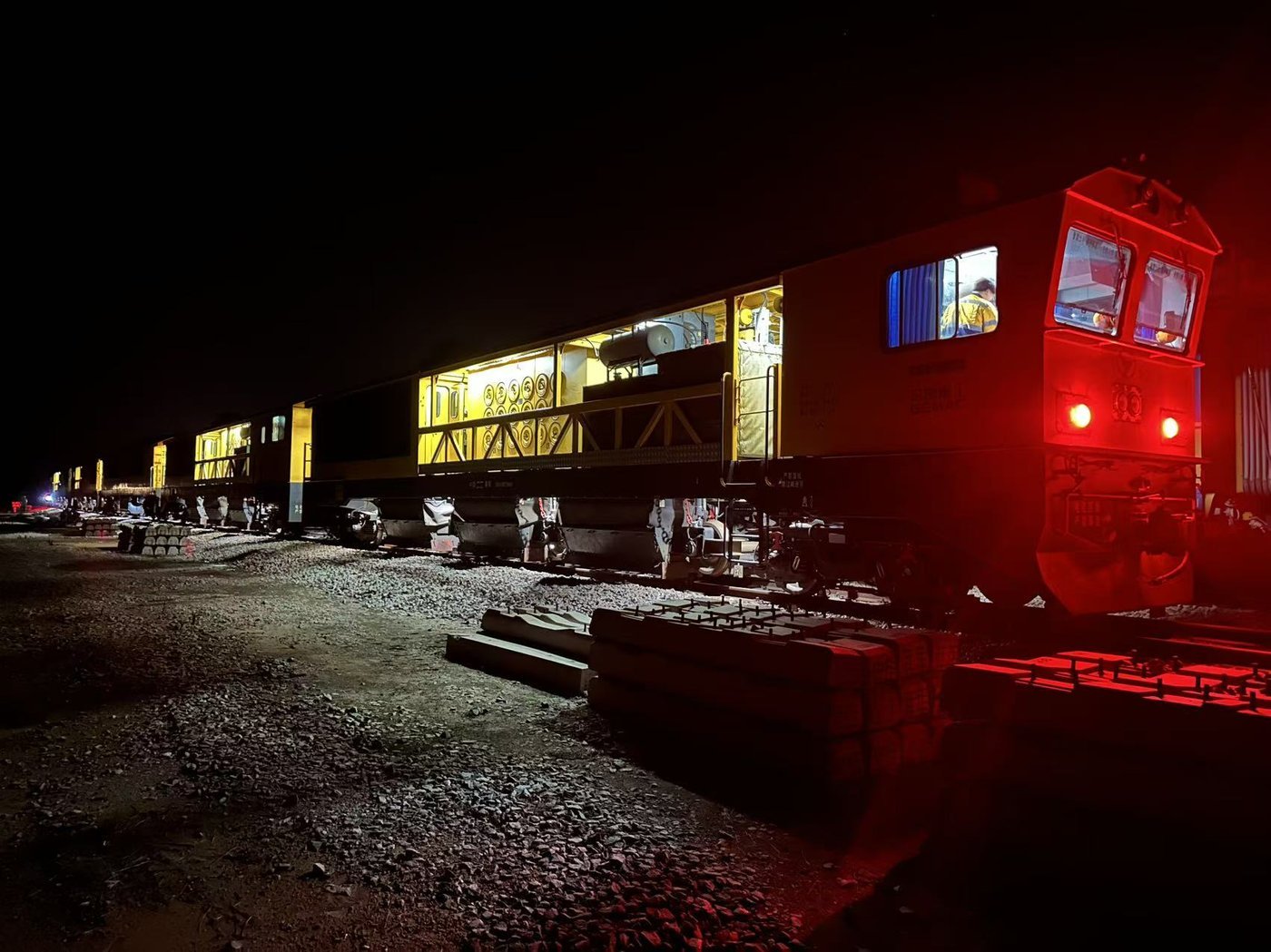
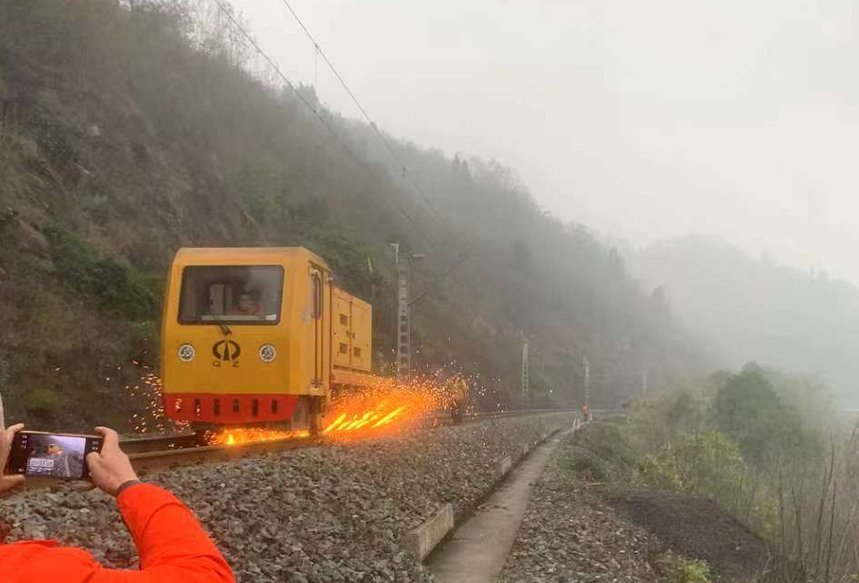
Utilisation can be settled by division instead of opinion. Divide the pass-kilometres you need in a year by the pass-kilometres one possession actually delivers — pass-kilometre here meaning length ground multiplied by the number of passes — and the answer is the number of nights you are really buying. On a Chinese high-speed line, one machine delivered 18.72 pass-kilometres inside a two-hour possession. If a year of work converts into a small number of nights, the fixed cost per night is large and ownership is difficult to defend; if it converts into most of the calendar, contracting means paying someone else's capital recovery on a machine you could have kept busy.
2. The part of the cost that does not shrink with the network
| Cost line | Why it does not scale down | What it does to a small network |
|---|---|---|
| Machine and its replacement reserve | Recovery runs on calendar life, not on kilometres ground. A machine worked twenty nights a year still reaches end of life | The reserve per pass-kilometre is set by how little you use it |
| Wheel stock and batch traceability | Heads need the sizes they were built for, and every batch has to be traceable to the sections it ground | Either stock sits on a shelf, or the job stops when a size runs out |
| A rostered, current crew | Competence decays without continuous work; a crew that grinds twice a year relearns the job each time | You pay to hold skills you rarely use, or you accept a thinner crew |
| Workshop bay, lifting and handling | Needed even for a machine that works a handful of nights a year | A fixed space cost that no volume of work can amortise |
| Measurement and calibration | Profile gauge, straightedge, roughness and balance checks and inspection records are needed whether you grind or not | Unavoidable in both models; what changes is who carries the cost of it |
| Preservation of an idle machine | Seals, hoses, batteries and machined surfaces degrade faster standing than working | The least-used machine is often the one that fails first |
| Standby capacity | A machine that stops mid-possession needs either a second machine or a contractor on call | Owning one machine does not remove that call-out; it adds to it |
| Contract administration | Written scope, verification and payment still need somebody's time | Contracting is not the absence of work, it is different work |
This is why an in-house cost never shrinks with the network. A contractor's rate looks expensive against depreciation alone and cheap against depreciation plus a crew, a bay, stock, calibration, preservation and standby. That is not an argument for contracting; it is an argument for costing ownership honestly before comparing it with a rate — which is also why the machine price quoted in what a rail grinding machine costs is only the first line of the comparison.
3. Three arrangements, and the one mixed networks tend to reach
| Arrangement | Fits when | What you must keep in-house either way |
|---|---|---|
| Full in-house | Pass-kilometres are high and predictable, possessions are dependable, and the crew depth already exists | Acceptance measurement, and the authority to reject a job that misses it |
| Full contract | The programme is episodic, the capital is committed elsewhere, and no crew depth exists to build on | Your own verification, an agreed baseline, and acceptance criteria that can actually fail a bad job — see what acceptance criteria decide whether a job passed |
| Hybrid — own small machines, contract the campaign | The main line needs few but long possessions, while turnouts and crossings need many short ones. This is the arrangement most mixed networks arrive at | One acceptance standard applied to both, so a contracted campaign and an in-house turnout job are judged the same way — the split itself is set out in rail turnout grinding solutions |
The hybrid arrangement exists because the two kinds of work fail differently. A main-line campaign is a throughput problem: many kilometres, a repeatable angle pattern, a long window. A turnout is a geometry problem: short sections, complex profile, and a window measured in minutes on a line that cannot be closed. Splitting the fleet along that line is usually cheaper than buying one machine to do both badly.
One asymmetry deserves naming before the decision is taken: ownership is reversible in one direction only. A machine can be bought and later supplemented by a contractor, but a crew that has been disbanded and a bay that has been handed back do not return at the old cost. How the commercial side is then written, tendered and signed off is a separate question, covered in rail grinding services, contracts and acceptance, while choosing among providers is treated in how to choose a rail grinding company.
Whichever model wins, the consumable is priced per pass-kilometre, so the wheel never decides the ownership question — ownership decides who buys the wheel. Molaton wheels are specified against a removal and roughness result rather than a dimensional sheet alone, which is what lets a pass-kilometre be compared honestly between an in-house machine and a contractor's.
Related questions you may also ask
How do I choose a rail grinding company? What acceptance criteria decide whether a grinding job passed? How many grinding passes does a rail need? How is a rail grinding interval set by tonnage? How much does a rail grinding machine cost? More answers on rail grinding strategy and equipmentWorking out whether to keep grinding in-house?
Send us your annual pass-kilometres, the possession pattern you can actually rely on, and what crew you could hold. We will run the utilisation arithmetic with you, show where the fixed cost stops spreading, and what a Molaton wheel set has to deliver per pass for either model to price the same.
Ask About the Ownership Model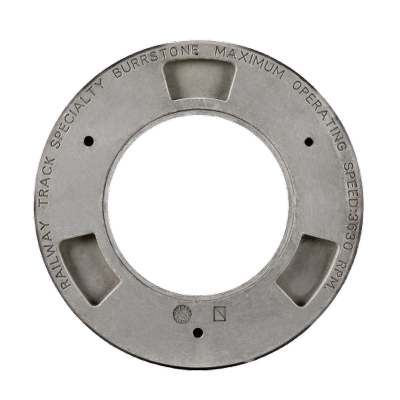
Are you looking for a reliable manufacturer of railway grinding and track maintenance equipment?
We can quickly provide customers with market analysis, technical support and customized services.
Safe Tracks Proven by China
- Name
- Phone
- *Title
- *Content