How much does a rail grinding machine cost?
How much does a rail grinding machine cost?
There is no single sticker price, because "rail grinding machine" covers three very different classes. A portable lithium grinder is the most economical entry point and sits comfortably in a switch and spot-maintenance budget; a CNC copying machine costs substantially more and is justified where profile accuracy protects expensive track assets; a grinding train is major capital equipment quoted project by project against contract grinding services. What you actually pay is set by machine class, power source, copying control, the tooling package and certification — so the only meaningful answer is a configuration-based quotation.
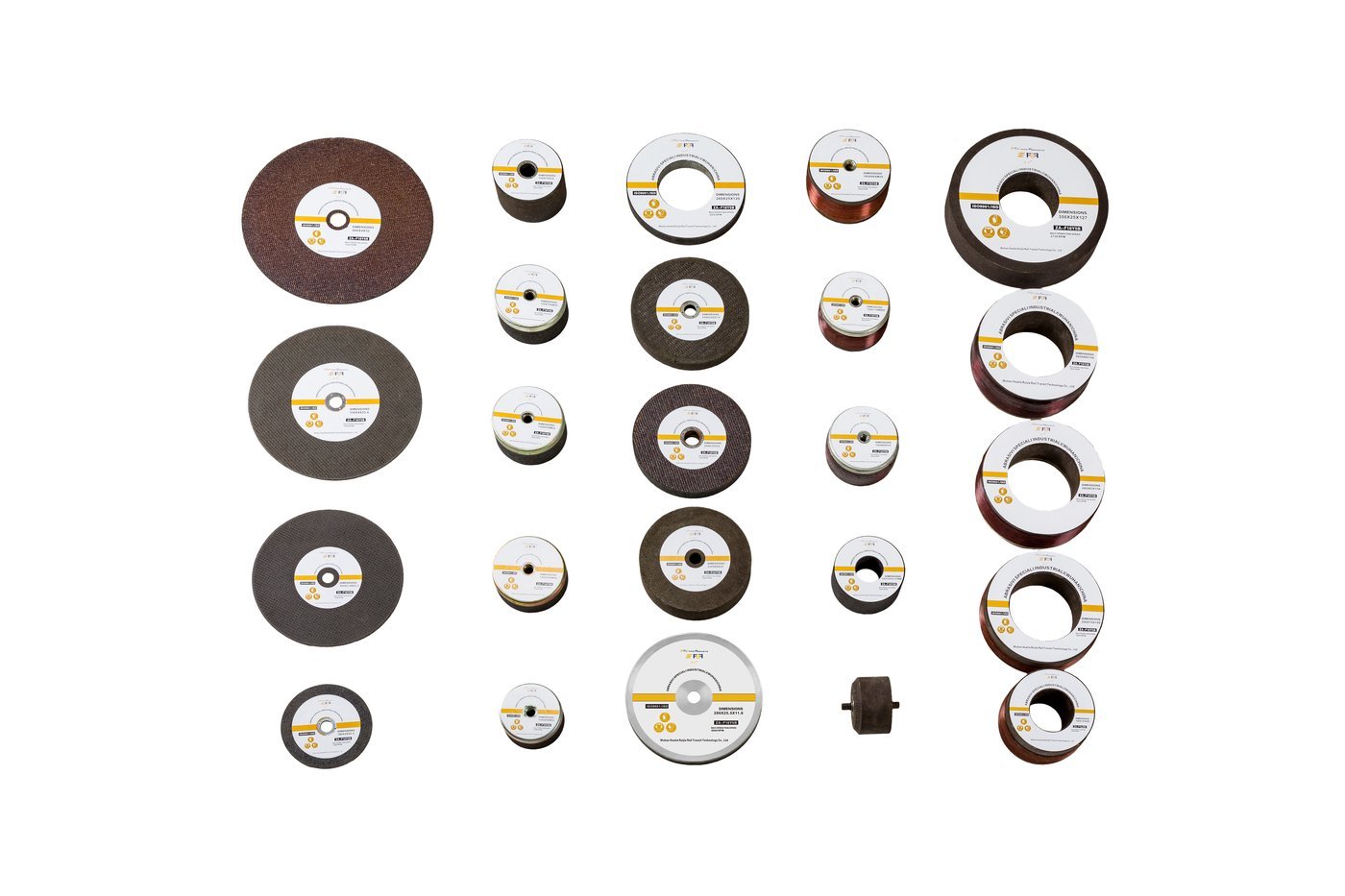
What moves the price
| Price factor | Why it matters | Effect on price |
|---|---|---|
| Machine class | Portable / handheld vs CNC turnout machine vs grinding train | Portable lowest, train highest |
| Power source | Lithium battery vs internal combustion vs mains electric | Lithium costs a little more up front, less to run |
| Copying / CNC control | Manual adjustment vs stored target profile | CNC adds a significant step |
| Tooling package | Grinding wheels, spare batteries, spares kit, rail profile templates | Affects the total budget, not the machine price alone |
| Certification and support | ISO / CRCC documentation, training, spare-parts response | Marginal on price, decisive on total cost of ownership |
| Volume and configuration | Single unit vs fleet order; gauge, voltage, rail profile variants | Customisation moves the quotation either way |
Because these factors interact, a like-for-like comparison is only possible when two machines are specified for the same rail type, defect list and daily working hours. RailwayCare's rail grinding machine range runs from the RCG-L50 lithium turnout grinder through the RCG-V50 vertical-axis multifunctional machine to the RCG-C65 CNC copying machine and the GMC16A grinding train — a single quotation request covers every tier, and the RCG-L50 specification shows what the entry tier includes.
Budget by class — and when each one pays
| Class | Typical position on a budget | Choose it when |
|---|---|---|
| Portable / handheld grinder | Lowest capital outlay; sized per work gang | Switch and spot maintenance, weld finishing, isolated defects, metro night windows |
| Entry lithium portable (RCG-L50 / L65 class) | Most economical powered option; low running cost | Turnouts, tunnels and enclosed sections where fume and noise are restricted |
| Vertical-axis multifunctional (RCG-V50 class) | Mid range — one unit covers more geometry | Mixed workloads needing frog, blade and rail-head contour work |
| CNC copying machine (RCG-C65 class) | Higher initial spend, lower scrap risk | High-value switches and curves where over-grinding is unaffordable |
| Grinding train (GMC16A class) | Major capital decision | Continuous mainline grinding of tens of kilometres — usually benchmarked against contract grinding |
For the train tier, the fair benchmark is not the machine price but the price of the alternative: published 2026 market research puts contract grinding at roughly USD 0.5-1.5 per track-metre per pass (about USD 500-1,500 per route-kilometre per pass), while 2026 Chinese tenders priced machine grinding at RMB 4,750 per pass-km for a 48-stone train and RMB 9,500 per pass-km for a 96-stone train, equipment and consumables included. Compare any purchase against those figures over a five-year horizon — see the full breakdown in rail grinding cost per kilometre.
The number that decides the bill: cost per pass-kilometre
Machine price is only the entry ticket. Two machines of equal price can produce very different running costs, because the consumable and the possession window dominate. Field evidence from Chinese networks:
- Liuzhou GMC-96X campaign (2022) — the train removed 18.72 km·passes in a two-hour night window; Molaton wheels wore 20-30 mm against 43.5-59 mm for the imported reference wheel, roughly double the wheel life for the same machine hours.
- Fewer passes to clear the same damage — conventional wheels needed 4-6 passes; the super-hard composite wheel cleared the same defect in 2-3, which is machine time, energy and possession cost taken straight out of the bill.
- Hefei-Wuhan high-speed line (2020) — 4.28 pass-km per mm of wheel wear versus 3.27 for the incumbent, averaging 214.22 pass-km per wheel.
- Heavy haul — 4.98 pass-km/mm on Shuohuang and 5.7 pass-km/mm on Yiyang.
Wheel life measured this way is the single most useful line in a quotation: a wheel that lasts 1.5 times longer cuts wheel cost per pass-km by a third even at an identical piece price. That is why the sensible budget question is not "what does the machine cost" but "what does this machine and its wheels cost per pass-kilometre, with acceptance passed first time".
Related questions you may also ask
Portable rail grinder vs full-size grinding train: which do I need? Rail grinding cost per kilometre: what operators pay Domestic vs import railway grinder wheels: 5 indicators compared Rail grinding machine overviewWant a real number, not a range?
Send us your rail type and main defects, daily working hours, and whether you need lithium or internal-combustion power. RailwayCare engineers will recommend the right model class, quote the machine with its matched Molaton wheels, and show the cost per pass-kilometre you can expect.
Request a Quotation
Are you looking for a reliable manufacturer of railway grinding and track maintenance equipment?
We can quickly provide customers with market analysis, technical support and customized services.
Safe Tracks Proven by China
- Name
- Phone
- *Title
- *Content