Portable rail grinder vs full-size grinding train: which do I need?
Portable rail grinder vs full-size grinding train: which do I need?
They solve different problems, so the answer is usually not either/or. A portable rail grinder is a single-head machine for localised, precision work — turnouts, welds, curve transitions and isolated defects — travelling at 1-2 km/h and holding ≤±0.1 mm. A full-size grinding train is a self-propelled, multi-head vehicle for profile restoration and corrugation elimination over kilometres of mainline, travelling at 3-16 km/h with a 16/20-head array. Choose a portable machine when the defect is localised and the space is tight; choose a train when the work is measured in kilometres or the whole network needs preventive grinding.
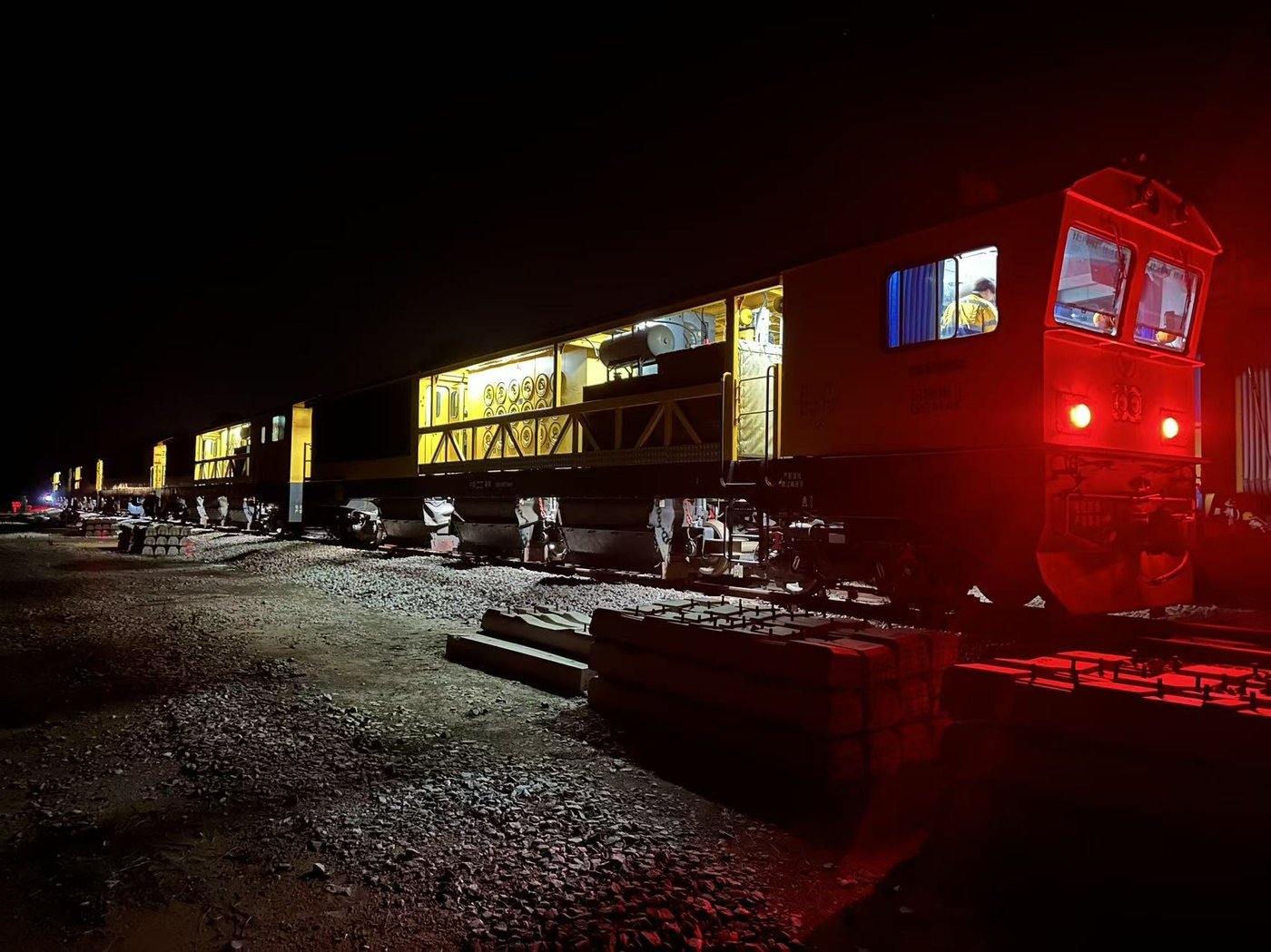
Side-by-side comparison
| Specification | Portable / light rail grinder | Full-size grinding train |
|---|---|---|
| Power and drive | Hand-held (electric / hydraulic) or small self-guided | Self-propelled, diesel or electric |
| Grinding heads | Single head | 16/20-head array (up to 48 wheels in a group) |
| Operating speed | 1-2 km/h | 3-16 km/h |
| Grinding accuracy | ≤±0.1 mm | ≤±0.2 mm |
| Surface finish | ≤ Ra 6 μm | < Ra 10 μm |
| Typical task | Weld finishing, turnout and frog repair, isolated defects, curve transitions | Profile uniformity, corrugation elimination, preventive grinding |
| Application | Turnouts, welds, short possessions, metro night windows | Mainline, station tracks, long-distance continuous grinding |
| Mobility / logistics | Carried to the site, lifted on track in minutes | Requires a possession and a full works train |
On the wheel side the split is just as clear: train heads take large wheels such as 260x90x154 mm ZA F16 running 3630 rpm at 50 m/s on PGM-48/96C-class cars, or 350x60/25/50/35x127 mm at 2730 rpm on the GMC16A; portable and handheld machines use 150 mm-class wheels at 6000-7500 rpm. Molaton manufactures both families and the matched wheels, so one supplier covers the whole fleet — see the machine range on the rail grinding machines page.
Decide by scenario
| Scenario | What to deploy | Why |
|---|---|---|
| Open mainline, tens of kilometres, corrugation | Grinding train | Output per possession; a 48-wheel group grinds 10-15 km continuously |
| Turnouts and crossovers | Light turnout grinder | Fits the restricted space between rails; RCG-L50 lithium machine keeps tunnels and stations clean |
| Tunnels, metro and enclosed sections | Lithium portable machine | Zero exhaust emission, low noise, usable in short night windows |
| Welds and isolated defects | Portable grinder | Reaches the spot without a possession; finishes to Ra ≤6 μm |
| Frogs and switch rails | CNC copying portable machine | Stored target profile keeps precision where geometry is complex |
| Whole-network programme | Both, in one cycle | Train handles the line, portables clean up the special trackwork the train cannot reach |
What the combination delivers in numbers
On the Liuzhou GMC-96X campaign (2022), a full-size train fitted with Molaton wheels removed 18.72 km·passes in a 2-hour night window, with 20-30 mm of wheel wear against 43.5-59 mm for the imported reference — about twice the wheel life for the same machine hours. Yiyang and Shuohuang heavy-haul fleets averaged 5.7 and 4.98 km·passes per mm of wheel wear. The portable side is judged differently: acceptance is by geometry, not volume — ≤0.3 mm deviation against a 1 m straightedge, Ra ≤10 μm and no blueing at the point of work. Running both, most operators keep the train on the open line and hand turnouts, welds and frogs to portable machines, so the expensive possession window is never spent on ground a portable could have fixed. Wheels for both come from the same 2004-founded plant — China's first dedicated rail grinding wheel manufacturer — certified to ISO 9001 / ISO 45001 / CRCC.
Related questions you may also ask
What is a rail grinding machine and how does it work? How to choose the right rail grinding wheel for your equipment? Rail head grinding: restoring the contact surface Rail grinding solutions by line typeNot sure which machine your track needs?
Tell us your line type, possession window and defect list. RailwayCare will recommend a machine mix — train, turnout grinder, portable grinder or a combination — with the matched Molaton wheels and a cost-per-km estimate.
Get a Grinding Plan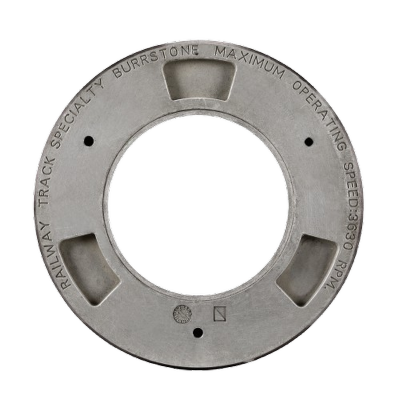
Are you looking for a reliable manufacturer of railway grinding and track maintenance equipment?
We can quickly provide customers with market analysis, technical support and customized services.
Safe Tracks Proven by China
- Name
- Phone
- *Title
- *Content