What is a rail grinding machine and how does it work?
What is a rail grinding machine and how does it work?
A rail grinding machine is a powered unit — from a handheld grinder to a self-propelled multi-head grinding train — that removes a thin, controlled layer from the rail head with rotating abrasive wheels. It works by controlled abrasive cutting: each grinding head spins a resin-bonded wheel (typically zirconia alumina) and presses it against the rail at a set angle and downforce while the machine travels along the track; profile and defect measurements taken before and after guide the number of passes. Done correctly the rail is restored to tolerance with no burning, no blueing and a finish of Ra ≤10 μm.
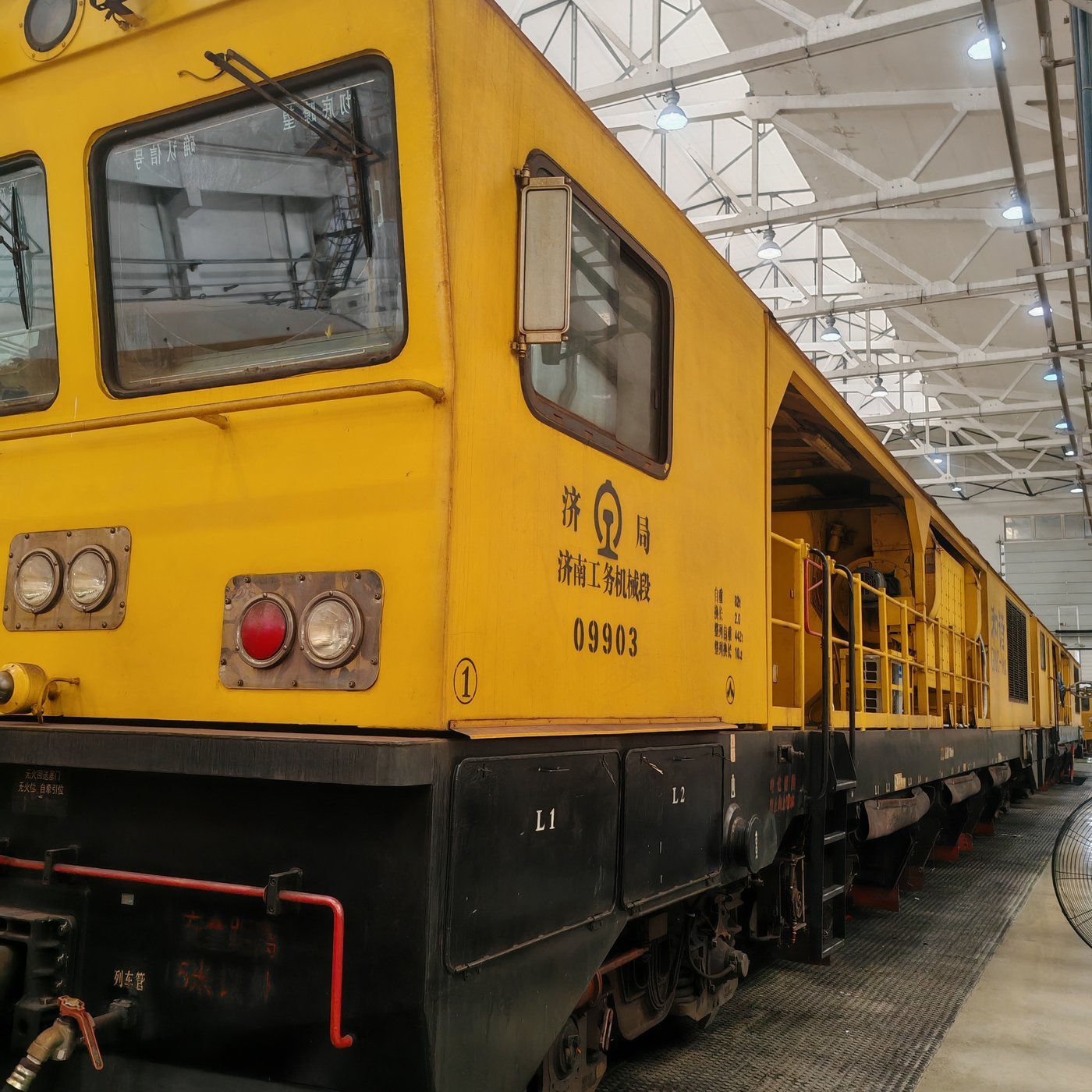
How a rail grinding machine works
- Survey the track — corrugation wavelength and depth, wear, profile deviation and burns are measured first so the right pattern is chosen.
- Position the heads — each head carries a wheel matched to the machine (e.g. 260x90x154 mm ZA F16 wheels on PGM-48/96C-class trains, running 3630 rpm at 50 m/s); the operator or CNC system sets angle and downforce.
- Grind in controlled passes — trains traverse at 3-16 km/h over long sections (a high-speed car with 48 wheels in a group grinds 10-15 km continuously); portables work at 1-2 km/h on localized spots. Each pass removes at most about 0.5 mm of metal.
- Verify and finish — profile is checked against a 1 m straightedge (≤0.3 mm), finish against Ra ≤10 μm, with no blueing; grinding depth is kept inside the accepted envelope.
Two families: grinding trains and portable machines
| Family | Examples | Typical wheel | Best for |
|---|---|---|---|
| Self-propelled grinding train / vehicle | GMC16A (16/20-head, 3-16 km/h, ≤±0.2 mm), PGM-48/96C class, 12-head light cars | 260x90x154 mm ZA F16 (PGM class); 180x105x90 mm 6000 rpm (GMC96B); 250x75x150 mm G3 3280 rpm (Loram class) | Corrugation elimination, preventive and corrective profile grinding over kilometres of main line |
| Portable / small rail grinder | RCG-L50 lithium turnout grinder, RCG-V50 vertical-axis grinder, RCG-C65 CNC copying grinder, RCG-L65 profile grinder; MRC-S handheld grinders | 150x70xM20-class wheels, 6000-7500 rpm | Turnouts, welds, web and rail-head local defects, finishing to ≤±0.1 mm at 1-2 km/h |
Machines and wheels must be matched as one system. Molaton (RailwayCare's product brand) manufactures the full wheel range — from train wheels at 260x90x154 mm to handheld wheels at 150 mm — engineered to each head's bore, rpm and duty. Explore the rail grinding machines (RCG series and GMC16A train) and the wheels that power them, or see how machines are deployed in the rail grinding solution.
Machine + Molaton wheel: measured on track
On the Liuzhou GMC-96X campaign (2022), the train fitted with Molaton wheels ground 18.72 km·passes in a 2-hour night window, with 20-30 mm wheel wear versus 43.5-59 mm for the imported reference — about twice the life. Yiyang and Shuohuang heavy-haul fleets averaged 5.7 and 4.98 km·passes per mm of wheel wear. Behind the machines stands a 2004-founded plant — China's first dedicated rail grinding wheel maker, drawing on the friction-materials laboratory of Wuhan University of Technology — with wheels certified under ISO 9001 / ISO 45001 / CRCC and quality tested by national abrasive institutes (rotation survival at 4775 rpm for 30 s, burst only above 6354 rpm).
Related questions you may also ask
What is a railway grinding wheel and how does it work? How to choose the right rail grinding wheel for your equipment?Pair the right Molaton wheel with your grinder
Tell us your machine model — RCG, MRC, GMC, PGM or Loram class — and your rail condition. We will confirm the exact wheel size, bore, grit and bond within 24 hours.
Get a Wheel Recommendation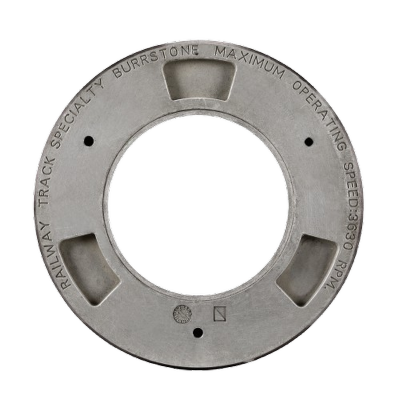
Are you looking for a reliable manufacturer of railway grinding and track maintenance equipment?
We can quickly provide customers with market analysis, technical support and customized services.
Safe Tracks Proven by China
- Name
- Phone
- *Title
- *Content