How do I choose a railroad track grinding machine?
How do I choose a railroad track grinding machine?
Choose a railroad track grinding machine on six factors in this order: (1) where the work is — mainline kilometres or turnouts and welds; (2) how many grinding heads the task needs; (3) power source — lithium for tunnels and enclosed areas, diesel for long-haul output; (4) the precision the acceptance standard demands; (5) whether grinding wheels are matched to the machine's bore, rpm and duty; (6) the supplier's support, spare-wheel supply and training. Get those six right and the machine choice follows; skip any one and you end up paying twice — once for the machine, once for re-grinding.
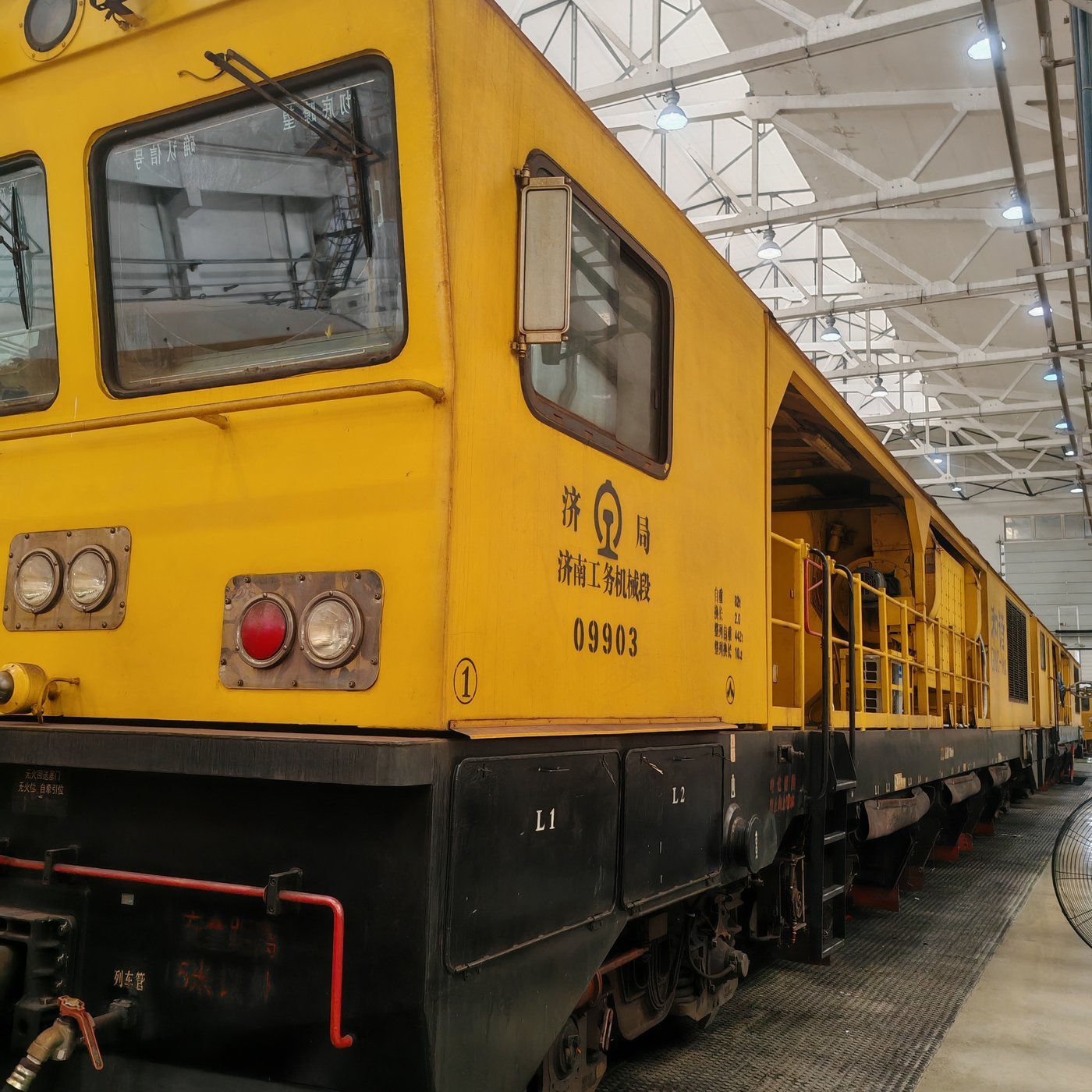
The six selection factors, in order
| Factor | What to decide | Practical rule |
|---|---|---|
| 1. Work scope and site | Mainline, station track, turnout, weld or isolated defect | Kilometres of line → grinding vehicle; turnouts, welds and curve transitions → portable machine |
| 2. Head count and speed | Single head or a 16/20-head array | Arrays run 3-16 km/h for preventive and profile work; single-head machines work 1-2 km/h on localised spots |
| 3. Power source | Lithium battery, electric, hydraulic or diesel | Lithium for tunnels, metro night windows and low noise/emission constraints; diesel or electric for continuous high-output campaigns |
| 4. Precision required | Acceptance tolerance for profile and finish | Vehicle class ≤±0.2 mm and Ra <10 μm; portable class ≤±0.1 mm and Ra ≤6 μm; frogs and switch rails need CNC copying |
| 5. Wheel compatibility | Wheel diameter, bore, thickness, rpm and bond | Every head must be fed the right wheel — 260x90x154 mm ZA F16 at 3630 rpm for PGM-48/96C-class cars, 350x60/25/50/35x127 mm at 2730 rpm for GMC16A, 150 mm class handheld wheels at 6000-7500 rpm |
| 6. Supplier support | Training, commissioning, spare wheels, custom sizes | A machine is only as productive as its wheel supply and service response |
Match the machine family to the job
| If your work is… | Choose | Typical models |
|---|---|---|
| Long mainline sections, corrugation elimination, preventive grinding | Self-propelled grinding train / vehicle | GMC16A grinding train (16/20-head, 3-16 km/h) |
| Turnouts, switch rails and stations | Light turnout grinder | RCG-L50 lithium intelligent turnout grinder (4.7 kW brushless motor, 72 Ah battery) |
| Rail head, weld and web in one pass | Vertical-axis grinder | RCG-V50 multifunctional vertical-axis grinder |
| Frogs and switch rails, high-precision profile recovery | CNC copying grinder | RCG-C65 CNC intelligent copying grinder |
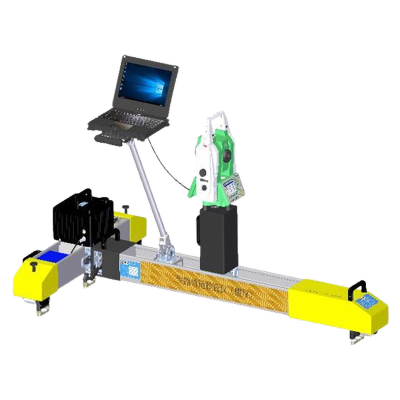
| Weld finishing and short night windows | Lithium NC grinder | RCG-L65 lithium battery NC grinder |
Every machine above runs on Molaton rail grinding wheels produced by RailwayCare — the wheels are engineered to the same head geometry and rpm as the machines, so the two are specified as one system. Compare the full range on the rail grinding machines page and the rail grinding wheels page.
What the choice costs you in practice
The Liuzhou GMC-96X campaign (2022) is the clearest illustration: a train ground 18.72 km·passes in a 2-hour night window, with wheel wear of only 20-30 mm against 43.5-59 mm for the imported reference wheel — roughly twice the wheel life from the same machine hours. Yiyang and Shuohuang heavy-haul operators averaged 5.7 and 4.98 km·passes per mm of wheel wear. On a 48-wheel high-speed car a single group grinds 10-15 km continuously. Precision matters just as much as metal removal: grinding is accepted at a profile within ≤0.3 mm of a 1 m straightedge, Ra ≤10 μm and no blueing, which is why the machine and the wheel must be chosen together. Molaton wheels are made in a 2004-founded plant — China's first dedicated rail grinding wheel manufacturer, with roots in the friction-materials laboratory of Wuhan University of Technology — certified to ISO 9001 / ISO 45001 / CRCC and tested by national abrasive institutes (rotational survival at 4775 rpm for 30 s; burst only above 6354 rpm). Machine, wheel and acceptance standard are one decision.
Related questions you may also ask
What is a rail grinding machine and how does it work? What grit size and abrasive should I use for rail grinding? Which rail grinding wheel fits Harsco PGM-48 and PGM-96C grinding trains? Operator training and commissioning supportTell us your track conditions — we will size the machine
Send us your rail type, defect list, possession window and target profile. RailwayCare will confirm the machine class and the matched Molaton wheel set within 24 hours.
Get a Machine Recommendation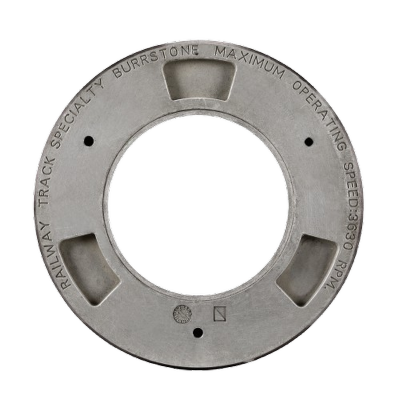
Are you looking for a reliable manufacturer of railway grinding and track maintenance equipment?
We can quickly provide customers with market analysis, technical support and customized services.
Safe Tracks Proven by China
- Name
- Phone
- *Title
- *Content