What is the RailwayCare (Molaton) rail grinding wheel range?
What is the RailwayCare (Molaton) rail grinding wheel range?
The Molaton range is organised in four families, and every wheel in it is a resin-bonded, glass-fibre-reinforced wheel rated 50 m/s: (1) grinding train wheels, 150-350 mm in diameter for production and turnout grinding trains; (2) portable and turnout wheels, 125-260 mm, for hand-guided machines and light turnout units; (3) rail cutting wheels for rail saws; and (4) custom sizes where a machine falls outside the catalogue. Most are aluminium- or steel-bodied with zirconia alumina (ZA) abrasive at 16 or 20 grit, with mountings from an M10 clamping bolt on train wheels to M20, 5/8-inch or M8 spindle fixings on portable machines. RailwayCare has manufactured these wheels since 2004 and drafted the Chinese industry standard JB/T 11431 that covers them.
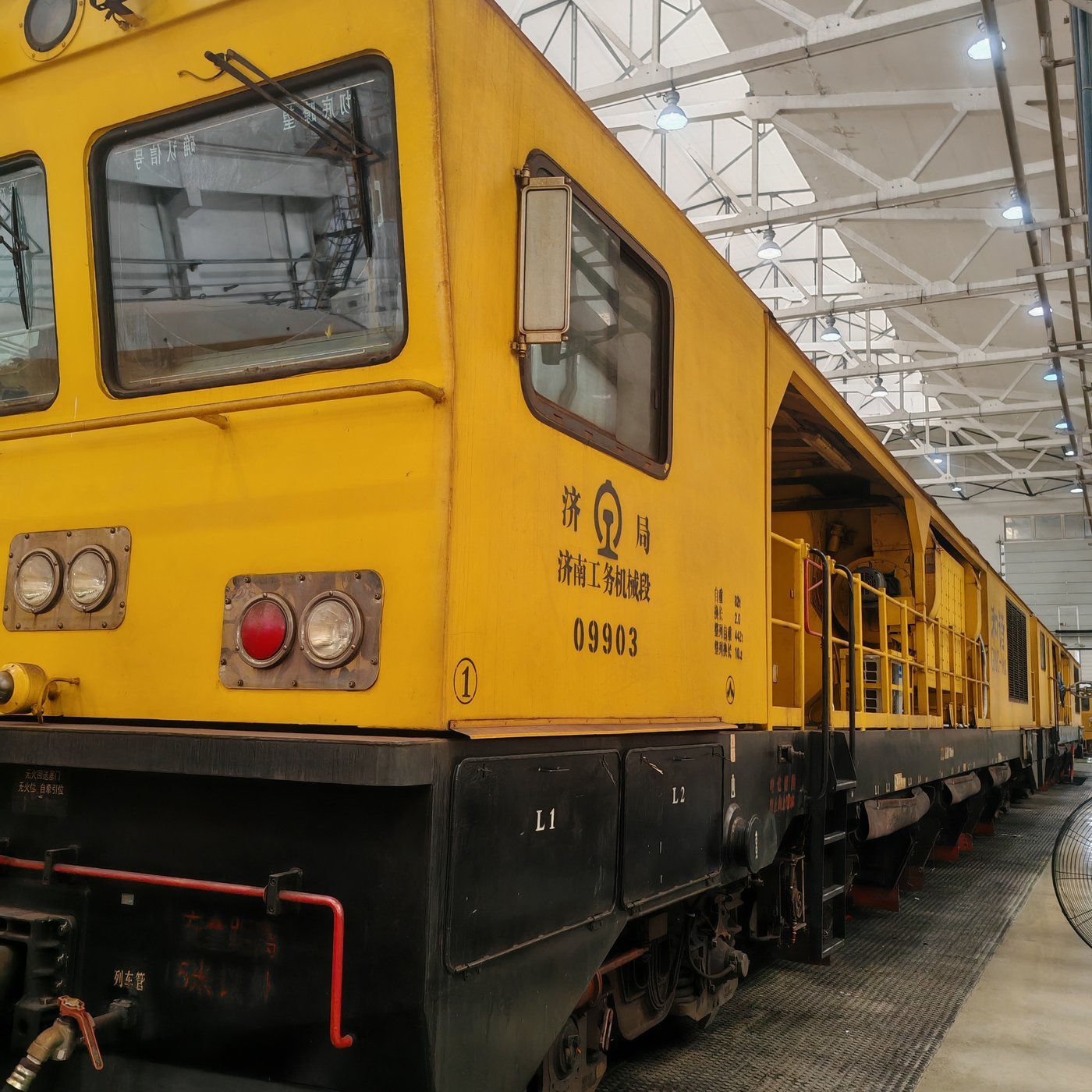
Family 1 — grinding train wheels (main line and turnout units)
| Wheel size | Typical machines | Body and abrasive | Grit | Rated speed |
|---|---|---|---|---|
| 260×90×154 mm | Harsco PGM-48, PGM-96C; CRRC Baoji GMC-48; Jinying GMC-96 | Aluminium or composite body + ZA + glass fibre, ZA/F16 Y5B | 16 | 50 m/s, 3,630 rpm |
| 260×83×154 mm | Loram C44/MFS | Aluminium body + ZA + glass fibre | 16 | 50 m/s, 3,630 rpm |
| 250×75×150 mm | Speno GMC-48/GMC-96; CRRC Taiyuan class (GMC96B); Loram-class G3 series | Aluminium body + ZA + glass fibre, ZA/F16 Y5B | 16 | 50 m/s, 3,280 rpm |
| 350×60 / 50 / 35 / 25×127 mm | Speno GMC16A main-line units | Aluminium body + ZA + glass fibre | 16 | 50 m/s, 2,730 rpm |
| 180×105×90 mm | Speno GMC16A turnout (switch) units | Aluminium body + ZA + glass fibre | 16 | 50 m/s |
| 280×25.5×116 mm | Harsco RGH20C turnout car | Steel body + ZA + glass fibre | 16 | 50 m/s, 3,630 rpm |
| 150×80×5/8 inch and 150×77×M20 | Harsco RGH20C turnout and urban rail units | Steel body + ZA + glass fibre | 16 | 50 m/s, 6,000 rpm |
| 260×90×153 mm (G1 type) | GMC-96X / PGM-96C class | Aluminium body, ZA/F16 Y, 50 m/s | 16 | 50 m/s |
| 150×27×92 mm (G6 type) | Turnout grinding cars | ZN F16 YSB | 16 | 50 m/s |
These are the wheels that run the production passes. Sizes are selected against the grinding head — bore, diameter band and rated speed — not against the rail type; the reasoning is set out in can one wheel fit different grinding machines. If you are grouping wheels by the railway they serve instead, that view is in what types of railway grinding wheels Molaton offers for different railways.
Family 2 — portable and turnout wheels for hand-guided machines
| Size | Fixing | Typical machine family |
|---|---|---|
| 150×70×M20, 150×65×M20, 150×56×M20 | M20 spindle | Geismar and Robel 150 class — general turnout, switch and weld-zone work |
| 150×75×32 mm | 32 mm bore | Geismar and Robel 150 series on urban rail |
| 150×70×55-4×M8 mm | Bolt-on pattern | Machines where the wheel is bolted rather than threaded |
| 125×65×20-54×47 and 125×65×20-36×18 | Dual-step and special bores | 125 class portable grinders and light machines |
| 254×32×25.4 mm | 25.4 mm bore | Larger turnout wheels on Geismar and Robel machines |
| 250×32×32 mm, 260×25×120 mm | Cylindrical and large-diameter formats | Weld dressing and specialised machine heads |
| 230×60×25 mm, 180×80×M20 | Custom and M20 formats | Light turnout and special-purpose heads |
Material across this family is zirconia alumina or brown alumina (ZA/F20) at 20 grit, rated 50 m/s at 6,000-7,500 rpm. The full landing page for this group is Geismar and Robel compatible wheels, and turnout-specific formats sit under turnout rail grinder wheels.
Family 3 — rail cutting wheels
| Size | Abrasive | Grit | Maximum speed |
|---|---|---|---|
| 356×4×25.4 mm | Brown alumina (ZA/F30) | 30 | 80-100 m/s |
| 400×4×32 mm | Brown alumina (ZA/F30) | 30 | 80-100 m/s |
| 305×3.6×22.2 mm | Brown alumina (ZA/F30) | 30 | 80-100 m/s |
| 180×3×22.2 mm | Brown alumina (ZA/F30) | 30 | 70-100 m/s (max 7,000 rpm on the standard sheet) |
Cutting wheels are a different duty from grinding wheels — they are thin, run at higher surface speed and are not interchangeable with grinding wheels on the same arbor.
Family 4 — custom bores, diameters and mountings
Where a machine head does not match a catalogue size, we build to the head drawing rather than force a near neighbour. The lightweight route covers custom bore, diameter, thickness, grit and mounting pattern, and is described in light customization solutions, with worked examples in rail grinding wheel customization cases.
How every wheel is built and released
| Aspect | What it means in practice |
|---|---|
| Structure | Aluminium or steel body with pre-formed mounting holes, grinding body, then glass-fibre winding for burst protection — the winding must be uniform, tight and colour-consistent |
| Mountings | M10 clamping bolts on train wheels with effective thread engagement of at least 17 mm; M20, 5/8-inch or M8 spindle fixings on portable wheels |
| Release inspection | Under Q/CR 1-2014 every wheel is checked individually for appearance, mated surfaces and dimensions, static balance and rotation strength — not sampled by lot |
| Third-party verification | National Abrasives Quality Inspection and Testing Centre reports on wheel geometry and strength, Railway Academy of Sciences testing to Q/CR 1-2014, and design approval against rotor-speed limits |
| System certificates | ISO 9001:2015 (USA24Q41620R4M, valid to 2027-07-11), ISO 45001 (to 2029), CRCC since 2011, Railway Academy TKTJ-19-0007-ST (to 2027-02-03) |
| Railway approvals | Bureau design approvals for PGM48 (2007), PGM96C (2010) and GMC96B (2013) |
| Standards | We drafted JB/T 11431 for rail grinding wheels; tolerances follow JB/T 7992 and JB/T 11431 |
| Capacity | Manufacturing since 2004, annual capacity approximately 500,000 wheels; over 230,000 wheels shipped in 2025 |
The 2025 shipment figure is documented in RailwayCare wheel sales surpass 230,000 in 2025, and the standard we co-drafted in the JB/T 11431 story.
What the range has delivered on track
- Shuohuang heavy-haul — 48 wheels on a half car at 15 km/h and 13.8 kW: 4.98 pass-km per millimetre, averaging 199 pass-km per wheel across a 172.8 pass-km campaign on 75 kg/m and 60 kg/m rail. Cumulative fitted wheels on this programme: 808.
- Hewu high-speed corridor — 260×90×154 mm at 68% power, 16 km/h: 4.28 pass-km per millimetre against 3.27 for the wheel then in use, and 214.22 pass-km averaged per wheel, with no continuous blueing.
- Yiyang line — 5.7 pass-km per millimetre on mixed U71Mn and U75V rail.
- Liuzhou bench — composite wheels 100-150 pass-km against 50-60 for ordinary and imported wheels, clearing defects in 2-3 passes instead of 4-6.
- Chengdu metro — scored 90 and passed on trial.
These are the numbers to weigh against price when you compare suppliers — and they are all pass-kilometre figures, which is the only unit in which wheel life is comparable. For how to turn them into a budget, see how to calculate rail grinding wheel cost per kilometre; for how to check a supplier’s claims, how to choose a reliable rail grinding wheel supplier; and for order quantities, what MOQ to expect — our smallest documented delivery was four wheels for a comparison trial, without any reduction in the per-wheel inspection regime.
Related questions you may also ask
What types of railway grinding wheels does Molaton offer? What does a specification like 260x90x154 mm mean? How to choose a reliable rail grinding wheel supplier? What MOQ should I expect when buying rail grinding wheels? More answers on rail grinder wheelsFind your wheel in the Molaton range
Send us the machine make and model, the wheel size you run today, and your rail section. We will point you to the Molaton wheel for each head in your fleet, quote in the quantity you actually need, and confirm lead time for anything outside the standard range.
Request the Molaton Wheel Range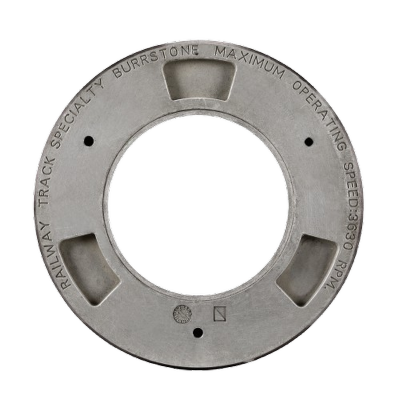
Are you looking for a reliable manufacturer of railway grinding and track maintenance equipment?
We can quickly provide customers with market analysis, technical support and customized services.
Safe Tracks Proven by China
- Name
- Phone
- *Title
- *Content