How to choose a reliable rail grinding wheel supplier?
How to choose a reliable rail grinding wheel supplier?
Screen a supplier on five things, in this order: (1) it is the manufacturer, not a trading layer; (2) it helped write the product standard your QA department will quote; (3) it holds third-party and railway-bureau type approvals that can be verified; (4) it can name the lines, machines and pass-kilometre figures behind its claims; (5) it inspects every wheel, not a sample, and can trace each one to a batch. A quote that comes without those five is not cheaper — it is unpriced risk. Ask for the documents below, then validate with a small on-track trial before you commit to a set.
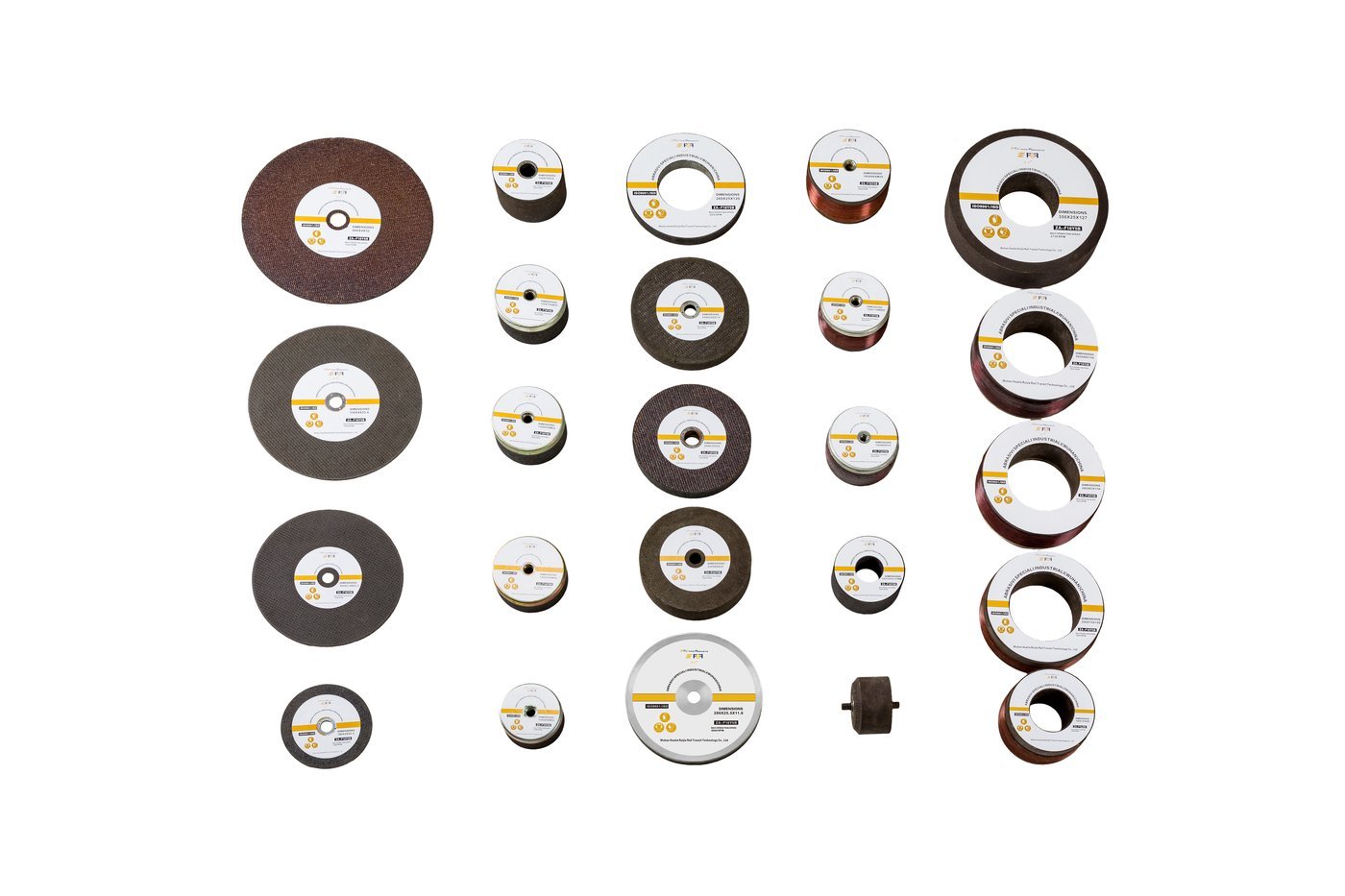
First question: manufacturer or reseller?
This decides everything that follows, because only a manufacturer controls the compound, the cure cycle and the test that releases each wheel. Ask three concrete questions:
- Who mixes the compound and presses the wheel? A supplier that cannot describe its own press line, cure cycle and balancing station is passing your order down a chain — and passing the accountability with it.
- What is the annual capacity? Our own plant runs at around 500,000 wheels a year. That number is checkable on a factory visit, and it tells you whether your set orders are a rounding error or a priority.
- How long has the plant made this product? We have manufactured rail grinding wheels since 2004 — the first dedicated rail grinding wheel manufacturer in China, with roots in the friction-materials laboratory work at Wuhan University of Technology. Institutional memory matters here more than in most consumables, because wheel performance is empirical.
Raw-material provenance is a useful, low-cost probe. If the supplier will name its grain and resin sources and explain why it selected them, you are talking to a manufacturer. We buy grain from Saint-Gobain Abrasives and bond resin from SI Group, and we will say so in writing.
The paperwork that separates suppliers
This is the part most buyers under-specify. Every item below can be requested before you place an order, and every one of them is independently verifiable.
| Document | What it proves | What to ask for specifically |
|---|---|---|
| Participation in the product standard | That the supplier understands the acceptance criteria, not just the drawing | Evidence of drafting work on the railway grinding wheel standard. We co-developed JB/T 11431 (current edition 2020) and manufacture to JB/T 7992 dimensional tolerances. |
| Quality management certification | That there is a system behind the sample you were sent | Current certificates with numbers and expiry dates. Ours: ISO 9001:2015 (USA24Q41620R4M, valid to 2027-07-11) and ISO 45001 (valid to 2029). |
| Third-party product test report | That an independent laboratory measured balance, geometry and rotation strength | A named report number and issuing laboratory. We test through the China Academy of Railway Sciences (TKTJ-19-0007-ST, valid to 2027-02-03) and the National Abrasives Quality Inspection and Testing Centre. Ask for the rotation-strength result in particular: it should stay intact at the overspeed test, not merely pass visual inspection. |
| Railway-bureau type approval | That the wheel has been accepted for service on a network, not just in a laboratory | Approval references for the machine classes you operate. Ours cover PGM48 (2007), PGM96C (2010) and GMC96B (2013) class machines, plus CRCC certification since 2011. |
| Per-wheel inspection record | That quality is produced, not hoped for | A statement of the inspection regime and a sample record. See the inspection section below — a sampling regime is not the same purchase. |
If a supplier cannot produce items one to four on request, treat the quotation as provisional regardless of price.
Claims you can check: ask for lines, machines and pass-kilometres
"Longer life" is not a specification. A credible supplier answers with a line, a machine, a wheel size and a wear figure. This is the pattern to demand, using our own programme as the example:
| Line and machine | Wheel | Result recorded |
|---|---|---|
| Shuohuang heavy-haul, half car, 15 km/h at 13.8 kW | 260×90×154 mm class | 4.98 pass-km per mm of wheel wear, average 199 pass-km per wheel; 808 wheels fitted cumulatively |
| Yiyang line | 260×90×154 mm class | 5.7 pass-km per mm, average 228 pass-km per wheel |
| Hewu high-speed line, PGM-96C, 16 km/h at 68% power | 260×90×154 mm | 4.28 pass-km per mm against 3.27 for the wheel in use, 214.22 pass-km per wheel, no continuous burning |
| Liuzhou bench comparison, 7 km/h at 8 kW | 260×90×154 mm | 100-150 pass-km for the composite design against 50-60 pass-km for ordinary and imported reference wheels |
Volume is a second, weaker signal — but it is a signal. More than 230,000 rail grinding wheels were shipped in 2025 alone, across main-line, turnout and metro programmes. A supplier at that scale has already met defect mixes it did not choose.
Two cautions for your own evaluation. First, pass-kilometres depend on the duty — line hardness, defect mix, power, speed and pass plan all move the number, so never compare two suppliers' figures unless the line conditions match. Second, treat any supplier's relative claim about a named competitor as unverified until you see the report; we publish our own measured data and let it stand on its own.
Inspection: every wheel, not a sample
This is the single most useful discriminator when two suppliers quote similar prices, and it is written into the standard. Q/CR 1-2014 §6.2.2 requires appearance, fit dimensions and geometry, static balance and rotation strength to be checked wheel by wheel. Our own test outline goes further and applies routine testing at type-test level to every rail grinding wheel dispatched, so a four-wheel trial and a six-hundred-wheel batch pass through the same gate.
Ask any supplier three follow-up questions: Is inspection per wheel or by sampling? Does each wheel carry permanent marking including a wear-limit indicator? Can a wheel in service be traced back to its batch and its record? Our batches are numbered and archived — examples include WHFL230829, CYF230930, CYF240130, SH240412 and SH240708 — and each wheel carries model, manufacturer code, month of manufacture, wheel code and wear-limit marker.
Compatibility and the willingness to say no
A reliable supplier documents which machines each size fits, instead of implying that one wheel covers every machine. Our Molaton product pages carry a Compatible Systems field for exactly this reason: 260×90×154 mm for Harsco PGM48/96C, CRRC Baoji GMC-48 and Jinying GMC-96 class machines; 250×75×150 mm for Speno GMC-48/GMC-96 and CRRC Taiyuan; 180×105×90 mm for Speno GMC16A switch units; 260×83×154 mm for Loram C44 and MFS; and a 125 mm class for Geismar and Robel portable machines.
The counterpart is honesty when a size is not in the catalogue. For machines with no catalogue match we route the enquiry into light customisation and quote against the head drawing, rather than promising a part number that does not exist. A supplier that never says "we do not make that" is not reliable; it is merely agreeable.
Also ask about the channel. If you buy through a distributor, confirm the partnership and distribution structure and who holds the technical responsibility for the grade recommendation.
How to run the trial, and the red flags to walk away from
Buying the first set is a test procedure, not a purchase. Keep it small, keep a control, and write down the acceptance criteria before the first pass. Our own programmes started at four wheels run side by side with the incumbent product on the same train, before scaling to a half-car set of 48 and a full-car set of 96. The same discipline applies to a new customer: an agent programme in South Africa was converted into a long-term partnership after sample validation on the customer's own track — see the sample-validation case.
Red flags, in rough order of severity:
- No third-party test report, or a report with no number, no laboratory name or no rotation-strength result.
- No batch traceability and no per-wheel inspection statement.
- A price with no specification attached — abrasive, grit, bond, speed rating and tolerance class are the minimum.
- "One wheel fits all machines" — the arbor, the diameter limit and the speed rating are set by the machine, not by the supplier.
- Grade recommendations that ignore your line — a wheel for a heavy-haul line with spalling is not the wheel for a metro with corrugation.
For the surrounding commercial questions, our answers are already published: how long a wheel lasts, what minimum order quantity to expect, and delivery lead times. If you are comparing suppliers on something other than price, start with the five key performance indicators and then narrow the list with these RFQ tips. The wider evaluation framework for contractors rather than consumable suppliers is set out in how to choose a rail grinding company.
Related questions you may also ask
How do I choose a rail grinding company? What MOQ should I expect when buying rail grinding wheels? How long does a rail grinding wheel last per grinding cycle? What does a specification like 260x90x154 mm mean? The industry standard behind our rail grinding wheels More answers on rail grinder wheelsVet us the same way
Ask Molaton for the test reports, the approval references, the inspection regime and the on-track figures for your line. Send your machine and wheel size, your defect mix and the volume you plan, and we will answer with the documents attached — then quote a trial set so you can check the claim on your own track.
Request Supplier Documents and a Trial Set
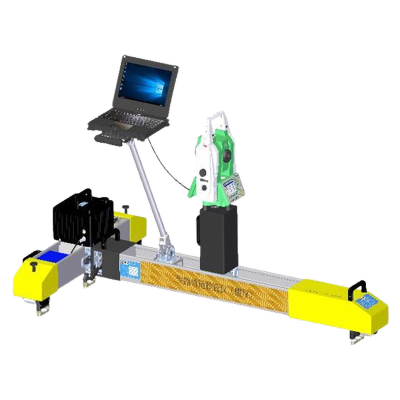
Are you looking for a reliable manufacturer of railway grinding and track maintenance equipment?
We can quickly provide customers with market analysis, technical support and customized services.
Safe Tracks Proven by China
- Name
- Phone
- *Title
- *Content