Which rail grinding wheel is best for switch and turnout grinding?
Which rail grinding wheel is best for switch and turnout grinding?
"Best" in turnout work means the wheel that fits the grinding head which can physically reach the zone — not the largest wheel you can buy. In practice that gives three families: 180×105×90 mm (zirconia alumina, resin bond, glass-fibre reinforced, 50 m/s) for the switch units on a grinding train, where the head must enter the gap between stock rail and check rail; the 150 mm series (150×65×M20, 150×70×55 dual-step bore, 150×56×M20 weld-zone and 150×77×M20) for frog point, check rail and wing rail work with portable machines; and the main-line sizes (260×90×154 or 250×75×150 mm) only where the geometry lets a large machine pass. Pick by job and by reachable zone first, then by grade.
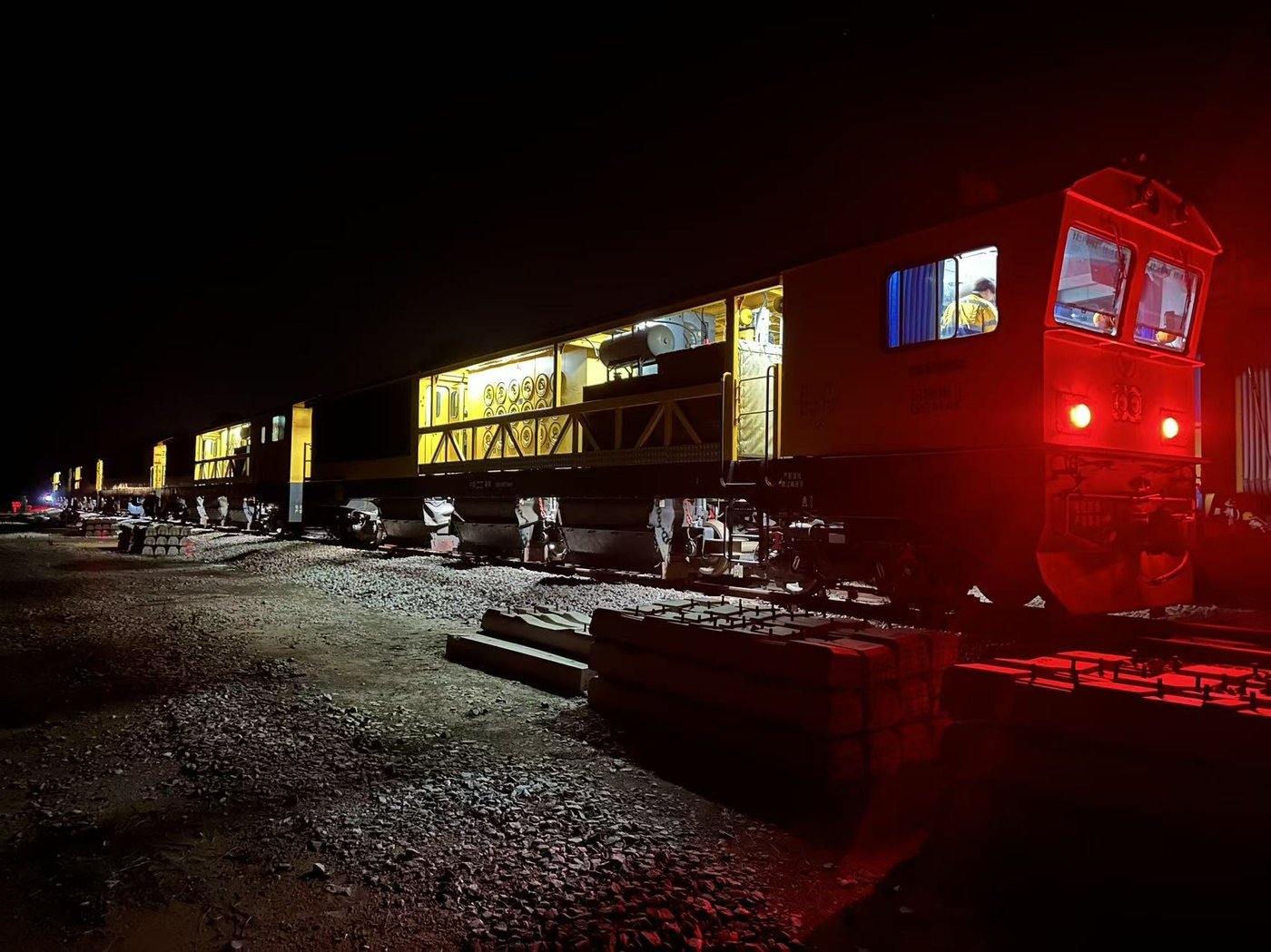
Why turnout grinding is a different job from plain line
- The working zones are restricted. Around the frog, the check rail and the switch rails, the wheel has to enter a narrow space without touching the gauge face that is not being ground. A wide main-line wheel simply cannot reach there, which is why switch units are built around smaller, narrower wheels.
- Contact is intermittent. The head engages and disengages as it crosses gaps and rails of different sections, so the cleaning action that keeps a wheel sharp on plain line is weaker — the wheel has to be able to re-expose its own grain.
- The unit pressure is high. A smaller contact patch concentrates the same head load, and the surrounding steel mass is not continuous, so heat has less room to escape. This is where burning and short wheel life come from, and it is why the finish check on a turnout matters more than on plain line.
- The target is the contact band, not just a smooth surface. The finished band on the rail head should be about 25-30 mm wide on high-speed turnouts and 35-40 mm on conventional and heavy-haul turnouts. A wheel that polishes without restoring the band has not done the job.
- Frog and switch rails are their own damage case — flange build-up along the switch rail, gauge-face crushing and lip flow appear here before they appear on plain line.
The three families, by job
| Job | Wheel class | Typical catalogue size | Compatible systems on our product pages |
|---|---|---|---|
| Turnout and switch units on a grinding train | Zirconia alumina, resin bond with glass-fibre reinforcement, 50 m/s, 16 grit | 180×105×90 mm (6.2 kg) | Speno GMC16A switch units; CRRC Taiyuan |
| Frog point, check rail, wing rail with a portable or light machine | Zirconia alumina, resin bond, 50 m/s, 20 grit | 150×65×M20, 150×70×55 dual-step bore, 150×75×32, 150×77×M20, 150×80×5/8" | Geismar and Robel 150 class; Harsco RGH20C light rail |
| Weld-zone finishing inside the turnout (aluminothermic or flash-butt joints) | Zirconia alumina, resin bond, 50 m/s, 20 grit | 150×56×M20 weld-zone wheel | Geismar and Robel 150 class |
| Turnout units on larger portable machines | Zirconia alumina, resin bond, 50 m/s | 254×32×25.4 mm | Geismar and Robel turnout units |
| Profile pass over turnout approaches where a production train can run | Heavy-duty zirconia alumina, resin bond, glass-fibre reinforced, 50 m/s, 16 grit | 260×90×154 mm or 250×75×150 mm | Harsco PGM48/96C, CRRC Baoji GMC-48, Jinying GMC-96 / Speno GMC-48 and GMC-96, CRRC Taiyuan |
The grades differ for a reason. The 16-grit, heavy-duty wheel is built to cut hard and survive impact on continuous main-line contact. The 20-grit turnout and portable wheels trade a little cutting aggression for a more controllable finish in a confined zone where an over-cut is expensive to repair.
The standard treats turnout wheels as their own class
This is worth knowing before you compare quotations, because it means a turnout wheel is not simply "a smaller main-line wheel". Q/CR 1-2014 sets separate wheel wear-rate and work-piece wear tables for switch and turnout wheels in two diameter brackets — 150 mm ≤ D ≤ 200 mm and 200 mm < D ≤ 280 mm. A 180×105×90 mm switch-unit wheel is therefore evaluated against a different performance table than a 260 mm production wheel, and a quotation that treats them as interchangeable is quoting to the wrong criteria.
Two practical checks follow from this:
- Check the speed arithmetic. At 50 m/s, a 180 mm wheel corresponds to roughly 5,300 rpm, so a data sheet that pairs that diameter with 6,000 rpm is quoting a machine spindle speed rather than the wheel rating. The rating that matters is the marking on the wheel, and it must be at least as high as the head it goes on.
- Check the mount, not just the diameter. Turnout wheels in the 150 series come with M20 threads, plain bores, bolt-mounted and dual-step bores, and the wrong mount is a scrap wheel regardless of how good the compound is.
What the finished turnout has to measure
Choose the wheel against the acceptance criteria your inspector will apply, not against the defect alone.
| Item | Target / limit |
|---|---|
| Contact band width | 25-30 mm (high-speed turnouts); 35-40 mm (conventional and heavy-haul) |
| Profile conformance (GQI) | ≥85 rated good, with standard deviation ≤8; ≥70 accepts, standard deviation ≤10 |
| Zone tolerance | Rail-head centre +0.2 / −0.4 mm; zones 2, 3 and 4 ±0.2 mm |
| Surface roughness | Ra ≤10 µm (contract-grade jobs target ≤8 µm) |
| Straightness | Within 0.3 mm under a 1 m straightedge, with a ramp-off steeper than 1‰ |
| Burning | No continuous oxidation (blue) band. As a colour guide: below about 471 °C leaves a normal surface, 471-600 °C produces light-yellow burning and 600-735 °C produces blue burning. |
| Base-material removal | Not more than 0.5 mm depth |
| Running behaviour after grinding | Lateral car-body acceleration measured at about 0.20 m/s² before grinding falls to about 0.04-0.08 m/s² after — this is the outcome a turnout pass is actually bought for. |
Field experience to fit the wheel against
Turnout results are line-specific, so the useful question is not "which wheel is best" but "which wheel on which machine produced which measured result". Three reference points from our own programmes:
- Turnout and crossing maintenance, Wuhan freight marshalling yard — a machine solution built for switch and crossing work, where the constraint was head reach into the crossing area rather than cutting capacity. See the marshalling-yard case.
- Heavy-haul turnout and main-line work with 260×90×154 mm wheels returned 4.98 pass-km per mm of wheel wear on the Shuohuang half-car programme, average 199 pass-km per wheel across 808 wheels fitted — the reference band to expect from a production-size wheel, and a reminder that turnout wheels are selected for reach rather than for that duty.
- Large-machine and small-machine combination on high-speed turnouts — the production train restores the main profile through the approaches while portable machines handle the confined zones the train cannot enter. The sequence and the target profiles are set out in large-machine and small-machine synergy and in target profiles and restricted zones.
For the mechanics of the confined zone, precision turnout grinding covers the geometry, and flange build-up on switch rails covers the defect most often mistaken for a wheel-size problem. The machine side, as opposed to the consumable side, is answered in how to choose a grinder for switch and turnout work.
Related questions you may also ask
How do I choose a rail grinder for switch and turnout work? Can one rail grinding wheel fit different grinding machines? What does a specification like 260x90x154 mm mean? What wheel types does Molaton offer for different railways? Rail turnout grinding solution More answers on rail grinder wheelsMatch the wheel to the head that reaches the zone
Send Molaton your turnout type, the machine or head that will do the work, and the zone you need to reach. We will confirm the Molaton wheel size, mount and grade for that job, and tell you honestly if the size you asked for will not fit.
Get a Turnout Wheel Recommendation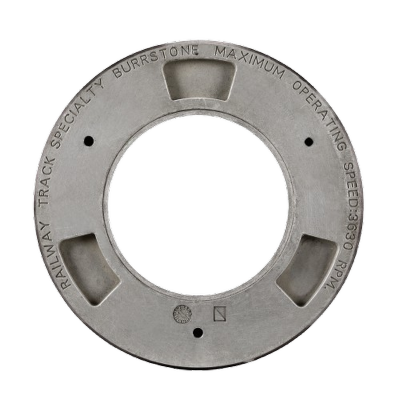
Are you looking for a reliable manufacturer of railway grinding and track maintenance equipment?
We can quickly provide customers with market analysis, technical support and customized services.
Safe Tracks Proven by China
- Name
- Phone
- *Title
- *Content