Home / All / Rail Maintenance Solution / Rail Grinding Machine Solution for Switch & Crossing Maintenance – Wuhan Freight Marshalling Yard
Rail Grinding Machine Solution for Switch & Crossing Maintenance – Wuhan Freight Marshalling Yard
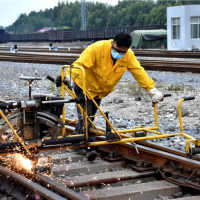
Rail Grinding Machine Solution for Switch & Crossing Maintenance – Wuhan Freight Marshalling Yard
Railway Turnout Grinding Case Study | Railwaycare Rail Grinding Machine Solution for Switch & Crossing Maintenance
Railwaycare provides professional rail grinding machine systems and abrasive solutions for turnout maintenance, including switch rails, crossing (frog) areas, and gauge face wear correction.
This case study presents a turnout maintenance project carried out at a freight marshalling yard under China Railway Wuhan Bureau, focusing on severe rail surface fatigue damage and profile degradation in complex turnout systems.

Railway Turnout Grinding Project in Wuhan Freight Yard | Switch & Crossing Maintenance Case Study
Railwaycare carried out a turnout grinding maintenance project at a freight marshalling yard under China Railway Wuhan Bureau.
The maintenance scope included:
·No.12 standard turnout
·Double slip switch
This area is subject to high traffic density and complex wheel–rail interaction forces.
Inspection identified major defects including:
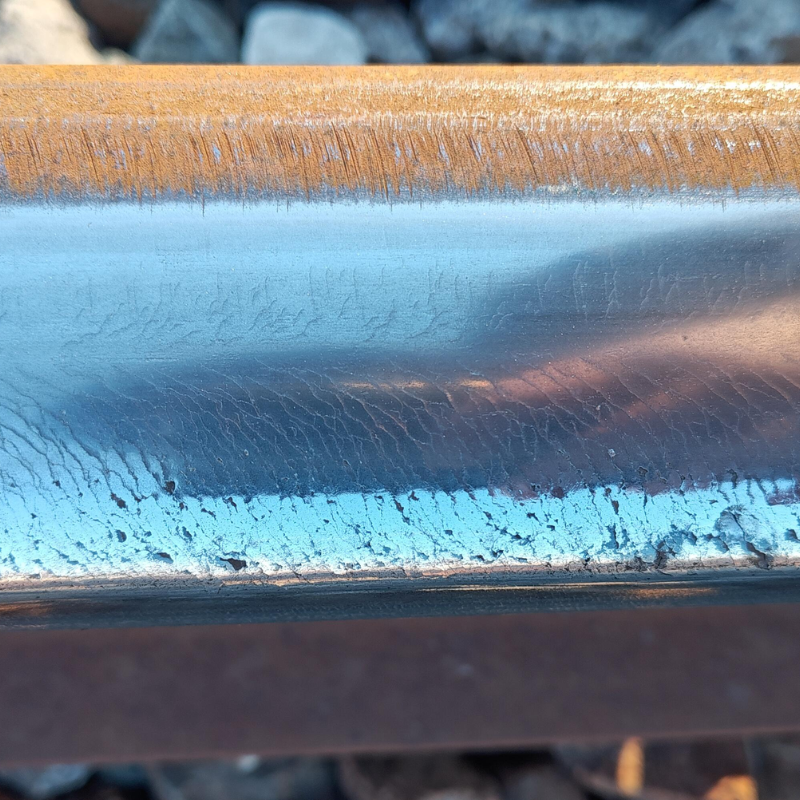
·Rail head contact fatigue damage
·Gauge face wear and profile distortion
·Crossing impact wear and plastic deformation
These defects significantly affected wheel–rail interaction quality and required systematic grinding intervention using Railwaycare equipment solutions.
Rail Head Contact Fatigue Damage in Turnouts | Rail Grinding Machine Solution

Rail head contact fatigue damage is one of the most common degradation modes in turnout zones.
Field inspection results:
·Flattened rail head area ratio: 15%–25%
·Wheel–rail contact patch expansion: 20%+ increase
·Transition from single-point to multi-point contact
Engineering consequences:
·Creepage increase: 20%–35%
·Elevated shear stress levels
·Accelerated fatigue crack propagation
Without timely intervention, rail head flattening develops into continuous wear bands, significantly reducing rail service life.
Basis for Rail Surface Contact Damage | ||||||
Slight Damage | Severe Damage | |||||
Operating Speed | v max ≥200 km/h | 160 km/h≥v max >120 km/h | v max ≤120 km/h | v max ≥200 km/h | 160 km/h≥v max >120 km/h | v max ≤120 km/h |
Damage Criteria | Depth > 0.3 mm | Length > 15 mm and Depth > 3 mm | Length > 15 mm and Depth > 4 mm | Depth > 1 mm | Length > 25 mm and Depth > 3 mm | Length > 30 mm and Depth > 8 mm |
Railwaycare Rail Grinding Machine Solution
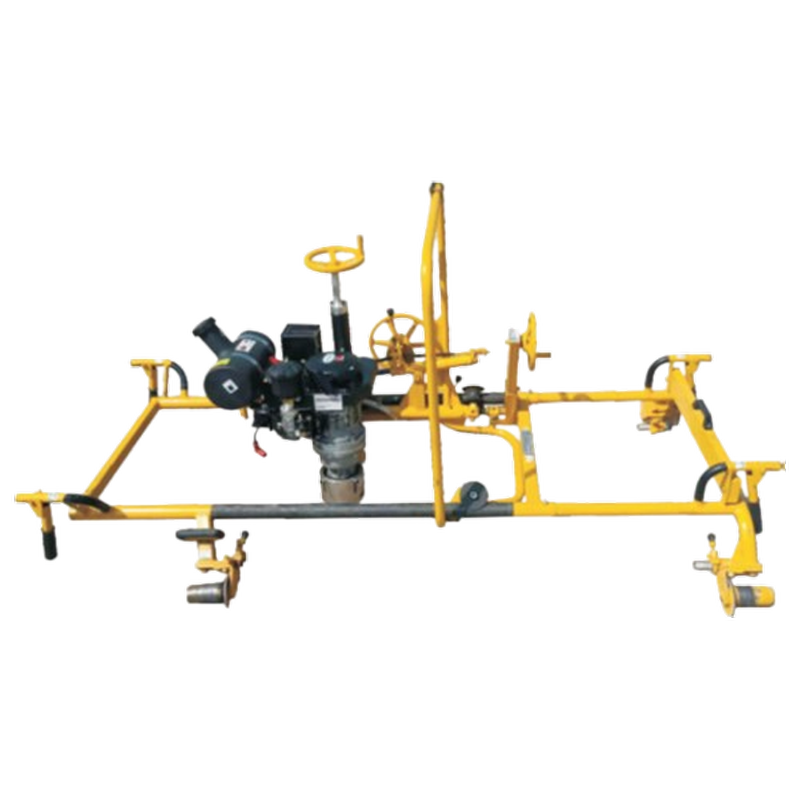
·Petrol-powered rail grinding machine system
·Maximum stable speed: 3600 rpm
·Speed stability: ±3%–5%
·Material removal per pass: 0.3–1.0 mm
·Efficiency improvement: 20%–30%
Abrasive system:
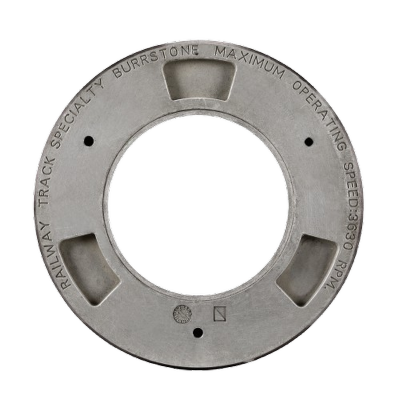
·Zirconia alumina hot-pressed grinding wheel
·Hardness increase: 15%–25%
·Cutting efficiency increase: 25%–40%
Engineering results:
·Flattened surface area reduced by 80%+
·Rail profile accuracy restored within ±0.3 mm
·Improved wheel–rail contact stability
Gauge Face Wear in Switch Rails | Switch Rail Maintenance Solution
Turnout curved sections experience high lateral forces due to the absence of transition curves and cant.
Observed conditions:
·Severe gauge face wear
·Reduced rail shoulder height
·Contact point shift toward wheel flange side
Wear step formation occurs at approximately 16–20 mm below rail head, leading to:
·Reduced contact angle
·Lower flange climb resistance
·Increased derailment risk
Railwaycare Switch Rail Grinding Solution
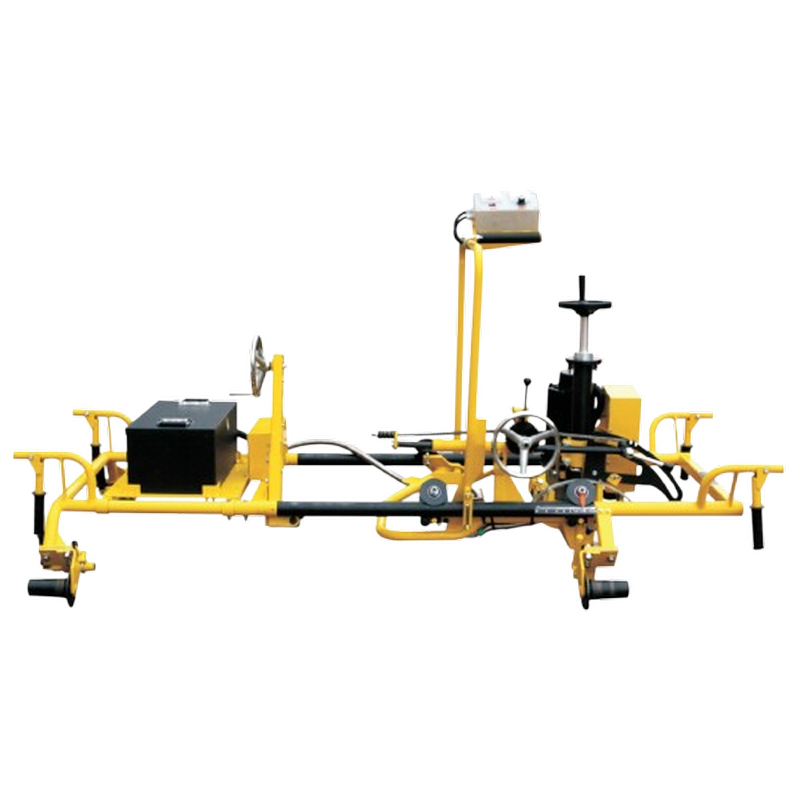
·Railwaycare Switch Rail Grinding Solution
·High-precision rail grinding machine system
·Profile correction for switch and stock rails
·Controlled material removal strategy
Engineering outcome:
·Restored rail profile geometry
·Improved steering stability through turnout zones
·Reduced abnormal wheel–rail interaction
Crossing (Frog) Damage Repair | Railwaycare Rail Grinding Machine Optimization
The crossing (frog) area is one of the most critical zones in turnout systems due to high impact loading during wheelset transition.
Field findings:
High stress concentration in 20–50 mm load transfer zone
Severe impact wear on wing rails and crossing nose
Plastic deformation and surface spalling
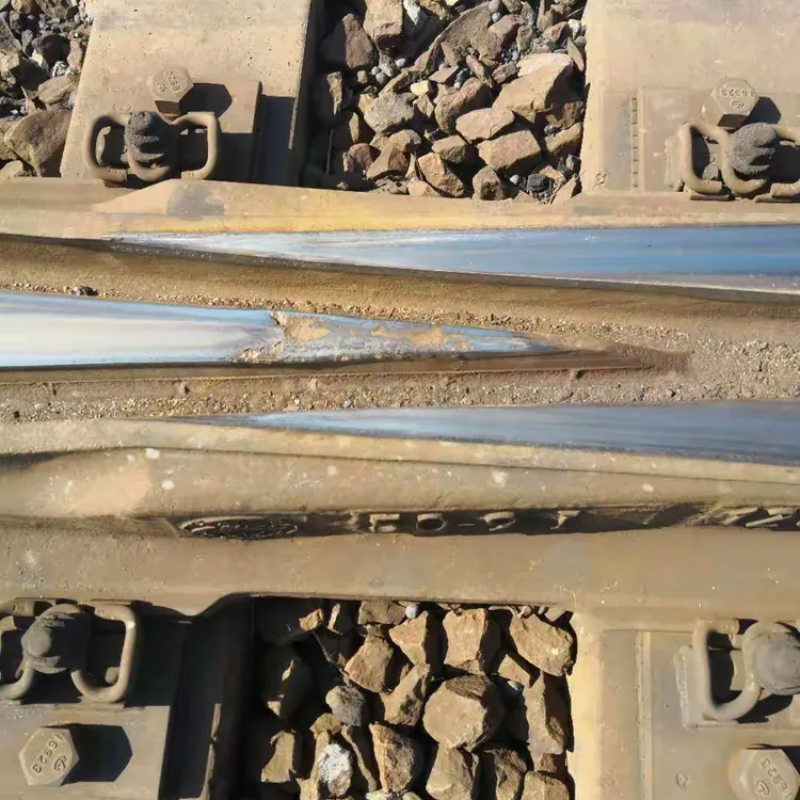
Railwaycare Engineering Grinding Solution
·Petrol-powered rail grinding machine
·Auxiliary angle grinding system for precision zones
·Stable speed: 3000 rpm
·Speed fluctuation: ±5%
·Abrasive: #20 zirconia alumina hot-pressed wheel
·Material removal improvement: 25%–40%
Engineering results:
·Removal of fatigue-damaged layers
·Restoration of crossing nose profile
·Improved wheel transition smoothness
·Reduced impact load concentration
Railwaycare Rail Grinding Machine System | Technical Performance Summary
Railwaycare provides integrated turnout grinding solutions combining equipment and abrasive technology.
System capabilities:
·Rail grinding machines for turnout maintenance
·High-performance zirconia alumina grinding wheels
·Switch rail profile restoration systems
·Crossing (frog) rehabilitation solutions
Project performance:
Maintenance efficiency improved by 20%–35%
Profile restoration accuracy within ±0.3 mm
Significant improvement in turnout running stability
Contact Railwaycare | Rail Grinding Machine & Turnout Maintenance Solutions
Railwaycare specializes in railway maintenance equipment and abrasive systems for turnout grinding applications.
We provide solutions for:
·Rail grinding machine systems
·Switch rail maintenance
·Crossing (frog) repair
·Turnout profile restoration engineering
Engineering support includes:
Are you looking for a reliable manufacturer of railway grinding and track maintenance equipment?
We can quickly provide customers with market analysis, technical support and customized services.
Safe Tracks Proven by China
Please send your message to us
- Name
- Phone
- *Title
- *Content