Can one rail grinding wheel fit different grinding machines?
Can one rail grinding wheel fit different grinding machines?
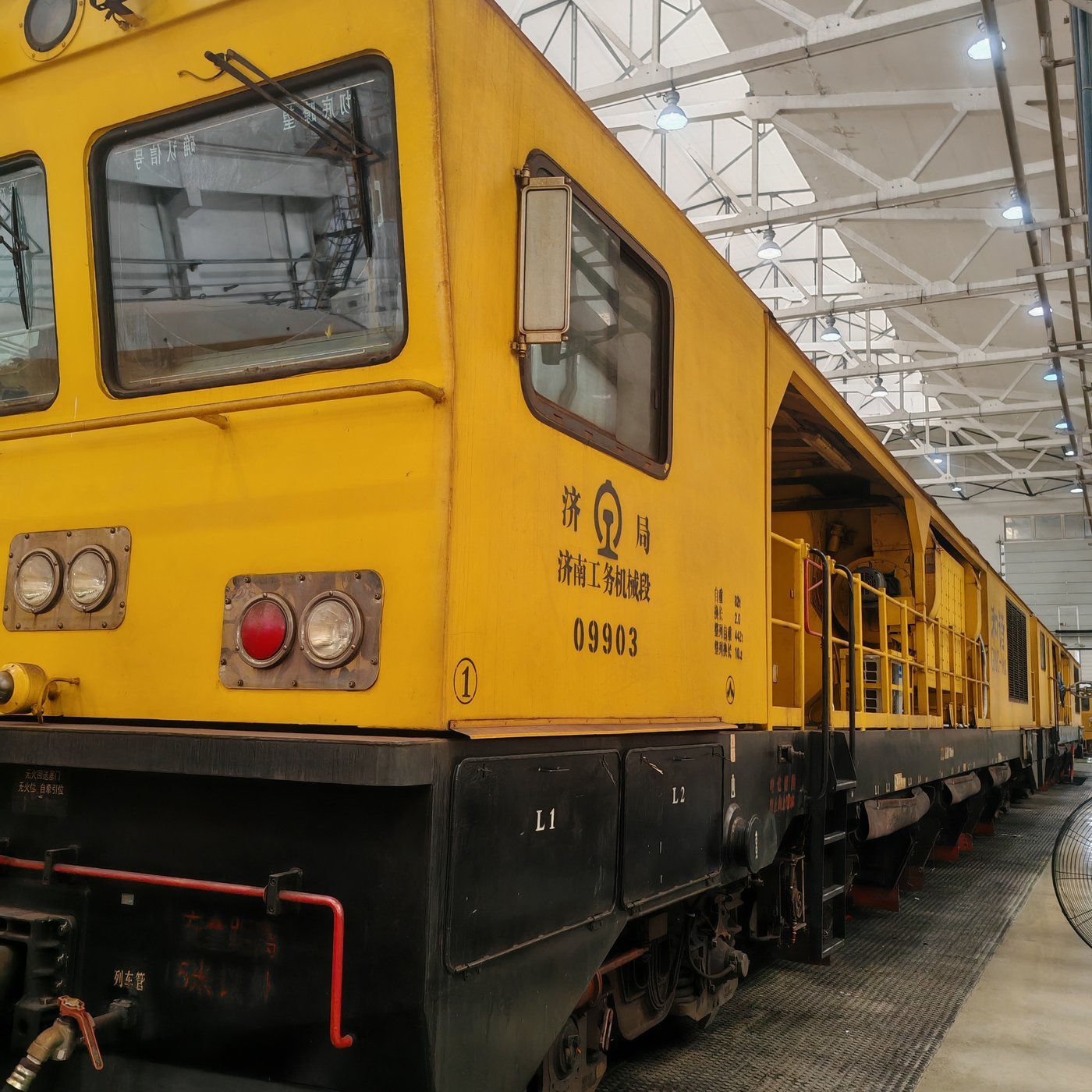
Yes, and in practice it usually does — a rail grinding wheel is matched to the grinding head, not to the machine brand on the cab. The same 250×75×150 mm format is listed for Speno GMC-48 / GMC-96 and for CRRC Taiyuan vehicles. The same 260×90×154 mm format serves Harsco PGM48/96C, CRRC Baoji GMC-48 and Jinying GMC-96. What changes between machines is four numbers: the bore, the head's maximum diameter, the maximum spindle speed, and the required bond type. Get those four right and the wheel is interchangeable; get one wrong and it is scrap — or a safety incident.
The formats that already cross machine brands
These are the formats we hold as standard inventory, with the vehicle families each one is built for. Note how often one line covers two or three builders.
| Format (OD × thickness × bore) | Weight | Rated speed | Machines it fits |
|---|---|---|---|
| 260×90×154 mm | 9.0 kg | 50 m/s (3,000 rpm) | Harsco PGM48/96C, CRRC Baoji GMC-48, Jinying GMC-96 |
| 250×75×150 mm | 7.48 kg | 50 m/s (3,000 rpm) | Speno GMC-48 and GMC-96, CRRC Taiyuan |
| 260×83×154 mm | — | 50 m/s (3,630 rpm) | Loram C44 / MFS grinding vehicles |
| 180×105×90 mm | 6.2 kg | 50 m/s | Speno GMC16A switch-and-crossing units, CRRC Taiyuan |
| 150-series (150×75×32, 150×70×M20, 150×65×M20, 150×56×M20) | — | 50 m/s (6,000 rpm) | Geismar / Robel 150-class turnout and portable machines |
| 125-series (125×65×20, bore 54×47 or 36×18) | — | 50 m/s (7,500 rpm) | Geismar / Robel 125-class light machines |
All six lines are zirconia-alumina grain in a glass-fibre-reinforced resin bond — that construction is what makes a 1.5× safety factor at 50 m/s achievable. Passive high-speed machines are covered by the same logic: the Vossloh HSG-2 wheel is a small M20-thread format, 4.06 kg, also rated 50 m/s. See the full Molaton rail grinding wheel range.
The five checks before a wheel moves between machines
- Bore and mounting. A 154 mm bore, a 150 mm bore, a 90 mm bore, an M20 thread and a 54×47 mm cup are five different spindles. The hub register and flange must match exactly; this cannot be adapted in the field with a shim.
- Rated speed above spindle speed. The wheel's maximum working speed has to exceed the machine's marked maximum spindle speed — not equal it. This is the condition written into the portable-machine manuals, and it is the one that gets ignored when a wheel is borrowed from a slower machine.
- Diameter limit and clearance. The outside diameter must not exceed the head's marked maximum (230 / 250 / 254 / 260 mm on the common portable heads). A larger wheel also means a larger rotating mass and a different guard clearance.
- Bond type. Rail grinding needs a resinoid bond with a glass-fibre wrap. A vitrified wheel on a rail head will not survive the impact of a dipped weld or a frog point.
- Balance and tolerances. Our rail range is balanced to G1, within the 30 g limit of GB/T 2492, and holds ±2.0 mm on outside diameter, ±1.5 mm on thickness, ≤0.4 mm parallelism and ≤0.5 mm concentricity under JB/T 7992 and JB/T 11431. On a 96-head train, one out-of-tolerance wheel shows up as vibration across the whole unit.
Where a format falls between two catalogue sizes, the answer is a light-customization batch rather than a force-fit: light customization solutions for rail grinding wheels.
Evidence from swapping formats in service
Two half-vehicle comparison trials show what "fits" means in practice. On the Jingha line, a GMC-16 class vehicle ran at 12 km/h and 13 kW over five passes (37.5 km per pass) with our wheels on one side: the mounting dimensions were correct, there was no damage and no burning, and the imported wheel consumed 1.027× as much material as ours. On the Liu Zhou GMC-96X in 2022, a two-hour possession produced 18.72 pass-kilometres, where our wheels wore 20-30 mm against 43.5-59 mm for the imported wheel — roughly a two-fold difference in wear for the same track.
On the Loram DM01 vehicle at Jiangmen in 2026, our wheels ran at 80% power and 7 km/h with no burning on either side, surface roughness of 1.05-9.0 μm (mostly 2-4 μm) against an acceptance limit of Ra 10 μm, and consumption of 0.079-0.151 mm per 100 m·pass. Type testing held 4,775 rpm for 30 seconds without rupture against a design speed of 3,000 rpm. That margin is the reason a wheel can be interchanged between machines at all.
Related questions you may also ask
260×90×154 mm rail grinder wheel for Harsco PGM-48 / PGM-96C 250×75×150 mm rail grinder wheel for Speno / CRRC GMC-96B Which rail grinding wheel fits CRRC and Harsco grinding trains? Which rail grinding wheel fits Speno grinding trains? Engineered for your grinding vehicle, not just your trackOne wheel, several machines — check it before you buy
Send us the machine model, the format currently fitted, and a photo of the hub or flange. Molaton will confirm the bore, diameter limit and speed rating, and quote the format that covers every vehicle in your fleet.
Get a Wheel Compatibility Check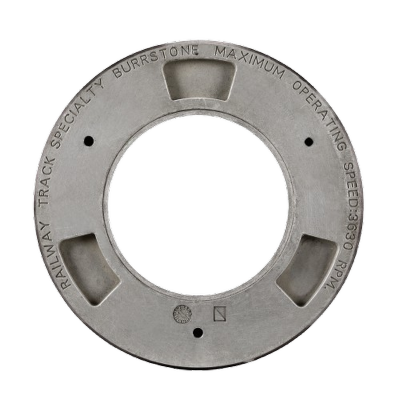
Are you looking for a reliable manufacturer of railway grinding and track maintenance equipment?
We can quickly provide customers with market analysis, technical support and customized services.
Safe Tracks Proven by China
- Name
- Phone
- *Title
- *Content