Why do rail grinder trains work at night?
Why do rail grinder trains work at night?
Rail grinder trains work at night because grinding requires the track to be handed over: the line must be closed, the traction current isolated and no trains allowed through while stones are cutting steel at up to 50 m/s. On a busy passenger or freight route there is no such block of hours during the day, so the work is scheduled into the night possession window — typically two to four hours between the last and first service. The night is not a preference, it is the only slot the timetable leaves free.
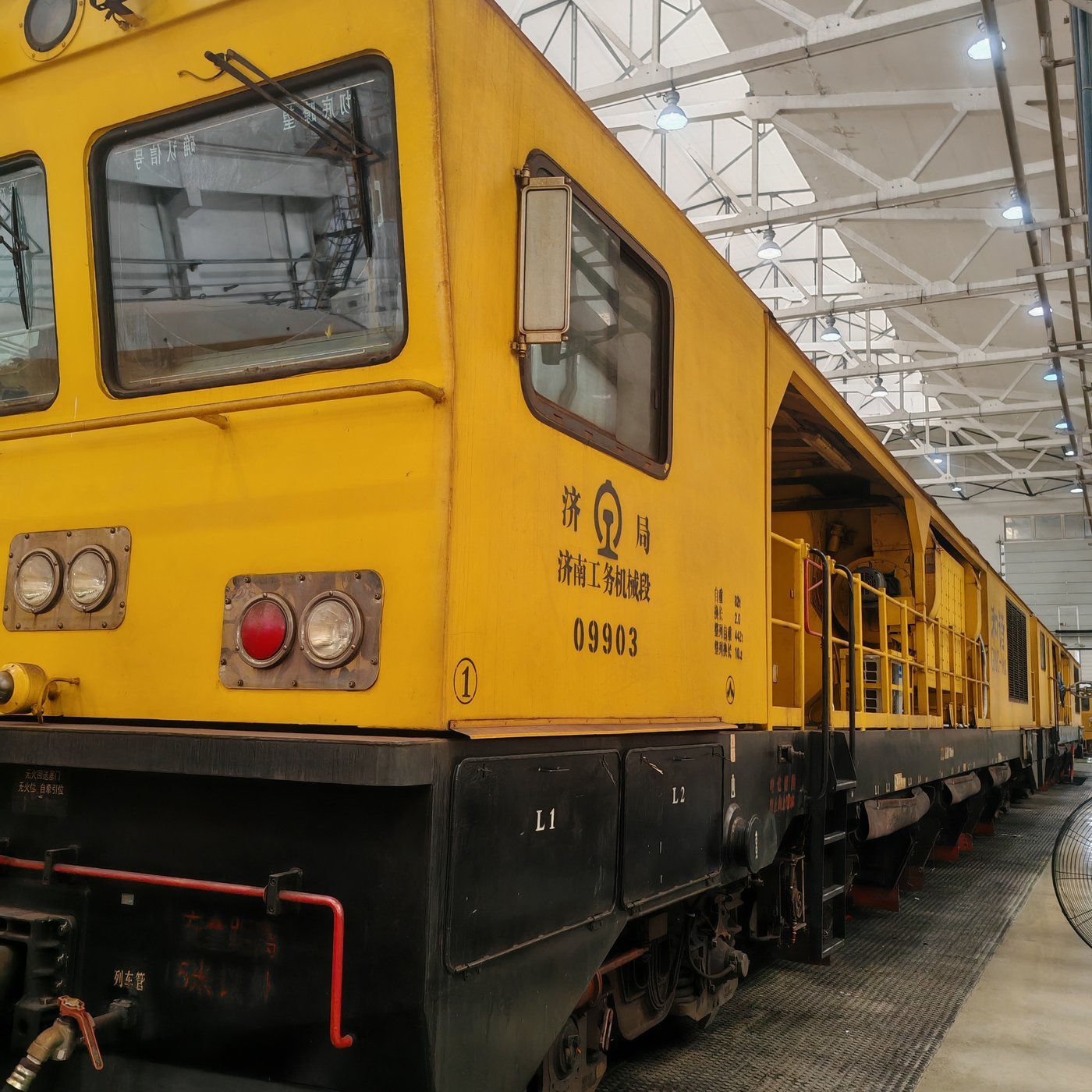
Why the track has to be closed
- Flying swarf and sparks. Grinding removes metal as hot chips and dust. The extraction system on a 12-head unit moves around 5000 m³/h of air, but nothing is allowed to reach a live track or a passenger environment.
- No tolerance for a stopped machine. A grinding train works at 7-12 km/h and cannot get out of the way. Once the sequence of passes has started, the possession has to run to completion or the profile is left part-ground.
- Electrical isolation. Overhead line equipment is switched off and earthed before anyone works near the rail head, which on an electrified route means no traffic at all.
- Surface temperature control. Acceptance requires the ground surface to sit below 130 °C within 30 s. A cool, stable night environment makes that easier to hold than a hot afternoon of continuous traffic.
Where the machine cannot get a window at all, the industry uses different equipment. High-speed passive grinding cars work at 60-80 km/h and do not need the line closed, and portable grinders are used for turnouts and spot defects. The trade-offs are set out in portable rail grinder versus full-size grinding train.
What actually fits into a night possession
| Window | Typical pattern | Recorded output |
|---|---|---|
| 2 hours | One grinding train, one direction, staged angle sequence | GMC-96X class train, Hengyang-Liuzhou line, November 2022: 18.72 pass-km in a single night window |
| 4 hours | Setup, grinding, profile measurement and hand-back | Nanning East to Wutang section on the Nanning-Guangzhou line: work scheduled 00:00-04:00, with the train prepared the previous evening |
| Multi-night campaign | Repeated windows on the same section until the target profile is reached | Yiyang line campaign: 145 pass-km accumulated across windows at 12 km/h and 15.6 kW |
| Metro night shift | Two to three hours between last and first train, tunnel and station restrictions | Acoustic and emission limits apply, which is why lithium-battery machines are preferred inside tunnels |
Inside a metro or urban system the window is tighter still, and internal-combustion machines are restricted or prohibited in tunnels, enclosed stations and elevated sections. That is why battery-powered units have become the default for urban rail grinding work.
What it costs the operator
Because the window is short, the productivity figure that matters is pass-kilometres per possession, not metres per hour. A stone that stops cutting part-way through the sequence wastes the whole window, and a stone that has to be changed mid-possession wastes time that cannot be recovered. That is why wheel life is specified as a hard number — for the GMC-96B class the requirement is a stone life of not less than 50 km under Q/CR 1-2014, verified by a burst test at 5700 rpm for 30 seconds, a static balance coefficient of 0.4 and a contact pressure of at least 10 kN.
At Liuzhou, Molaton stones consumed 20-30 mm over the campaign where imported reference stones consumed 43.5-59 mm — roughly twice the wear resistance over the same pass-kilometres, which directly reduces how many nights the job takes. On the Hefei-Wuhan high-speed line the same wheels averaged 214.22 pass-km each at 4.28 pass-km/mm against 3.27 for the reference, with no continuous blueing. The commercial side of window planning — how many nights a section needs and what it costs — is analysed in rail grinding cost per kilometre.
RailwayCare has manufactured rail grinding wheels since 2004, was the first dedicated producer in China, drafted industry standard JB/T 11431 and holds ISO 9001, ISO 45001 and CRCC certification. The products used on these night campaigns are listed under Molaton on the railway grinding wheel page.
Related questions you may also ask
What are the types of track grinding machines? What is a rail grinder train and how does it work? What is a rail grinding machine and how does it work? Rail grinding machines for main line, metro and turnout workPlanning a night grinding campaign?
Send us your possession length, the section you are working and the profile you need to reach. RailwayCare will size the stone specification so the job fits inside the window you actually get.
Ask About Night Possession Wheels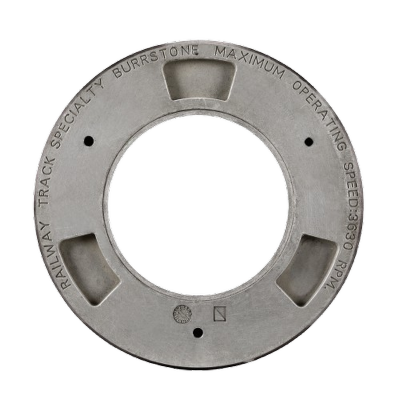
Are you looking for a reliable manufacturer of railway grinding and track maintenance equipment?
We can quickly provide customers with market analysis, technical support and customized services.
Safe Tracks Proven by China
- Name
- Phone
- *Title
- *Content