What is a high speed grinding train?
What is a high speed grinding train?
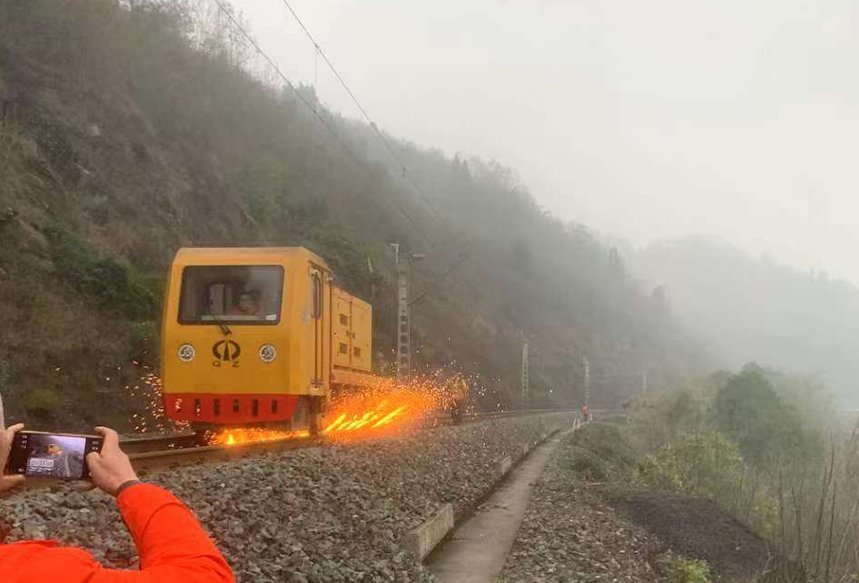
A high speed grinding train is a rail grinding vehicle that works at normal line speed rather than at walking pace. Its grinding stones have no drive motor of their own: they are pressed against the rail head and turned by the resistance of the rail passing beneath them, a method called high-speed passive grinding. Working speed is typically 60-80 km/h, the depth taken is around 0.1 mm per pass over up to three passes, and because the vehicle keeps up with traffic it can run inside the normal timetable instead of taking a possession window.
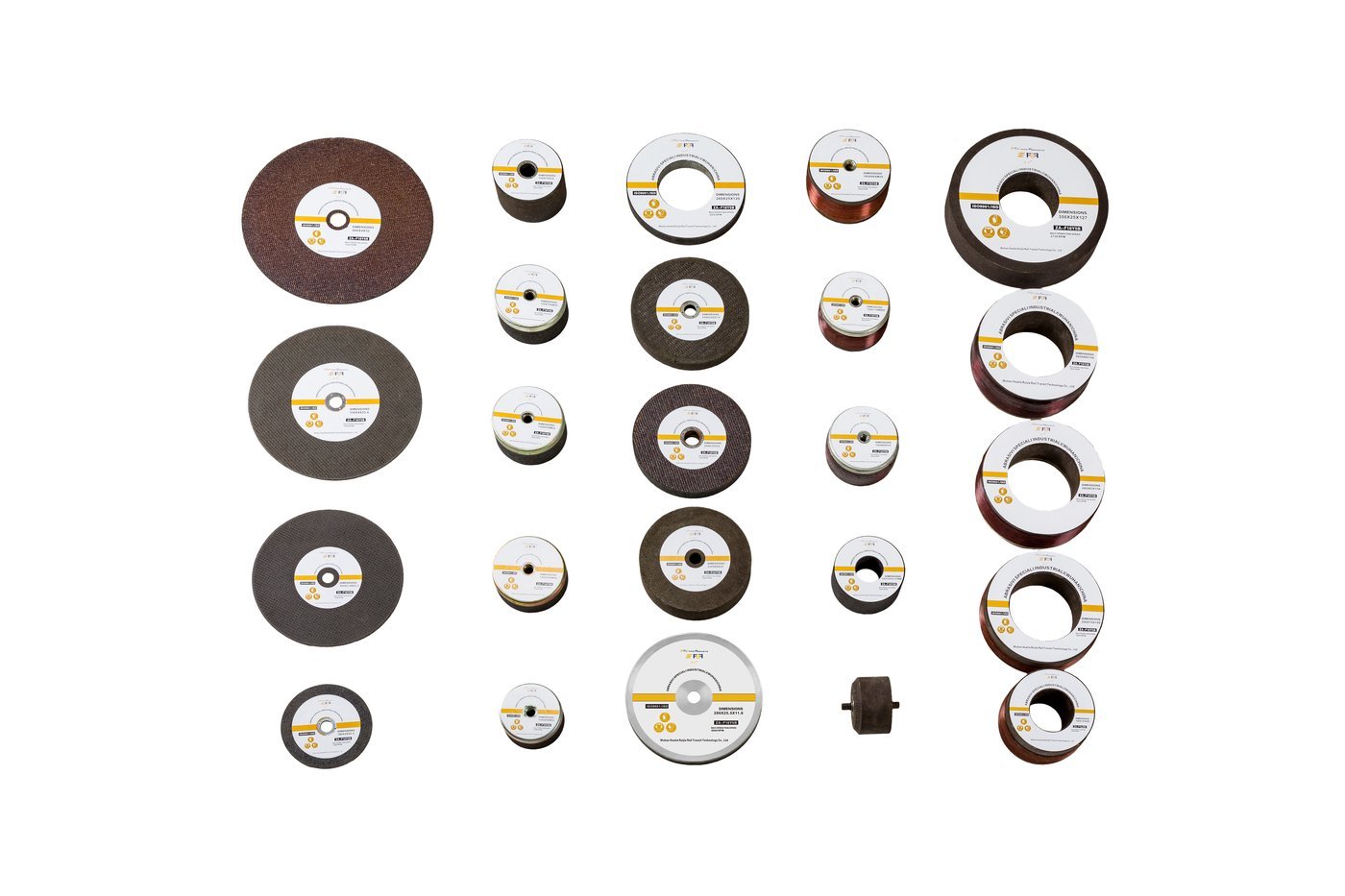
How passive grinding differs from a conventional grinding train
On a conventional active grinding train each stone sits on its own motor running at 3600-6000 rpm, and the train crawls at 3-24 km/h while the stones cut. On a high-speed passive unit the stones are free-turning and undriven. The cutting action comes from the forward motion of the vehicle: the harder the stone is pressed against the rail, the more resistance it meets, and the more material it removes.
The consequence is a different job profile. Passive high-speed grinding is a preventive tool — it keeps a healthy profile healthy and smooths the early stages of corrugation before the defect deepens. It cannot cut away severe surface damage or rebuild a badly worn profile, because the depth per pass is deliberately small and there is no independent angle control on each stone. Where the machine is used, it runs as part of a rail-life strategy rather than as a repair.
Operating speed, not stone pressure, is the main process variable, and it is a trade-off: too slow and the cut becomes excessive and burns the rail, too fast and the stone cannot keep up the removal rate. That balance is the reason high-speed grinding needs a stone engineered specifically for it, rather than a standard grinding wheel run faster.
High-speed passive grinding against the alternatives
| Feature | Active grinding | High-speed passive | Milling / composite |
|---|---|---|---|
| Grinding mode | Pre-grinding, preventive, restorative | Preventive | Restorative |
| Working speed | 3-24 km/h | 60-80 km/h | 0.36-1.20 km/h |
| Material removed | Up to about 0.2 mm per pass | Up to about 0.1 mm, up to 3 passes | Up to 5 mm at the gauge corner, 3 mm at the rail top |
| Surface finish | Ra below 10 μm | Ra below 9 μm | Ra 3-5 μm |
| Surface texture | Parallel marks roughly perpendicular to the rail | Interwoven mesh at about 45° to the rail | High finish, near-machined |
| Needs a possession window | Yes | No — runs within normal traffic | Yes, and a long one |
| Main limitation | Risk of burning the rail and forming a white layer | Cannot remove serious defects or re-profile the rail | Heavy equipment, very low working speed |
The three methods are complements, not competitors. A typical strategy uses high-speed passive grinding to hold a profile between interventions, active grinding to remove accumulated damage and restore geometry, and milling or composite equipment only where a section is severely deformed. The chemistry of why active grinding burns rails, and how a Molaton wheel is designed to avoid it, is covered in rail burning prevention.
The profile side of the same story — what "restoring" actually means against a design contour — is explained in rail profile grinding techniques and standards.
The stones a high-speed grinding train runs on
Passive grinding puts the abrasive under a different load case from a driven wheel: the stone is pushed into the rail with no motor controlling its speed, so it must resist glazing, hold its shape and stay dimensionally true. In Chinese high-speed grinding stone procurement, the specification calls for zirconia-alumina abrasive rated for surface speeds of 0-40 m/s at sizes around Φ119-122.5 × 71.5-74.5 mm.
| Requirement | Value |
|---|---|
| Abrasive type | Zirconia-alumina (ZA), resin bond with glass-fibre reinforcement |
| Rated surface speed | 0-40 m/s — lower than an active grinding wheel because the stone is undriven |
| Outside diameter tolerance | ±1.0 mm |
| Thickness tolerance | ±1.5 mm |
| Condition | No cracks or inclusions, no base-plate deformation, glass-fibre winding uniform and tight |
| Inspection basis | JB/T 7992 and JB/T 11431 (rail grinding wheels) |
Zirconia-alumina is chosen for a measurable reason. In single-axis compression testing, ZA abrasive measured 308.0 MPa against 124.0 MPa for calcined brown alumina and 103.2 MPa for white alumina, with grinding ratios of 41.0, 22.4 and 11.9 respectively on the companion wheel tests. In a passive grinding application, where the only force putting abrasive into contact with steel is the train's own forward resistance, abrasive toughness is the property that decides whether the stone cuts or just polishes.
RailwayCare has produced rail grinding wheels since 2004 as the first dedicated manufacturer in China, works from the friction-materials background of Wuhan University of Technology, drafted industry standard JB/T 11431, and holds ISO 9001, ISO 45001 and CRCC certification with annual capacity of 500,000 pieces. The Molaton range for high-speed and conventional grinding trains is listed under railway grinding wheels, and the vehicle family that uses them is described in what a rail grinding vehicle is.
Related questions you may also ask
What is a rail grinding vehicle? What is a rail grinding machine and how does it work? How does CNC intelligent copying improve rail profile grinding? What is a rail grinder train and how does it work?Specifying stones for a high-speed grinding car?
Send us your grinding car model, the rail section and the surface speed you run at. RailwayCare will confirm the Molaton stone size, abrasive grade and tolerance class that fits your machine.
Get a High-Speed Grinding Stone Quote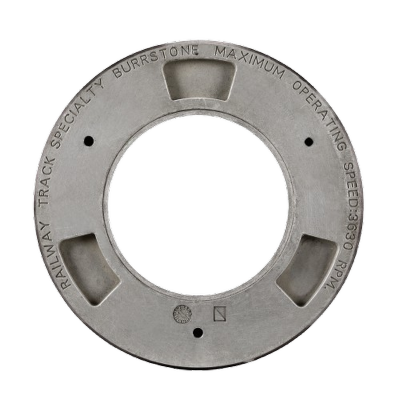
Are you looking for a reliable manufacturer of railway grinding and track maintenance equipment?
We can quickly provide customers with market analysis, technical support and customized services.
Safe Tracks Proven by China
- Name
- Phone
- *Title
- *Content