What does rail grinding cost per kilometre, and what drives it?
What does rail grinding cost per kilometre, and what drives it?
Cost per kilometre is a division, not a rate card. The numerator is what the machine, crew and consumables cost for the time the track is handed over; the denominator is the kilometres you actually finish inside that time. Four things move either side of that line — passes, working speed, possession utilisation and wheel consumption — and the cheapest quoted rate usually wins only by assuming the best possible value for all four at once. No unit prices are given here, because they belong to a specific network, machine class and contract; the structure is what makes two quotes comparable.
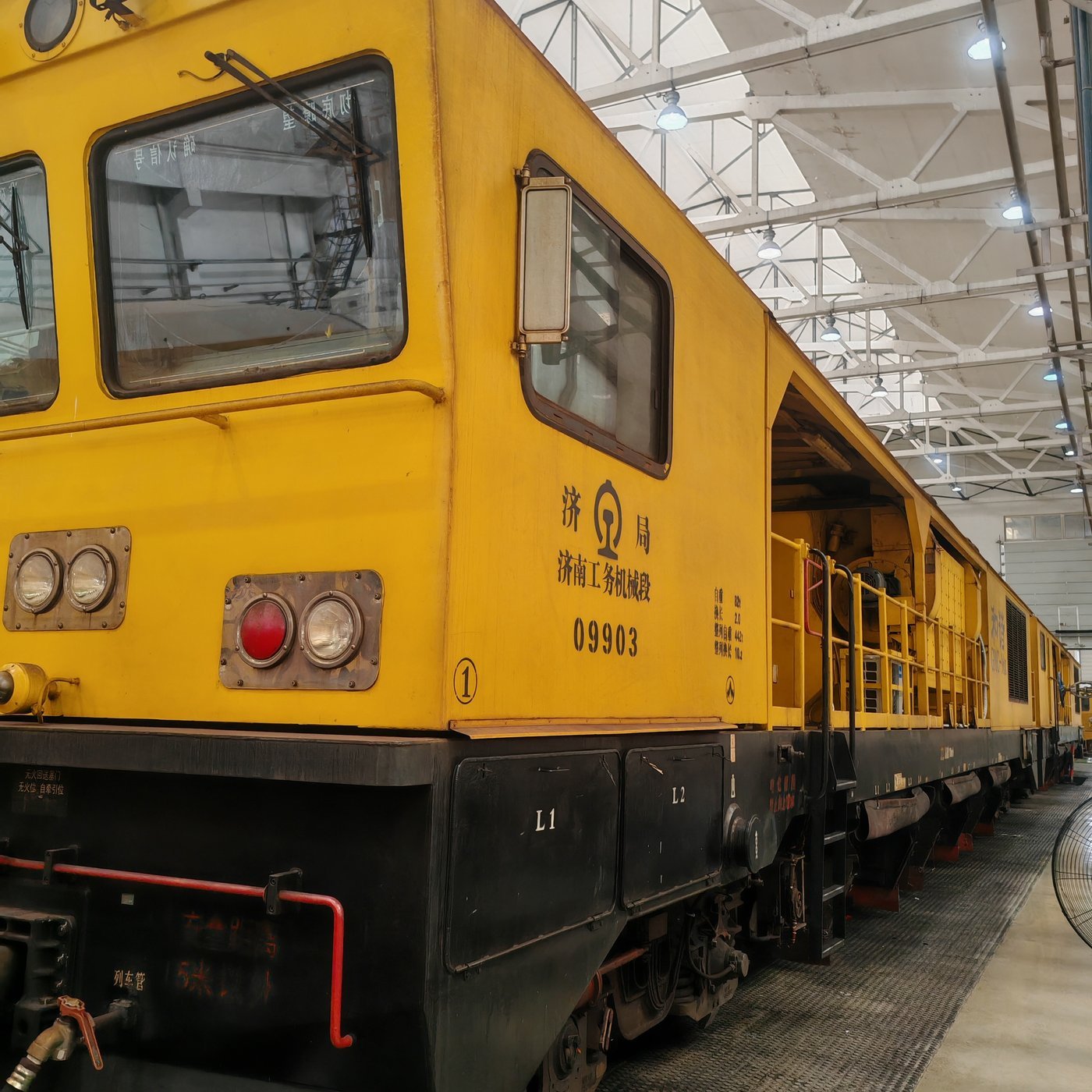
The four drivers, written as one division
| Driver | Where it sits in the division | What moves it | Who controls it |
|---|---|---|---|
| Passes | Multiplying the denominator: work is counted in pass-kilometres, so a section ground three times is three times the distance billed for the same track length | How far the measured head sits from the target shape, and whether the plan is built on that measurement or on last year's number — see how many grinding passes a rail needs | The planner, from the profile survey — this is the only driver the owner can cut without touching quality |
| Working speed | Sets the denominator directly: at an unchanged depth per pass, a higher working speed buys more kilometres from the same window | Depth per pass and the heat balance that limits it, so speed cannot be raised on its own — the trade is set out in preventing rail burn | The machine and the pass plan, jointly; not a commercial lever |
| Possession utilisation | Decides how much of the window is productive: two hours of occupation is never 120 grinding minutes | Travel to and from the section, waiting for isolation, pattern resets and unplanned stops | Operating and possession planning, before a contractor is priced |
| Wheel consumption | The only driver normally quoted as consumable life, in pass-kilometres per millimetre, which is how possession time converts into consumable spend | Removal achieved per pass, and whether depth is reached by the plan or chased with pressure | Wheel performance plus depth discipline — the interface where a Molaton wheel specification and the grinding plan have to agree |
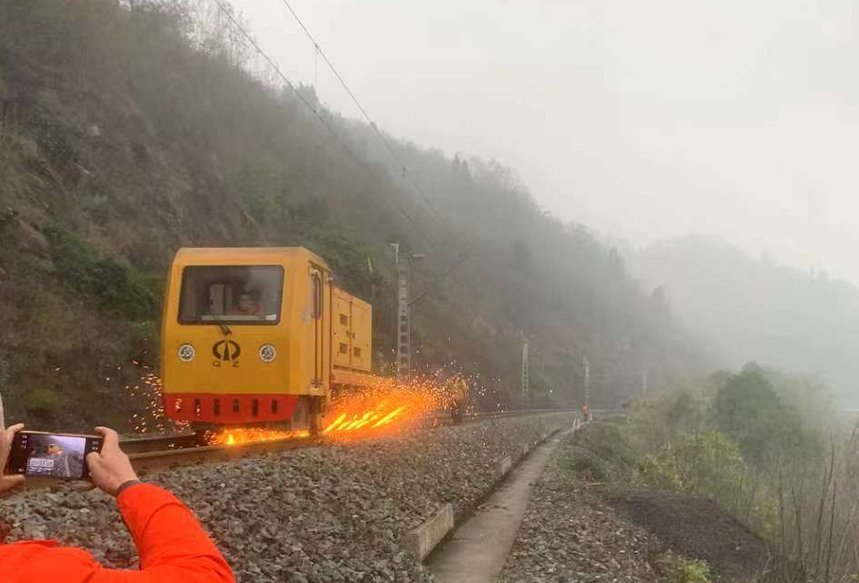
An anchor makes the arithmetic visible without quoting a price. On one Chinese high-speed line a GMC-96X produced 18.72 pass-kilometres inside a two-hour possession — 9.36 pass-kilometres per hour of window, not per hour of grinding. A 20 km section ground three times is 60 pass-kilometres, roughly 6.4 window hours at that measured rate; dropping the third pass takes 20 pass-kilometres off, about a third of the time, the wheels and the occupation together. That is where the largest savings sit — on the denominator, not on the rate.
Why the lowest rate per kilometre tends to cost the most
| How the rate is written | How it looks in a tender | What actually comes back later | Whose budget it lands on |
|---|---|---|---|
| A rate tied to a fixed number of passes | The most comparable number in the room | The bid built on the fewest passes is the cheapest; when the measured deviation needs one more, the extra pass returns as a variation | The owner's maintenance budget, in-year |
| A rate that excludes wheel consumption | Clean, low, easy to defend | Consumption is the input that rises first when depth is chased with pressure instead of plan | The owner, as re-ordered wheels or extra shifts |
| A rate built on a full two-hour window | Identical for every bidder | When windows shrink, a fixed rate per kilometre is recovered through fewer metres per shift or a re-mobilisation | The owner, as a section left unfinished into the next cycle |
| A rate that stops at the last pass, not at the profile | Invoice matches the work order | Acceptance failure is outside the price, so the re-work is a second campaign inside the same interval | The owner, and again in the next interval |
| A rate with mobilisation priced separately | The machine day looks efficient | On networks of many short or remote sections, mobilisation repeats while kilometres stay modest | The owner, per visit, for the life of the contract |
None of this argues for a dearer contractor. It argues for reading a per-kilometre figure against the pass basis and the window it assumes. A Molaton wheel can hold removal so the planned depth is reached inside the planned passes; it cannot make a rate built on two passes pay for three.
What a per-kilometre rate must state to be comparable
| Line in the rate | What it must state | Why it changes the number | Who carries the risk if it is silent |
|---|---|---|---|
| Pass basis | Planned passes and the depth each pass is expected to take | A rate for two passes is not a rate for three, and the difference is a third of the job | The owner, as a variation |
| Measurement basis | Which sections were surveyed, how the starting deviation from the target profile was taken | Depth is derived from that deviation, so the survey sets the passes | The contractor first, then the owner as a claim |
| Window | Window length per shift and the productive share assumed | The denominator is window hours, not machine hours | The owner, as unfinished metres |
| Wheel basis | Whether consumption is inside the rate, and the pass-kilometres per millimetre it assumes | Consumable life varies by section: 4.28 against 3.27 pass-kilometres per millimetre on two sets in the same high-speed campaign, and that figure describes the wheel, never the rail | The owner, as re-orders |
| Acceptance | Which criteria, measured by whom, and what happens on a fail | A failed job is a second campaign, priced or not — criteria are set out in acceptance for a grinding job | Whoever the contract leaves holding it |
| Re-mobilisation | How short, remote or split sections are priced | On a network of many short sections this line can outweigh the rate itself | The owner, every visit |
| Records | What is handed over per shift, and in what form | Nothing above can be checked after the fact without it | The owner, permanently |
Two adjacent questions are deliberately excluded. What the wheel itself costs per kilometre of track is a consumable calculation, answered on that side: wheel cost per kilometre of track. What a grinding machine costs to buy is an equipment question: the cost of a rail grinding machine. This page is the cost of the job, which is the rate multiplied by passes, then divided by whatever the window actually delivers. Set the interval first — interval by tonnage — because a cheap campaign run too often costs more per year than a properly scoped one.
Related questions you may also ask
How to calculate rail grinding wheel cost per kilometer of track How many grinding passes does a rail need? What KPIs should a rail grinding contract include? Should you buy a grinder or contract the grinding out? How do rail grinding programs extend rail service life? More answers on rail grinding strategy and equipmentWhat is your cost per kilometre actually made of?
Send RailwayCare the section length, the planned passes, the window you can offer and the profile survey you are planning from. We will set out which of the four drivers is inflating your figure, what a Molaton wheel schedule would consume at that depth, and how the same work could be scoped in fewer passes.
Break Down My Cost per Kilometre
Are you looking for a reliable manufacturer of railway grinding and track maintenance equipment?
We can quickly provide customers with market analysis, technical support and customized services.
Safe Tracks Proven by China
- Name
- Phone
- *Title
- *Content