How do you prevent rail burn during grinding?
How do you prevent rail burn during grinding?
Burn is a heat balance, not a fault in the wheel. Every pass puts heat into the rail, and that heat has to leave through the steel before the next head arrives at the same point. Four things decide whether it does: depth per pass, working speed, head pressure and how long one section keeps being cut. The field rule needs no instrument: once the surface turns blue the steel has already passed the temperature where its surface layer changes, so you stop and re-plan the pass instead of finishing it more slowly.
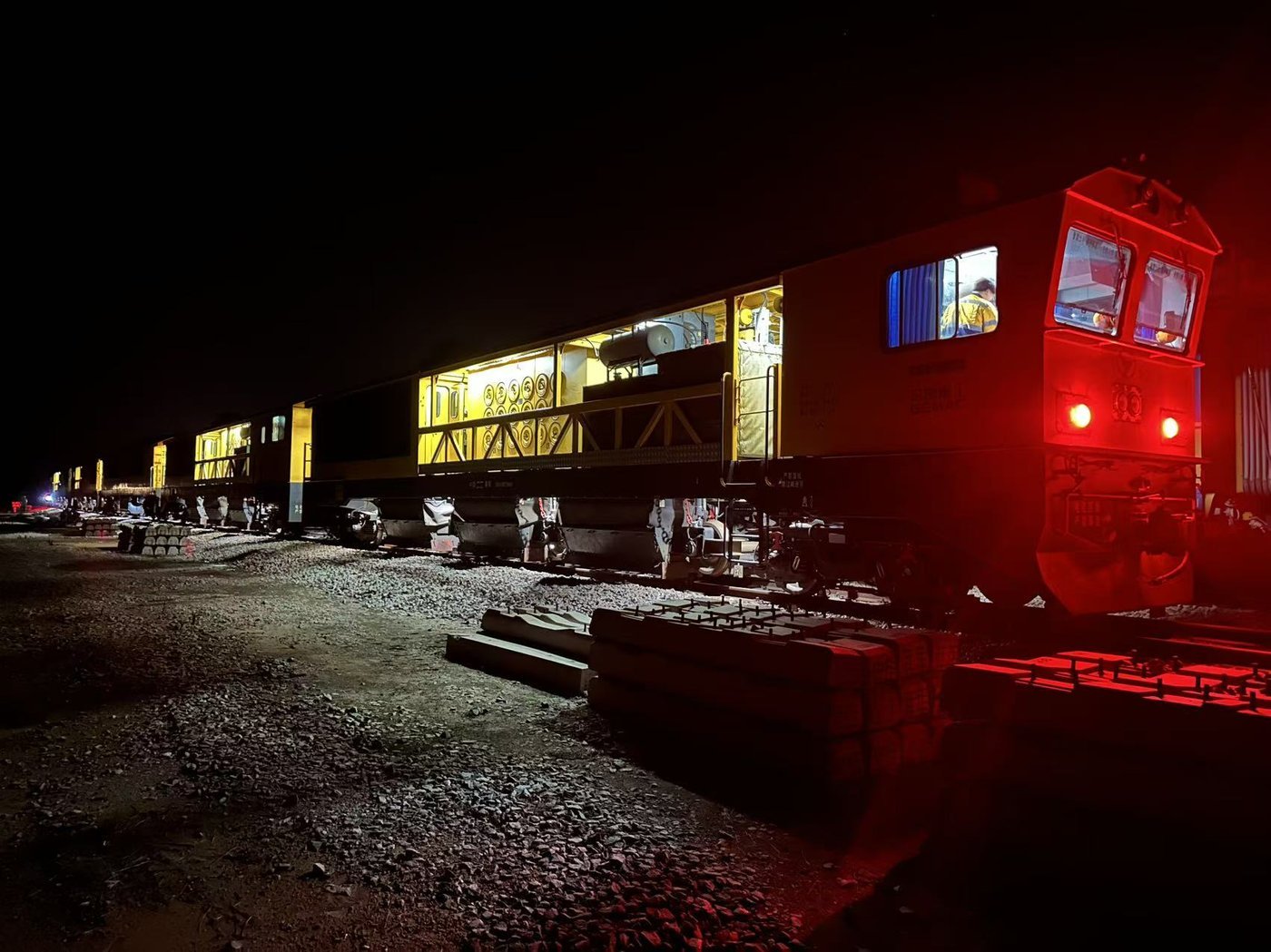
The four variables you actually control
| Variable | What it changes | Which direction raises the heat | The limit or check you already have |
|---|---|---|---|
| Depth per pass | The volume of steel taken per unit length, and therefore the energy any one head has to put into the surface | Deeper cut at the same speed | Planned depth runs from 0.1 mm and up for preventive work to 0.2 mm and up for corrective work, with single passes typically 0.2-0.3 mm; total removal on the parent metal is capped at 0.5 mm |
| Working speed | The time the contact arc spends on any one point, and at a fixed depth the power needed to hold the cut | Faster at the same depth, because removal rate per hour goes up with it | Speed should come from removal measured at that speed on that line, never from the schedule alone |
| Head pressure | How hard the wheel is pressed into the steel, and how much of the work turns into rubbing instead of cutting | Pressure above what the cut needs, which is a friction source rather than a removal source | The standard keeps contact pressure below 10 kN; on a qualification run at 30% power we measured 3,120 N, so the cap is a ceiling, not an operating point |
| Continuous cutting time | How many times a section is re-heated before it gets a chance to cool | Long runs with no stop and no change of pattern | Set a distance per run and an inspection stop after it, and record the stop on the shift sheet |
The four are not equal levers. Depth multiplies the heat directly and is the one number the plan already fixes; pressure and speed mostly decide how much of that energy becomes cutting rather than friction. That is why the correction for a hot job is almost never a single knob: take depth down first, then check whether the pattern is stacking cuts on one band, and only then look at speed.
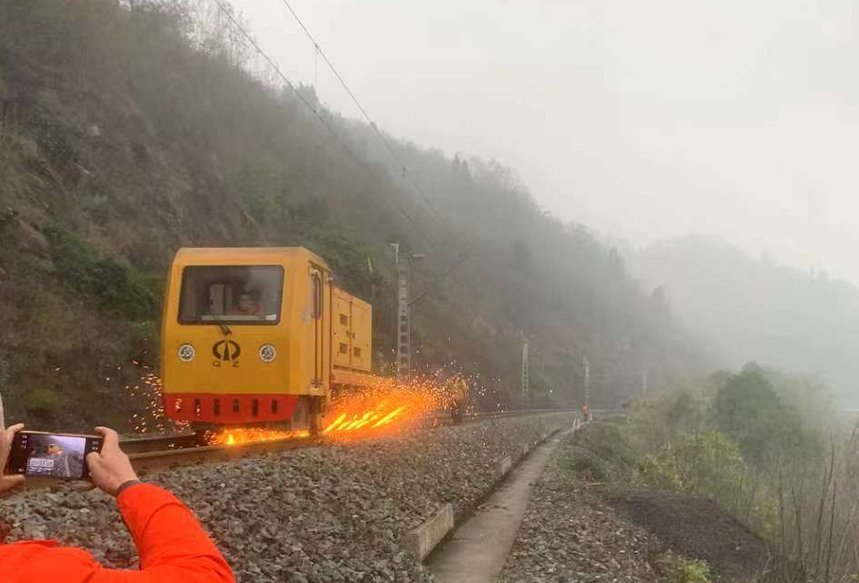
Read the surface instead of the gauge
| Surface after the pass | Rail temperature it indicates | What has happened in the steel | What to do now |
|---|---|---|---|
| Normal steel, no discolouration | Below about 471 °C | Nothing structural; the pass stayed within the removal the plan asked for | Carry on, and keep the acceptance record on roughness and profile |
| Straw to light yellow | About 471-600 °C | The first stage of change at the surface, and roughness is already climbing | Reduce depth on the next pass and re-check roughness before continuing; do not add passes to make up for it |
| Blue | About 600-735 °C | The band in which the surface layer transforms into the hard, brittle layer that spalls later | Stop. Re-plan depth, speed and the number of cuts landing on that point — a blue streak is not a cosmetic mark to be ground out at the same setting |
| No colour, roughness drifting up | Below the visible threshold, so the colour gives no warning | Invisible heat damage: on trials, taking spindle speed from 1,000 to 3,000 rpm moved the white layer from about 45 to about 320 µm and roughness from 6.6 to 8.4 µm, with spalling appearing at the top of that range | Treat a roughness trend as the warning the colour did not give, and pull speed back before the next run |
The fourth row is the reason a colour check alone is not an acceptance method. Oxidation confirms what the eye already sees: oxygen content on the surface rises as the damage gets worse, and it rises further on the underside of the removed chips than on the rail, which is what you would expect if the heat is generated in the cut and left in the steel. The acceptance standard therefore does not ask whether the rail looks acceptable. It asks for no continuous blue, a workpiece temperature below 150 °C, and no cracking, breakage or abnormal vibration during the work — measured, not judged by eye.
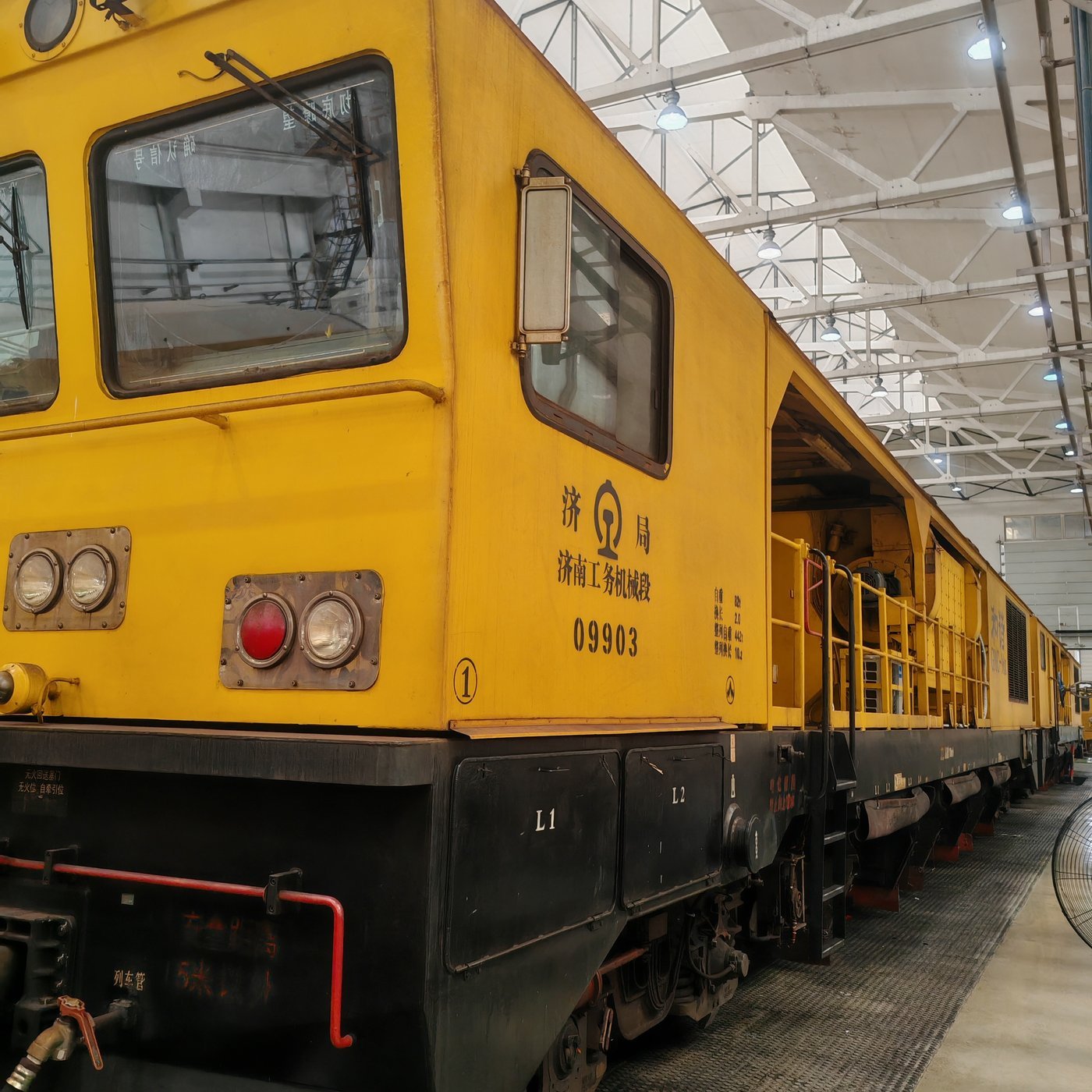
The order to change things in when heat shows up
| What you see | First thing to change | Why that one first | What not to do |
|---|---|---|---|
| Blue along the crown for the whole length | Depth per pass | It is the variable that scales the heat directly and the one the plan already fixes, so the correction is arithmetic rather than guesswork | Do not slow the machine to hide it: slower at the same depth keeps the heat on the point for longer, not shorter |
| Blue in one zone only, typically the gauge corner | The pattern, not the depth | Heat appearing in one band means too many cuts landed on that band within one run, while the rest of the head was barely touched | Do not take depth off the whole head; the zones that were already on target will fall short |
| Light yellow that appears late in the run | Continuous cutting time, then pressure | A late onset is the signature of heat accumulating in a section that keeps being re-cut rather than a single overloaded pass | Do not run on to finish the shift and inspect afterwards |
| No colour, but roughness above 10 µm or above the 8 µm contract target | Speed, then the state of the cutting face | Roughness is the earliest visible evidence that energy is going into rubbing rather than cutting | Do not sign the job off on colour alone |
| Spalling or a crack found after a hot job | Stop and re-open the section | Once the layer has transformed, the damage shows up after the wheel has gone; the surface you are looking at is the consequence, not the defect | Do not grind it again at the same setting to smooth it over |
Notice what this table does not contain: any change to the wheel. Whether a consumable is suited to your rail is a real question, but it is a different one, and it is answered on the diagnosis side in why a grinding wheel burns the rail surface and in our article on burning prevention and wheel choice. What a Molaton wheel has to do for this page to be useful is narrower: hold the same removal per pass from the first kilometre to the last, because a wheel that stops cutting mid-job is exactly what tempts an operator to raise pressure and turn a depth problem into a heat problem.
Two of the numbers on this page are also the two a contract should ask for. Depth is checked against the safe grinding depth, and the heat result is checked with the rest of the job in the acceptance criteria for a grinding job. If the blue has already appeared on a section that was ground last season, the sequence that produced it is usually a pass plan copied from another line, which is covered in how many grinding passes a rail needs.
Related questions you may also ask
Why does my rail grinding wheel burn the rail surface? What acceptance criteria decide whether a grinding job passed? What grinding depth is safe before you over-grind a rail? How do you control white etching layer by grinding? Preventive vs corrective rail grinding: what is the difference? More answers on rail grinding strategy and equipmentIs your plan asking for more heat than the rail can shed?
Send RailwayCare your depth per pass, working speed, pressure setting and one photo of the finished surface. We will tell you which of the four variables is out of budget, what to change first, and which depth your line can still take — with a Molaton wheel schedule built to hold removal without pushing you into pressure.
Review My Heat Budget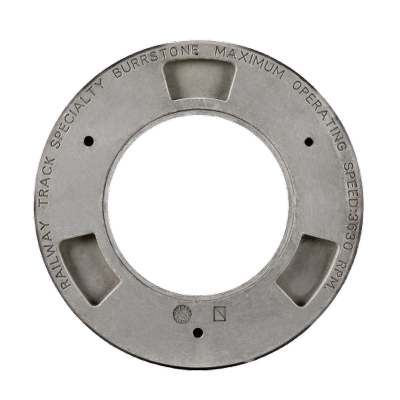
Are you looking for a reliable manufacturer of railway grinding and track maintenance equipment?
We can quickly provide customers with market analysis, technical support and customized services.
Safe Tracks Proven by China
- Name
- Phone
- *Title
- *Content