Why does my rail grinding wheel burn the rail surface?
Why does my rail grinding wheel burn the rail surface?
A rail burn is heat that the contact zone could not get rid of, not a rail-quality problem. Grinding heat comes from three sources added together: plastic deformation of the rail material under the grain, friction between grain and steel, and friction as the chip flows over the grain face. If that heat is not carried away by the chip and the wheel body fast enough, the rail surface temperature passes the oxidation threshold and the surface discolours — light yellow first, then blue. Blame the wheel-job match and the pass, not the rail: a wheel that is too hard, too fine or already glazed rubs instead of cutting, converts power into friction instead of metal removal, and the rail pays for it. Below 471 °C the rail keeps its normal colour; 471–600 °C produces a light-yellow burn; 600–735 °C produces the blue burn.
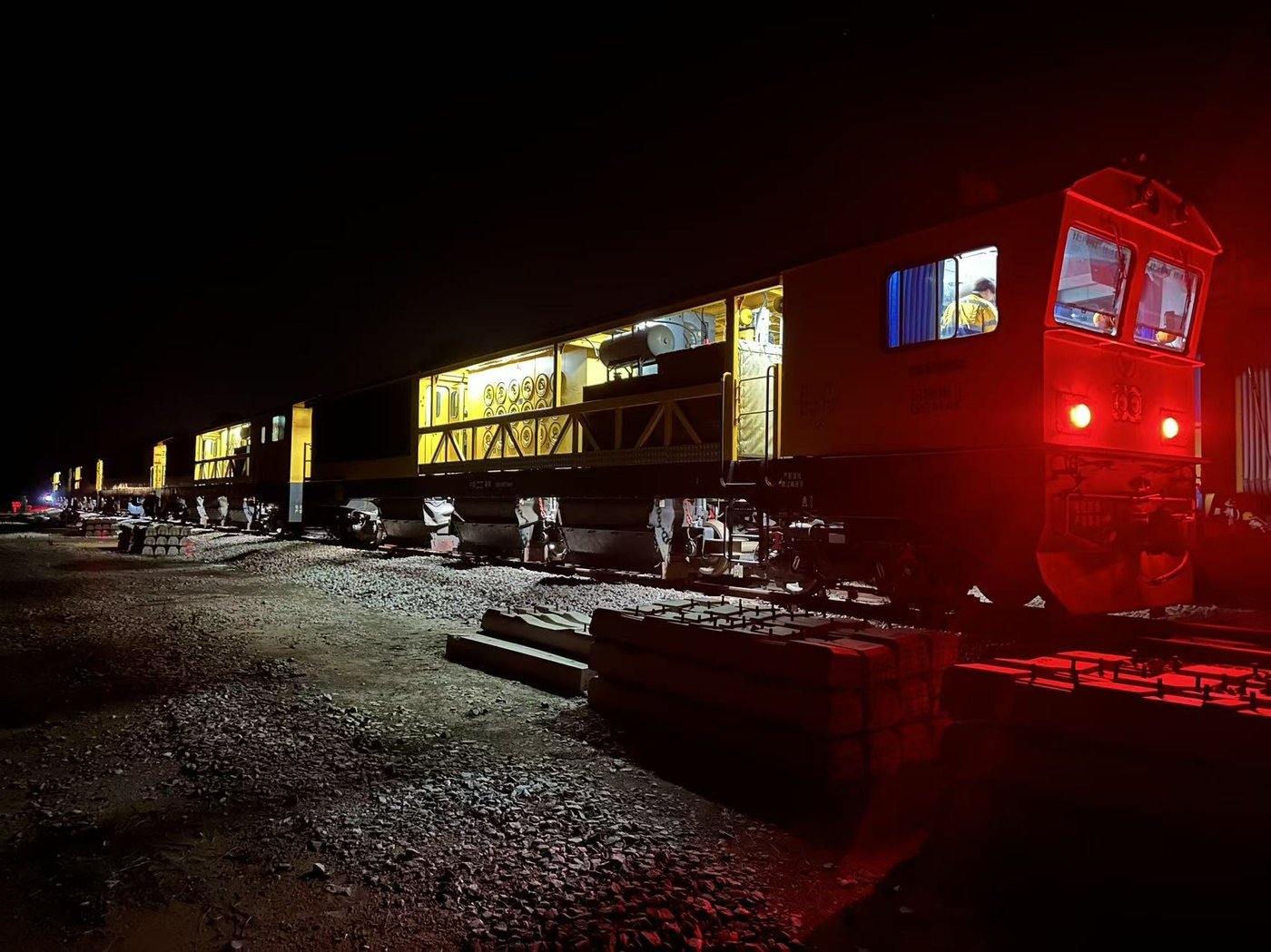
Read the burn: rail colour is a thermometer
| Rail surface temperature | Appearance after grinding | What it means |
|---|---|---|
| Below 471 °C | Normal rail colour | Heat is being carried away by the chip and the wheel |
| 471–600 °C | Light-yellow burn | Cutting is turning into rubbing; the wheel match or the pass needs review |
| 600–735 °C | Blue burn | Serious overheating — a wheel or machine setting fault, not a one-off |
Surface colour is confirmed by oxygen. Energy-dispersive spectroscopy of ground rail surfaces shows the oxygen content rising as the burn gets worse: more Fe combines with O, so the surface is more oxidised. The same test shows the underside of the chips is more oxidised than the rail surface itself, because the chip is squeezed plastically and then drags across the grain face on its way out. In one series, increasing wheel strength shifted the surface colour back from blue and brown towards the rail's original colour — the wheel was cutting rather than sliding.
The heat path: where the temperature is decided
The rail surface is only half the story. The wheel face temperature tells you whether the wheel is carrying heat out or trapping it. On our test rig at 3,600 rpm, a Molaton rail grinding wheel face reached a maximum of 124 °C and a minimum of 55 °C, against 143 °C and 68 °C for the imported wheel on the same duty. A cooler wheel face means heat is leaving the contact zone with the wheel and the chip instead of being pushed into the rail — and that is what prevents blueing.
Getting there is a formulation job, not a marketing one. Our development programme added hydrophobic aerogel and hollow glass microspheres to open up the structure and suppress heat conduction into the contact face, and replaced sulphur-bearing fillers with rare-earth and graphite systems so that sulphur content stays at or below 0.03% and no harmful gas is released during grinding — which also cuts the dust load around the machine. Where early samples did show line burning, the fix was a formulation change: adjusting density and hardness, raising the composite grain share and widening the pore range to improve heat dissipation.
Thermal damage also feeds back into the wheel. When a wheel face runs hot enough, the resin bond carbonises and blackens, loses its holding power, and the wheel starts shedding grain and rubbing even harder — the same failure that produces a glazed face. Burning and glazing are usually the same fault seen from two ends of the contact zone.
Speed is the lever that moves the temperature fastest
Grinding tests at 1,000, 2,000 and 3,000 rpm show how quickly the picture changes:
| Parameter | 1,000 rpm | 2,000 rpm | 3,000 rpm |
|---|---|---|---|
| Surface roughness Ra | 6.6 μm | 7.2 μm | 8.4 μm |
| White layer thickness | approx. 45 μm | — | approx. 320 μm |
| Grinding marks | Even | Wider and deeper | Wide, deep, with spalling pits |
| Removal mechanism | Cutting | Cutting with more plastic flow | Cutting plus thermal-fatigue flaking |
At the highest speed the rail surface also shows cracks running perpendicular to the grinding direction. Those cracks are the sum of three tensile stresses — thermal stress, mechanical stress and the microstructural stress from surface phase transformation — exceeding the yield strength of the material. The white layer on that surface measures around 870 HV0.3 against roughly 340 HV0.3 for the parent rail: hard and brittle, and it breaks up early in wheel/rail service, gets pressed back into the matrix and drives new crack initiation. A burn is therefore not cosmetic — it is a fatigue seed. That is why the industry caps pass depth and treats a blue surface as a rejection item, and why controlled grinding is the primary defence against rolling contact fatigue.
What the standard requires, and what stops the burn on track
Q/CR 1-2014 sets the acceptance envelope for rail grinding train wheels: the wheel must not produce blueing on the workpiece surface; the contact pressure between wheel and workpiece must stay below 10 kN; the workpiece grinding face must be below 150 °C when measured by infrared thermometer 30 seconds after grinding finishes; and surface roughness must meet Ra 8.0. On the track, acceptance is tighter still: no continuous blueing, roughness Ra ≤ 10 μm (contract grades target ≤ 8 μm), metal removal depth capped at 0.5 mm per pass, no periodic wheel marks, and spark-out ramps steeper than 1‰.
In practice the list of controls is short. Use a wheel matched to the machine and the removal target so that power goes into cutting rather than friction. Keep the pass depth inside the cap instead of trying to remove more per pass. Do not run the head at excessive speed with light pressure. Do not let a glazed wheel stay in the train — it will burn not only its own band but the bands beside it. And keep the contact geometry correct so the wheel is not riding a narrow band or the gauge corner, where heat has nowhere to go. This is also why on-track results are quoted in passes per kilometre rather than sheer speed: a heavy-duty rail grinding wheel earns its place by removing the target depth cleanly, pass after pass.
Two independent checks show it can be done. On the Loram DM01 trial in 2026, both sides of the car — the new wheel on the left-hand heads and the incumbent wheel on the right — finished with no blueing at all, surface roughness of 1.05–9.0 μm with most readings between 2 and 4 μm, and no fracture, cracking or loosening. On the He-Wu high-speed line the same wheel produced no continuous blueing across the test section. Both followed the same rule: match the wheel, cap the pass, and let the wheel do the cutting.
Related questions you may also ask
Rail burning prevention: why the wheel choice matters most What is the difference between a rail grinding wheel and a grinding stone? What does a wheel specification like 260x90x154mm mean? What tools detect rail defects and rolling contact fatigue? More answers on rail grinder wheelsCooler cutting, verified on your duty
Tell Molaton your machine, your rail and your removal target. We will specify the wheel and the pass conditions that keep the surface out of the burn range — and show you the measured data.
Ask for Burn-Free Grinding Parameters
Are you looking for a reliable manufacturer of railway grinding and track maintenance equipment?
We can quickly provide customers with market analysis, technical support and customized services.
Safe Tracks Proven by China
- Name
- Phone
- *Title
- *Content