How is a grinding pass pattern set, and why does the angle sequence matter?
How is a grinding pass pattern set, and why does the angle sequence matter?
A grinding head never touches the rail head; it touches a band of it. A pattern is therefore a set of bands laid side by side from the gauge corner round to the field side, and it only works if adjacent bands overlap — a strip that falls between two angles is never cut by either. The sequence matters because the order fixes what the first passes are allowed to do: take the peaks off while the head is still rough, or bring the head into the target shape first and trim the peaks afterwards. Choose the order for the state the rail is actually in, and verify the result by position, not by pass count.
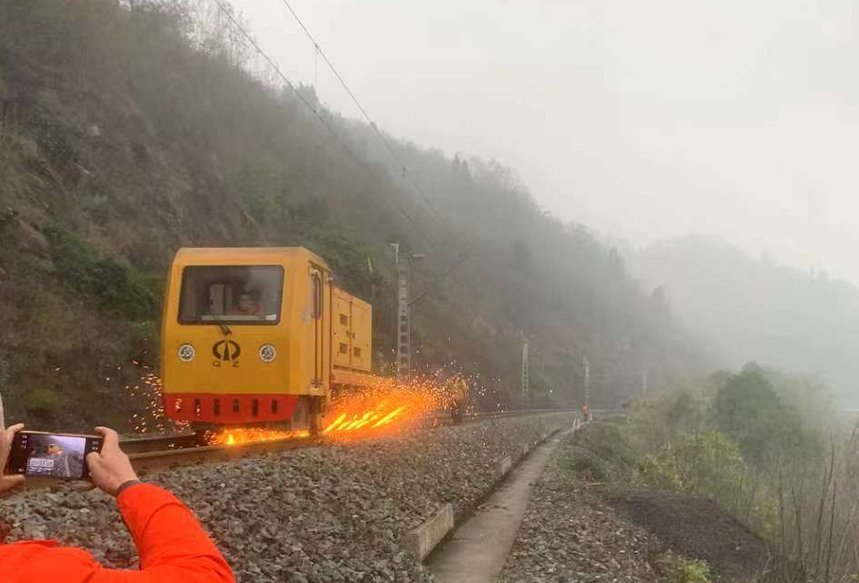
Why one angle cuts one band, not the head
| Band on the head | What the head has to do | Tolerance it has to meet | Signature when the strip is missed |
|---|---|---|---|
| Running surface, crown | Presented roughly square to the running surface, so the band straddles the centre of the head | Crown centre inside +0.2 to -0.4 mm of the target profile | The running band measures narrower than the 25-30 mm expected on high-speed track or 35-40 mm on conventional and heavy haul, and the wheel rides the edge of it |
| Gauge corner | Tilted towards the gauge corner, so the band wraps the shoulder the wheel loads on curves | Zones 2 to 4 within ±0.2 mm, side profile included | A flow lip and side wear keep growing, and the crack source the pass was meant to remove stays below the depth a later pass can reach |
| Field side shoulder | Tilted the other way, covering the outer shoulder used when the wheelset shifts outboard | Zones 2 to 4 within ±0.2 mm | Contact migrates inboard, the shoulder carries no load, and the head settles into a shape narrower than the drawing |
| Between those three | Intermediate angles whose only job is to make the bands above meet | No periodic wheel marks on the finished surface, roughness Ra ≤10 µm, or ≤8 µm where the contract asks for it | A raised stripe that no angle reached, visible as a line after the job and as a periodic mark that comes back with the next wheel |
The fourth row is where most patterns quietly fail, because the three main bands can all be correct while the joins between them are not. Overlap is not a refinement, it is the condition that turns a set of angles into a surface. Band width per angle is fixed by the wheel diameter and the tilt, so with a given number of heads the spacing either overlaps or it does not — there is no operating skill that closes a gap the geometry left open.

Why the order is not interchangeable
| Order chosen | What the first passes are allowed to do | Which rail condition it suits | What it costs on a rail in the wrong condition |
|---|---|---|---|
| Peaks first, shape second | Cut the high spots and flow lips while the head is still far from the drawing | Heavy corrugation, deep lips, a head that has drifted a long way out of band | The peaks are gone but the shape is still wrong, so the finishing angles have to take metal from the whole head to reach the band |
| Shape first, peaks second | Bring the head inside the target band, then trim what still stands above the crown | A head close to the drawing with only surface irregularity left | A peak that stands above the band is outside the reach of the finishing angles, so the pattern is spent and the peak survives |
| Crack depth first, shape second | Remove the layer the cracks start from before anything is formed | Rolling contact fatigue, or a white etching layer at the surface | A perfect profile cut over a crack root that is still below reach simply moves the same defect into the next interval |
| Amplitude first, profile later | Set the crest target from the measured amplitude itself | Wavelength confirmed and amplitude measured on the same chord and position | A uniform depth over crest and trough removes metal from both and leaves the amplitude exactly where it was |
Read the rows as answers to one question: what is standing between this head and the drawing. If it is metal above the band, peaks go first. If it is a surface layer the cracks live in, the layer goes first even though it is not the biggest dimensional problem. If it is a wave, the target for the crest is the amplitude, because only a differential cut changes a wave — the arithmetic behind that is set out in our answer on why grinding sometimes makes corrugation worse.
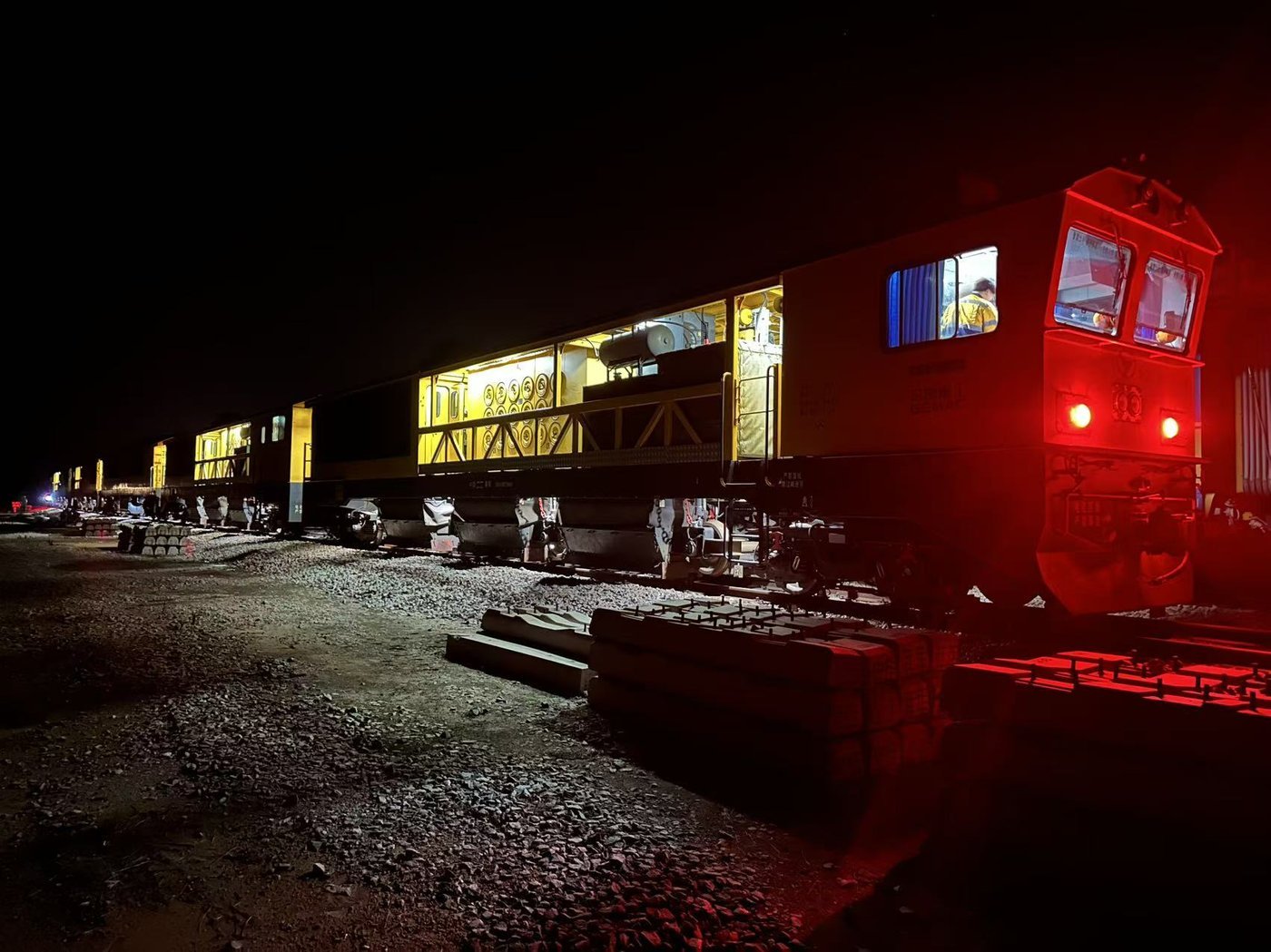
Setting the bands for your own line
| Step | Input you need | What it decides | Check before you leave |
|---|---|---|---|
| 1. Measure the head | A transverse profile taken on the section before the job, on the same chord and position afterwards | Which zones are already out of band, and therefore which bands carry the removal | The before and after traces are from the same section, not from two convenient ones |
| 2. Count the sections | The zones the acceptance standard already names on the head | How many bands the pattern needs before overlap is even possible | Every named zone has at least one angle assigned to it |
| 3. Set the spacing | The width each angle actually cuts on this machine at this wheel diameter | Whether adjacent bands overlap or leave a strip | No gap between bands anywhere from gauge corner to field side |
| 4. Order the sequence | Defect type, wave amplitude, and how far the head sits from the drawing | Whether peaks go first or the shape does | The purpose of the first pass is written in the plan, not chosen on the night |
| 5. Verify by position | Removal measured per zone rather than per pass | Whether the pattern did what this table said it would | Per-zone removal matches the plan and no periodic mark appears |
Step five is the one that turns a pattern from a setting into a strategy. On one curve at R=800 m, a single six-pass plan at 12 km/h took up to 0.3 mm from the high-rail field side and up to 1.8 mm from the low-rail side — one pattern, six times the removal in one place. Our own cutting trials show the same thing in a different form: on the same machine and the same setting, measured removal ran 0.142-0.241 mm on the inner rail, 0.165-0.326 mm on the outer rail and 0.193-0.222 mm at the crown. A pattern is therefore set per position, and a pass count copied from another line tells you nothing about what any one zone received. The bands only make sense once the target they are aiming at is fixed, which is covered in our answer on the target rail profile, and the depth ceiling they may not cross in our answer on safe grinding depth.
What a Molaton wheel has to deliver for this to hold is narrow and testable: the removal per pass at your working speed, and the same removal held for the whole job instead of fading as the wheel wears. A wheel that loses its cut halfway through leaves the last kilometres of the plan uncut, and the unground strip appears in the zones nobody thought to check. If you want the pass count question on its own, it is answered in how many grinding passes a rail needs; how a restored contact surface is judged afterwards is in our article on restoring the contact surface.
Related questions you may also ask
How many grinding passes does a rail need? What is the target rail profile and who defines it? What acceptance criteria decide whether a grinding job passed? Why does grinding sometimes make corrugation worse? Rail profile grinding: techniques, standards and practice More answers on rail grinding strategy and equipmentDo you know which zone your pattern never reached?
Send RailwayCare the before-and-after profile from one section, the pass list you ran and your working speed. We will show you where the bands overlap, where a strip was left uncut, and what order your head actually needed — with a Molaton wheel schedule sized to hold that removal across the whole job.
Review My Pass Pattern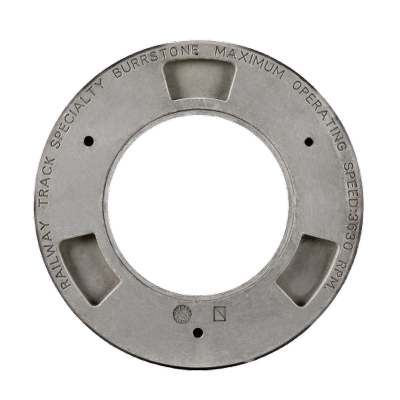

Are you looking for a reliable manufacturer of railway grinding and track maintenance equipment?
We can quickly provide customers with market analysis, technical support and customized services.
Safe Tracks Proven by China
- Name
- Phone
- *Title
- *Content