Why does grinding sometimes make corrugation worse?
Why does grinding sometimes make corrugation worse?
Because corrugation is a wavelength, and a grinding pass either breaks that wavelength or reprints it. Amplitude is measured from crest to trough, so a cut that removes the same depth everywhere moves the whole surface down and leaves the wave exactly as it was. Three further causes add to it: the wheel rubbing instead of cutting, the machine's own repetition landing near the wavelength, and a hand-back with no before-and-after measurement. All four are visible in numbers long before a machine arrives.
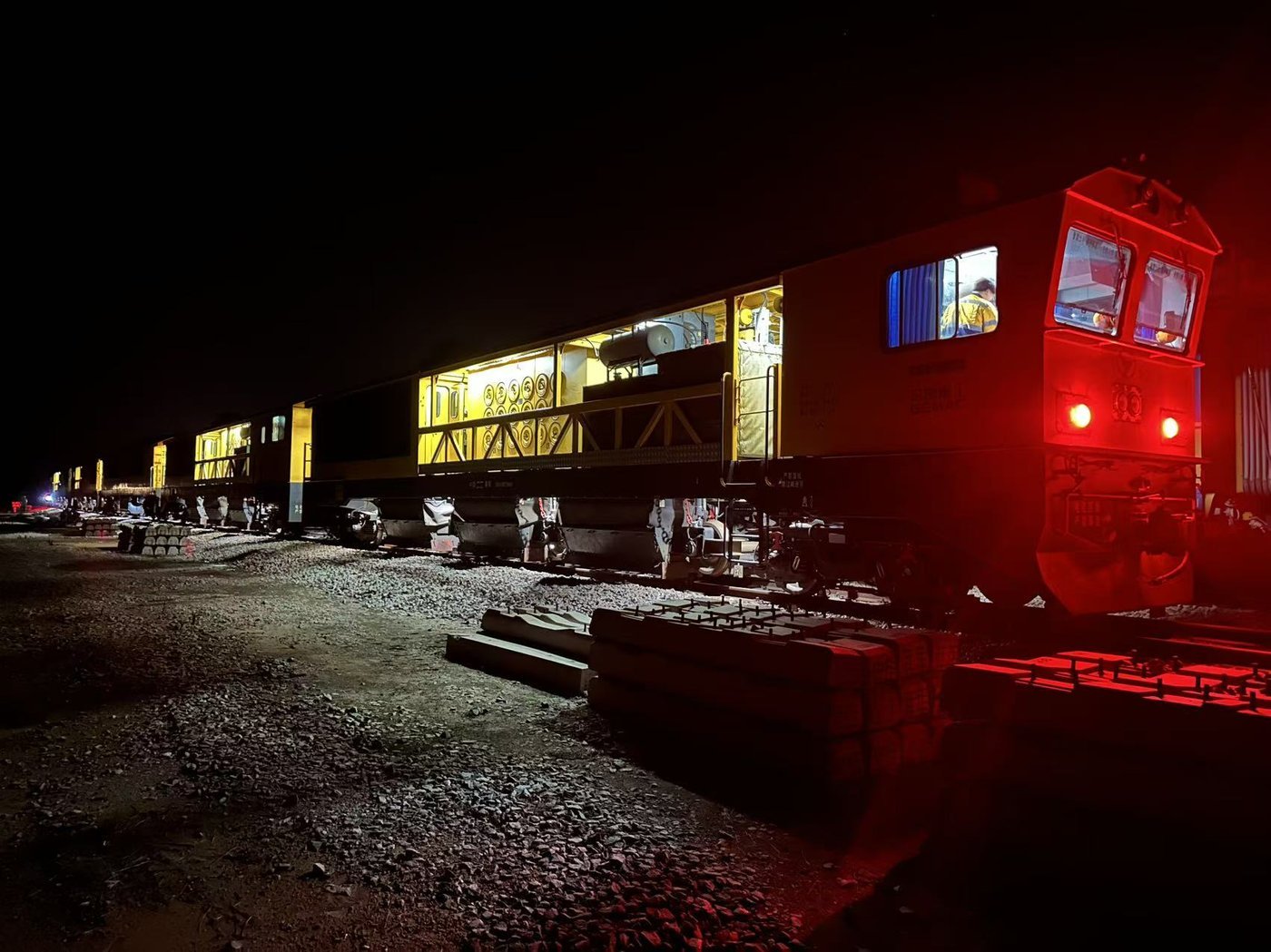
Four ways a campaign leaves the wavelength alive or makes it deeper
| Cause | What you see on the line | What is really happening | What to change |
|---|---|---|---|
| The cut is uniform instead of differential | The trace looks cleaner but the same period is still readable, and the depth reading has barely moved | Every point of the head moves down by the same amount, so crest-to-trough distance is unchanged. Flattening a wave requires removing more metal at the crest than in the trough | Compare the corrective depth at the crest with the measured wave amplitude, not with a nominal depth per pass |
| Too few passes for that amplitude | Peak amplitude falls just under the trigger line, so the job is signed off, then the wave is back within part of the interval | The crest was shaved, not brought down to trough level. What remains is a shallower wave of the same wavelength, and the same contact geometry regrows it | Passes are an output of removal per pass on this machine and this line, not a number copied from the last job |
| The wheel rubs instead of cutting | Face of the wheel looks loaded and shiny, the spark pattern changes, and metal seems to be smeared rather than cut | Without self-sharpening the grain rubs: heat rises, peaks are pushed sideways into the trough, and roughness climbs even though the vehicle kept moving | Stop the campaign and check the wheel duty. Adding passes to a rubbing wheel only adds heat |
| Machine repetition near the wavelength | The surface carries a regular pattern with a spacing that matches the head layout rather than the original wave | The heads strike the same phase repeatedly and the machine writes its own periodicity into the surface, which then grows under traffic as if it were real corrugation | Change the angle sequence and the working speed so successive heads do not repeat the same phase |
The arithmetic behind the first two rows is worth stating plainly, because it explains most disappointing campaigns. Corrugation depth is a peak-to-trough distance. Removing a uniform layer from a wavy surface does not change that distance at all; it only lowers the average. Only removal that is deeper at the crest reduces the amplitude, and the depth required at the crest is the amplitude itself, not the depth that happens to be comfortable for the machine.
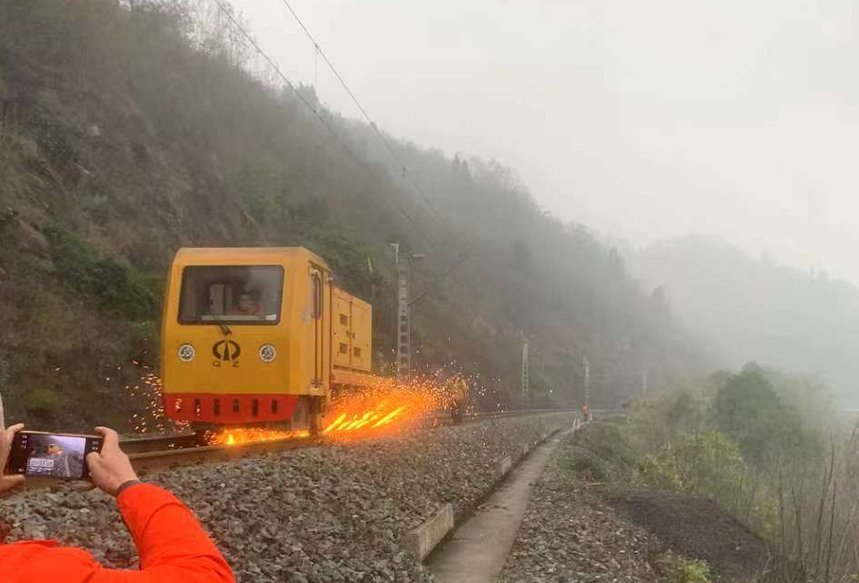
Proving the wavelength is gone, not just the peak
| What to measure | A pass looks like | A false pass looks like |
|---|---|---|
| Amplitude, same section, same chord, same transverse position | Re-measured on the exact section that triggered the job and below the corrective trigger of 0.3 mm depth on a conventional line | A figure quoted from a neighbouring section, a different chord length, or a different position across the head |
| Wavelength content of the trace | The dominant period is no longer present, or is reduced across the band rather than at one point | The peak is lower but the same period is still readable, which means the job traded amplitude for time |
| Whole contact band, every zone | Crown within +0.2 to -0.4 mm, zones 2 to 4 within plus or minus 0.2 mm, and GQI at 85 or better where that index is used | Only the crown measured; the gauge corner left as found, so the wave migrates rather than disappears |
| Surface condition at the same time | Roughness at or under 10 µm, no blue, and a 1 m straight edge showing less than 0.3 mm | A cured wave replaced by a burnt, torn or glazed surface, which is a new defect recorded as a repair |
| Behaviour after the first block of tonnage | Amplitude stable over the traffic that follows, so the result survives contact | Measured only at hand-back, with regrowth already visible within the interval |
This is where a verification habit beats a specification. The five rows above are the same measurement repeated, not five different instruments: fix the section, fix the chord, fix the position, and take the reading twice. Without a baseline the acceptance sheet says nothing — and a corrugation job with no baseline is indistinguishable from a job that never happened.
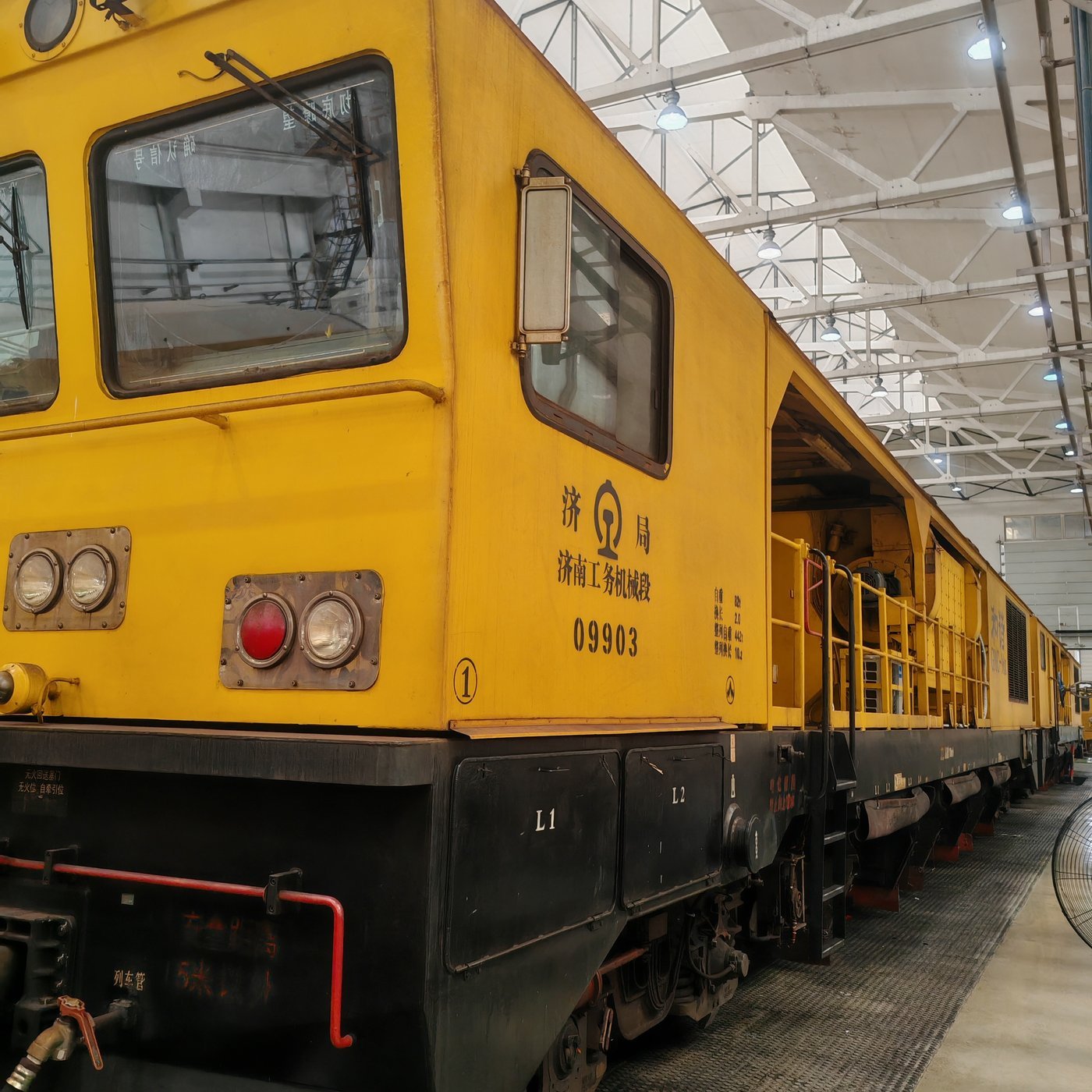
The order of work that avoids reprinting the wave
| Step | Decision to take | Input you must already have |
|---|---|---|
| 1. Characterise the wave | Amplitude, wavelength band, transverse position and extent along the line | A recording over the affected section, taken before any machine is booked |
| 2. Choose the mode | Preventive work that keeps the shape, or corrective work where the defect governs the depth | Defect depth against the envelope the section still has left |
| 3. Set the passes from measured removal | Number of passes at the planned speed, from removal per pass on this machine and this line | One measured pass on the same rail grade, not a figure from another network |
| 4. Set the depth per zone | Deepest where the wave is deepest, not one setting across the head | Per-zone deviation. On an R=800 m curve we measured up to 0.3 mm on the high-rail field side and up to 1.8 mm on the low-rail side in the same six-pass plan |
| 5. Verify and hand back | Amplitude, wavelength, profile and surface condition, all on the same section | The baseline from step 1 and the acceptance thresholds agreed before the job |
Two things sit outside this list and still decide whether the wave returns. The first is the target profile: corrugation follows the contact geometry that produces it, so a campaign that restores the surface without restoring the intended shape is grinding a symptom. Who owns that shape, and how it is specified, is answered in our answer on the target rail profile. The second is the wheel: a Molaton wheel is qualified on removal per pass at the planned speed, which is the number the pass arithmetic depends on — if a wheel cuts less than the plan assumed, the wave survives even though the campaign ran exactly as scheduled.
The honest summary is that grinding does not make corrugation worse by accident. It makes it worse when the plan is written against tonnage and pass counts instead of against the measured wave, and when nobody measures the same section twice. Our corrugation grinding and verification study follows the same argument from the mechanism side; this page is the work instruction that comes out of it, and Molaton wheels are what the plan asks to deliver that removal, pass after pass, at the depth the section was promised.
Related questions you may also ask
How to remove rail corrugation and verify the result How many grinding passes does a rail need? What acceptance criteria decide whether a grinding job passed? What grinding depth is safe before you over-grind a rail? More answers on rail grinding strategy and equipmentCorrugation coming back after every campaign?
Send RailwayCare the corrugation trace, the section and chord it was measured on, the pass plan that was used and the rail grade. We will work out whether the wave is being reprinted, and what removal per pass at your working speed it actually takes to flatten it — with a Molaton wheel schedule that delivers that depth.
Review the Wave Plan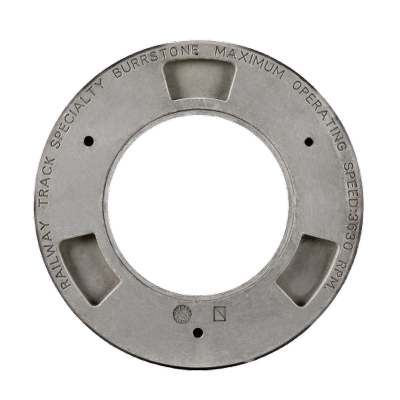
Are you looking for a reliable manufacturer of railway grinding and track maintenance equipment?
We can quickly provide customers with market analysis, technical support and customized services.
Safe Tracks Proven by China
- Name
- Phone
- *Title
- *Content