How do rail grinding programs extend rail service life?
How do rail grinding programs extend rail service life?
A programme extends life through a chain of three links, and it only counts if all three hold: remove the source the cracks start from, restore the contact shape that sets the stress, and slow the rate the same defect comes back. Depth per cycle governs the first two. Interval governs the third. A campaign that takes metal without moving all three has spent section and bought nothing, which is why the honest measure of a programme is not kilometres ground but the removal per cycle and the interval both staying inside budget.
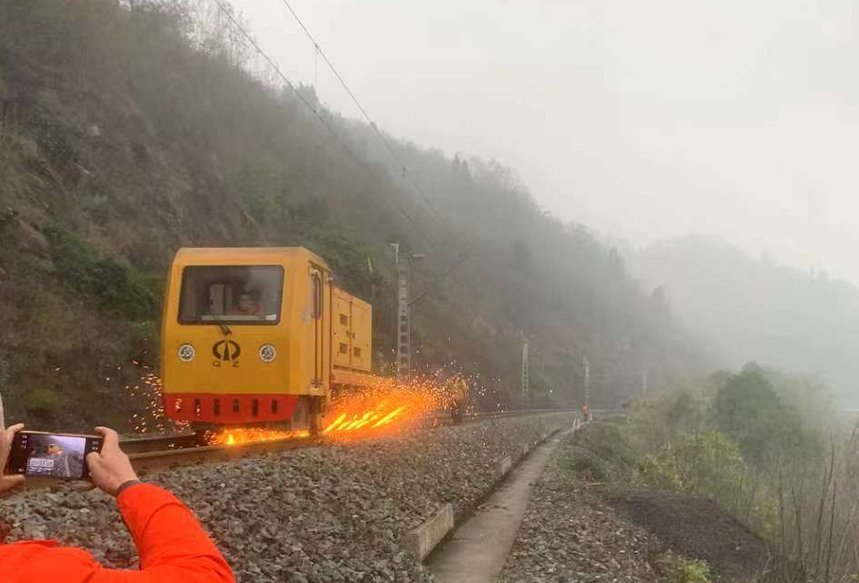
Three links between one pass and a later renewal
| Link | What the pass actually changes | The number that proves it happened | What the renewal date does if the link is skipped |
|---|---|---|---|
| 1. Crack source | Removes the surface layer in which rolling contact fatigue initiates, including the hard, brittle layer sitting above it | Crack depth at the surface after the job, against the 0.2 mm window; the layer itself measures about 870 HV0.3 against about 340 HV0.3 for parent metal on our samples | The face looks clean while the crack root stays below reach, so the same defect returns inside the next interval and the renewal moves forward rather than back |
| 2. Contact shape | Puts the head back inside the target profile band, so the wheel rolls where the design intended | Crown and zone deviation against the band, plus running-band width: 25-30 mm on high-speed, 35-40 mm on conventional and heavy haul | Contact migrates onto a narrow strip, contact stress rises, and side wear and plastic flow accelerate; the rail loses section without being worn evenly |
| 3. Rate of return | Takes the peaks and flow lips off before they grow into a shape that keeps regenerating the same defect | Metal removed per position, against the section the line still has left to spend | The same defect class returns faster every cycle, so the budget is spent without buying time |
| 4. Dynamic load | Lowers the impact a wheel delivers where geometry is discontinuous, which is where crack growth is driven hardest | Lateral acceleration measured at turnouts fell from about 0.20 to 0.04-0.08 m/s² after grinding on our projects | The rail keeps absorbing loads the shape was supposed to remove, and fatigue accumulates at the rate of the unground surface |
Read the four rows as a sequence, because each one is a precondition for the next. There is no point restoring the shape over a crack root that will surface again, and no point removing the crack if the geometry that created it is left alone. Life is what you get when the sequence is completed in order, cycle after cycle.
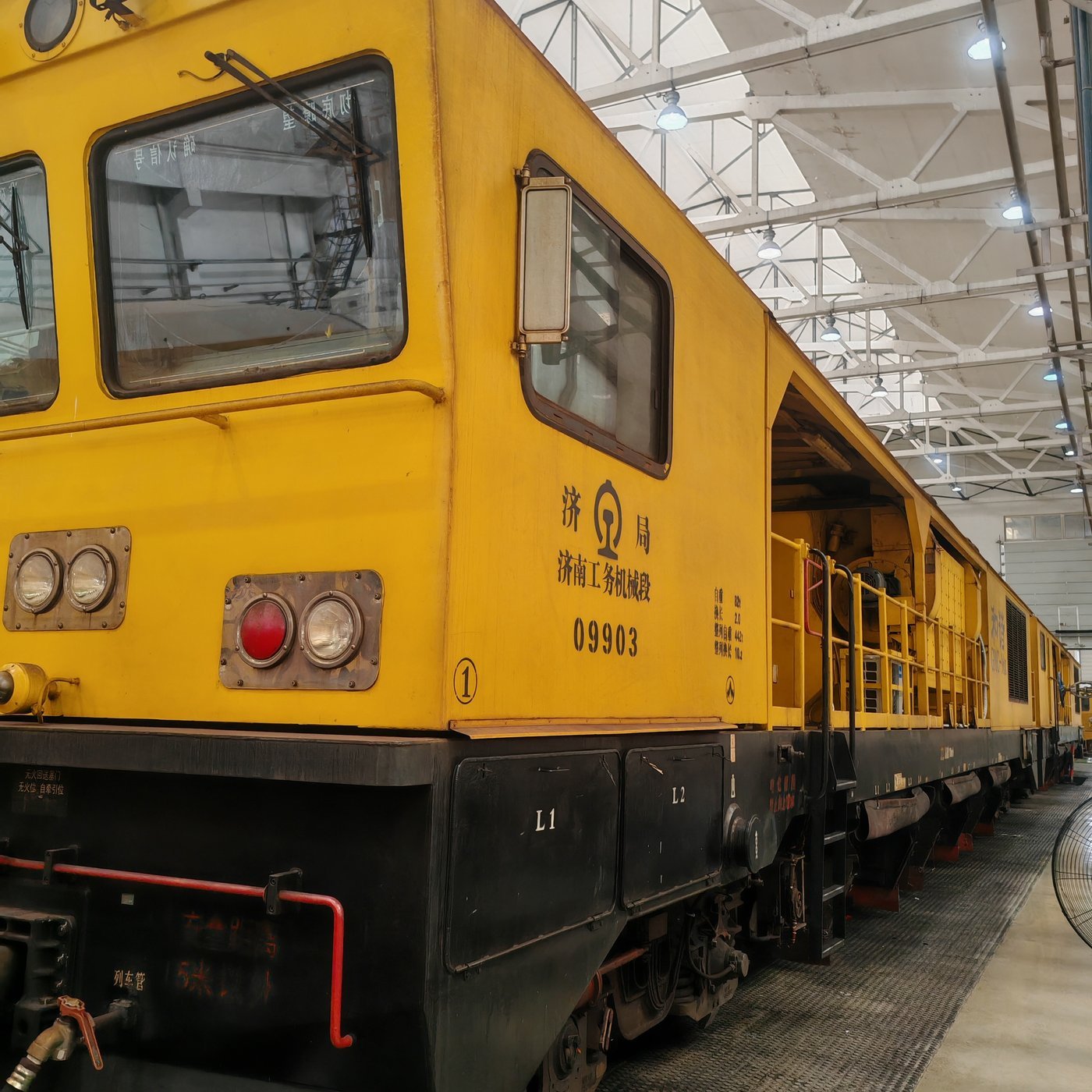
What our own track records show
| Line and year | What was measured | Result | What it means for the renewal date |
|---|---|---|---|
| Liuzhou, 2022 | Output of a production campaign inside a single possession | 18.72 pass-km in one two-hour possession | Interval is a throughput question before it is a metallurgical one: if one night cannot deliver the removal the plan needs, the interval slips for reasons that have nothing to do with steel |
| Hewu high-speed line, 2020 | Passes delivered per millimetre of consumable consumed, on one machine and one line | 4.28 pass-km per millimetre of consumable, 214.22 pass-km on a single set, no continuous blue | A campaign can only be worked to the planned depth if the consumable lasts the campaign; when it does not, depth is traded for changes and the second cycle is where the defect returns |
| Shuohuang heavy haul, 2024 | Same measure, much higher tonnage per pass | 4.98 pass-km per millimetre, 199 pass-km per set | On heavy haul the tonnage pressure lands mostly on the interval, which is why depth discipline matters more there, not less |
| Shuohuang, single-machine trial, 2023 | Same measure, with a changed machine set-up rather than a changed plan | 5.96 against 4.99 pass-km per millimetre, best single set 332.3 pass-km | The plan is not the only lever: how the machine applies the cut changes what share of the plan is deliverable inside the window |
| Yiyang, R=800 m curve, 2024 | Metal removed per position inside one six-pass plan at 12 km/h | Up to 0.3 mm on the high-rail field side, up to 1.8 mm on the low-rail side | One plan, six times the removal in one place: the deep side is where the remaining section is genuinely being spent, so any life claim must name the position it refers to |
These are our own records, and they are deliberately reported as production measures rather than as a service-life figure. They answer the question a programme manager actually has to settle: can the work be delivered, at the depth the plan requires, with a consumable that survives long enough to finish it. Every row above can be re-measured on your line in one possession.
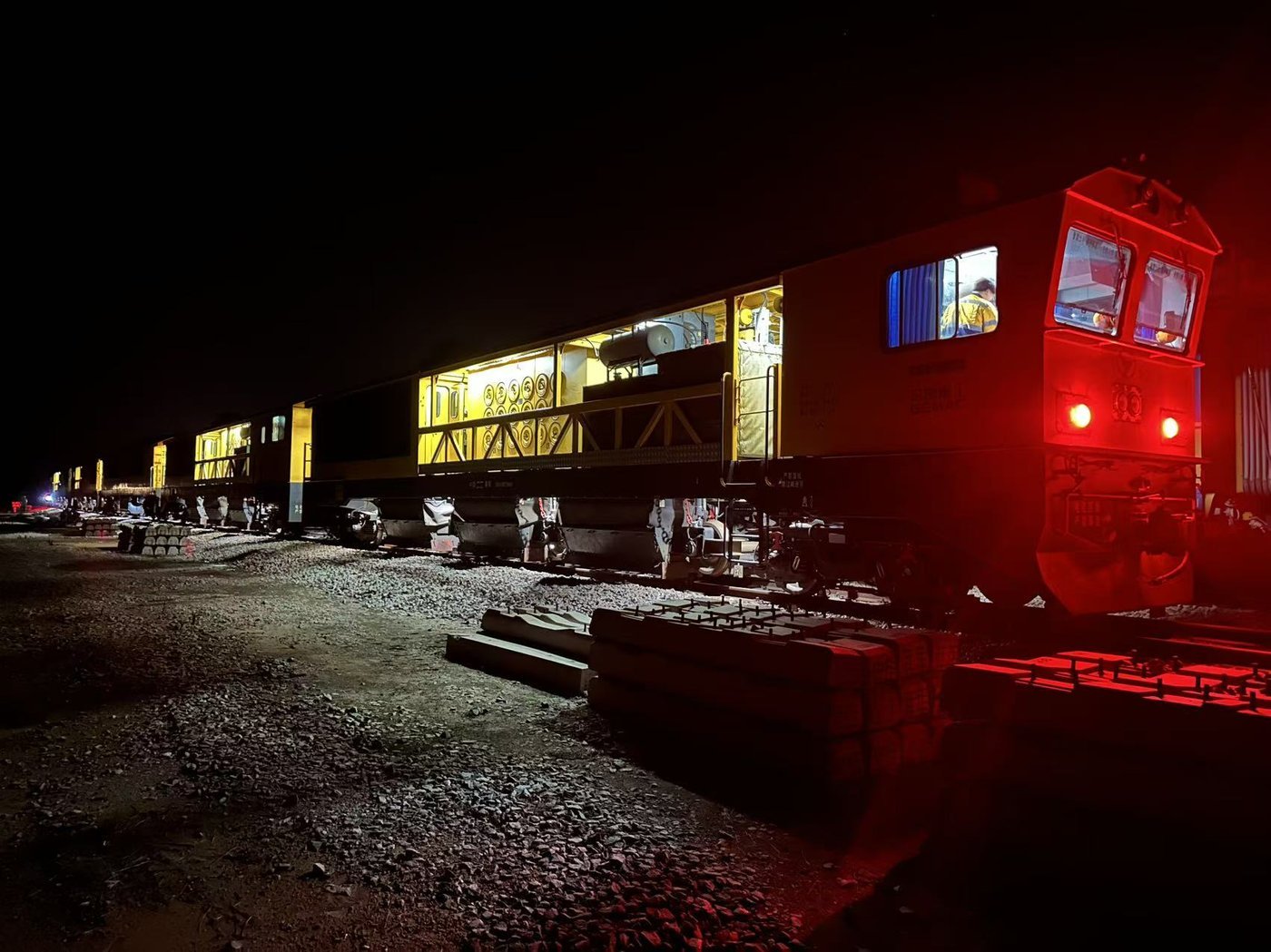
Five ways a programme spends section without buying life
| What goes wrong | How it shows in numbers | What it costs | The correction |
|---|---|---|---|
| Depth set by the defect every cycle | Cumulative removal runs against the crown band of +0.2 to -0.4 mm and against the head's design wear allowance | Section meant to last years is consumed in a few campaigns | Budget removal per cycle against the envelope still available, and keep corrective work as the exception it was meant to be |
| Passes copied from the last job | Same pass count, but removal per position differs across the head | One zone is left above the crack window while another is over-cut | Set passes from measured removal per zone on this machine and this line |
| Interval read off the calendar | The job starts after the 0.3 mm trigger instead of before it | The crack root sits below the depth a normal pass can reach | Set the interval as a division and cap the result with the defect clock |
| Surface restored, shape ignored | Crown inside tolerance, running band outside 25-30 or 35-40 mm | The same defect is regenerated by the contact geometry itself | Hand back against the profile drawing, not only against roughness |
| No baseline, so nothing is provable | The acceptance sheet is signed without a before reading | You cannot tell a campaign that bought life from one that only spent metal | Measure the same section, the same chord and the same transverse position twice |
The fifth row is the one that quietly costs the most, because it removes the ability to learn. Two programmes with identical removal can have opposite effects on life, and only a baseline taken on the same section distinguishes them. That is also why the plan, the depth and the acceptance thresholds belong in the same document: who owns the target shape is answered in our answer on the target rail profile, and the depth limits themselves in our answer on safe grinding depth.
We do not publish a life extension in years or in per cent, and a supplier who has not measured your line should not either. What can be stated without invention is the arithmetic: the rate at which the defect returns and the amount of section each cycle costs are both measurable, and the programme that keeps both inside budget is the one that defers renewal. A Molaton consumable is qualified on exactly the two numbers this arithmetic depends on: removal per pass at the planned working speed, and passes delivered per millimetre consumed. Where the defect has already passed the point of grinding, the decision turns into the one covered in grind or replace.
Related questions you may also ask
How is a rail grinding interval set by tonnage? What grinding depth is safe before you over-grind a rail? How many grinding passes does a rail need? When should you grind a rail instead of replacing it? What rail grinding is, and how a programme is built More answers on rail grinding strategy and equipmentIs your programme actually buying years, or only spending metal?
Send RailwayCare the interval you are running, the depth you take per cycle, the rail grade and one before-and-after measurement from the same section. We will show you which of the four links is missing, and what depth and interval your remaining section can still afford — with a Molaton wheel schedule built to deliver that removal at your working speed.
Review My Programme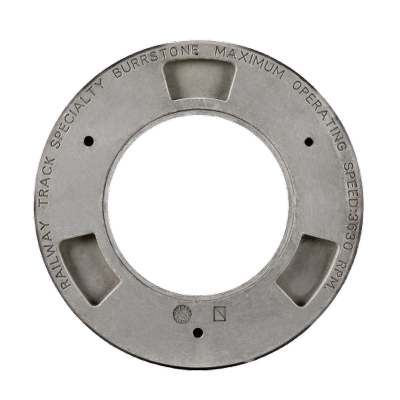
Are you looking for a reliable manufacturer of railway grinding and track maintenance equipment?
We can quickly provide customers with market analysis, technical support and customized services.
Safe Tracks Proven by China
- Name
- Phone
- *Title
- *Content