How should grinding be planned around rail welds?
How should grinding be planned around rail welds?
A weld is not a short length of plain track, and it must not be planned as one. It arrives with its own deviation from the target shape — excess height where it was not trimmed flush, a slight dip where it was — and with a heat-affected zone on either side. So the plan has to give it three things plain track never asks for: a short stroke, a lighter cut, and a finishing pass of its own. The parameter that decides whether that works is the grinding length, the distance the stroke runs out beyond the weld, and it is the number most plans leave blank. Too short and the cut ends in a step that the next wheel strikes; too long and the pass spends parent metal the interval cannot afford. The length is not a preference — it is derived from the weld's measured excess height and from the ramp the acceptance sheet requires.
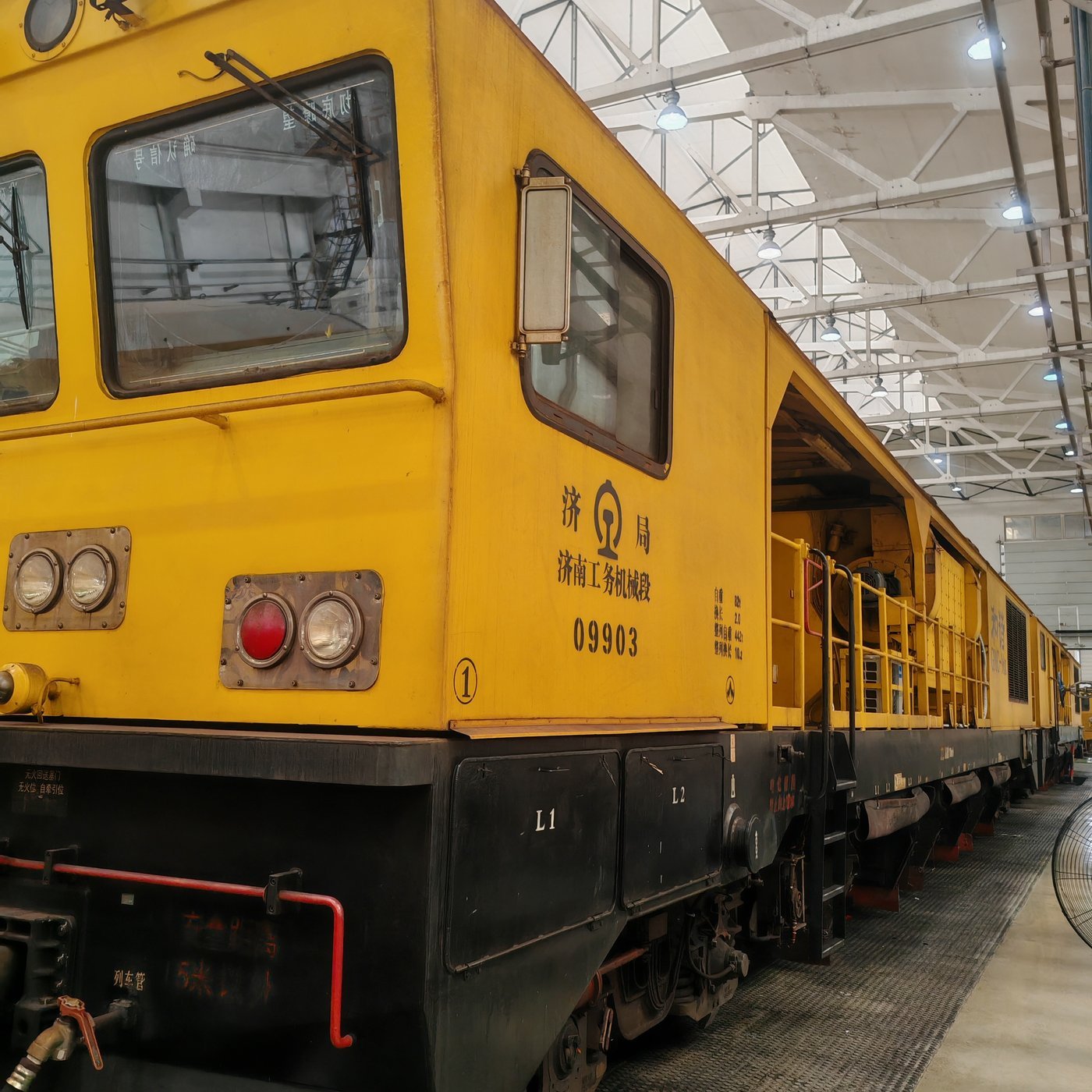
What a weld actually asks of the plan
| Zone in the plan | What the plan must give it | Why plain-track settings fail there | Who owns the decision |
|---|---|---|---|
| Weld crown and the first tens of centimetres either side | A stroke measured in centimetres, run at a lighter pressure than the main pattern | The same head pressure applied over a few centimetres of harder, hotter metal removes more than intended and drives heat where the metallurgy is already altered | The planner, from the measured excess height |
| The heat-affected zone on both sides | Shorter dwell and lower pressure until the finished surface stays clear of the bluing threshold | Plain-track speed and pressure were chosen for sound metal, not for a zone that has already been through a thermal cycle | The machine crew, under a rule written into the work order |
| The run-out at each end of the stroke | A ramp long enough to be a ramp — acceptance on Chinese networks calls for more than ‰1 | Ending the stroke where the wheel happens to reach depth leaves a step, and a step is a geometric defect, not a surface-finish item that can be polished away | Whoever signs acceptance, which is why the length appears on the sheet |
| A weld inside a curve or a crossing | Blending to the local rail shape at that point, not to the tangent-track target | A target copied from tangent track leaves the weld high on one leg or hollow on the other | The planner together with whoever owns the target profile — see who defines the target rail profile |
| A cluster: closure panels, plug rails, a crossing | One grouped zone with a single setup rather than a series of isolated points | Grinding each weld as a standalone point multiplies setups inside the same possession and eats the window before the plain track is reached | The possession planner, together with the grinding plan |
The reason length deserves its own line in the plan is arithmetic. On Chinese networks the weld zone is worked to roughly 0.2 mm per pass, while parent metal removal is capped at 0.5 mm across the whole job. A weld delivered with excess height above the cut a single pass can take at acceptable heat is therefore a multi-pass job by definition — and the answer is more passes over a longer stroke, never more pressure over a short one. Depth rules on their own are set out in what grinding depth is safe. How the length itself is measured, ramped and verified at the seam is the subject of its own field analysis: why grinding length is the unseen critical parameter in weld seam finishing.
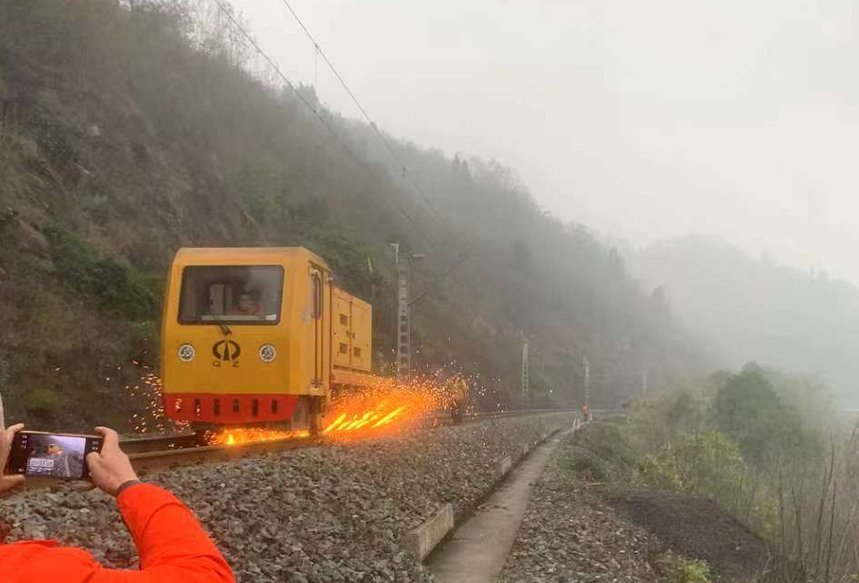
The sequence a weld should force on the work order
| Step | Decided before the window opens | What it changes downstream |
|---|---|---|
| Count and locate the welds in the section | Position, welding method as delivered, and whether each sits on tangent, curve or crossing | Converts the section into a list of zones with known geometry, which is what makes a per-weld stroke possible at all |
| Measure the excess height at each weld | A reading taken before the machine arrives, not guessed from the previous campaign | Sets both the pass count and the stroke length, because the ramp has to bleed the height out over a finite distance |
| Fix the stroke length and the ramp | Length in centimetres either side, with an end ramp steeper than ‰1 | Removes the two standard failures at once: the step left by a short stroke, and the hollow left by a stroke long enough to cut sound rail |
| Split the pass allocation | Which passes the whole section shares, and which passes only the weld zone receives | Stops the weld from absorbing passes budgeted for corrugation, and stops plain-track passes from re-cutting a finished weld |
| Write the finishing rule | Lighter pressure, own stroke, own final pass — stated as a rule, not left to feel | Makes the result repeatable across crews and shifts, which is what a programme needs and a one-off job does not |
| Record the outcome against the number | The acceptance values for the weld itself: 0.3 mm under a 1 m straightedge, Ra at or under 10 µm, no continuous bluing | Turns the next campaign's stroke length into a measured starting point instead of an inherited habit |
A weld is ground in a different rhythm from the rail around it, which is why the crew and the plan have to agree on where the zone begins. The same principle governs grinding a turnout without closing the line, where restricted zones inside a possession break the pattern in a similar way.
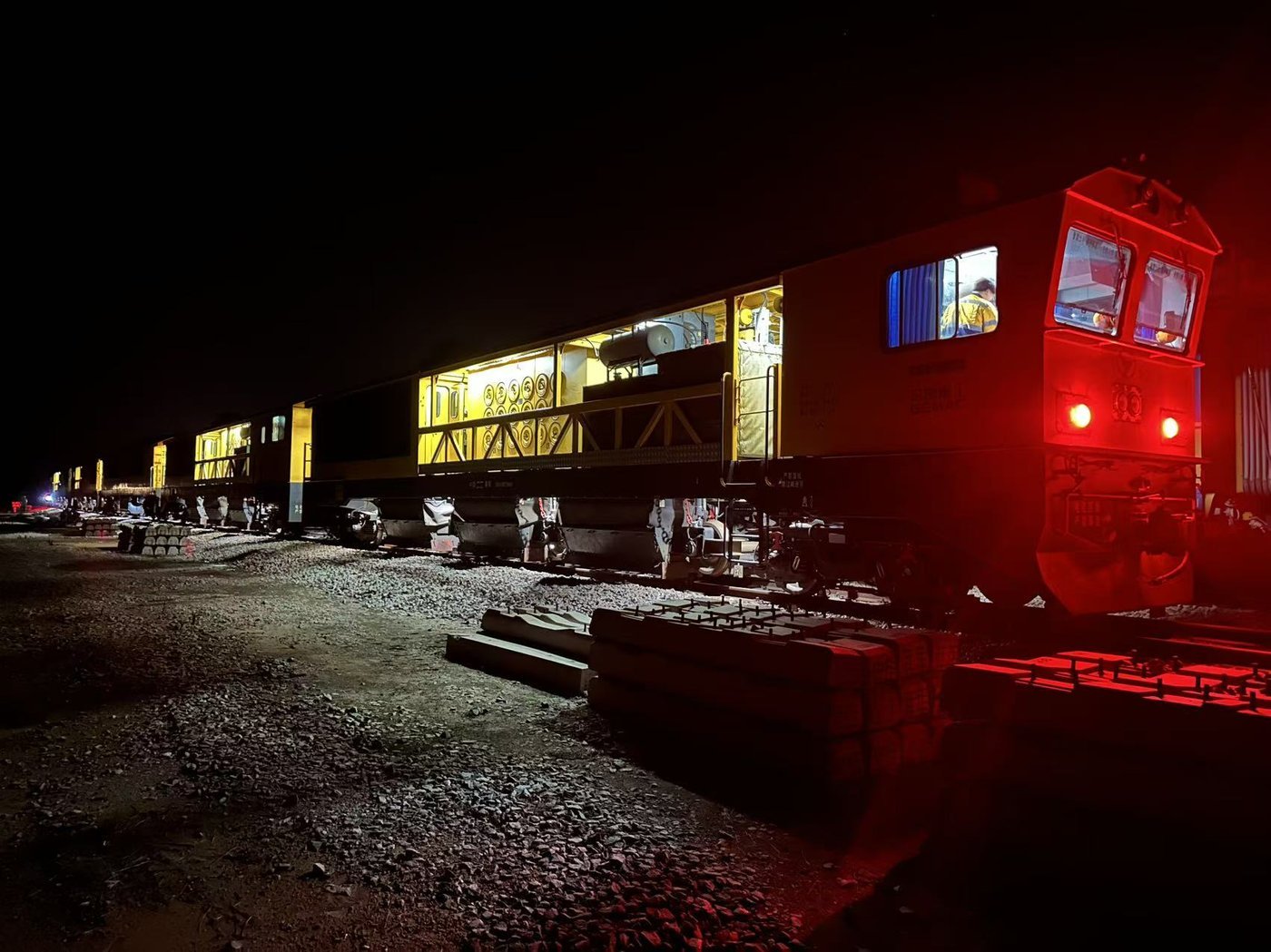
What the finished weld tells you about the plan behind it
| Symptom at the weld | What it usually means | What the plan got wrong | What to change next cycle |
|---|---|---|---|
| A visible step at the end of the stroke | The cut stopped at depth instead of ramping out of it | Stroke length was copied from plain-track practice or left to the operator | Set the ramp from the measured excess height and put a length on the work order |
| Blue or straw colour at the toe of the weld | Heat went in where the zone was already altered | Same pressure and dwell as sound rail, or depth chased with pressure instead of passes | Lighter cut and shorter dwell in the zone; see preventing rail burn during grinding |
| Weld still proud after a full campaign | Depth was limited by the pass count rather than by the metal available | Passes were budgeted for the section and never allocated to the zone | Give the weld its own pass allocation instead of borrowing from the plain track |
| Hollow either side of a weld that looks clean | The stroke overshot and took parent metal on the ramps | Length was set generously to be safe, without a depth budget | Reconcile stroke length with the 0.5 mm parent-metal cap; a longer stroke needs lighter passes, not fewer |
| A crack reappears at the same weld within one interval | Either the seam was not fully cleaned out, or the geometry still concentrates load | The plan treated the weld as a finish problem instead of a profile problem | Re-read the deviation, not just the surface; a repeat defect is a planning input, and the failure logic is set out in why grinding can make a defect worse |
Two boundaries keep this a grinding question. Which consumable should be fitted to the weld zone is a separate decision, answered on that side: which wheel is used for weld seam grinding; a Molaton weld-zone wheel simply gives the plan the removal consistency the stroke length assumes. How the weld was made — alignment, preheat, cooling — belongs to rail replacement and welding, and grinding starts from whatever geometry that process delivered. And where the whole campaign sits in time is a separate arithmetic: interval set by tonnage.
Related questions you may also ask
Why grinding length is the unseen critical parameter in weld seam finishing How many grinding passes does a rail need? How is a grinding pass pattern set, and why does the angle sequence matter? What grinding depth is safe before you over-grind a rail? What acceptance criteria decide whether a grinding job passed? More answers on rail grinding strategy and equipmentDo your welds have a length on the work order?
Send RailwayCare the weld count in your section, the welding method used and the excess height you measure at the seam. We will set out how the stroke and the pass allocation should be split, what a Molaton weld-zone wheel would hold at that depth, and where your current plan is most likely to leave a step.
Plan My Weld Zone Grinding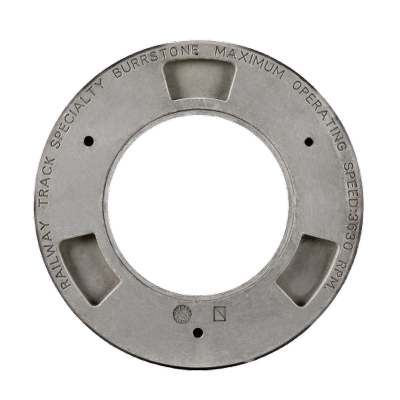
Are you looking for a reliable manufacturer of railway grinding and track maintenance equipment?
We can quickly provide customers with market analysis, technical support and customized services.
Safe Tracks Proven by China
- Name
- Phone
- *Title
- *Content