What records should a rail grinding programme keep?
What records should a rail grinding programme keep?
The rail will be measured again next cycle. The numbers behind this campaign will not exist unless someone wrote them down. Four record sets separate a grinding programme from a series of grinding jobs: the condition found before the machine arrived, the parameters the job actually ran at, the acceptance data taken after it left, and the wheel batches with what each consumed. Their real purpose is not compliance and not the audit file. It is to hand the next plan a measured baseline instead of last year's assumption — because the passes a section needs are derived from the deviation the last campaign did not remove, and that deviation only exists as a number if somebody recorded it.
The four record sets, and the decision each one feeds
| Record set | What goes into it | Which decision it feeds | What breaks when it is missing |
|---|---|---|---|
| Condition before the work | Profile readings by section against the target, the defect map with measured depth at each point, rail section and tonnage carried since the last campaign | How many passes and which pattern the section needs, and where the depth budget is already spent | Passes get carried over from the previous job or from the standard pattern, and depth is discovered to be unavailable mid-window |
| Parameters actually run | Pass count, working speed, the angle sequence used, depth achieved per pass, section actually completed, and every stoppage with its reason | Whether the outcome came from the plan or from improvisation — and what a repeatable job looks like | The result cannot be reproduced, so a good campaign cannot be copied and a bad one cannot be diagnosed |
| Acceptance data after the work | Profile against the target, 0.3 mm under a 1 m straightedge, Ra at or under 10 µm, no continuous bluing, parent-metal removal within 0.5 mm, ramp steeper than ‰1 | Handover, payment, and the starting position for the next interval | Disputes are settled by opinion, and the next plan starts from a shape nobody verified |
| Wheel batches and consumption | Batch identity, wheels fitted and removed per shift, pass-kilometres per millimetre achieved, and any abnormal wear, glazing or breakage with the section it happened on | Re-order quantities, and whether a consumption change is a wheel problem or a depth problem | Consumption anomalies only appear as an unexplained purchasing increase months later |
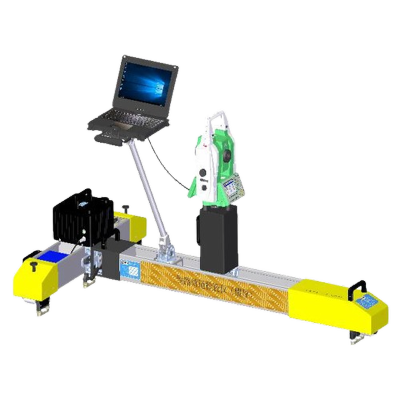
None of the four is a formality. Each one closes a question that arrives later, usually from someone who was not on site. The method used to take the readings is deliberately left open here — a recording car, a hand instrument or a marked reference section all work, provided the same method is used each cycle; the options are compared in verifying a grinding job without an inspection car.
The questions that arrive later, and the entry that answers them
| What someone asks, months later | The minimum entry that answers it |
|---|---|
| Was the section inside the profile envelope when you handed it over? | The post-work profile readings per section, filed against the target they were compared with — not against a nominal drawing |
| Why did this campaign take four passes when the last one took three? | Pre-work deviation at the same sections and the depth each pass actually achieved |
| Did that bluing come from the machine or was the rail already like that? | Speed and dwell per pass, plus a surface note at the section taken before work started |
| Why are wheels being ordered ahead of schedule? | Pass-kilometres per millimetre per batch, per section — the figure reads as consumable life, never as rail life |
| Was the interval too long, or was the last job too shallow? | Tonnage carried since the previous campaign, next to the depth that campaign left behind |
| Who accepted this work, and against what? | The signed acceptance entry naming the criteria, the measured values and the person who signed |
Two numbers are routinely misfiled, and both make a programme look better than it is. Pass-kilometres per millimetre describes how long a wheel lasted — on one high-speed campaign two sets ran at 4.28 and 3.27 pass-kilometres per millimetre, and neither figure says anything about the rail. Pass-kilometres per window hour describes throughput — the measured 18.72 pass-kilometres in a two-hour possession on a Chinese high-speed line is a productivity figure, and filing it as evidence of rail preservation is a category error.
How long each record keeps earning its place
| Horizon | What is retrieved from the records at that point | Why it cannot be rebuilt later |
|---|---|---|
| End of the shift | Metres covered against metres planned, passes run, and every stop with a reason | The window is gone; a stop that was not written down becomes an unexplained shortfall in the next report |
| End of the campaign | Acceptance values, the depth consumed, and the deviation that remains | The rail has already been changed by the work, so the pre-work state exists only as the record |
| Next interval | The tonnage and the residual deviation that together set the next pass count | Without it the interval becomes a calendar habit rather than a measured one — the arithmetic is in setting the interval by tonnage |
| Life of the asset | How much of the design wear allowance has been spent across all campaigns, and how often each section has been worked | This is the only place the cumulative cost of grinding — in steel rather than money — is visible; see the safe grinding depth per rail |
The record set also settles commercial questions without argument, which is why it belongs in the contract rather than in good intentions: a per-kilometre rate can only be checked against the pass basis and window actually run, and the KPI structure that makes those numbers contractual is set out in what KPIs a grinding contract should include. A Molaton wheel batch is traceable by identity for exactly this reason — if consumption moves, the batch record tells you whether the wheel changed or the job did.
Related questions you may also ask
Grinding acceptance standards and profile tolerance How do you verify a grinding job without an inspection car? What acceptance criteria decide whether a grinding job passed? What KPIs should a rail grinding contract include? How long does a rail grinding wheel last per grinding cycle? How do rail grinding programs extend rail service life? More answers on rail grinding strategy and equipmentCan you reconstruct what your last campaign actually did?
Send RailwayCare one shift of your existing paperwork, a profile survey and the wheel usage for that shift. We will show you which of the four record sets is missing, what the next interval can and cannot be set from, and how a Molaton wheel batch record closes the consumption question.
Review My Grinding Records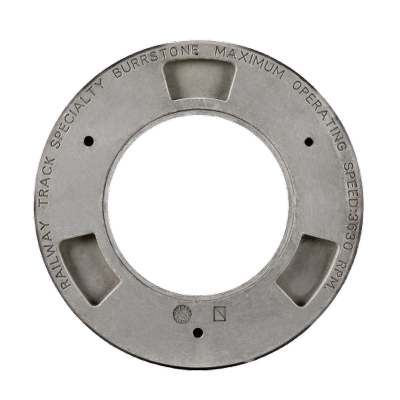
Are you looking for a reliable manufacturer of railway grinding and track maintenance equipment?
We can quickly provide customers with market analysis, technical support and customized services.
Safe Tracks Proven by China
- Name
- Phone
- *Title
- *Content