Which wheel is used for weld seam grinding after rail welding?
Which wheel is used for weld seam grinding after rail welding?
Weld seam grinding uses a dedicated weld-zone wheel — typically 150×56×M20 in zirconia alumina, resin bond with glass-fibre reinforcement, rated 50 m/s — and then a light finishing wheel of the same class to bring the running surface back to profile over the required grinding length. The two stages do different jobs and should not be folded into one. The first cuts the weld collar and the upset metal down to the head; the second blends the transition so there is no geometric step left behind. Where welds are finished at production scale, purpose-built weld-dressing wheels such as 260×25×120 mm do the same work from a rail-mounted machine. On a normal grinding campaign the train's standard main-line wheel finishes the joint as part of the pass plan — the wheel does not change, the pass plan does.
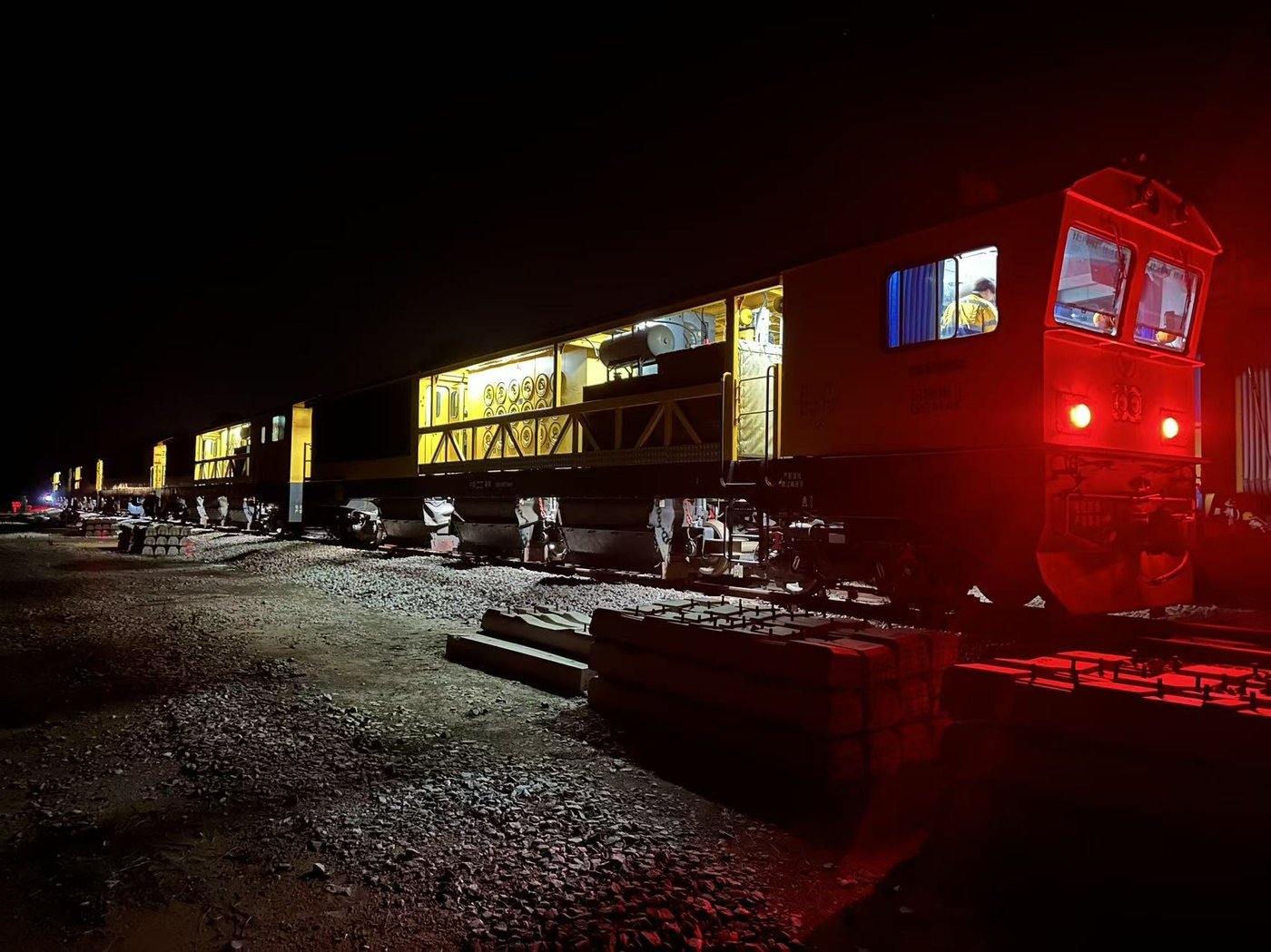
Weld seam grinding is two jobs, and they need two different wheels
- Job one: remove the collar. A weld leaves excess metal above the rail head — the collar, the upset bulge and often a raised edge on both sides of the joint. This is bulk removal in a very short length of track, so the wheel has to cut fast without loading. That is the weld-zone wheel: a 150×56×M20 class wheel in zirconia alumina with a resin bond, running on the light or hand-held machine at 6,000 rpm class.
- Job two: restore the profile. Removing the collar is not the same as restoring the rail. The head has to be brought back to its design shape across a defined length either side of the joint, with the blend long enough that wheels do not see a step. Skip this and you have created a hard geometric discontinuity exactly where the highest dynamic loads arrive.
- The production route. Where many welds are finished per shift, weld-dressing wheels such as 260×25×120 mm do the collar work from a rail-mounted machine, and a grinding train then runs the joint in its normal campaign. Both routes end at the same acceptance limits.
- Do not use one wheel to do both badly. A wheel coarse enough to cut a collar quickly is too coarse to leave the finish the running surface needs. Trying to finish with the rough wheel produces a scored, over-ground surface; trying to cut the collar with the finishing wheel glazes the wheel and burns the rail.
The wheel sizes that do this work
| Stage | Wheel class and size | Machine family | What it does |
|---|---|---|---|
| Collar and weld-zone removal | 150×56×M20, zirconia alumina, 20 grit, resin bond, 50 m/s | Geismar and Robel 150 class light machines | Cuts the weld collar and upset metal down to the head — weld-zone wheel 150×56×M20 |
| Production weld dressing | 260×25×120 mm weld-dressing wheel, resin bond, 50 m/s | Geismar and Robel rail-mounted weld-dressing machines | Finishes weld zones at scale with a wide, thin wheel — weld-dressing wheel 260×25×120 |
| Finishing and profile blending | 150×65×M20 and 150×70×M20, 20 grit, resin bond, 50 m/s | Geismar and Robel 150 class, Harsco RGH20C | Blends the transition and restores the contact band — 150×65×M20, 150×70×55 bolt-mounted |
| Confined and urban weld work | 125×65×20 series, 20 grit, resin bond, up to 7,500 rpm class | Geismar and Robel 125 class | Small-radius and tram-style joints where access is tight — 125×65×20-54×47, 125×65×20-36×18 |
| Weld cut-out and rail cropping | Cutting wheels 356×4×25.4, 305×3.6×22.2, 400×4×32 mm, brown alumina ZA/F30, 30 grit, rated 80-100 m/s | Rail saws and cut-off machines | Removes a defective weld or crops the rail end before re-welding — a different job from grinding, with its own wheel and its own speed rating |
The last row is worth separating in your stores. A cutting wheel and a grinding wheel are not substitutes: the cutting wheel is thin, hard-bonded and designed to sever, while the grinding wheel is built to remove stock gradually and leave a finish. Mixing them is one of the more common workshop errors.
Why a weld seam is the hardest short length of rail on the network
- The metal is not the same as the rail. A thermite weld reaches a reaction temperature above 2,500 °C, is cast in a mould and preheated to 350-500 °C, and must reach 95% of parent-metal strength or better under TB/T 1632.3 to be accepted at all. Around the weld sits a heat-affected zone with different hardness from the parent rail. A wheel that meets a hard patch and glazes will polish rather than cut it — and a polish is how a small step survives.
- The blend length is specified, not optional. Alignment tolerance at the joint is 0.5 mm or less before welding, and after grinding the joint has to sit within the running surface so that nothing reads as a step. Grinding a weld flat over too short a length is the single most common way to leave a defect that passes visual inspection.
- You are cutting in interrupted conditions. At the collar the wheel enters and exits hard metal repeatedly, which is exactly the loading resin bond with glass-fibre reinforcement is designed to survive. It is also the reason a brittle bond is a bad idea here regardless of how well it performs on plain line.
- Heat is a real risk in a small area. Weld grinding concentrates energy in a zone only a few hundred millimetres long. The finished surface must be below 150 °C, show no continuous blue band, and the pass must not create the 870 HV0.3 white layer that measures roughly two and a half times the parent-metal hardness of about 340 HV0.3. On a weld, that layer sits right at the highest-stress location on the rail.
- Acceptance is measured, not judged by eye. Ra 10 µm or better, within 0.3 mm under a 1 m straightedge, ramp-off steeper than 1‰, and base-material removal inside the 0.5 mm cap. The same limits that apply to a production pass apply to the joint.
Five checks before the wheel goes on the spindle
- Mounting interface. M20 spindle thread, 5/8-inch arbor or bolt-on pattern — the wheel must match the machine's fixing exactly. A wheel that “nearly fits” is not fitted.
- Guard and head clearance. The head is designed around a diameter band. A wheel larger than the guard allows cannot legally be run, and a wheel much smaller than the band exposes the spindle and changes the contact angle at the weld.
- Speed rating against spindle speed. The rated speed is a property of the wheel, never of the machine. A 150 mm wheel at 50 m/s corresponds to about 6,366 rpm; a 125 mm wheel to about 7,639 rpm. That is why these wheels are marked in the 6,000-7,500 rpm band. Under Q/CR 1-2014 the wheel must survive 1.5 times its rated speed for 30 s without bursting at or below 50 m/s, and 1.6 times above that — the test protects you only if the machine stays inside the marking.
- Abrasive and grit. Zirconia alumina in the F16 to F20 band. F16 zirconia alumina measured 308.0 MPa compressive strength with a grinding ratio of 41.0 in our material testing, against 124.0 MPa and 22.4 for calcined brown alumina. Brown alumina belongs in the cutting wheel, not the finishing wheel.
- Balance and batch inspection. Permissible unbalance scales with wheel mass under GB/T 2492 and ISO 6103, and Q/CR 1-2014 sets a static balance coefficient of K=0.4. Under Q/CR 1-2014 §6.2.2 the appearance, mated surfaces, dimensions, static balance and rotation strength are checked wheel by wheel — that regime is what a weld job needs, because a single imbalanced wheel shows up directly as chatter and burning at the joint.
Doing the job well: sequence and verification
- Let the weld cool properly. Thermite welds need about 5-8 minutes of cooling and a total cycle of 25 minutes or less. Grinding hot metal damages the wheel and distorts the finish.
- Rough first, across the collar only. Take the collar down with the weld-zone wheel, working both sides of the joint rather than from one direction, and stop as soon as the head profile is reached. Do not chase a shine at this stage.
- Then blend. Switch to the finishing wheel and work the transition out over the full grinding length. Removal per pass is about 0.2 mm in normal active grinding, with a 0.5 mm cap on base-material removal — work within that budget rather than trying to finish in one cut.
- Measure against limits, not impressions. Straightedge, surface roughness, ramp-off and colour. If a blue band is visible, the pass was too hot regardless of how the number looks.
- Record it. A joint that is ground and measured, with the numbers kept, is worth more than a joint that is ground twice.
For the welding side, see what aluminothermic welding involves and how rail replacement and welding work. On the grinding side: why grinding length is the unseen critical parameter in weld seam finishing, why grinding is half the job on thermite joints, the complete weld grinding workflow and grinding acceptance standards. If you are working inside a possession, this guide to track replacement within a blockade window covers the whole sequence.
One honest note on method. Official Chinese guidance has moved new-build and reconstructed lines toward flash-butt and gas-pressure welding in preference to thermite, because a factory-controlled weld is more consistent. Thermite welding remains in service, and in restricted locations it is sometimes the only option — which makes the grinding discipline described above more important, not less.
The welding and grinding products behind this answer
Two sides of the same operation, both supplied by us under the Molaton rail consumables brand: the TWS high-performance rail thermite welding system for the joint itself, and the weld-zone, weld-dressing and finishing wheels for what happens immediately after. The full welding range sits in rail replacement and welding systems, and the grinding side in rail grinding wheels and rail welding consumables. Custom weld-zone sizes are covered by light customization solutions.
Related questions you may also ask
What is aluminothermic welding in rail replacement? How does rail replacement and welding work? What is the Geismar MC3 rail grinder? What is the maximum operating speed for a rail grinding wheel? What does a wheel specification like 260x90x154mm mean? More answers on rail grinder wheelsGet the right wheel for your weld procedure
Send Molaton your welding method, your machine and the wheel size you currently run. We will confirm the Molaton weld-zone and finishing wheels for your procedure, and the pass sequence that reaches your straightedge and finish limits.
Request a Weld Grinding Wheel Recommendation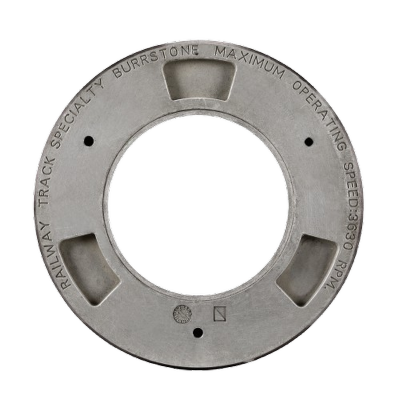
Are you looking for a reliable manufacturer of railway grinding and track maintenance equipment?
We can quickly provide customers with market analysis, technical support and customized services.
Safe Tracks Proven by China
- Name
- Phone
- *Title
- *Content