Rail Welding & Grinding: The Complete Workflow
Every welded rail joint is finished twice: once with fire, once with abrasive. The welding itself - flash butt or thermite - takes minutes. But the joint only enters service after it has been ground back to the correct profile, checked against straightness and roughness limits, and blended seamlessly into the parent rail. Rail grinding after welding is the step that decides whether a joint survives 20 years or fails inspection on day one. This guide walks through the complete workflow as it is executed in the field: what each welding method leaves behind, the grinding sequence, the acceptance numbers, the wheel selection, and the field data that separates an efficient campaign from a costly one.
Why Grinding After Welding Is Not Optional
A finished weld is deliberately over-thick. Both flash butt and thermite welding leave a raised crown - on thermite joints, the sheared riser can leave several millimetres of excess metal in the first pass. The surrounding rail is not perfectly aligned either: vertical and lateral mismatch between rail ends, plus distortion from welding heat, mean the joint area deviates from the design profile.
Send that joint into traffic unground and every wheel passage becomes an impact event:
- The crown hammers the wheel tread, accelerating damage on both sides of the interface.
- Mismatched vertical geometry grows into a dip at the joint - one of the most common sources of dynamic overloading on continuously welded track.
- The abrupt profile change concentrates contact stress in a narrow band, initiating rolling contact fatigue and squats exactly where inspection will later look for them.
- Grinding marks left too rough, or a transition too short, transmit vibration to vehicles and ballast.
In other words: the weld determines the metallurgical quality of the joint, but the grinding after welding determines its geometric service life. Skip it, rush it, or do it with the wrong consumables, and the cost of the weld is wasted.
Rail Welding Methods - and What Each Leaves Behind
The three welding processes used on mainline rail leave different signatures for the grinding crew:
- Flash butt welding (stationary plant). Rail ends are butted and melted by electrical resistance, then forged together. The upset metal is trimmed hot, leaving a relatively small, regular crown and a small heat-affected zone. This is the standard process for shop-welded long rails.
- Mobile flash butt welding. The same metallurgy brought to the track, used for closure welds and renewals inside a possession window. Trimming in the field leaves slightly more variation than the plant.
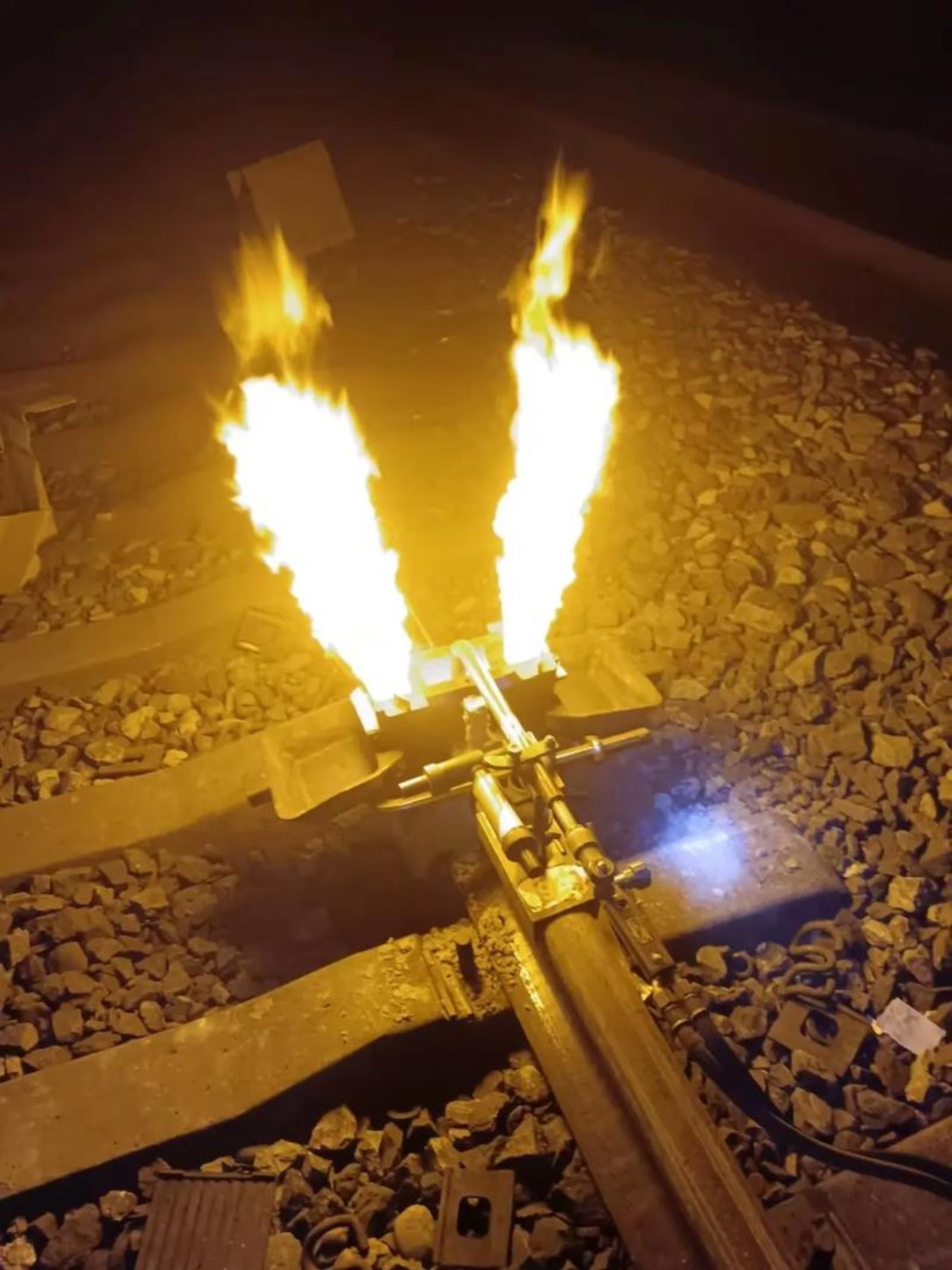
- Thermite (aluminothermic) welding. Molten steel from the thermite reaction fills a mould around the rail ends. After the mould is removed, the shear removes the riser - but the weld collar remains proud of the rail surface on the head, web and foot. Thermite joints are common at turnouts, plain-line closures and emergency repairs, and they generally require the most grinding.
Whatever the process, the grinding target is identical: remove all excess metal without over-cutting the parent rail, and restore the running surface and gauge corner to the design profile of the adjoining rail.
The Complete Workflow: From Weld Bead to Finished Joint
Rail grinding after welding follows a disciplined six-step sequence. Cutting steps short is where rework comes from.
Step 1 - Cool, then inspect before you grind. The joint must cool to ambient and pass its non-destructive testing (typically ultrasonic inspection of the weld metal and heat-affected zone) before finishing. Grinding cannot be allowed to mask a defect: a beautiful surface on top of an internal flaw is the most expensive kind of failure. Visual check for cracks, porosity and undercuts comes first.
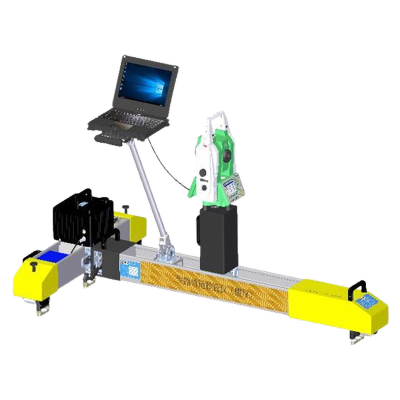
Step 2 - Baseline measurement. Using a 1-metre straightedge and feeler gauges (or an electronic straightedge), measure the joint for vertical surface error in the running band, plus lateral misalignment. Record the profile of the adjoining rail as the grinding target - the weld must be blended to its neighbours, not to a nominal drawing.
Step 3 - Rough grinding (crown removal). A coarse wheel on a hand rail grinder removes the bulk of the excess metal quickly, working the railhead down close to - but not at - final level. Keep the machine moving and the pressure moderate; the goal is fast stock removal without heat damage.
Step 4 - Profile grinding. Switch to the finishing sequence and restore the full railhead profile across the weld: running band, gauge corner, and field side. On hardened or premium rails this is where wheel choice matters most - see below.
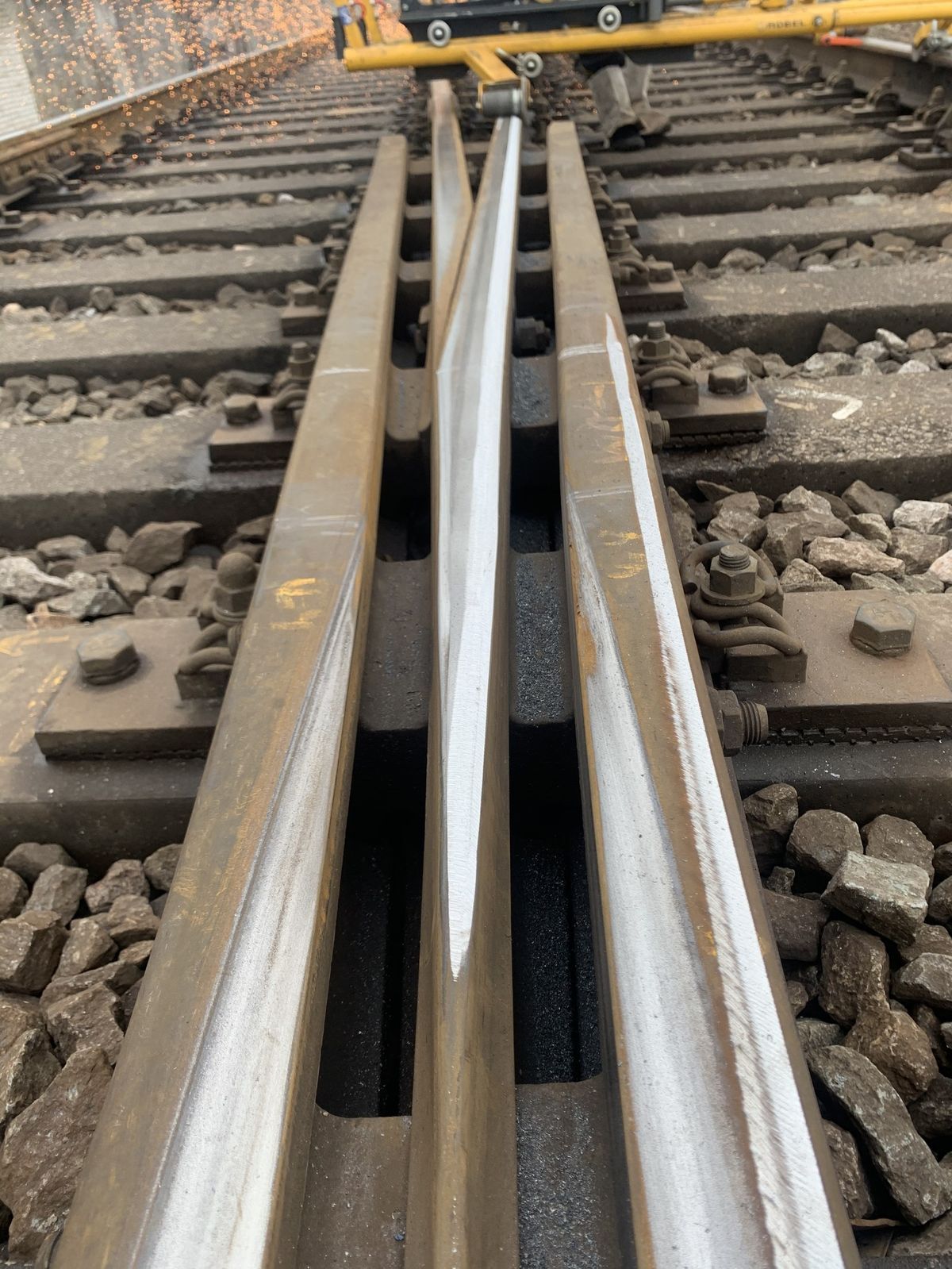
Step 5 - Longitudinal blending. Blend the weld into the parent rail with a gentle longitudinal ramp. The finished surface must not step at the weld boundary; the transition extends beyond the visible weld zone so that a wheel rolls over the joint without feeling it.
Step 6 - Final inspection and acceptance. Re-measure straightness, check surface roughness, inspect for burn marks and grinding marks, then release the joint to traffic or to the acceptance record.
Acceptance Numbers: What a Ground Weld Must Actually Meet
Field acceptance of ground welds is numerical, not visual. In Chinese railway practice the core criteria applied to ground rail surfaces - welds included - are:
| Criterion | Limit | How it is checked |
|---|---|---|
| Vertical surface error | ≤ 0.3 mm over 1 m | 1-m straightedge + feeler gauge |
| Surface roughness | Ra ≤ 10 µm | Roughness comparison / instrument |
| Burn marks (blueing) | No continuous blue band | Visual, good lighting |
| Longitudinal ramp | ≥ 1 ‰ (gradient) | Measurement over transition |
| Parent metal removal | ≤ 0.5 mm | Profile comparison |
Two points deserve emphasis. First, roughness: TB 10413-2018 and related acceptance practice set Ra ≤ 10 µm for ground rail surfaces; in RailwayCare field trials the finished surface measured Ra 7.13-7.25 µm - comfortable margin. Second, no blueing: a blue burn band means the grinding process overheated the surface and altered the microstructure - it is a rejection item, not a cosmetic one. Where profile quality is formally scored (the GQI grinding quality index used on some networks), a single measured profile scores "good" at GQI ≥ 85, and the weld zone is part of the measured section.
Grinding Length: the Transition Zone Where Most Joints Fail
The most under-appreciated variable in weld finishing is how far the grinding extends beyond the weld itself. A technically flat weld with a short, steep transition will still read as a geometric defect under a wheel. When large machines and small machines share a work site, best practice is to measure the profile 5-10 m on either side of the handover point before planning the blend, so the two operations converge on the same target instead of producing a step between them.
We have covered this variable in depth in a dedicated article: Why Grinding Length Is the Unseen Critical Parameter in Rail Weld Seam Finishing - worth reading alongside this workflow guide.
Choosing the Right Grinding Wheel for Weld Finishing
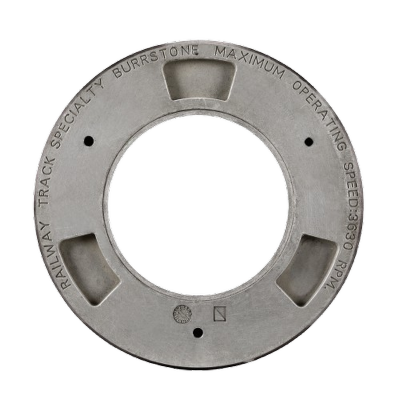
Weld finishing runs on hand rail grinders (Geismar, Robel and equivalents), and the wheel decides speed, surface quality and heat damage all at once. Typical specifications for this class of work: 150 mm wheels in 150×70×M20, 150×65×M20 and 150×75×32 formats, zirconia alumina abrasive around F20 grit, rated at 50 m/s, running at 6,000-7,500 rpm.
The abrasive matters more than the label. In grinding research conducted for a heavy-haul railway project, zirconia alumina achieved:
- A grinding ratio of 41.0, against 22.4 for calcined brown fused alumina and 11.9 for white fused alumina - meaning roughly 3.5 times the metal removed per unit of wheel wear compared with white alumina.
- Compressive strength of 308 MPa, versus 124 MPa (brown) and 103.2 MPa (white) - the grain keeps cutting instead of shattering under load.
For the crew this translates directly into fewer wheel changes inside a possession window and a wheel that keeps a sharp, cool cutting face through the last weld of the shift. Molaton hand-machine wheels pair zirconia alumina with a fibre-glass reinforced bond precisely for this duty; the self-sharpening behaviour of the grain exposes fresh cutting edges continuously, which is what keeps grinding temperature down (see the thermal data below).
Machine Options: Hand Machines and Dedicated Weld Grinders
For isolated joints, the hand rail grinder remains the primary tool. Where weld finishing is done in volume - new-build lines, systematic rail renewal - dedicated weld grinding machines take over. A representative example from Chinese practice, the VM8000 12E rail weld grinding machine (Autech):
- 12 spindles, 12 kW each, 4,000-6,500 rpm
- Angle coverage -72° to +20°, covering the full railhead profile
- Working efficiency around 300 m/h
- Metal removal of 0.2-0.3 mm per pass
- 5,000 m³/h dust extraction
- One set of 12 wheels finishes approximately 1,000 m of welds
The economics are straightforward: machine finishing multiplies output per shift and improves consistency across thousands of joints, while hand machines remain indispensable for turnouts, repairs and awkward access. Corridor-scale profile restoration, by contrast, is the domain of rail grinding trains - a different workflow, covered in our rail profile grinding guide.
Common Weld-Grinding Defects and How to Avoid Them
Four failure modes account for most rejections at weld grinding:
- Blue burn bands. Too much pressure or dwell on one spot overheats the rail surface. Thermal imaging of the grinding interface in RailwayCare's testing showed why wheel choice matters: at 3,600 rpm, an imported comparison wheel produced workpiece surface temperatures up to 143°C, while the trial wheel ran at 124°C - the self-sharpening zirconia grain cuts cooler. Keep the machine moving, use sharp wheels, and let the wheel do the work.
- Excessive roughness / grinding marks. Coarse-grit work not finished off, or a worn (glazed) wheel rubbing instead of cutting. Finish with the correct sequence and check Ra before acceptance - the ≤ 10 µm limit is achievable with margin (7.13-7.25 µm in trials).
- Over-cutting the parent rail. Removing more than 0.5 mm of parent metal around the weld weakens the section and is a rejection item. Measure the target profile first and remove to the profile, not "until it looks flat".
- Sharp edges at the gauge corner. Grinding the running band without dressing the gauge corner leaves a burr-like edge that rolls contact fatigue into the corner. Full-profile finishing, not just top-surface flattening.
What Efficient Consumables Deliver: Field Data
The difference between wheel grades shows up in production numbers, not brochures. From RailwayCare field trials and side-by-side comparisons:
- Passes to clear a defect: super-hard composite wheels removed typical surface damage in 2-3 passes where conventional wheels needed 4-6 - half the occupancy time for the same finished surface.
- Wheel wear per shift: in a GMC-96X comparison on a Chinese railway, Molaton wheels consumed 20-30 mm per wheel over the trial, while imported comparison wheels consumed 43.5-59 mm - roughly double durability. A half-car comparison (48 wheels Molaton vs 48 imported, same train) confirmed 1.5x durability with equivalent grinding quality and less smoke.
- Efficiency per mm of wear: on the Hefei-Wuhan high-speed line, the super-hard composite wheel delivered 4.28 pass-km per mm of wheel wear versus 3.27 for the incumbent wheel - and averaged 214.22 pass-km per wheel over the trial.
- Night window output: in one 2-hour night window on the Hengyang-Liuzhou line, a GMC-96X train completed 18.72 pass-km with the trial wheels - the kind of output that makes a maintenance window productive.
- Environment: sulphur-free bonding (rare earth/graphite replacing sulphur-bearing minerals) cut SO₂ in grinding fume by 30-35% - relevant for metro tunnels and enclosed work.
These are the numbers a welding campaign should budget with: wheel life, pass counts and window output determine the cost per finished joint far more than the wheel's unit price.
The Molaton and RailwayCare Approach to Weld-to-Grind Quality
RailwayCare (Wuhan Feelow Friction Material / Wuhan Huatie Ruijie Rail Transit Technology) has focused on rail grinding consumables since 2004, when it became the first Chinese company dedicated to rail grinding machine wheels. The company co-drafted the Chinese industry standard for rail grinding wheels, JB/T 11431 (current edition 2020), holds CRCC product certification (since 2011), operates under ISO 9001 and ISO 45001, and has passed the China Academy of Railway Sciences technical review for grinding machine accessories. Its wheels - sold under the Molaton brand - are validated in independent laboratory tests (National Quality Supervision and Inspection Center for Abrasives, 2024) and in the field trials quoted above, at a production scale of 500,000 wheels per year.
For weld finishing specifically, Molaton hand-machine wheels cover the common Geismar/Robel-compatible formats, so a welding crew can standardise on one supplier from crown removal through final profile work.
FAQ
How soon after welding can grinding begin?
After the joint has cooled to ambient and passed non-destructive testing. Grinding before NDT is completed risks burying an internal defect under a finished surface.
Can a rail grinding train replace weld finishing?
No - they solve different problems. Grinding trains restore corridor-level profile and remove corrugation and fatigue damage; weld finishing is precision local work on the joint itself. Serious maintenance programmes run both.
What roughness must a ground weld meet?
Ra ≤ 10 µm on the running surface is the acceptance limit in Chinese practice; trials with zirconia-alumina wheels have achieved 7.13-7.25 µm.
One grit size for the whole weld?
No. Coarse grit (around F20) for fast crown removal, then finer finishing work for roughness and profile. Trying to do everything with one wheel either burns time or burns the rail.
Get the Complete Weld-to-Grind Package
Welding and grinding are one workflow with one quality target: a joint a wheel cannot feel. RailwayCare supplies Molaton grinding wheels for the full sequence - hand-machine wheels for weld finishing, grinding train wheels for corridor maintenance - backed by trial data, third-party test reports and field support.
Request specifications, samples or trial data:
- WhatsApp: +86 15072332788
- Email: simon.wang@railwaycare.com
RailwayCare (Wuhan Huatie Ruijie Rail Transit Technology Co., Ltd.) – your professional partner in rail grinding, with Molaton grinding wheels field-proven on high-speed, heavy-haul and metro lines since 2004.