What is the grinding envelope, and who sets its limits?
What is the grinding envelope, and who sets its limits?
A target profile says where the rail head should be. The envelope says how much rail you are allowed to spend getting there. It is drawn as a band around the target — a tolerance on each zone of the head — together with a depth floor and a depth ceiling: deep enough that the defect is genuinely removed, no deeper than the parent-metal cap, and never deeper than the section can still afford over its remaining life. The infrastructure manager sets it, per rail section and per remaining section, and publishes it alongside the target profile as part of the maintenance specification. It is not a live setting. An operator who works outside it has not improved a surface; he has spent a future the asset owner had not agreed to spend.
Three things the paperwork names separately, and crews keep merging
| What it is called | What it actually constrains | What goes wrong when it is treated as one of the other two |
|---|---|---|
| Target profile | Where the running band should sit and what shape the head should present to the wheel. On Chinese plain line it is published as a profile family — 60N or 75N, per Q/CR 583—2017 — not as a rail weight name like 60 kg/m | If "grind to UIC60" or "grind to 60 kg/m" is accepted as an instruction, the crew has a rail section and no shape, and will invent a shape from whatever the head already looks like. The full argument is in who defines the target rail profile |
| Tolerance band around that profile | How close each zone has to sit to the target. Chinese profile-quality practice allows plus 0.2 to minus 0.4 mm at the crown zone and plus or minus 0.2 mm across the other three zones, scored as a grinding quality index | Treated as a target, the band becomes a place to aim for rather than a limit to stay inside; the crew grinds until the gauge says "green" and stops, whatever depth that took |
| Depth envelope | How much metal this cycle may remove and how much the section can still give over its whole life, with a hard ceiling on parent-metal removal | Treated as a target, it turns into a depth to reach for; treated as absent, it is simply whatever the passes happened to take — and no record exists to subtract from next time |
The three are related but none of them substitutes for another: the profile is a shape, the band is an accuracy, the envelope is a budget. A job can land perfectly inside the band and still have overspent the budget, because the budget is measured against the rail's remaining section rather than against the drawing.
What an envelope is actually built from
| Input | Which end of the envelope it sets | What breaks if it is left out | Where the figure comes from | How often it changes |
|---|---|---|---|---|
| Rail section and profile version | The shape the band is drawn around | The band has no centre, so every zone tolerance is applied to whatever shape was inherited | Section standard for the rail, profile family from Q/CR 583—2017 for plain line, plus the crossing standard for turnouts | On relaying, on major repair, or when the manager revises the profile |
| Zone tolerances on that profile | The ceiling on how close, and how far, each zone may sit | Acceptance becomes a single number for the whole head, and local over-grinding hides inside an average | The manager's own profile-quality scheme, with its zone definitions and scoring bands | Rarely — but it is versioned, so the version belongs on the sheet |
| Planned depth for the grinding mode | The floor — the minimum a pass must achieve to count | Passes polish the surface and the defect survives; the next cycle has to be remedial | Mode rules: pre-grinding and remedial work from 0.2 mm, preventive work from 0.1 mm, measured near the crown at the running band | With the mode, not with the mood — it changes when the campaign type changes |
| Section already spent in earlier cycles | The remaining headroom under the ceiling | The plan starts from the wrong remaining section, which is the commonest way a programme runs out of metal early | Your own records: measured profile before and after each cycle — see what records a programme should keep | Every cycle |
| Remaining section against wear limits | The absolute ceiling, and the point where grinding stops being the tool | Grinding continues on a rail that is already at its maintenance limit | Wear limits by rail type — for example 9 mm vertical and 15 mm side for 43 kg/m rail, 10 mm and 17 mm for 50 kg/m rail | Every measurement, and it only ever moves one way |
| Parent-metal removal cap | The per-job hard stop, independent of how the budget looks | A generous envelope plus a deep defect invites a single cut that no acceptance sheet would pass | Acceptance rules, where parent-metal removal is capped — the figures themselves are set out in what grinding depth is safe | With the standard, not per job |
Nothing in that table is a preference the crew can re-rank on site. Three of the six rows are published figures, one is a mode rule, one is an arithmetic subtraction from your own records, and one is a physical limit that does not respond to scheduling pressure. That is why the envelope is signed at specification level: it is the one document that lets a later argument be settled from paper.
Five ways a crew leaves the envelope while every reading looks legal
| What happens on site | Why it looks compliant afterwards | Which line it actually crossed | Who pays for it |
|---|---|---|---|
| Grinding until the index score is high, then stopping | Every reading sits inside the band, often comfortably | The per-cycle depth budget, because the metal was spent to improve a score rather than to remove a defect | The next cycle, which has less to spend — and eventually the relaying date |
| Chasing a corrugation peak with more depth on the same spot | The reported depth is an average, and averages stay modest | The parent-metal cap, and the local section in one zone | The asset, permanently — and the reason is set out in why grinding can make corrugation worse |
| Spot re-grinding between campaigns, logged as maintenance | Each individual visit is inside the envelope | The cumulative spend, which is the only figure the envelope really tracks | Whoever plans the next interval on a remaining section that no longer exists |
| Treating the band edge as the finish line | The surface is inside tolerance on every zone | The depth floor, which is a separate requirement | The defect, which comes back at its own rate regardless of how tidy the profile looks |
| Applying the main-line envelope inside a turnout or a restricted zone | The numbers on the sheet did not change | The local geometry budget, where target and budget are both section-specific | The restricted zone, which is either over-cut or left proud depending on which way the assumption fell |
The governance part is short. The envelope is issued by the infrastructure manager with the profile, quoted in the specification, and accepted against measured before-and-after data. The contractor's part is to stay inside it and to hand back the evidence; the authority's part is to confirm the evidence and to authorise the line. On that reading, the envelope is not the grinder's business at all — the grinder is only the instrument that has to be capable of respecting it. What makes a Molaton wheel relevant here is narrow and mechanical: it has to hold a stable cut at the depth the envelope allows, pass after pass, so the depth that is budgeted is the depth that actually arrives. Verification without a recording car is its own procedure, covered in verifying a grinding job without an inspection car, and how much time that budget buys between cycles is interval set by tonnage.
Related questions you may also ask
What is the target rail profile and who defines it? What grinding depth is safe before you over-grind a rail? When should you grind a rail instead of replacing it? What acceptance criteria decide whether a grinding job passed? Rail profile grinding techniques, standards and best practices More answers on rail grinding strategy and equipmentDo you have the envelope in writing, or just a profile drawing?
Send RailwayCare your target profile, the zone tolerances you must meet and the measured section you are starting from. We will set out what depth per cycle the envelope really allows, what a Molaton wheel holds at that depth, and where your current specification leaves the budget open to interpretation.
Review My Grinding Envelope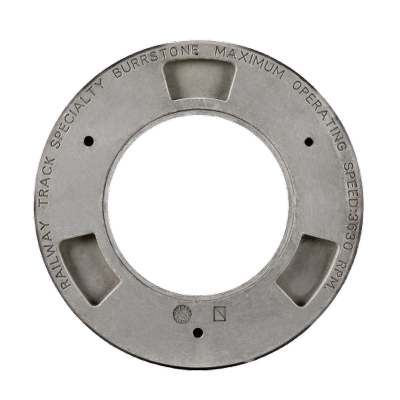
Are you looking for a reliable manufacturer of railway grinding and track maintenance equipment?
We can quickly provide customers with market analysis, technical support and customized services.
Safe Tracks Proven by China
- Name
- Phone
- *Title
- *Content