How does rail surface condition change the grinding plan?
How does rail surface condition change the grinding plan?
Surface condition does not change how much steel you plan to remove. It changes whether the first pass can cut at all. A grinding plan is a subtraction: target profile minus measured profile, divided by the per-pass removal rate. Every term in that subtraction rests on two assumptions — that the surface being measured is steel, and that the wheel will bite it. Surface condition attacks those assumptions, not the arithmetic. Four states do it, and each one breaks a different term. Rust and mill scale put a loose oxide film on the head: the profile you measure includes it and the first pass removes it, so both the before-reading and the removal figure are partly oxide. Oil and grease cut the friction at the contact: removal collapses while heat does not, and the reflex response — more pressure, less speed — produces a glazed wheel and a burn in the same shift. White etching layer is not parent metal at all: measured at roughly 870 HV0.3 against about 340 HV0.3 below it, 45-320 µm thick depending on parameters, with cracks reaching about 0.2 mm. A pass sized for parent metal skates across it, or presses it in. Indentations mean the head is not a continuous plane: a plan set from the average crown leaves the pit edge standing and over-cuts the metal around it. All four call for the same shape of answer and a different setting — make the first pass a pass that reads the surface, then re-measure before the campaign commits its depth.
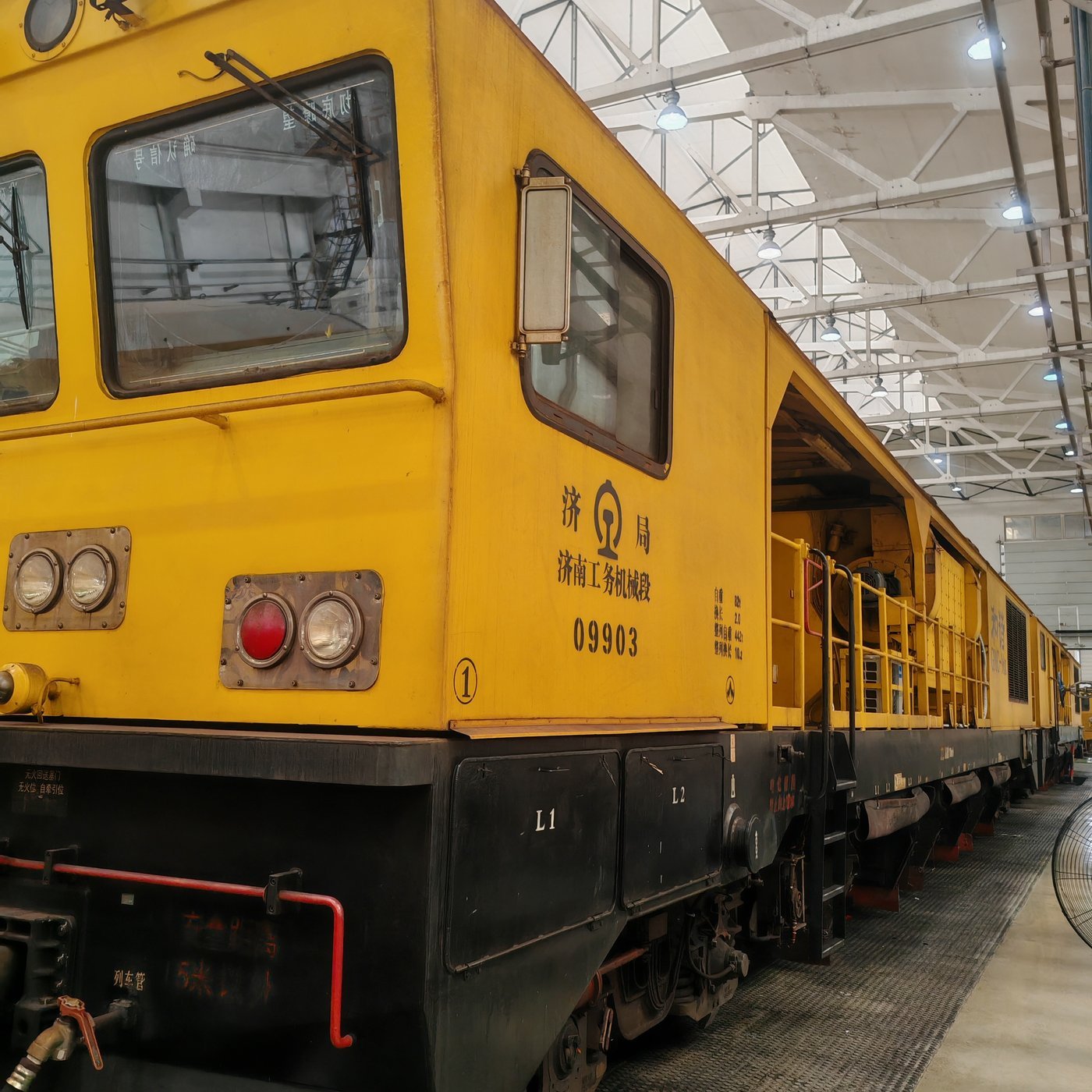
Four states, four different assumptions broken
| What is on the rail | What you see before the pass | Which assumption it breaks | What the first pass has to change | What does not change |
|---|---|---|---|---|
| Rust and mill scale | A dull brown or grey film, often patchy, sitting differently on the running band than in the four-foot | That the measured profile is steel. The gauge reads the oxide, and the oxide comes off easily, so the pass reports removal that is not metal removal — see what grinding actually removes | One light conditioning pass, then re-measure at the same points and set the removal depth from the new reading. This pass is a measurement, not the first removal pass | The target profile. It describes where the head should end up, not what it looks like now |
| Oil and grease | A dark wet sheen, characteristically near a lubricator, a crossing, a fuelling point or a depot throat | That the wheel will bite. Contact friction falls, removal drops away, and the surface stays grey and unmarked while the temperature climbs | Clean first, then grind. If the possession forces grinding anyway, cut light and watch colour rather than depth — the wheel is the thing being tested, as set out in a wheel that glazes instead of cutting | Nothing in the depth plan is valid until friction is back. Depth computed from a skating pass is a number without a source |
| White etching layer | Bright, almost polished bands that do not respond to a normal cut; martensitic rather than the surrounding structure | That the material is uniform. Hardness and crack depth vary through the layer, so one depth cannot serve it and the metal under it | A shallow pass read against the layer thickness, not against the profile deviation — the grading logic is in controlling white etching layer by grinding | The measurement discipline. Layer thickness and crack depth are readings you take, never values you assume |
| Indentations | A regular outline with sharp edges, repeated at even spacing along the same rail; it catches a fingernail | That the head is a continuous plane. A pit is local metal below the plane, so a uniform depth is wrong in two directions at once | An exploratory, light pass, with the depth set from the deepest pit rather than the average crown; the blending length then follows that depth, as described in the indentation grinding protocol | The acceptance thresholds. Roughness at or under 10 µm and no continuous bluing apply whatever the surface looked like going in |
The pattern across those four rows is worth naming, because it is what makes this a planning question rather than a housekeeping one: not one of them is answered by grinding more. Rust answers to measurement, oil answers to cleaning, the hard layer answers to depth control, and a pit answers to where the depth is referenced from. Every one of them turns the first pass into an instrument, and an instrument that is read as a working pass corrupts the depth budget of the whole campaign from its first metre.
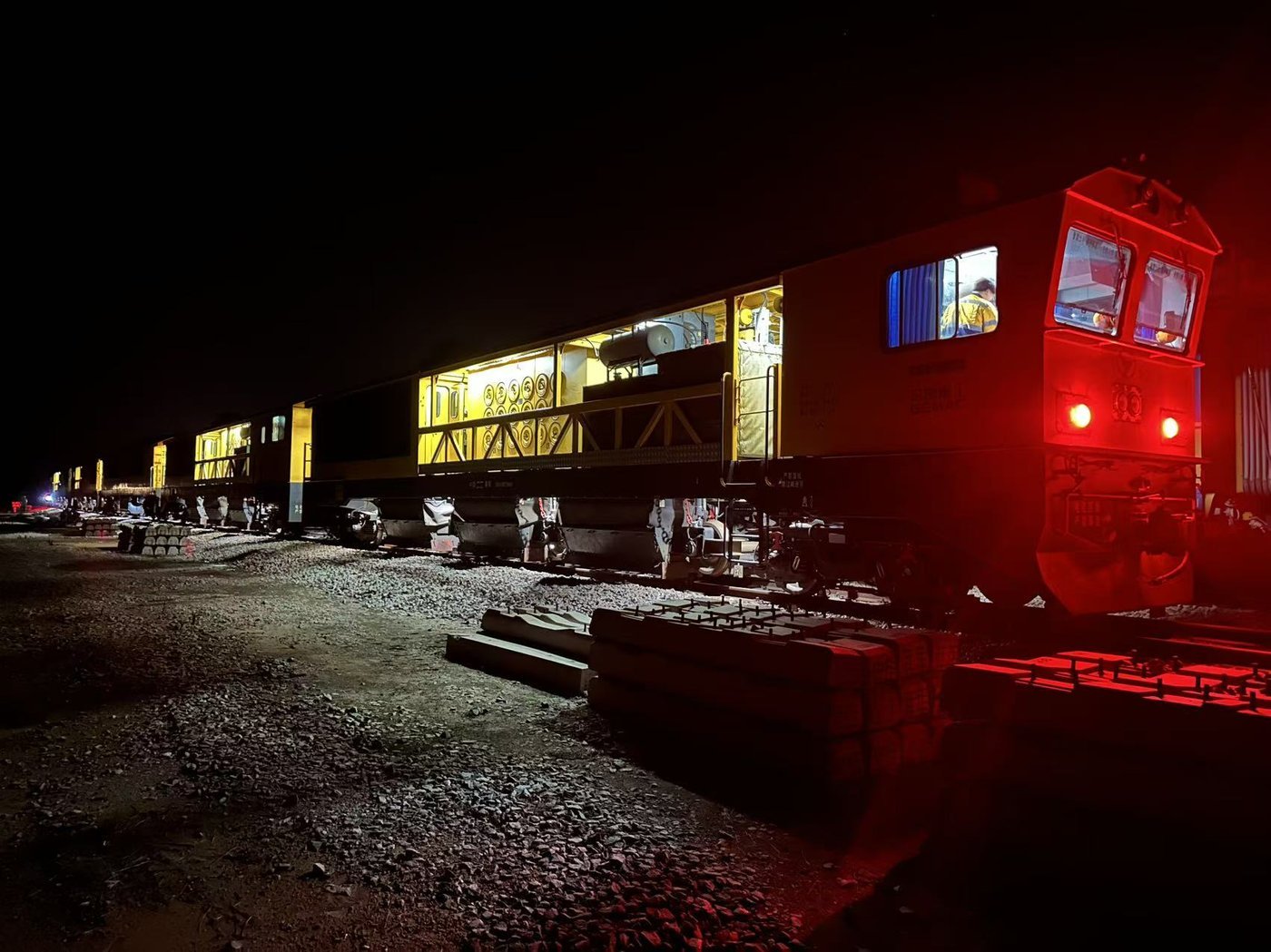
Reading the first pass when the surface was not clean
| What the first pass shows | What it actually means | What to do next | What not to do |
|---|---|---|---|
| Removal well below plan, surface clean and grey, no marks | The wheel is sliding. Lubrication on the rail or a loaded wheel face; the cut never engaged | Clean the rail, dress or change the wheel face, and run one pass again before reading anything into the number | Do not add pressure or slow the machine down. That converts a friction fault into a heat fault — the mechanism in preventing rail burn |
| Removal below plan, surface bright and polished | The pass cut oxide and stopped at metal it had not yet reached. The reading describes the film, not the head | Re-measure now and re-plan the depth from this pass. Record it as the conditioning pass | Do not count it as the first removal pass, and do not average it with the passes that follow |
| Removal on plan, but colour rises in one band and fades either side | The wheel found a harder band. The single depth number is an average across two materials | Reduce depth per pass in that band and re-order the angles so the same band is not worked continuously — how the angle sequence is set | Do not accept the average as proof of removal. Half the head was never cut to that figure |
| Removal on plan and even, but a bright strip survives at the pit or along one shoulder | The plan was referenced from the average crown, so the lowest point never came into the cut | Re-set the depth from the deepest point and read the first pass again at that point | Do not add a pass to the same pattern. It deepens what was already cut and leaves the strip where it was |
That last row is the expensive one, because it is invisible in an average. Removal across a rail head is never even — a single machine in a single working can take several times more metal on one side of the head than the other — so a first pass read at one position can certify a surface it never touched. Reading the crown and both shoulders is the minimum that makes the reading mean anything, and it is also the only way to tell an oil film from a missed angle: one leaves the whole band grey, the other leaves a strip.
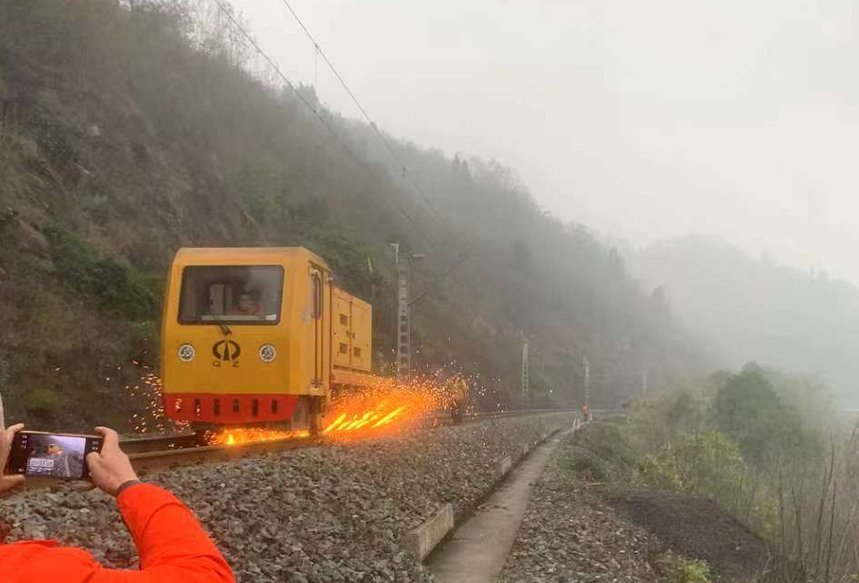
Four lines to add to the plan sheet
| Line on the plan | What it records | Who fills it | What it costs to leave out |
|---|---|---|---|
| Surface condition by chainage | Which of the four states, over which length, and how thick or how deep the reading said it was | The person who walked the section before the possession — not the operator on the night | The first pass is set for the wrong surface, and the discovery happens after the depth has already been spent on it |
| First-pass type and cap | Whether this pass is a conditioning pass or a removal pass, and the depth ceiling for whichever it is — against the 0.5 mm limit on parent metal in the safe depth before over-grinding | The planner, from the measured condition | Two shifts read the same pass two ways and neither number transfers to the next section |
| Pre-treatment and who pays for it | Clean, scrape or dry; who does it, and whether it sits inside the possession or before it | The planner together with whoever owns the maintenance of way | Cleaning turns up as an unplanned stoppage in the middle of the window, and the metres planned for the night do not happen |
| Re-measure points and the stop trigger | The fixed points where the before-reading is taken again after conditioning, and the reading that stops the job rather than changing it | The supervisor, with whoever owns the envelope for anything outside tolerance — see who sets the envelope limits | The original depth survives the new reading, and it is paid for out of the section — the deficit described in rail that has already been over-ground |
None of these lines is a machine setting. They are records of what the rail was, and they exist so that the trial pass has something valid to test against instead of testing the plan against itself. Which wheel holds a consistent cut through oxide, through a lubrication film and through a hard band is a consumable question rather than a planning one, and it is answered in the Molaton wheel range. A Molaton wheel behaves predictably; it still cannot tell you what it is cutting through unless the surface is written down before the window opens.
Related questions you may also ask
What does rail grinding actually remove from the rail head? How do you control white etching layer by grinding? What is the role of a trial pass before full grinding? How do you prevent rail burn during grinding? What grinding depth is safe before you over-grind a rail? More answers on rail grinding strategy and equipmentGrinding a section you have not seen clean yet?
Send RailwayCare the rail section, what the surface looks like along the length, and the possession you have. We will set out which surface states change the first pass, what the pass has to read before it becomes a removal pass, and which Molaton wheel holds a consistent cut through the condition you actually have.
Plan My First Pass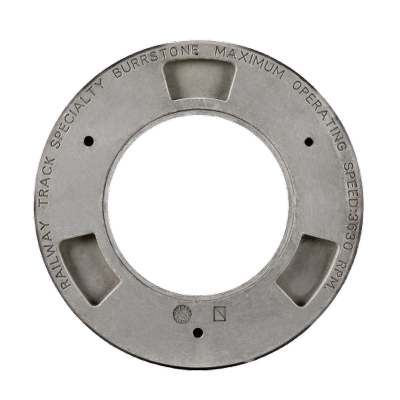

Are you looking for a reliable manufacturer of railway grinding and track maintenance equipment?
We can quickly provide customers with market analysis, technical support and customized services.
Safe Tracks Proven by China
- Name
- Phone
- *Title
- *Content