How do you treat a rail that has already been over-ground?
How do you treat a rail that has already been over-ground?
Grinding cannot undo grinding. There is no pass that puts the crown back, so the first thing to abandon is the instinct to run the machine again over the low spot. What is still open is a choice between three moves, and the choice is settled by measurement rather than by another pass. Read the running band first. If the polished band has stopped running through the middle of the head and now appears on the two shoulders with an untouched strip between them, the crown was cut below its neighbours — the profile is concave across its width, and the wheels are riding two shoulders instead of one crown. When the shoulders still carry metal above the wear limit, the profile can be made convex again by bringing the shoulders down to the crown you cut; that works, and it is the only grinding-based repair there is, but it spends more section, so the whole profile then sits permanently lower than the plan said. When the shoulders are already at their limit, further grinding is not a repair and the conversation moves to replacement planning. Either way, inspect the wheels, because a band that has narrowed or split loads them first — and the component that has already failed is often not the rail.
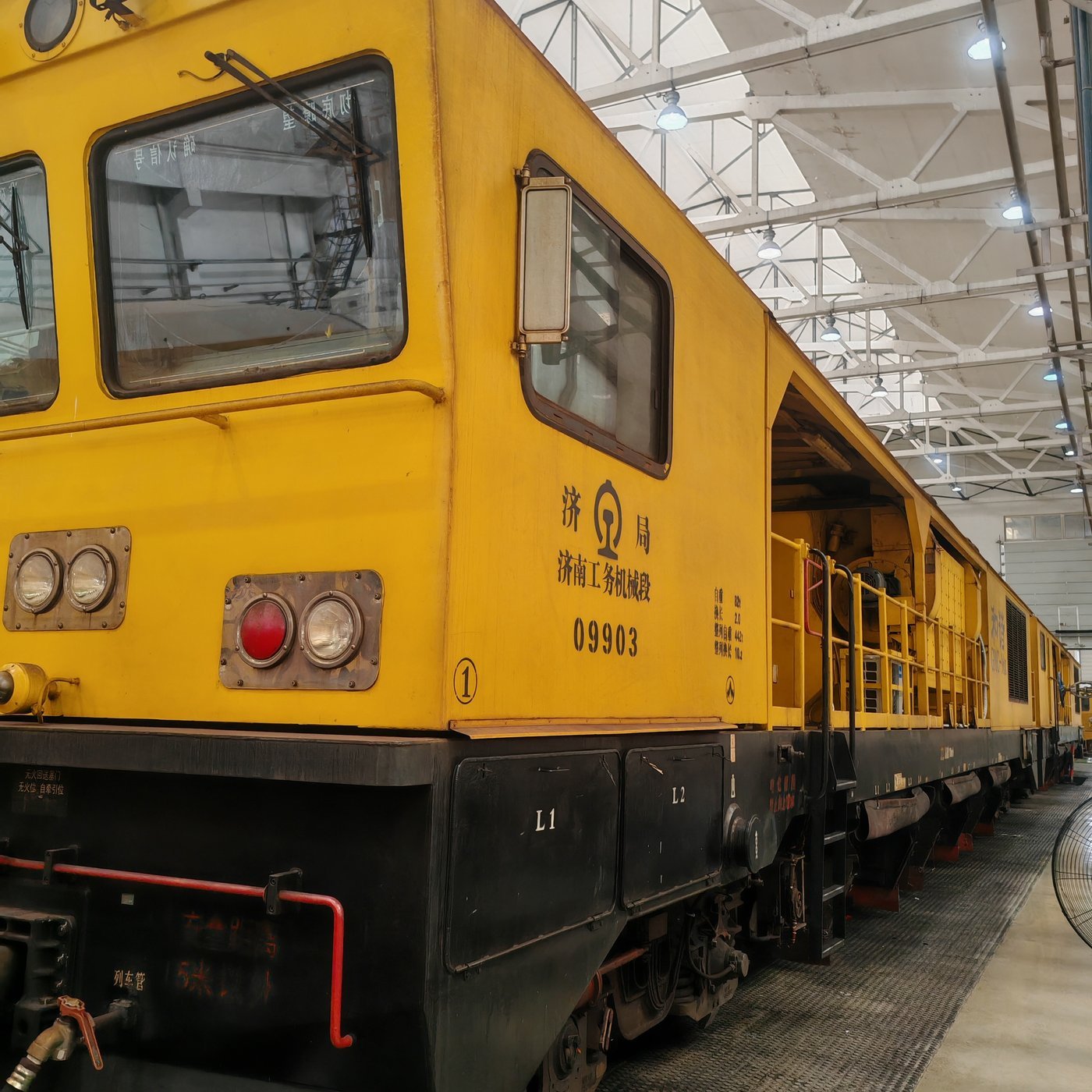
What an over-ground head looks like, and why the score can still be green
| What you see on the head | What the section has actually done | What the profile score can say | Why it is a loss you cannot recover |
|---|---|---|---|
| Crown sits at or below the bottom of its zone band — region 1 is allowed +0.2 / −0.4 mm against the target profile | Metal has left the part of the head the design expected to be there | Still passes while every other zone stays inside its own allowance | Every later cycle starts from a lower crown, and nothing in the process adds steel back — the arithmetic is set out in whether to grind or replace |
| The polished band no longer crosses the middle; it shows on both shoulders with an untouched strip between them | The crown was cut below its neighbours, so the profile is concave across its width | Often still passes, because the shoulders read at zero deviation and the crown reads at the edge of region 1 | The wheels stop touching the middle of the rail altogether, and the area that carries the load shrinks to two strips |
| Crown flattened into a wide polished plane instead of a crowned arc | The transverse radius has been taken out of the head | Can improve — a flat face can sit inside the band across more measuring points than a curved one | The score measures fit inside a band, never how much metal is left. A comfortable number over a thin section is the trap described in the grinding envelope |
| Colour on the surface, or a bright etched layer under it, with the geometry otherwise compliant | Heat went into the metal as well as the shape — usually the signature of chasing depth with extra passes at low travel speed | Nothing: surface condition is a separate acceptance item from profile fit | A hard, brittle white layer measured at about 870 HV0.3 against about 340 HV0.3 for parent metal. In bench work its thickness ran from roughly 45 µm at 1,000 rpm to roughly 320 µm at 2,000-3,000 rpm — a layer that later breaks up and seeds cracks |
Note what the second and third rows have in common: the measurement is not lying, it is answering a narrower question. A profile score asks how closely the head matches a shape and how far that shape is from the design line, zone by zone. It does not ask how much of the head is left, and it does not ask where the wheel actually touches. Both of those are separate readings, and an over-ground rail can be perfectly compliant on the first while being deficient on the other two.
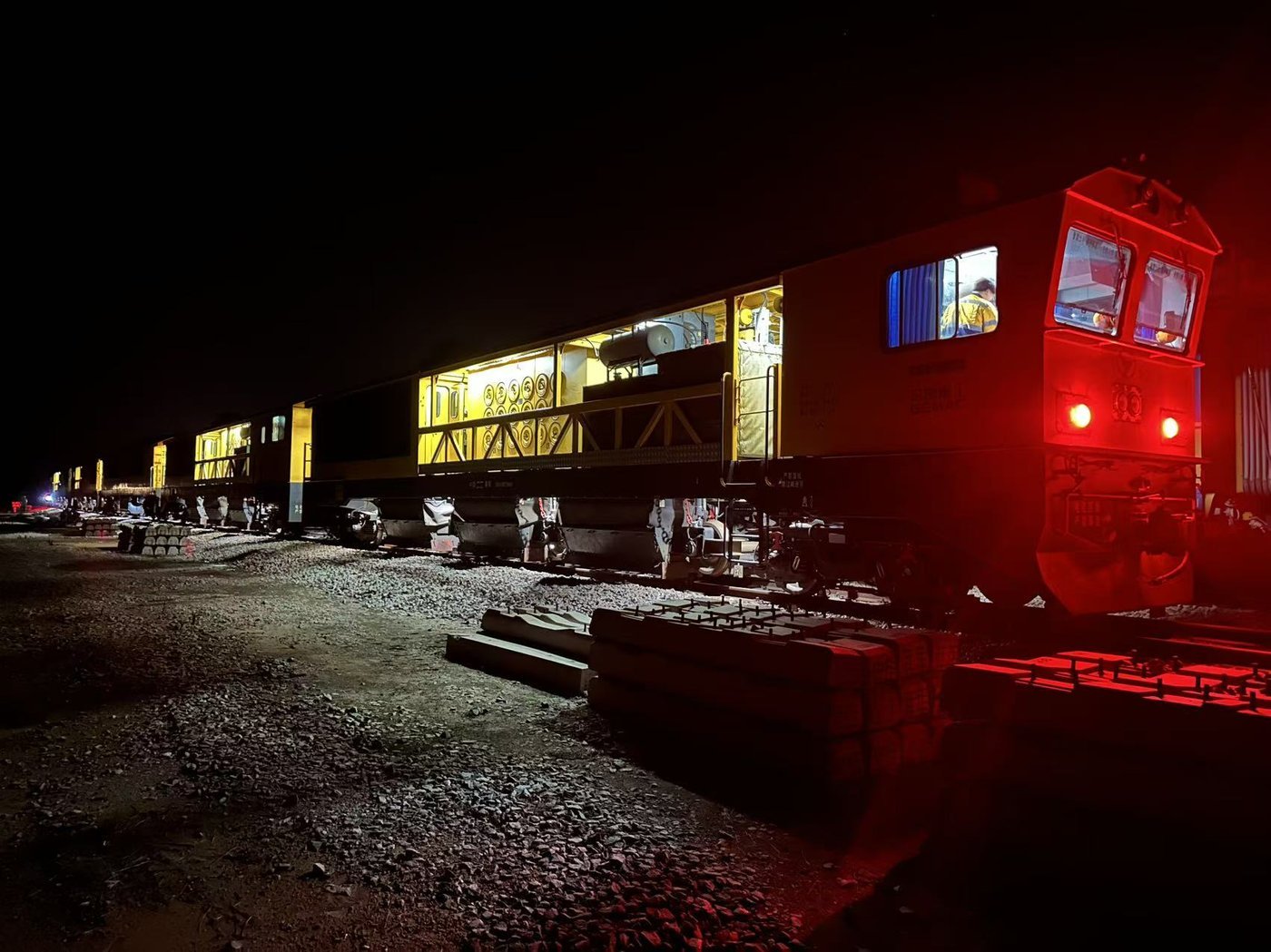
Three readings decide it — and each one has a different owner
| What to measure | Measured against what | Where there is still a route back | Where there is none | Who decides |
|---|---|---|---|---|
| Remaining section at the crown and at the gauge corner | The wear limit for that rail section — for 43 kg/m rail 9 mm vertical and 15 mm lateral, for 50 kg/m rail 10 mm and 17 mm | Still above the limit with the next cycle's planned depth in hand: accept it, record it, and bring the next interval forward | At or below the limit: this is rail replacement planning, no matter how good the profile looks | The infrastructure manager, on the section record — see what a programme should record |
| Profile deviation across the four head zones | The envelope: region 1 at +0.2 / −0.4 mm, regions 2, 3 and 4 at ±0.2 mm, inside a 0.5 mm cap on parent metal removal in one job | Deviation that sits on the side where cutting is still allowed — the shoulders can be lowered to the crown | Deviation on the side of too little metal at the crown. Cutting operations only move one way | The envelope owner. A crew cannot re-open the band on site to make a shallower crown legal |
| Running band position and width | Where the target profile puts contact — on the crown, over the zone the wheels' nominal rolling circle meets. As a reference for guidance values, turnout practice quotes 25-30 mm on high-speed lines and 35-40 mm on conventional and heavy-haul | A band that is narrow or split but still on the crown, with metal on the shoulders: restore convexity by taking the shoulders down, then re-measure | A band that has moved onto the gauge corner, or that has no continuous cut through the middle because the crown is below its neighbours and the shoulders are exhausted | Jointly: the track engineer and the rolling-stock engineer. Rail geometry alone cannot settle it |
| Surface right after the cut | No continuous bluing, roughness at or under 10 µm, no periodic wheel marks | Light colouring that a finishing pass inside the remaining budget will take off | A white layer already formed, with the section already spent producing it | The acceptance authority — and the reading is recorded, not negotiated |
The second row is where most arguments start, and it is worth stating plainly: you cannot lift a crown, you can only lower the shoulders to it. That is a real repair, it works, and it is routinely the right call — but it is a repair paid for out of the same account that was already overdrawn. The profile afterwards is correct in shape and lower in level, which means the next cycle arrives sooner for the whole width, not just for the part that was over-cut. On heavy-haul and mining lines, where tonnage consumes the section budget quickly, that acceleration compounds: the section economics of a long-haul programme are set out in track care for heavy-haul and mining railways.
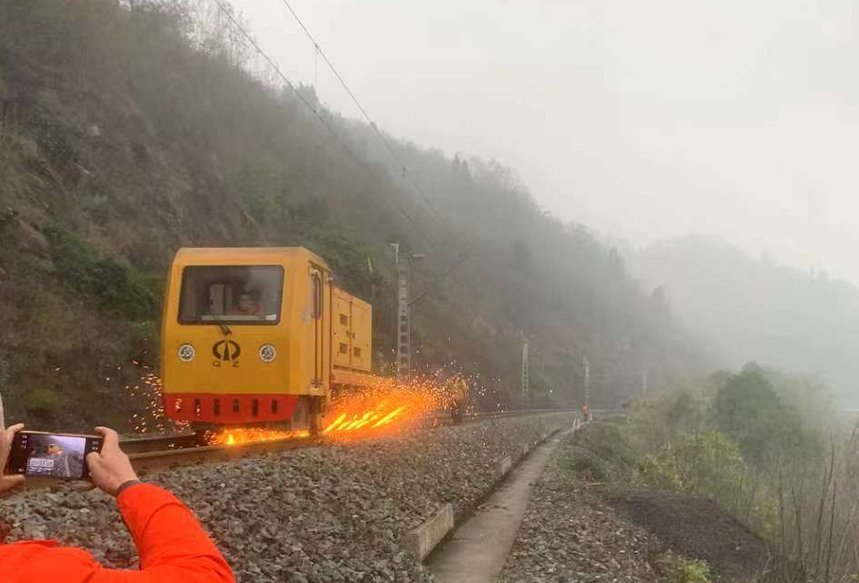
Why the wheels usually fail before the rail does
| Part | Why it goes first | What to look at on site | What grinding can and cannot do |
|---|---|---|---|
| Wheel tread | A narrower band loads a smaller area. A tread that has hollowed meets the rail on two shoulders rather than one crown, so the two profiles stop agreeing even if each is individually acceptable | The shape of the tread across its width, and whether the polished mark on the tread is one band or two. If it is two, the rail is not the only thing that needs restoring | Grinding can move where contact happens. It cannot change the wheel's own shape — that is wheel-set reprofiling, a different job in a different place |
| Wheel flange and gauge face | Once the band migrates towards the gauge corner, the lateral force carried at the flange rises, and both faces wear faster | Flange wear against the previous inspection, and how high the contact mark has climbed up the gauge corner | Grinding can restore the gauge-corner relief the target profile specifies — see how grinding addresses side wear. It cannot restore a worn flange |
| Gauge-corner fatigue on the rail | The corner was never designed to carry the load that a narrowed band puts on it | Cracking and spalling in the corner zone, not only at the crown | This is where grinding still has genuine work to do — but it is now remedial work created by the earlier over-cut, and it is paid for in more section |
| The crown itself | It is already below the level the plan assumed | Depth at the same fixed measuring points each cycle, compared with the envelope rather than with the last contractor's report | Nothing. This row is arithmetic, and it is where the honest answer to the question is “this is the depth that was not safe” rather than “grind it again” |
The direction of that last mechanism is not a matter of opinion. A rail defect that departs from the intended profile degrades the wheel-rail contact condition, and that degradation raises noise and vibration and accelerates the deterioration of both the vehicle components and the rail itself. Over-grinding is exactly such a departure — manufactured, not worn. So the sequence on site is: read the band, read the section, inspect the wheels, and only then decide whether the machine comes back. If the crown is below the plan and the band has left it, the next programme should carry the deficit forward as a recorded input and set its interval from remaining section rather than from the tonnage schedule, which is what a programme that extends life actually does. Which wheel can hold a light finishing pass without adding heat is a consumable question and is answered in the Molaton wheel range. And where the crown has gone below what the target profile allows at all, the question stops being a grinding question and becomes the one in who defines the target profile.
Related questions you may also ask
What grinding depth is safe before you over-grind a rail? What is the grinding envelope, and who sets its limits? When should you grind a rail instead of replacing it? How does grinding address rail side wear? What records should a rail grinding programme keep? More answers on rail grinding strategy and equipmentHas a rail been cut below its band?
Send RailwayCare the measured profile, the running band and the section record for the length in question. We will tell you whether the shoulders still hold enough metal to bring the profile back to convex, what that costs in remaining section, and whether a Molaton wheel can take the finishing pass off without adding heat.
Assess My Over-Ground Section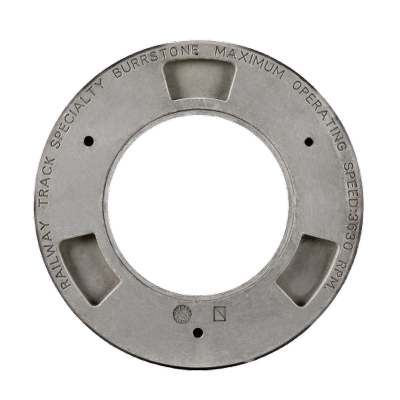

Are you looking for a reliable manufacturer of railway grinding and track maintenance equipment?
We can quickly provide customers with market analysis, technical support and customized services.
Safe Tracks Proven by China
- Name
- Phone
- *Title
- *Content