What is the role of a trial pass before full grinding?
What is the role of a trial pass before full grinding?
It is the only pass in the campaign you can afford to get wrong. Everything after it has already spent the possession, so the trial exists to convert a plan into a measurement while the cost of being wrong is still one pass wide. One pass, measured at the same fixed points before and after, has to settle exactly three things. Did the removal reach the planned depth? Pre-grinding and remedial work plan at least 0.2 mm at the crown, preventive work at least 0.1 mm, and no single job goes past the 0.5 mm cap on parent metal. Did the cut leave the surface out of the burn range? No continuous bluing, roughness at or under 10 µm, no periodic wheel marks. Do the angles cover the band the profile asks for? One continuous fresh cut across the whole zone, no bright strips left between cut bands. If any of the three fails, the answer is a setting change — depth per pass, travel speed, power, or the angle pattern. It is not another pass. Adding passes re-runs the same fault on metal that has not yet been touched, and on a rail it is metal you will want in the next cycle.
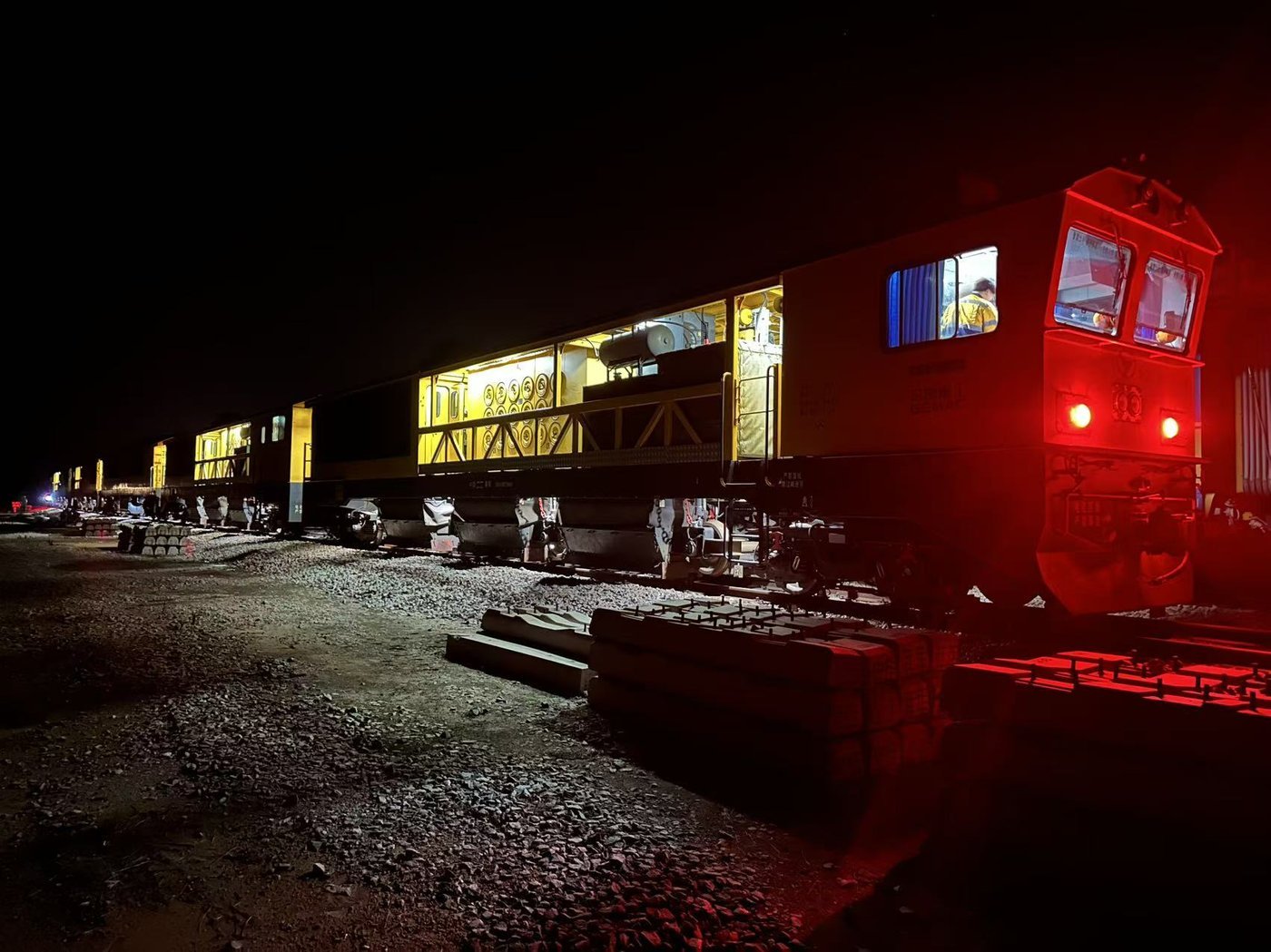
Three readings, and nothing else, decide whether the window opens
| What the pass has to prove | How it is read | What passing looks like | What failing looks like | Where the threshold comes from |
|---|---|---|---|---|
| Removal reached the planned depth | Same points, same method, measured immediately before and immediately after a single pass | A cut equal to the mode's plan: at least 0.2 mm at the crown for pre-grinding and remedial work, at least 0.1 mm for preventive work, with 0.5 mm as the absolute ceiling on parent metal | A clean, grey, almost polished surface with a cut below the plan. The metal looks good — that is exactly what makes it easy to miss | The grinding mode plan and the parent-metal cap; contract clauses are typically written as at least 0.2 mm at the crown at 7 km/h with roughness at or under 8 µm and no bluing |
| No burn | Colour along the whole trial length, plus roughness, taken on the same pass the depth was measured on | Rail colour, roughness at or under 10 µm, no continuous blue band, no evenly spaced wheel marks | Pale yellow turning blue, and roughness climbing with each successive reading | Temperature against colour: normal colour below about 471 °C, pale yellow burn around 471-600 °C, blue burn around 600-735 °C |
| The angle set covers the band | Which parts of the head carry a fresh cut and which are still untouched, read across the width, not along the length | One continuous cut through the zone the target profile asks for, edges included | Bright untouched strips between cut bands, or the cut sitting to one side of the crown | The pass pattern against the target profile — see how a pass pattern is set |
| The section is still inside the envelope | Trial length measured against the envelope, not against the previous contractor's report | Deviation inside region 1 at +0.2 / −0.4 mm and regions 2-4 at ±0.2 mm, with depth still available for the rest of the job | The trial length already at or over the band on one pass — the plan, not the machine, is wrong | The envelope and its owner — who sets the limits |
One detail matters when reading the first row: removal is not the same at every position across the head. In a six-pass campaign on an 800 m-radius curve, the same high rail gave up about 0.3 mm at the outer shoulder against about 1.8 mm on the inner side — a sixfold spread on one rail, from the same machine in the same working. A trial that reads the crown only will therefore report a number that is true and useless. Read at least the crown and both shoulders, which is also the only way the third reading — coverage — can be answered at all.
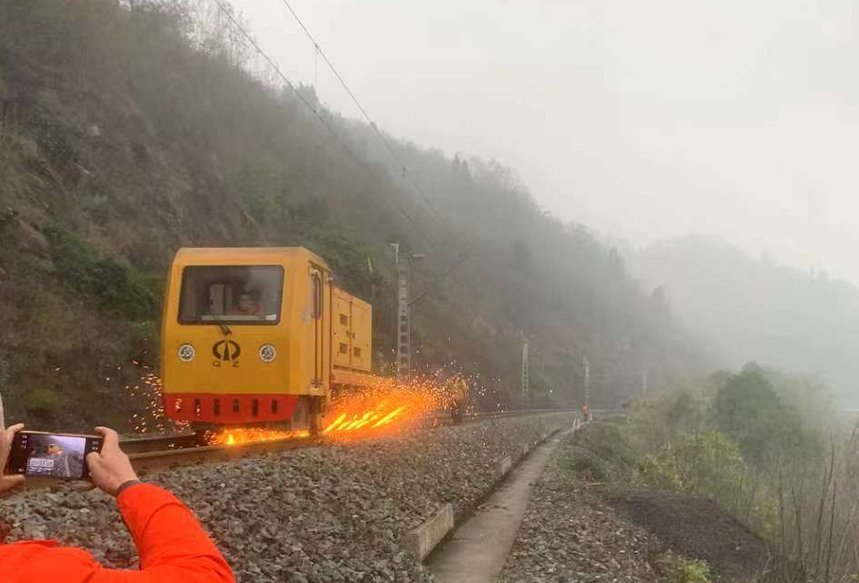
Reading a failure: which parameter to move, and why a pass will not do
| What the trial shows | What it actually means | What to change before the next pass | What adding a pass would do instead |
|---|---|---|---|
| Depth short, surface clean | Power or travel speed is wrong for this rail — a faster pass shortens the contact arc and takes less per pass | Slow down or raise power until a single pass reaches the planned depth, and record the pair — a speed without its power is not a setting — see what speed actually changes | Repeats the same shallow cut. You reach the depth eventually, but every repeat is another heat cycle on the same metre, and the burn reading gets worse while the depth reading gets better |
| Depth fine, colour blue at one zone | Heat per metre is too high there: too much depth in one pass at too low a speed, or the head dwelling over one zone | Cut the depth per pass, raise speed, shorten the dwell, and re-order the angles so no single zone is worked continuously — the sequence is in preventing rail burn | Buys nothing on depth, adds heat, and thickens the white layer that a bench programme measured running from roughly 45 µm to roughly 320 µm as the parameter rose |
| Depth fine, no burn, bright strips untouched | An angle is missing from the set, or the head is being worked across a narrower band than the profile requires | Change the pattern, not the depth — a missing angle is a coverage fault, and coverage does not improve with repetition | Re-runs the same angles over the same strips: the untouched strip stays untouched and the worked strip simply goes deeper |
| Depth, burn and coverage all fine, but the crown is already at the band | The trial found the limit the hard way: the whole job cannot run without leaving the envelope | Stop and re-baseline the plan with whoever owns the envelope. This is a scope question, not a parameter question | Makes it worse on every pass, and creates the deficit described in what a programme should record |
The pattern in that table is worth naming, because it is the most common mistake in trial work: depth can be bought with passes, but nothing else can. A campaign that answers every failed reading by grinding again converts a parameter problem into a section problem. The three readings are deliberately separate for that reason — each one points at a different setting, and only one of them points at the pass count.
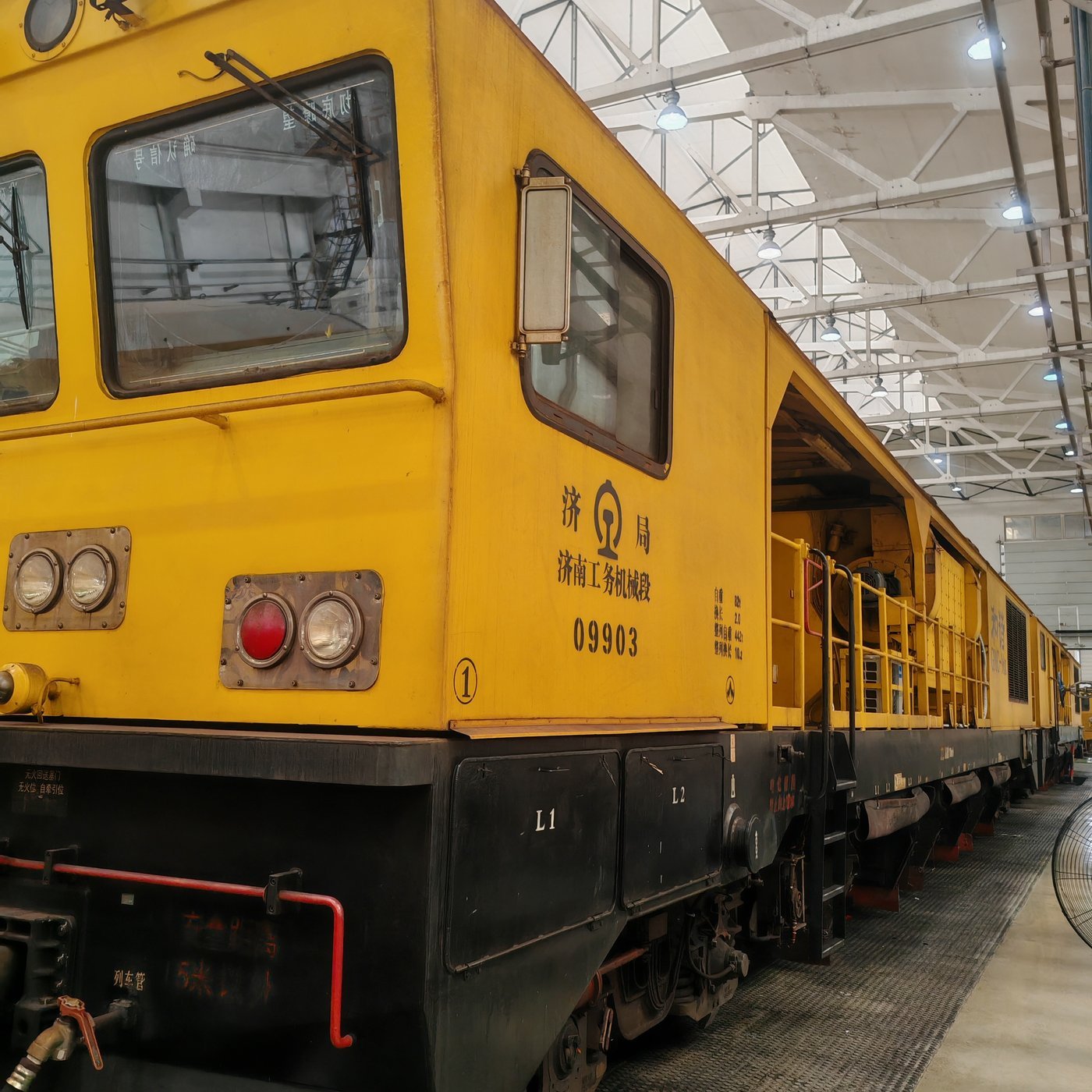
Where the trial sits in the window
| Step | What it produces | What skipping it costs |
|---|---|---|
| Pick the trial length — representative of the worst condition in the job, same rail section and same class of deviation, not the smoothest stretch available | A result that transfers to the kilometres you have not seen yet | A trial that proves the easy part of the job and says nothing about the length that will actually decide the outcome |
| Pre-measure at fixed, marked points with the same method that will be used for acceptance | A before-picture that the after-reading can be subtracted from | Removal becomes an impression rather than a number, and the acceptance report has no baseline to stand on — the method is set out in verifying a job without an inspection car |
| Run one pass only, then read depth, burn and coverage | A per-pass removal rate — the single input the whole pass count is computed from | You learn the rate after the depth has already been spent, and the plan cannot be corrected without paying for it twice — see how many passes a rail needs |
| Fix the setting from the readings, or exit the job | A parameter set the rest of the window can be run on without re-deciding | Every later pass becomes another uncontrolled experiment on rail that cannot be re-cut |
That is why the trial is best understood as the gate rather than the warm-up: it is where the pass count, the pattern and the speed all get their numbers from one measured reality instead of three assumptions. Which wheel holds that depth at that speed without adding heat is a consumable question, answered in the Molaton wheel range; what the finished surface must read before the job is signed off is set out in the acceptance criteria and, at length, in how acceptance standards are written. A Molaton wheel is only as good as the pass that proves what it does on your rail.
Related questions you may also ask
How many grinding passes does a rail need? How is a grinding pass pattern set, and why does the angle sequence matter? How do you prevent rail burn during grinding? What acceptance criteria decide whether a grinding job passed? How do you verify a grinding job without an inspection car? More answers on rail grinding strategy and equipmentPlanning your first pass on a new section?
Send RailwayCare the rail section, the measured deviation and the possession you have. We will set out what one trial pass has to show on your rail, which angle pattern covers the band, and which Molaton wheel holds the depth without putting heat into the surface.
Plan My Trial Pass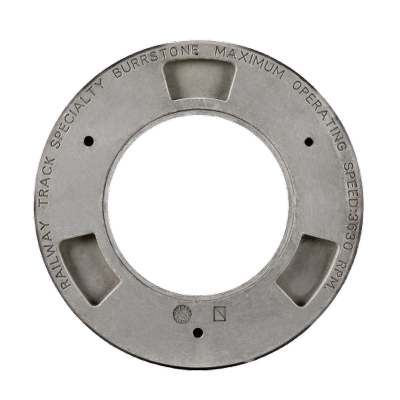
Are you looking for a reliable manufacturer of railway grinding and track maintenance equipment?
We can quickly provide customers with market analysis, technical support and customized services.
Safe Tracks Proven by China
- Name
- Phone
- *Title
- *Content