How does a network move from corrective to preventive grinding?
How does a network move from corrective to preventive grinding?
Corrective grinding decides depth from a defect you can see. Preventive grinding decides it from a clock and a tolerance you agreed to — and that swap is the real work. The move between them is not a change of depth setting, it is a change in what has to be proven at the end. A corrective job is accepted when the defect is gone: one measurement, at one moment, settles it. A preventive job cannot be accepted that way, because a shallow pass over rail that is already near its target profile produces rail that looks finished whether or not the amount removed was right. What makes it provable is a comparison — damage accumulated since the previous pass against steel removed in this one — and a comparison needs a starting point. So the transition runs in three steps in a fixed order: baseline the sections that will go on the clock, set an interval from a clock the track actually responds to, then rewrite the acceptance and payment wording that decides whether a preventive depth is allowed to pass. Each step is what makes the next one checkable. Networks that reverse the order end up with a preventive campaign ground to a corrective depth, or one that cannot be closed out at all.
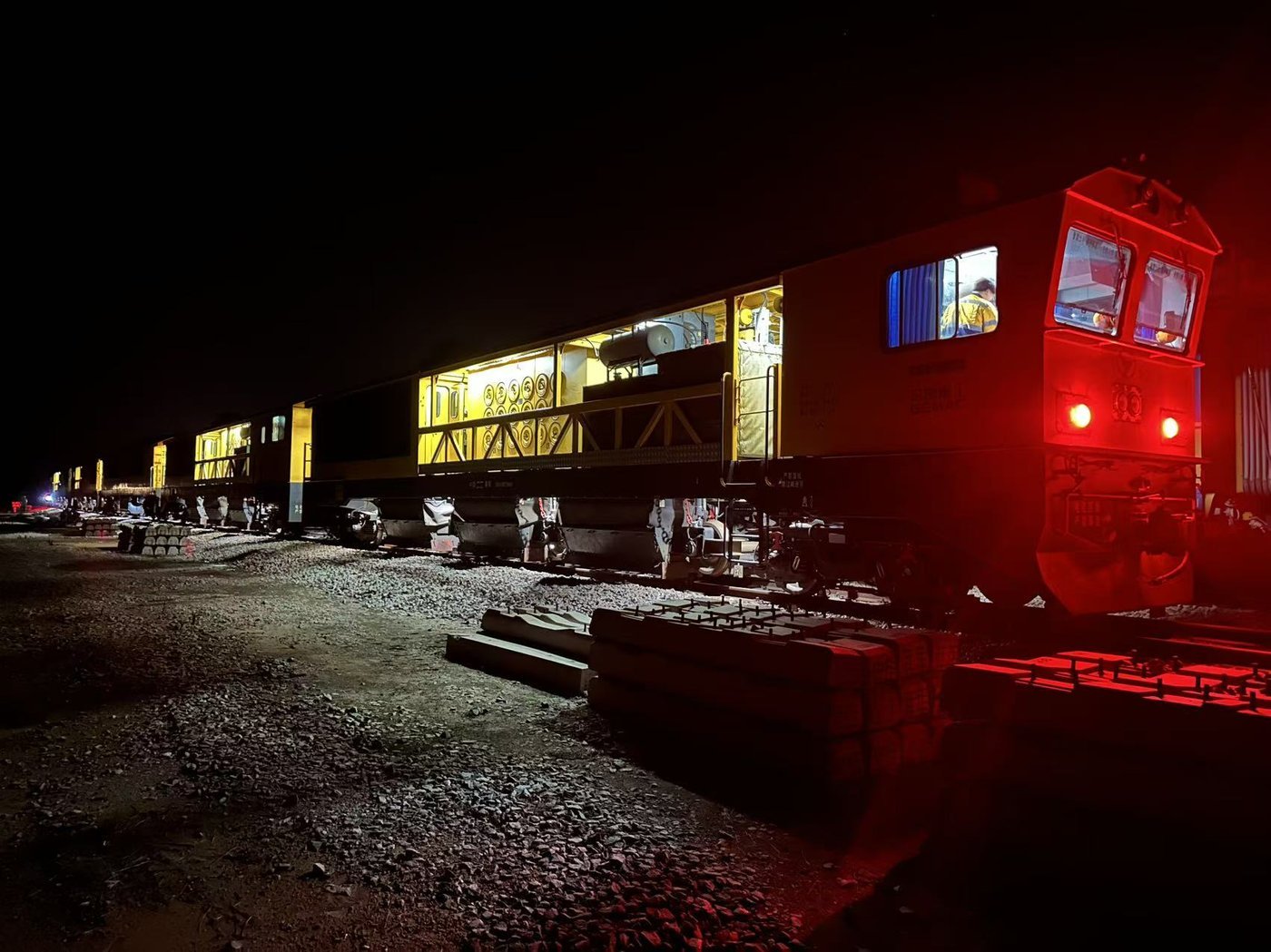
Three steps, in this order
| Step | What it puts in place | What breaks when it is skipped |
|---|---|---|
| Baseline the sections that will go on the clock | A measured starting condition at fixed points: profile against the target, a defect census by type, and the section still left in the head | There is nothing to subtract. The interval cannot be defended and the first pass cannot be judged, because nobody recorded what was there before it |
| Set the interval from a clock that section responds to | An interval tied to the mechanism actually damaging that track — accumulated tonnage where duty is heavy, wheel passes and measured condition where it is not | A round number is adopted instead. It is then either too long, so damage outruns the depth, or too short, so the section is spent for nothing |
| Rewrite the acceptance and payment lines | A criterion a preventive depth can satisfy, a unit of payment that does not reward depth for its own sake, and a proof defined across the interval rather than at a single moment | The strategy changes and the paperwork does not. The crew grinds to the old depth to be paid, which is a corrective cut charged to a preventive clock |
In practice the third step is where transitions fail, and the reason is organisational rather than technical. The first two can be done by the engineering side alone. The third needs procurement, the contractor and the acceptance authority to agree on a number that is smaller than the one they used last year — and nobody is thanked for proposing that. It is still the step that decides whether the programme survives its first cycle, because a criterion written for defect removal will reject a compliant preventive pass every single time.
Where the wording has to change with the strategy
| Line in the documents | What it says under corrective grinding | What it has to say under preventive grinding | What leaving it alone costs | Who owns the change |
|---|---|---|---|---|
| Minimum depth at acceptance | A removal deep enough to take the defect out, which for most visible defects means a value in the upper tenths of a millimetre | A value matched to a planned preventive depth, which is smaller by design. One Chinese intercity operator's published grinding quality index, for example, sets 0.2 mm for pre-grinding and for corrective work but 0.1 mm for preventive work | A compliant preventive pass is rejected as shallow, or the crew doubles the depth to pass and the section is consumed at twice the planned rate | The acceptance authority, not the contractor |
| Interval clause | Silent, or written as "as defects appear" | A stated range on a stated clock, plus the condition that triggers an out-of-sequence intervention | The programme reverts to reactive within a year, and the transition is remembered as a cost with no visible benefit | The permanent way engineer |
| Unit of payment | Per millimetre removed, or per defect treated | Per kilometre brought inside the envelope, with the depth band fixed and coverage measured | The commercial incentive points straight at depth, so every pass drifts to the deepest value the criterion will allow | Procurement |
| Proof required at acceptance | The defect is gone; a single inspection closes the job | Accumulated damage is smaller than steel removed; two measurements across the interval close the job | Corrective proof is applied to preventive work, and it always fails — there is no defect left to point at | The acceptance authority and whoever holds the records |
| What has to be recorded per cycle | The defect, the depth used, the result | Profile against target at fixed points, depth per pass, the interval actually achieved, and which condition trigger fired if one did | The interval can never be revised on evidence, so it slowly becomes whatever the first guess was, defended on seniority | Whoever holds the records |
Two of these lines are worth arguing about in advance rather than at the first acceptance meeting. The depth line sets the physical ambition of the programme, and the documentation for how deep is safe before rail is over-ground is where the upper end of that band belongs. The proof line sets what the contractor has to be able to show, and the criteria themselves are set out in what acceptance criteria decide whether a job passed. A Molaton wheel does not decide any of this; what it does is make the shallow end of the depth band repeatable, because a programme whose whole economics rest on removing a small, consistent amount cannot afford a pass that skates and has to be repeated.
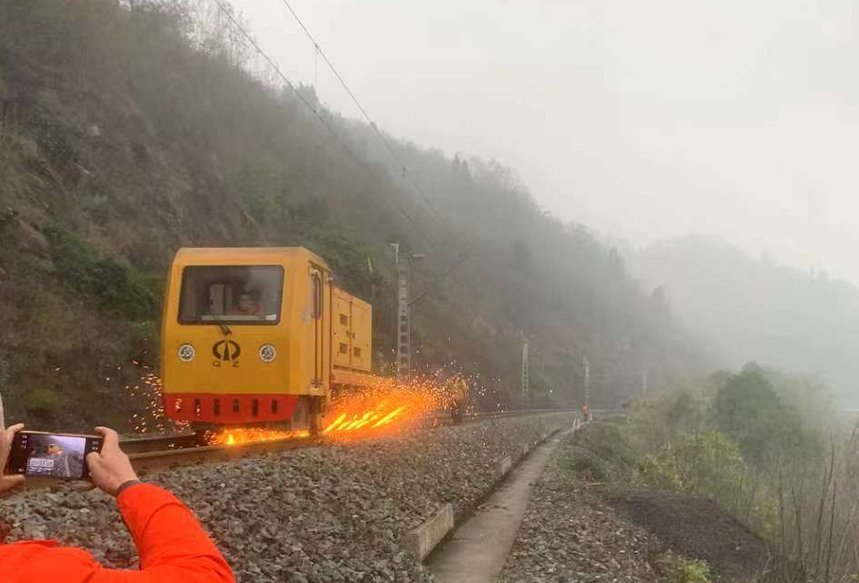
Reading whether the transition is holding
| What you see at the end of a cycle | What it means | What to do next | The reading that would mislead you |
|---|---|---|---|
| Measured damage over the interval is smaller than the steel removed, with margin left | The clock is at least as short as the damage rate requires | Hold the interval and start widening the list of sections on it | That the rail looks good. It looks good after a corrective pass too, which is exactly the confusion being designed out |
| Depth achieved per cycle drifts up while the interval stays unchanged | Coverage is being bought with depth — something inside the pass is being missed | Check the pass pattern and the coverage before touching the interval | That acceptance readings still pass. They are passing on depth, not on shape |
| Unplanned corrective interventions fall but do not disappear | The programme is working on the defects it was designed for and not on the others | Split the census by defect type before widening the scope | A lower total count, which can hide a rise in the one defect the programme does not address |
| Rejections cluster on a single criterion | One line of the wording was never changed, or was changed and never explained to the crew | Rewrite that line and brief the crew before the next possession, not after it | That the crew is at fault. The criterion is doing exactly what it says |
The economics are the reason the transition is worth its friction at all. Reported defect probabilities differ sharply by strategy — one published comparison puts them at roughly 15% with no grinding, 8% with corrective grinding and 4% with preventive grinding — and the gap comes from removing damage while it is still shallow rather than after it has become a defect with a depth of its own. That is the same mechanism that lets a grinding programme extend rail service life, and it is why the interval has to be defended on measured accumulation rather than on a nationally quoted figure — the reasoning behind setting an interval by tonnage is conditional for the same reason.
Related questions you may also ask
What is rail grinding: a complete guide for track operators Preventive vs corrective rail grinding: what is the difference? How is a rail grinding interval set by tonnage? What grinding depth is safe before you over-grind a rail? What KPIs should a rail grinding contract include? What records should a rail grinding programme keep? More answers on rail grinding strategy and equipmentMoving a network onto a preventive clock?
Send RailwayCare the sections you intend to baseline, the defect census you already hold and the acceptance wording currently in use. We will set out what the baseline has to contain, what interval the measured accumulation supports, and which Molaton wheel holds a shallow preventive depth consistently enough to keep the contract wording honest.
Plan My Transition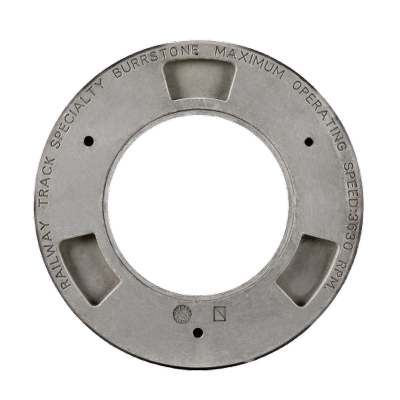

Are you looking for a reliable manufacturer of railway grinding and track maintenance equipment?
We can quickly provide customers with market analysis, technical support and customized services.
Safe Tracks Proven by China
- Name
- Phone
- *Title
- *Content