What operating constraints apply to grinding inside tunnels?
What operating constraints apply to grinding inside tunnels?
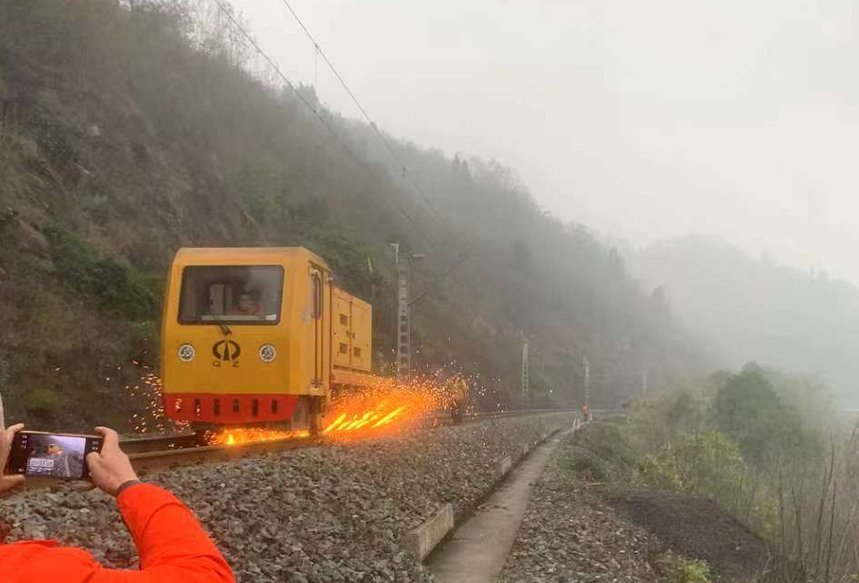
Inside a tunnel the constraint is not the rail, it is the air. A pass that removes the same fraction of a millimetre underground as it does in the open removes exactly the same amount of steel, and turns it into exactly the same amount of dust — but in the open that dust is carried away, and in a tunnel it is released into a volume that is barely being replaced. Three things follow, and none of them is "grind shallower". First, the extraction system becomes the ceiling: it is rated as a volumetric flow, so the mass you can make per hour is capped, which turns the night from a depth question into a rate question. Second, visibility goes before the depth target does, and the operator loses the one cue that told him the full band was covered. Third, sparks and heat that are harmless outdoors become a fire and an exposure question, so the mitigations — suppression, water mist, forced ventilation, respiratory protection — add steps the possession has to pay for. The practical result is a slower night with fewer passes, not a shallower plan.
What the tunnel takes away, and what it costs to get it back
| Constraint | On open track | Inside a tunnel | Which planning variable it takes away | What the workaround costs |
|---|---|---|---|---|
| Dust dispersal | Fine particulate is carried off by ordinary air movement; the concentration never reaches anything the crew notices | There is no dispersal. Concentration rises with the mass removed per hour and stays where the machine is working | The rate — and through the rate, the number of passes a possession can carry | Time. The cut is either slowed or interrupted while the air is cleared, and neither is free inside a fixed window |
| Visibility | The bright worked band on the rail head stays readable for the whole pass, so coverage can be watched as it happens | The cloud builds ahead of the machine; the band fades at precisely the point where a missed band would show up | The certainty of coverage, and with it the confidence to keep cutting | A second way of confirming coverage — marking, measurement between passes, or shorter work blocks |
| Sparks and heat | Sparks land, cool and are gone; radiant heat is shed upwards to open sky | A dust cloud plus sparks in a confined space is an ignition path, and the heat has nowhere to go | Continuity. Every stop for fire watch or cooling is productive time leaving the night | Suppression and water mist, and then drying time before anything can be measured honestly |
| Air change | Not a variable at all — the track is outside | Forced ventilation has a finite throughput, and a single-bore tunnel with one access is worst at the far end | How far into the bore a single night can reasonably reach | Sequencing. Work has to start at the end that keeps the cloud behind the machine, not at the nearest point to the access |
| Exposure of people | Dispersed long before anyone breathes it at concentration | The dust is not only rail steel: high contact temperatures add fine particulate from the tool itself, and the exposure limit applies where the crew is actually standing | Whether the work can proceed at all on a given night | Respiratory protection, rotation, and a stop-work threshold written down in advance rather than judged on the night |
Read the five rows together and one pattern is hard to miss: every one of them converts into time, and not one of them converts into depth. That is why a tunnel programme copied from an open-track programme does not produce a shallow grind — it produces an unfinished one, with the last stretch of the bore left half covered because the night ran out at the point where the dust was thickest. The rate itself is set by a combination of depth, working speed and how many cutting heads are engaged — and speed alone is never a complete instruction, as set out in whether grinding speed changes the result.
Rewriting the plan rows for a tunnel
| Row of the plan | How it is written for open track | How it has to be written for a tunnel | Why the open-track form fails |
|---|---|---|---|
| Working speed | Chosen from the removal rate needed to reach the planned depth in the pass | Chosen from what the extraction can clear at that depth, and then the depth is checked back against it | Speed is being set by the wrong ceiling, so the first symptom is not a slow cut — it is a dusty one |
| Passes per possession | Length divided by speed, with a standard allowance for set-up | Derived after deducting clearing time from the possession and allowing for passes lost to the stop for air | The arithmetic is correct and the possession still runs out, every night, by the same amount |
| Where the night starts | Anywhere. Order does not change the result | At the end that leaves the cloud behind the machine, finishing back towards the access | The machine works into its own dust and loses the far end first, which is the stretch nobody can inspect cheaply later |
| Acceptance reading | Taken as the cut finishes, on a surface the crew can see | Taken after ventilation, on a dry surface, with the clearing time recorded beside the number | The reading is taken through a film of dust and water, and the argument about it arrives a week later with no way to settle it |
The wet-surface row is the one that catches experienced crews. Water mist is a reasonable answer to the spark problem, and it leaves the rail head damp; a profile measurement taken on a damp head is not automatically wrong, but it is taken under conditions that nobody wrote down, and a reading without its conditions cannot be defended. The same discipline that governs preventing burn in a light-restricted working environment applies here: the mitigation and the measurement have to be planned as one step, not two.
Decisions that have to be made before the machine enters
| Decision | Why it cannot wait until the crew is inside | What the night looks like when it was not made |
|---|---|---|
| The depth plan and the speed it implies | In a tunnel these are one decision, not two. A depth chosen without an extraction rate behind it is a target nobody can reach within the air | The crew reaches the depth by cutting faster than the air can clear, and the final third of the bore is measured blind |
| Where the air goes, and how fast it is replaced | The ventilation path fixes the clearing time, and the clearing time is part of the possession rather than an afterthought at the end of it | Clearing is discovered at the end of the night, and the acceptance check is taken out of the following night's production |
| Which point will be measured, and at what hour | A measurement point has to be reachable and dry at a known time; that is a plan input, not a convenience | The reading is taken late, at the most accessible spot, and the section that actually mattered has no number attached to it |
| Who has authority to stop on air quality | A threshold that needs a discussion on the night is not a threshold | The crew keeps cutting because stopping is somebody else's call, and the exposure is written up as normal working conditions |
None of this makes tunnels ungrindable; it makes them a different planning problem, which is why a network with a large underground share cannot be planned with a mainline template — the reasoning is in planning grinding for a metro or light rail network. What a wheel contributes here is narrower than suppliers like to suggest: a Molaton wheel does not change the mass a given depth removes, and it cannot make the air clear faster. What it can do is keep cutting at the reduced speed a tunnel imposes, so the night is spent on the planned passes instead of on a second, dustier attempt at the same metre. The records that make that visible afterwards are the same set a network needs anyway, described in the records a grinding programme should keep.
Related questions you may also ask
How to grind subway rails: urban transit grinding programmes How do you plan grinding for a metro or light rail network? Does grinding speed change the result? How do you prevent rail burn during grinding? What acceptance criteria decide whether a grinding job passed? What records should a rail grinding programme keep? More answers on rail grinding strategy and equipmentGrinding a tunnel section this season?
Send RailwayCare the bore length, the ventilation arrangement, the possession you get and the defect you are chasing. We will set out how the dust rate caps the passes you can plan, which depth is reachable at tunnel speeds, and which Molaton wheel suits a shallow cut where the air, not the rail, sets the pace.
Plan My Tunnel Programme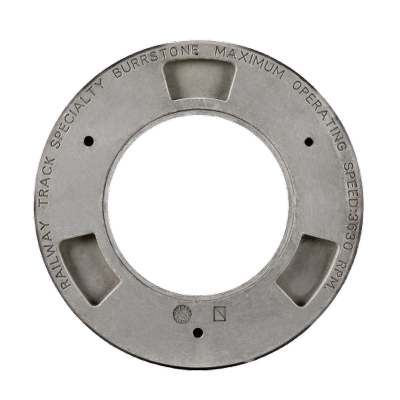
Are you looking for a reliable manufacturer of railway grinding and track maintenance equipment?
We can quickly provide customers with market analysis, technical support and customized services.
Safe Tracks Proven by China
- Name
- Phone
- *Title
- *Content