Railway Maintenance Equipment Procurement: The 2026 Buyer's Checklist
Most procurement failures are decided before the first quotation arrives. By the time three suppliers are compared on price, the requirement has already been written in a form that no machine can be held to, and the acceptance criteria are still being argued about two weeks after delivery. The checklist that matters is not the one used at handover. It is the one used before the enquiry goes out.
Direct answer
Railway maintenance equipment procurement runs in five steps: define the requirement from line condition, possession window and required output; choose between new, refurbished and rented; verify the factory with evidence rather than claims; model life cycle cost across seven lines; and fix the acceptance standard, class and deadline before signing.
This guide takes the five procurement steps in order — requirement definition, path selection, supplier verification, life cycle costing and acceptance — and gives each one a working checklist. It is written for the buyer who has to sign, not for the buyer who has to admire.
How to Define Railway Maintenance Equipment Requirements
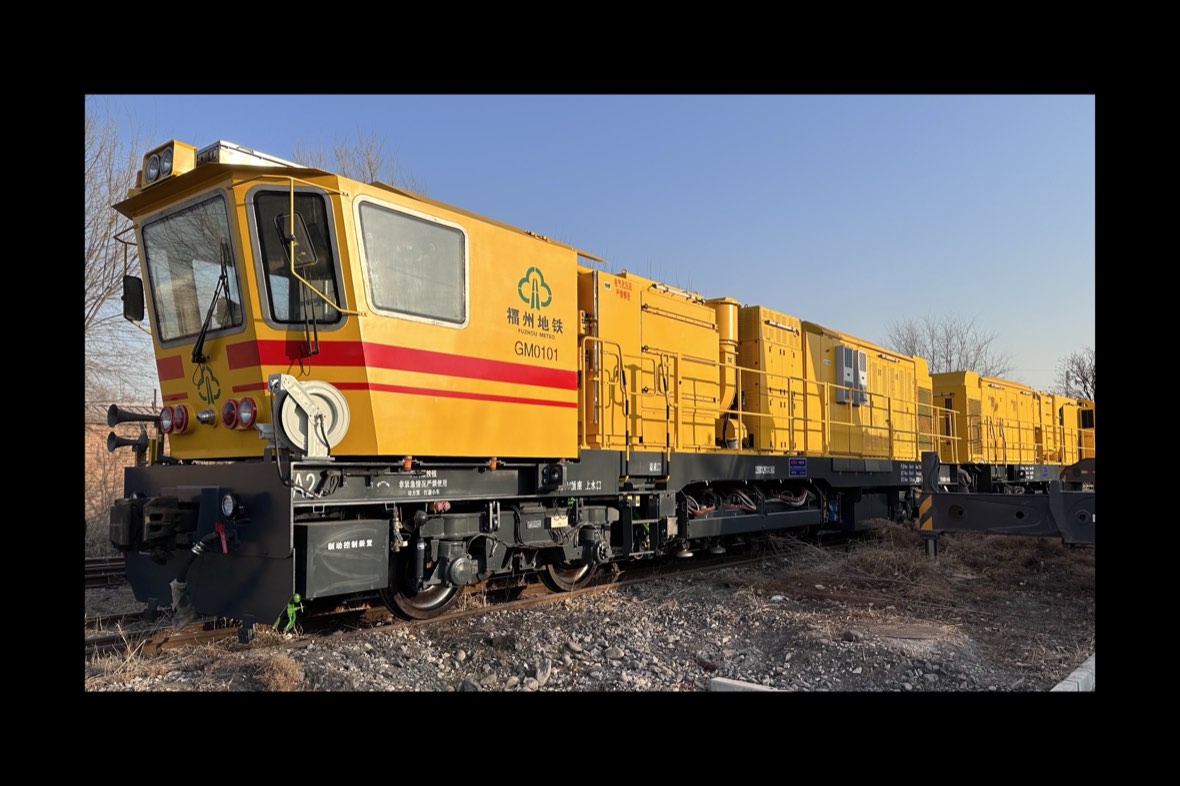
There are three inputs to any defensible requirement, and they are all measurable before a supplier is contacted: the line condition, the possession window, and the output the equipment must deliver inside that window.
The line condition is not a description. It is a set of numbers: axle load, annual gross tonnage, the proportion of the network in curves and in turnouts, rail profile and grade, and the defect population the equipment is expected to remove. Two buyers who both say they need a rail grinder can be specifying machines two classes apart, because one runs 25 MGT a year on tangent track and the other runs 80 MGT through curves with a corrugation problem the first does not have.
The possession window is the second input, and it is the one most often left out of the enquiry. A machine that produces an excellent surface at 4 km/h is worth less than a machine that produces an acceptable surface at 9 km/h if the window is four hours. The window sets the required rate, and the required rate eliminates more candidate machines than any other single number.
The output is the third input, and it has to be expressed in a unit the contract can measure. "Improved profile" cannot be measured. "Ninety-five per cent of the reprofiled length within the peak-to-peak limits of EN 13231-3 Class 1, measured within 8 days of work" can.
| Requirement input | What to record | Why it changes the purchase |
|---|---|---|
| Axle load and annual tonnage | Tonnes and MGT per year, per line | Sets metal removal depth and grinding frequency; a 30 t axle line wears a profile differently from a 22 t line |
| Curve and turnout share | Percentage of track length, plus turnout count | Turnouts require different tooling from plain line; a network that is 30% turnout is a different machine |
| Rail section and grade | Profile designation and steel grade | Determines wheel grade and the metal removal rate that is realistic per pass |
| Defect population | Corrugation, RCF, squat, side wear, head checking, with severity and location | Defines the target profile and the number of passes, not just the machine class |
| Possession window | Hours available, and how often | Converts to a required production rate in metres per hour |
| Required output | Kilometres or turnouts per shift | The denominator of every fleet and cost calculation |
| Acceptance standard | Named standard clause, class, and measurement deadline | Decides whether the work can be accepted at all, and who pays for a redo |
| Operator skill available | Existing crew qualification and training budget | A machine that needs a specialist crew is a different total cost from one the existing gang can run |
Two things go wrong when this table is left blank. The first is that suppliers quote to their own assumption, and the comparison becomes meaningless because the three offers are for three different duties. The second is that the acceptance clause gets written later, by whoever is available, and it usually ends up as a reference to a standard with no class specified — which is unenforceable.
A word on where the arithmetic for tonnage comes from. The relationship between annual gross tonnage and the grinding interval is covered in the [complete guide to track maintenance of way](https://www.railwaycare.com/blog/Railroad-Track-Maintenance-The-Complete-Guide-to-Track-Maintenance-of-Way-in-2026_b39057), including how a network's per-kilometre tonnage converts into a number of full-section passes per year. The point to carry into procurement is simpler: the requirement is a rate, not a model number.
Track Maintenance Equipment Checklist for Track Operators
Procurement usually starts with one machine and then grows by acquisition. The result is a fleet with gaps that nobody planned and overlaps that nobody uses. A category view fixes that, because it forces the buyer to ask what the whole maintenance workload needs rather than what the current failure needs.
| Category | Typical equipment | What it is bought to do | Common procurement error |
|---|---|---|---|
| Rail treatment | Grinding trains, turnout grinders, portable grinders, rail cut-off saws | Remove surface defects and restore profile | Buying machine capacity without matching consumable grade to the duty |
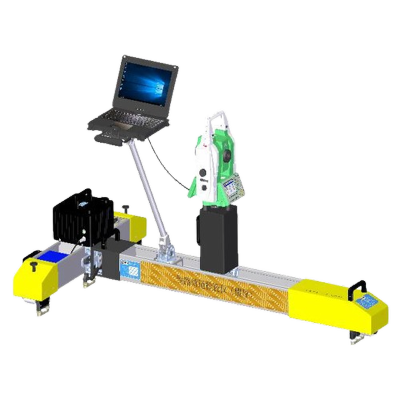
| Geometry and measurement | Track geometry trolleys, rail wear gauges, profile measuring devices, gauge rulers | Produce the numbers that acceptance and planning depend on | Treating measurement as an accessory rather than as the tool that decides payment |
| Welding and jointing | Aluminothermic welding kits, grinding of weld geometry, joint separators | Restore continuity and the running surface at joints | Specifying the weld process without specifying the post-weld grinding tolerance |
| Lifting, lining and tamping | Tamping machines, ballast tools, sleeper handling equipment | Restore geometry after settlement | Sizing the machine to the worst site rather than to the recurring work |
| Hand tools and consumables | Track tools, fastening tools, insulated tools, grinding wheels | Do the work that no machine reaches | Under-ordering consumables, then running machines below rated performance |
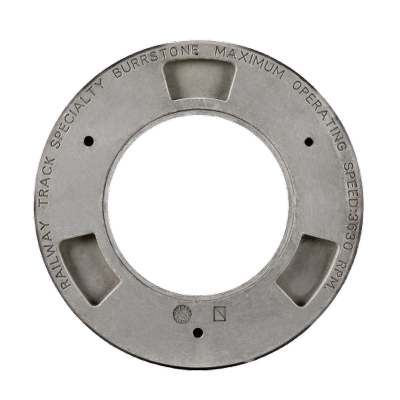
The consumable line deserves separate attention, because it is where a machine's rated output and its actual output diverge. A grinder is specified by spindle power and number of stones; what it removes in a pass is set by the wheel grade in the spindle and the pressure it is run at. Two operators with identical machines and different wheel specifications will not achieve the same depth, and the buyer who procured only the machine has no lever on that.
The category table also exposes the redundancy question. If a network already owns a turnout grinder and is buying a second machine for plain line, the honest question is whether the turnout grinder can cover the plain-line work at lower total cost than a dedicated purchase. Our own range is organised this way, with the [rail grinder selection](https://www.railwaycare.com/products2149769/Railway-Grinder.htm) pages split by application rather than by price band, and the [railway maintenance tools](https://www.railwaycare.com/products2146444/Railway-Maintenance-Tools.htm) catalogue covering the hand-tool end that machines cannot reach.
New, Refurbished or Rented Railway Track Maintenance Equipment?
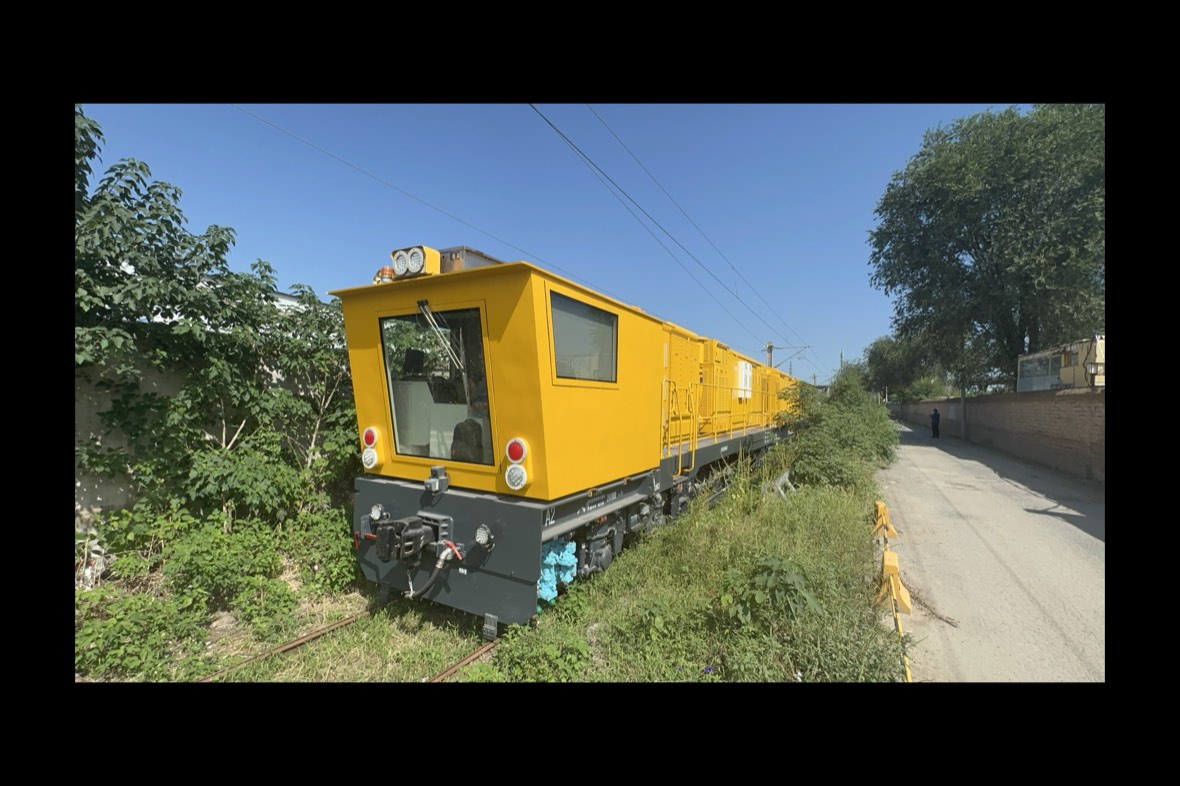
The three paths are usually compared on purchase price, which is the one dimension where refurbished always wins and rental always loses. Compared on what actually differs, the decision is narrower than it looks.
| Dimension | New | Refurbished | Rented |
|---|---|---|---|
| Cash profile | Full capital outlay, depreciated over 8–15 years | 40–65% of new, shorter asset life | Operating cost only, no asset on the books |
| Delivery lead time | Typically longest; tooling and build slots dominate | Weeks to a few months if the base machine exists | Immediate, subject to fleet availability |
| Downtime risk | Lowest in the first years, then rising with component wear | Highest in year one until the rebuild is proven | Transferred to the owner, but so is the queue for a replacement |
| Spare parts | Full manufacturer support, but check the obligation term | Depends on whether the rebuild used current or obsolete components | Owner's problem, not yours — until the machine fails on your track |
| Warranty | Full, and negotiable in scope | Usually limited to rebuilt assemblies | None; you get availability, not condition |
| Compliance basis | Declared against the regulation in force at placing on the market | Must be re-declared if the rebuild is a substantial modification | Owner's declaration, which you should see |
| When it wins | Recurring work above the break-even volume, with a long remaining asset life | A defined campaign or a line with limited remaining life | Short campaigns, peak cover, or a first programme before committing capital |
The refurbished path carries a compliance question that buyers routinely miss. Under the EU machinery rules a rebuild that creates new hazards or increases existing risks is treated as a substantial modification, which makes the party carrying it out the manufacturer of a new machine, with the full conformity assessment that follows. A refurbished grinder bought without a clear statement of what was changed, and against which declaration, is a liability with a serial number.
Rental has a mirror-image trap. The rate looks like it removes the capital decision, but the availability clause is where the risk actually sits: a machine promised for a specific month, on a track with a specific possession booked, is only as good as the replacement commitment behind it.
What to Verify in a Rail Maintenance Equipment Supplier
Supplier evaluation tends to be reduced to a questionnaire about company size and years in business. Neither predicts whether the machine will be delivered to specification. What predicts it is whether the supplier can show evidence for four things: that the process is controlled, that the measurement is traceable, that the reference projects are real, and that support exists after the invoice is paid.
Ask for the evidence, not the claim. "ISO 9001 certified" is a claim. The scope statement on the certificate, and whether it covers the actual product line being purchased, is evidence. "We supply major railways" is a claim. A named project with a contactable reference and the delivered specification is evidence.
This is also where the strategic view and the operational view separate. The question of which supplier archetype fits a given buyer — specialist, integrator, or regional service provider — is a positioning question covered in the [railway maintenance machinery market analysis](https://www.railwaycare.com/blog/Railway-Maintenance-Machinery-Market-2026-Segments-Demand-Drivers-and-Buyer-Risks_b39059). The question here is narrower and more mechanical: whether this specific factory can hold this specific tolerance on this specific product.
Factory Audit Checklist for Rail Maintenance Equipment Manufacturers
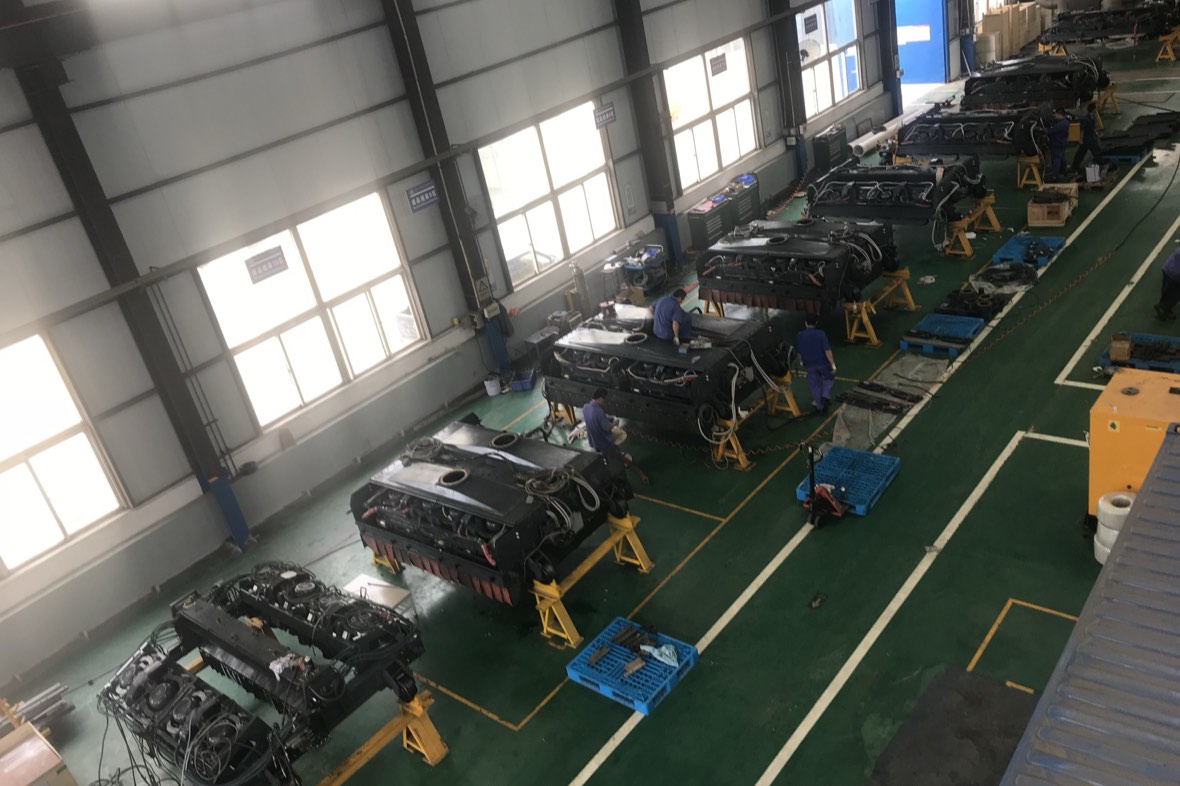
An audit that asks "do you have a quality system" produces a yes. An audit that asks for a record produces either a document or an admission. These are the twelve questions worth the travel.
| # | Question | What a good answer looks like |
|---|---|---|
| 1 | Show the control plan for the product being purchased | A document naming each process step, its control parameter, and its inspection frequency |
| 2 | Which processes are subcontracted, and who approves them | A list, with the approval and the incoming inspection that covers it |
| 3 | How is the critical raw material verified, batch by batch | Mill certificates tied to batch numbers that appear on your delivery |
| 4 | What is measured on 100% of units, and what is sampled | Two distinct lists; if everything is sampled, the special characteristics are not controlled |
| 5 | Show the calibration record for the gauge that checks the critical dimension | A certificate with a date inside its validity and a traceable reference |
| 6 | What happens to a non-conforming unit, physically | A quarantine area, and a record of disposition — not a verbal procedure |
| 7 | Which test is performed on every unit before packing | A run test with recorded results, not a visual check |
| 8 | What is the recorded reject rate, and the top three causes | Numbers that match the production volume you are being quoted on |
| 9 | Who signs the certificate of conformity, and against which standard | A named responsible person and the standard revision in force |
| 10 | Where is the spare parts stock, and how many years of support are committed | A location, a stock figure, and a written term — not "we always support our machines" |
| 11 | Show one delivered project with the same duty as ours | A reference whose specification matches your tonnage, profile or window |
| 12 | What training is included, and who delivers it | A written scope, a duration, and whether it happens on your track or in a classroom |
Question 10 is the one that changes the total cost of ownership more than any other, and it is the one most often answered with a promise. Spare parts provisioning has its own standard for a reason: IEC 62550 sets out the requirement that the right part be available in the right quantity, at the right time, in the right place. A supplier who cannot name a stock location and a support term is not committing to any of the four.
Question 12 matters for a reason that is not obvious at the quotation stage. An unqualified crew running a correctly specified machine produces out-of-tolerance work, and the acceptance test will fail for a reason the machine cannot fix. Training is not a soft benefit; it is the last control in the quality chain.
Compliance Deadlines That Land Inside the Equipment's Life
Rail maintenance equipment is bought with a fifteen-year horizon and, increasingly, is specified against rules that change inside that horizon. Two changes are worth putting in the enquiry document today.
The first is the EU machinery regulation. Regulation (EU) 2023/1230 was published on 29 June 2023 and became applicable on 20 January 2027, replacing Directive 2006/42/EC. There is no transition period in which both instruments can be used: equipment placed on the EU market up to 19 January 2027 must be declared against the directive, and from 20 January 2027 against the regulation. The regulation is directly applicable in every member state rather than being transposed, adds requirements for machinery with software, connected functions and autonomous behaviour, introduces the substantial modification concept described above, and extends obligations to importers and distributors as well as manufacturers.
For a buyer, this produces three practical consequences. A machine delivered in 2026 carries a declaration against a directive that will no longer exist; if it is later rebuilt in a way that counts as a substantial modification, the declaration has to be rebuilt too, against the newer instrument. A machine delivered after January 2027 should be declared against the regulation, and the enquiry should say so. And a distributor selling into the EU after that date carries verification duties, so the paperwork trail matters commercially, not just legally.
The second is interoperability. The EU rail system is governed by eleven Technical Specifications for Interoperability, eight covering physical subsystems and three covering operations and telematics. The TSIs do not replace national rules: they contain specific cases, which are derogations for particular national conditions, and open points, where no European specification exists and the national rule continues to apply. According to the European Commission's interoperability report published in July 2025, 796 national rules still applied to vehicle authorisation and fixed installations in June 2024, down from 13,459 in January 2016.
That is a 94% reduction, and it is still 796 rules. For a buyer of infrastructure-side equipment, the practical reading is that a CE-marked machine and an accepted machine are not the same thing, and the gap is filled by a national rule you have to identify before you buy.
| Check | Question to ask in the enquiry | Why it is a purchase term, not a legal footnote |
|---|---|---|
| Machinery declaration | Against which instrument is this machine declared, and on what date will it be placed on the market | Decides whether the declaration survives a 2027 rebuild |
| Substantial modification | What counts as a substantial modification for this machine, in writing | Determines whether an in-house upgrade makes you the manufacturer |
| Interoperability constituent | Is this product a constituent covered by a TSI, and which one | Sets whether a notified body is needed before the subsystem can be authorised |
| National rules | Which national rules apply in the country of use, and who confirms it | A CE mark does not clear them; the buyer usually discovers this at commissioning |
| Documentation language | In which languages must the instructions and declaration be supplied | Paperless instructions are permitted, but not for non-professional users |
| Spare parts term | Written support period, and the stock location behind it | The single largest driver of late-life cost |
Total Cost of Ownership for Railway Maintenance Machinery
Life cycle costing has a standard, and using it removes the argument about which costs to include. IEC 60300-3-3, whose third edition was published in January 2017, sets out a cost breakdown structure across the life cycle stages — concept, development, realisation, utilisation, enhancement and retirement — and gives particular weight to the costs driven by dependability: reliability, maintainability, and the spares and support that follow from both.
That structure is why purchase price is a poor proxy. Two machines with the same price and different reliability have different total costs, and the difference sits in stages the purchase order does not mention.
The model below is the one we use when a buyer asks what a machine will cost to own. It is a framework, not a price list: the arithmetic works with the buyer's own numbers, and we do not publish per-unit figures that would be wrong for the next buyer's duty.
| Cost line | What to enter | How to obtain it before purchase |
|---|---|---|
| Acquisition | Purchase price, delivery, installation, commissioning | Quotation, plus the logistics and duty that are usually quoted separately |
| Consumables | Wheel or tool consumption per kilometre or per turnout, at the specified depth | The supplier's rated consumption, verified against a reference project |
| Scheduled maintenance | Service intervals, parts per service, labour hours | The maintenance schedule, priced at your labour rate |
| Unplanned downtime | Expected failures per year × hours lost × cost per lost possession hour | Ask for the failure record of the reference machine, not the MTBF claim |
| Possession cost | The charge or penalty attached to track time, including cancelled work | Your own access regime — this is often the largest line and is never in the quotation |
| Training and competence | Initial training, refresher interval, and the cost of the learning curve | Training scope from the supplier, applied to your crew size |
| End of life | Residual value or disposal cost, and the cost of the compliance position at that date | Depreciation policy, plus the declaration status at retirement |
Two entries in that table are habitually left out. The first is unplanned downtime expressed in lost possession hours rather than in repair cost, which understates it by an order of magnitude on a congested network. The second is the compliance position at end of life: a machine that cannot be re-declared, or that needs a conformity assessment to be sold on, has a residual value below its condition.
For buyers who want the reference points on what grinding work itself costs per kilometre, our [rail grinding cost per kilometre](https://www.railwaycare.com/blog/Rail-Grinding-Cost-per-Kilometer-What-Operators-Pay_b33086) analysis sets out the published ranges and what moves them. The two calculations are complements: this one decides whether to buy, that one decides what the work is worth when it is contracted out.
Acceptance Tests Before Railway Maintenance Equipment Handover
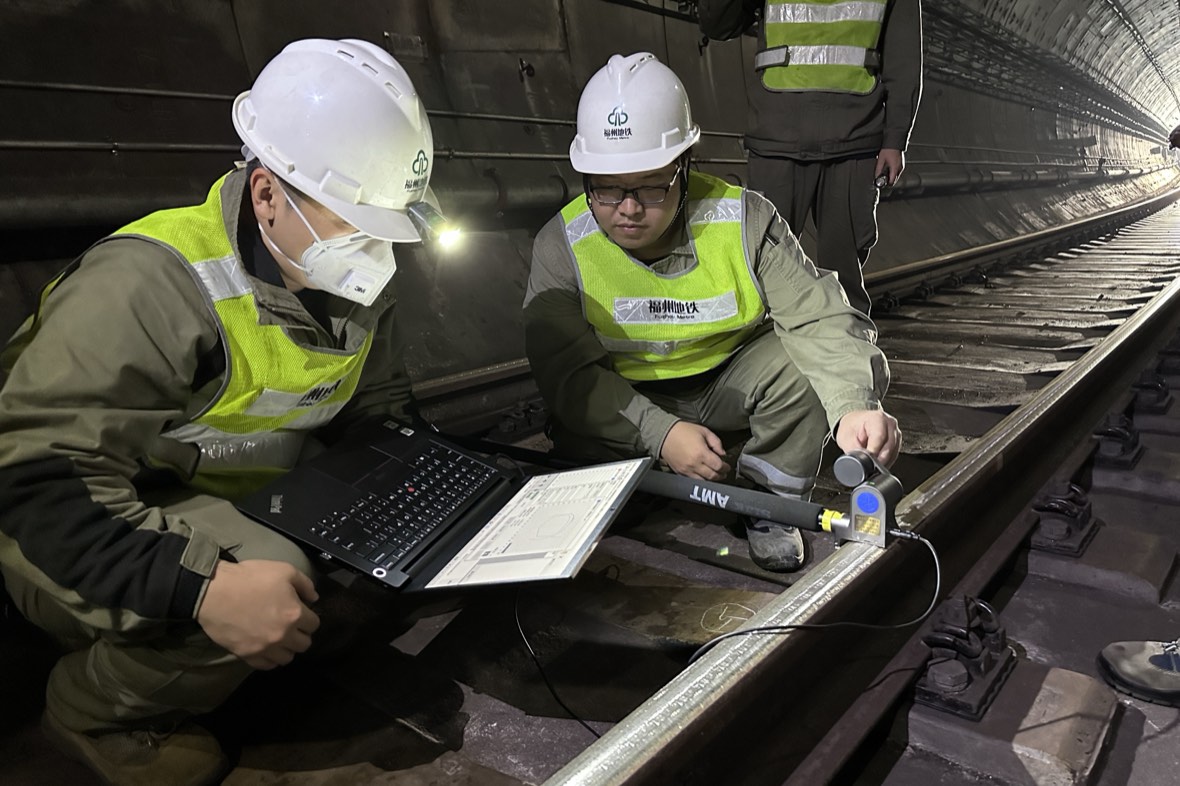
The acceptance test is the only point at which the machine can be rejected without a legal argument. It should be written before the order is placed, and it should be written as a set of measurements with a pass threshold, not as a list of functions to demonstrate.
For rail treatment equipment, the reference standard in Europe is EN 13231-3:2012, and the part that matters commercially is that it offers classes rather than a single requirement. For the transverse profile, three quality classes exist, and they differ by how much of the measured length may sit outside the tolerance:
| Class | Tolerance band | Minimum proportion within band | Where it is used |
|---|---|---|---|
| Q | ±0.3 mm | 90% of recordings or measured length, with no more than 2% outside any specification | High-quality track and conicity-critical work; required by infrastructure managers who consider the lower classes insufficient |
| R | 0.6 mm / 1.0 mm / 1.7 mm bands | 75% / 85% / 98% respectively | Standard main-line requirement |
| S | 1.7 mm | 75% | The least demanding class; considered too loose by several European infrastructure managers |
A purchase that does not name the class has not specified the work. The same machine, operated by the same crew, can pass Class S and fail Class Q on the same track, and the difference in cost per pass is real.
Three further points from the same standard are worth writing into the acceptance clause:
Measurement timing. Measurements are to be taken immediately after work, and at the latest within 8 days of reprofiling or before the track has carried 0.3 MGT of traffic, whichever comes first. That deadline is not administrative. On a line carrying 30 MGT a year, 0.3 MGT accumulates in about 3.6 days, so a dispute that runs a fortnight will be settled on contaminated data.
Measurement density. The transverse profile must be recorded at least once per reprofiling site, or at intervals of not more than 500 m on a site longer than 500 m. Where independent verification is required, each rail is measured at intervals of not less than 10 m.
Instrument class. The standard distinguishes a reference instrument from an approved instrument, and holds that approved instruments, while generally adequate to demonstrate compliance, do not offer the same accuracy. In the 10–30 mm wavelength range it notes that instruments other than reference instruments are unlikely to have sufficient accuracy at all. Whether the acceptance measurement is taken with a train-borne system or an independent reference instrument is therefore a contractual decision with a price attached, and it should be made deliberately.
Our [grinding acceptance standards](https://www.railwaycare.com/blog/Grinding-Acceptance-Standards-Reflect-the-Rigorous-Requirements-of-Rail-Maintenance-Only-Superior-Products-Can-Achieve-An-Optimal-Rail-Profile_b26687) article covers the tolerance bands in more detail, including the longitudinal wavelength ranges, if the acceptance discussion needs to go deeper than the transverse profile.
| Test | Basis | Recorded value | Signed by |
|---|---|---|---|
| No-load function test | Supplier specification | Every interlock and control function, pass or fail | Buyer and supplier |
| Loaded performance test | Contracted production rate | Metres or turnouts per hour under the specified duty | Buyer and supplier |
| Longitudinal profile | EN 13231-3, named class | Percentage of length outside the peak-to-peak limit | Buyer's measurement team |
| Transverse profile | EN 13231-3, named class (Q, R or S) | Percentage within the tolerance band, per rail | Buyer's measurement team |
| Metal removal depth | Contracted minimum and maximum | Depth in millimetres, measured before and after at marked locations | Buyer and supplier |
| Surface condition | Contracted finish specification | Visual and roughness record at defined points | Buyer |
| Dust and emissions | Contract specification | Measured at the defined boundary | Third party where required |
Contract Terms That Decide the Outcome
The clauses that generate disputes are rarely the ones about price. They are the ones that leave a word undefined, and the word is usually a quality word: acceptable, reasonable, adequate, standard. Each of those has a defensible meaning in an argument and no testable meaning in a contract.
| Clause | What to write | What it prevents |
|---|---|---|
| Scope of supply | Itemised list including tooling, consumables for first run, documentation and training | The delivery that is technically complete and operationally unusable |
| Delivery and milestones | Dates tied to defined events, with the consequence of delay stated | A machine on site with no possession left to test it in |
| Acceptance | Named standard, named class, measurement method, deadline, and the remedy for failure | The unenforceable "to the buyer's satisfaction" |
| Payment schedule | Retention held against acceptance, not against delivery | Paying in full for an unaccepted machine |
| Warranty scope | What is covered, what is excluded, and how a claim is raised | The warranty that excludes the failure mode that actually occurred |
| Spare parts | Support term in years, stock location, and price basis for the term | Late-life obsolescence with no contractual recourse |
| Service level | Response time, on-site attendance time, and availability target | A response time that starts when a technician is free |
| Training | Duration, content, competence assessment, and who pays for the repeat | A crew certified on paper and unqualified in practice |
| Compliance | Declaration instrument, date, and the party responsible for re-declaration after modification | A 2027 rebuild with no valid declaration behind it |
| Data and documentation | Which measurements are supplied, in what format, and when | An acceptance claim with no underlying record |
Two of these are worth more than the rest. Retention against acceptance converts the acceptance test from a discussion into a deadline. The spare parts support term converts a promise into a liability, and it is far easier to obtain before the order than after.
Where RailwayCare Fits
We supply the consumables, machines and measurement tools that maintenance work runs on, and we train the teams that use them. Specifically: rail grinding wheels for grinding trains, turnout grinders and portable machines, including light customisation for non-standard rail heads; rail grinders and turnout grinders; rail inspection and measurement tools; track maintenance tools; and a tiered training programme.
Two things we do not do, and it is worth being plain about them. We do not take on a network's maintenance programme, and we do not publish a life cycle cost figure for a machine without the buyer's duty behind it. The first would make this checklist self-serving; the second would make it useless.
What we can contribute to a procurement is the part where our own products are the variable: matching the consumable to the duty, so that the depth written into the acceptance clause is the depth the machine actually produces. That is the lever most purchase orders leave unaddressed, and it is the one that decides whether a pass removed the defect or merely touched it.
If your enquiry document is at the stage where the standard is named but the class is not, or the production rate is a range rather than a number, that is the point at which a conversation is worth having. Send us the line conditions, the possession window and the target profile, and we will tell you what the work requires — including, where it is the honest answer, that the requirement should be rewritten before any supplier is approached. The [rail maintenance solution lifecycle](https://www.railwaycare.com/comm03/Rail-Maintenance-Solution.htm) page sets out how specification, consumable and verification fit together, and the [project cooperation and OEM/ODM](https://www.railwaycare.com/comm06/Project-Cooperation.htm) page covers the route for buyers who need a configuration that is not in the catalogue. Where the requirement is to build local supply rather than import, the [global partnership network](https://www.railwaycare.com/comm07/Global-Partnership-Network.htm) describes that model.
Send your line conditions, possession window and target profile to our engineering team and we will come back with the specification the work actually needs, rather than the catalogue page closest to it.
Frequently Asked Questions
What is the difference between railway maintenance equipment and railway maintenance machinery?
The two terms are used interchangeably in practice, and both cover the same population: the machines, tools and measurement devices used to hold a railway in a defined condition. Machinery tends to be used for powered, rail-borne plant such as tampers and grinding trains, and equipment tends to be the wider category including hand tools, gauges and consumables. In a procurement document the distinction is not worth arguing, but the scope list is: a machine purchased without its tooling and consumables is an incomplete scope, whatever it is called.
Should we buy new, refurbished or rent railway track maintenance equipment?
It depends on three numbers rather than on preference: the annual work volume, the remaining life of the asset the work serves, and how much possession time is available. New equipment wins above the break-even volume where the asset has a long remaining life and support can be secured for its term. Refurbished wins on a defined campaign where the base machine is sound and the rebuild is documented. Rental wins on short campaigns, peak cover and first programmes, subject to the availability clause being enforceable. The mistake in all three cases is comparing them on purchase price, which is the one dimension where the ranking is already decided.
How do we calculate total cost of ownership for railway maintenance machinery?
Use a cost breakdown structure across the life cycle stages rather than a list of expense lines, which is the approach set out in IEC 60300-3-3. In practice, six lines carry most of the difference between two apparently similar machines: consumable consumption per kilometre at the specified depth, scheduled maintenance parts and labour, expected unplanned downtime converted into lost possession hours, the cost or penalty attached to possession itself, training and the learning curve, and the residual value at the end of life including the compliance position at that date. Purchase price is one line out of seven, and rarely the largest.
Which acceptance standard should be named in a railway maintenance equipment contract?
Name the standard, the part, the class and the measurement deadline, or the clause is not enforceable. For rail reprofiling work in Europe that means EN 13231-3:2012, with the transverse profile class stated as Q, R or S. The class is what distinguishes a demanding contract from a permissive one on the same machine: Class Q requires 90% of the measured length within ±0.3 mm with no more than 2% outside any specification, while Class S requires 75% within 1.7 mm. Also state the measurement deadline, which the standard sets at within 8 days of work or before 0.3 MGT of traffic, and the instrument class, because an approved instrument and a reference instrument do not give the same answer.
What changed in EU machinery compliance for rail maintenance equipment in 2027?
Regulation (EU) 2023/1230 became applicable on 20 January 2027 and replaced Directive 2006/42/EC, with no transition period in which both can be used. It is directly applicable in all member states, adds requirements for machinery with software, connected functions and autonomous behaviour, obliges importers and distributors as well as manufacturers, and introduces the substantial modification concept: a rebuild that creates new hazards or increases existing risks makes the party carrying it out the manufacturer of a new machine. For a buyer, the practical effect is that the declaration instrument and its date belong in the enquiry document, especially for a machine bought in 2026 that is expected to be rebuilt later in its life.
Does a CE mark mean the equipment can be used on our network?
No. A CE mark declares conformity with the applicable EU harmonisation legislation, which is a different question from whether the equipment is accepted on a particular network. The rail system adds its own layer: eleven Technical Specifications for Interoperability, each containing specific cases and open points where national rules continue to apply. The European Commission's interoperability report published in July 2025 recorded 796 national rules still applying to vehicle authorisation and fixed installations in June 2024, down from 13,459 in January 2016. The number is falling, and it is not zero, so the national rules applicable in the country of use belong on the pre-purchase checklist rather than on the commissioning list.