Railway Maintenance Machinery Market 2026: Segments, Demand Drivers and Buyer Risks
Most buyers enter this market looking for one number. What actually decides a purchase is not the size of the market but the shape of the work: which machine, running on which track, inside which possession, accepted against which measurement.
Direct answer
The railway maintenance machinery market is best understood as five equipment segments — grinding, inspection and measurement, welding and renewal, tamping and stabilisation, and hand tools — beside a separate maintenance and overhaul services market. In 2026 demand comes from traffic on track already in service, not from new construction.
This article is written for the engineer or procurement manager who has to justify a machine purchase, not for someone writing a trend summary. It does four things. It draws the boundary of the market so that figures from different sources can be compared without being added together. It separates the equipment segments and shows how each one is bought. It sets out the demand drivers with the published figures behind them. And it turns the purchase into a scored decision with a cost model attached.
What Is the Railway Maintenance Machinery Market?
The railway maintenance machinery market is the trade in the machines, and the tooling those machines consume, that restore or verify the condition of track already in service. The work divides into two families. The first changes the geometry of the asset: grinding reprofiles the rail head, tamping lifts and consolidates, stabilisation holds what tamping achieved, and renewal replaces rail, sleepers or ballast outright. The second only measures: track geometry cars, rail profile gauges, ultrasonic flaw detection, and the wheel-rail measurement equipment that decides whether a campaign passed.
Three boundaries keep the definition useful. A machine that never touches a rail — a crane, a tamper's carrier lorry, a tunnel-cleaning wagon — is not in the market, however often it appears in the same invoice as one that does. A consumable is in the market only where it is consumed by the maintenance operation itself; the grinding wheel and the cutting insert are in, the fuel is out. And a service is in the market only where the contract transfers execution, not merely the supply of an item.
What this market is not, despite frequent confusion, is a single purchase category. A production rail grinder, a handheld profile gauge and a box of track tools have almost nothing in common commercially. They differ in capital intensity, in lead time, in who carries the acceptance risk, and in how the buyer recovers the cost. Treating them as one market is the first mistake, and it is a mistake that published market-size figures quietly encourage.
If you need the wider picture — traffic, electrification, the maintenance backlog and how the industry is shifting between them — that material sits in our railway industry insights for 2026. This article deliberately stays narrower and stays on the buying decision.
Why Published Market Sizes Disagree — and What to Use Instead
Two analysts can both report "the railway maintenance machinery market" and produce figures that differ by a factor of three without either being wrong. They are counting different things under the same name. Before any figure can be used in a business case, you have to establish which of five accounting boundaries it sits on.
| Boundary | Counted in | Counted out | Unit that matters |
|---|---|---|---|
| OEM machine revenue | New machines, ex-works, list or net | Consumables, spares, contractor fleets, possession cost | Currency per year |
| Operator equipment capex | Machines and spares bought by the infrastructure manager | Contractor-delivered grinding, tamping and survey | Currency per year, per budget line |
| Equipment plus consumables | Adds grinding wheels, cutting inserts, wear parts | Labour, training, possession access | Currency per campaign |
| Maintenance and overhaul services | Contractor execution, labour, mobilisation, track access | Capital purchases of any kind | Currency per pass, km or possession |
| Total addressable spend | All of the above, stated as a ceiling | Nothing by construction, which is why it inflates | Currency per year, rarely comparable |
The practical rule follows from the table. Never add two figures unless their boundary matches, and never compare a machine-revenue figure with an operator-spend figure and call the difference "the service market". When a published number is quoted to you, ask two questions: does it include consumables, and does it include contractor labour and track access. Two answers are enough to place it on this table.
It is worth being explicit about our own position, because it is a departure from how this topic is usually written. We do not lead with a headline market value, and we do not reproduce third-party growth forecasts. Regulatory and operator statistics — network length, gross tonnage, axle load, acceptance tolerances — are published by the bodies that own the data, are revised openly, and can be checked. Forecasts of a market that has no agreed definition cannot be checked at all, and a procurement case built on one inherits that weakness. An earlier article of ours reviewed a published multi-billion projection for this same market; it is still a fair summary of that forecast, and it is worth reading precisely to see how much of the number dissolves once consumables, services and track access are separated out. The comparison is here: what a published demand projection for rail maintenance machinery actually measures.
What replaces the headline number is segment logic plus citable operational data. The rest of this article is built that way.
Railway Maintenance Machinery Market Segments in 2026
Five segments cover the field. They are not five sizes of the same business; each is sold against a different acceptance reference and recovered through a different budget line.
| Segment | What it corrects | Acceptance reference | Normal commercial unit |
|---|---|---|---|
| Rail grinding | Longitudinal and transverse profile, surface cracks, corrugation, fatigue layer | EN 13231-3, four wavelength bands | Per pass, per km, or machine plus wheel supply |
| Inspection and measurement | Track geometry, rail cross-section, internal defects, wear | EN 13848 for geometry; EN 13231-3 for profile | Instrument sale, or contracted survey |
| Welding and track renewal | Rail continuity, weld geometry, rail and sleeper replacement | EN 14587 flash-butt; EN 14730 aluminothermic | Per weld, per km renewed |
| Tamping and stabilisation | Longitudinal level, cross-level, twist, ballast consolidation | EN 13848 | Per km, per possession |
| Hand tools and small plant | Isolated defects, gauge, fastenings, local profile correction | Operator standard, plus EN 12413 for bonded abrasives | Per unit, consumable |
The commercial unit in the last column is the one to remember. It determines who carries utilisation risk, and utilisation risk is the single largest difference between a purchase that pays back and one that does not.
Rail Grinding, Inspection and Welding Equipment Segments
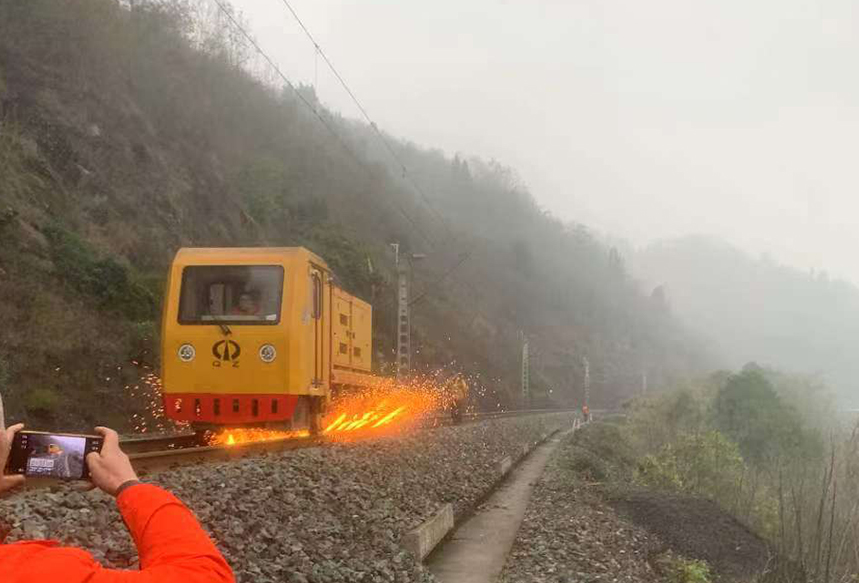
Grinding is the segment where the gap between what a machine promises and what a contract enforces is widest, because the finished work is invisible while it is happening. Nothing about the result can be judged from the cab. It is confirmed afterwards by measurement, against a standard that is unusually specific.
EN 13231-3:2012 accepts reprofiled rail against the longitudinal profile filtered into four wavelength bands, with peak-to-peak limits of 0.010 mm, 0.010 mm, 0.015 mm and 0.075 mm across the 10–30 mm, 30–100 mm, 100–300 mm and 300–1,000 mm ranges respectively. Class 1 allows 5% of the measured length to exceed those limits; Class 2 relaxes the requirement on the two outer bands. The transverse profile is graded separately as classes Q, R and S, where Q requires 90% of recordings within ±0.3 mm of the target. Measurement has to happen within eight days of reprofiling or before the track has carried 0.3 million gross tonnes, whichever comes first, at intervals of no more than 500 m.
Two consequences follow, and both should appear in a specification. First, the acceptance figure is a percentage over a length, not a single pass-fail reading, so the contract must name the measuring instrument, the sampling interval and the deadline. Second, because the deadline is expressed in traffic as well as in days, a busy line reaches 0.3 MGT quickly — on a corridor carrying 32 MGT per route-kilometre per year, that ceiling arrives in roughly three and a half days. Acceptance cannot be deferred to the next visit.
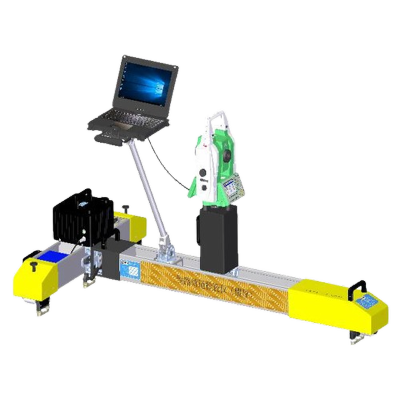
Inspection and measurement sits upstream of everything else, and its buying logic is inverted: the customer is not buying output but the ability to disprove a claim. That is why the decisive specification is rarely accuracy in isolation and usually repeatability against a named reference instrument, which EN 13231-3 requires an approved instrument to demonstrate by correlation before its readings are accepted.
Welding and renewal is the most capital-intensive segment per unit of track, and the one where the machinery decision is least separable from the method decision. Flash-butt and aluminothermic welding are governed by separate European standards with different acceptance geometries, and the plant that follows each weld is not interchangeable. Where the grinding supplier also advises on rail grinding products and service solutions, that advisory work belongs inside the weld scope, not after it.
Railway Maintenance & Overhaul Services Market vs Equipment Market
The railway maintenance & overhaul services market is routinely reported alongside the equipment market and then mistaken for its continuation. In commercial terms the two are opposites, and a buyer who confuses them will price the decision wrongly even with correct numbers to hand.
| Dimension | Equipment market | Maintenance & overhaul services market |
|---|---|---|
| Unit of sale | Machine, consumable, spare part | Pass, kilometre, possession, campaign |
| Utilisation risk | Buyer — the machine earns only when it works | Contractor — idle days are their loss |
| Acceptance risk | Buyer, unless the supply contract says otherwise | Contractor, where payment follows measured delivery |
| Cash profile | Capital up front, recovered over asset life | Operating cost per campaign |
| Break-even driver | Annual gross tonnes per machine | Annual campaign volume against mobilisation cost |
| Exit cost | Resale or redeployment value | Termination terms and re-mobilisation of a replacement |
The break-even between the two is arithmetic, not preference. A machine becomes cheaper than contracting when the annual work it can absorb, multiplied by the contractor's per-kilometre price, exceeds the machine's total annual cost. Because a production grinder's fixed cost is dominated by the capital charge and a contractor's price already contains mobilisation, the crossover usually sits at a work volume high enough that only a network with substantial annual tonnage reaches it. Below that volume, buying converts a variable cost into a fixed one and takes on utilisation risk that the buyer cannot diversify.
The railway maintenance service market also behaves differently under pressure. In a tight possession market, contractors price access, not metal removed; in a soft one they price per kilometre and absorb the difference. A buyer who tracks only the equipment side of this market will miss that shift entirely until the tender comes back.
Demand Drivers for Railway Maintenance Equipment
Six drivers account for most of the demand for railway maintenance equipment in 2026. They are listed with the equipment they move and, more usefully, with what changes in the purchase itself.
| Driver | Affected equipment | What changes in the purchase |
|---|---|---|
| Traffic growth on track already in service — UIC reports worldwide rail freight at about 10,000 billion tonne-km and passenger traffic at about 3,600 billion passenger-km, with 2025 provisional growth of roughly 2% and 4.5% respectively | Grinding, tamping, inspection | Interval is set in million gross tonnes; annual utilisation becomes the deciding metric |
| New construction slowing while the network keeps growing — China commissioned 3,109 km of new line in 2025 against 165,000 km already operating | Renewal plant, heavy corrective grinding | Budget migrates from project capex to multi-year framework contracts |
| Axle load escalation — the Malmbanan preventive grinding programme was a precondition for raising axle loads from 25 t to 30 t | Grinding, bonded abrasives | Consumable durability is tested against harder rail grades, not against price per piece |
| Urban network maturation — China had 13,067.89 km of urban rail in operation at end-2025, of which 10,004.89 km is metro | Compact, possession-efficient plant | Short night windows; low-emission and quick-setup machines favoured |
| Acceptance enforcement — payment increasingly follows the measured profile rather than the number of passes | Grinding, measurement | Specification names the standard, the instrument and the sampling interval |
| Crew availability and turnover | Hand tools, small plant, assisted operation | Training and written work instructions bundled into the machine scope |
One driver deserves emphasis because it is usually described backwards. Construction slowing is not a decline in this market; it is a transfer of spend within it. When a network stops adding route-kilometres, the average age of its asset base begins to rise, and the maintenance obligation attached to every kilometre of existing track stays exactly where it was. The equipment that serves that obligation is bought on a different budget line, on a different rhythm, and by a different person than the plant that built the line. Buyers who read falling construction investment as falling maintenance demand misread which curve they are looking at. Our analysis of why construction and maintenance scopes are qualified differently sets out the same distinction from the contractor's side.
How Much Maintenance a Network Actually Needs
The most useful number a buyer can compute is not the size of the market. It is the maintenance intensity of their own network — how many million gross tonnes pass over one route-kilometre in a year — because that figure converts a metal-removal rate into a campaign count.
The method is short. Take the annual traffic, expressed in gross tonnes, and divide by the route length that carries it. China's 2025 statistical bulletin gives converted turnover of 53,264.65 billion tonne-km across 165,000 km of operating railway. Divided through, that is roughly 32 million gross tonnes per route-kilometre per year, averaged across passenger and freight and across track types.
Now apply the removal rate. A well-documented preventive grinding regime on Sweden's Malmbanan iron ore railway removed about 0.2 mm of rail head per 25 million gross tonnes, with curves ground annually — every 27 MGT — and tangent track every third year, at about 80 MGT. At 32 MGT per route-kilometre per year and a 25 MGT removal increment, a network of that intensity needs slightly more than one full campaign per route-kilometre per year just to keep the removal schedule intact.
That single arithmetic result does more for a business case than any forecast. It says the annual workload is fixed by traffic, not by ambition; it says the number of machines required is that workload divided by output per possession hour; and it says the consumable budget is that workload multiplied by metal removed per tonne. It also explains why the Malmbanan programme produced the result it did: over the first two years, the combined cost of grinding and rail renewal fell by almost 40% while track geometry improved and detectable defects declined, on a line that had previously been renewing close to 10% of its rail every year despite grinding every year or two.
Read that result correctly. The saving did not come from grinding more metal. It came from grinding to a profile that unloaded the cracks, on a schedule short enough to reach them while they were still shallow. The same annual tonnage, spent differently, produced a different asset life.
Regional Demand: Heavy Haul, High-Speed and Urban Rail
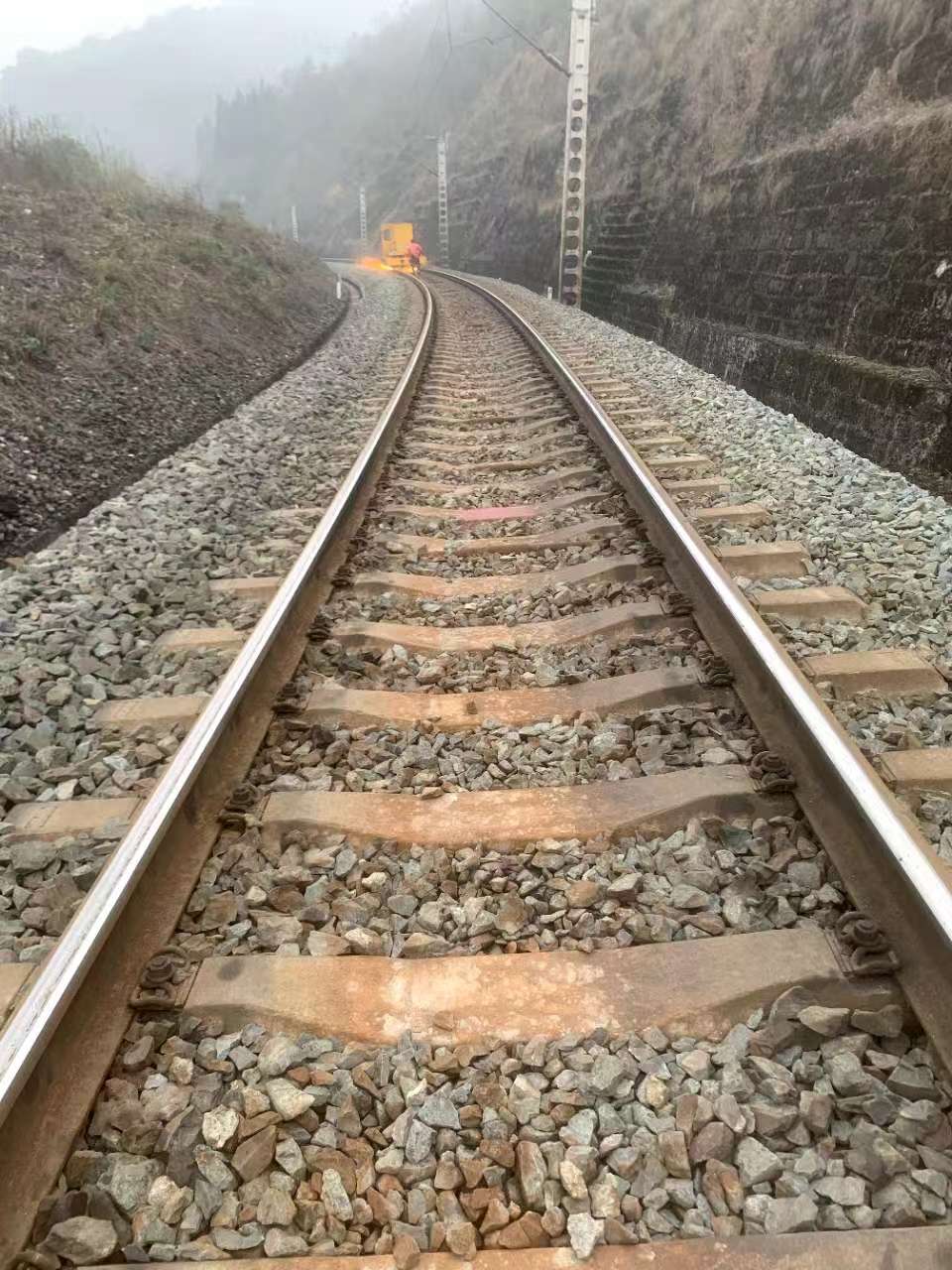
The regional story is less about geography than about which of three operating regimes a line belongs to. The same machine class is rarely optimal across all three, and the same commercial model certainly is not.
| Regime | Binding constraint | Grinding logic | Effect on the purchase |
|---|---|---|---|
| Heavy haul | Gross tonnage; documented at 25 t rising to 30 t axle load on the Malmbanan ore line, with curves near 400 m radius | Deformation-led; curves at about 27 MGT, tangent at about 80 MGT | High-power production machine, consumable life measured in metal removed, multi-year framework contract |
| High speed | Acceptance precision; DB AG measures the transverse profile every 50 m on high-speed lines | Preventive and shallow, frequent, profile-stability led | Measurement capability purchased with the machine; payment tied to documented class |
| Urban and metro | Window length; 58 Chinese cities operating 13,067.89 km, carrying 33.383 billion passengers in 2025 | Corrugation and side-wear led, small increments, high repetition | Compact plant, fast setup, night work, often contracted per kilometre |
The high-speed regime is the one most often mis-specified, because the temptation is to buy tonnage capacity that the line will never use. A high-speed corridor accumulates gross tonnage far more slowly than a heavy-haul corridor of the same length, yet its acceptance tolerances are the tightest in the table and its windows are the shortest. Capacity bought for metal removal is capacity wasted; what the line needs is repeatable precision and a measuring chain that can prove it inside 0.3 MGT.
The urban regime inverts the problem again. Windows are measured in a few hours, access is shared with service, and the work is repetitive across a compact network. That is why the hand tool and small plant segment, which looks trivial beside a production grinder, carries real volume in transit: it is the only plant that fits the constraint.
Procurement Risks in the Railway Maintenance Machinery Market
Seven risks account for most of the value lost between a tender and a working campaign. Each has a specific mitigation that belongs in the contract rather than in the relationship.
| Risk | How it surfaces | Mitigation that works |
|---|---|---|
| Specification lock | Machine is set up for one target profile; changing it needs new tooling or a re-engineer | Require a profile library and the cost of a target change to be stated at tender |
| Consumable dependency | Wheel or insert prices rise after the machine is installed | Specify consumable life in millimetres removed or MGT, never per piece |
| Acceptance dispute | Ground profile falls outside the EN 13231-3 band over more than the allowed 5% | Agree instrument, sampling interval of 500 m or less, and the 8-day / 0.3 MGT deadline in advance |
| Possession mismatch | Machine cannot finish its pass inside the window it was bought for | Express output as km per possession hour and verify it on a trial section |
| Conformity of supply | Bonded abrasive or machine rejected at import or by the operator | Verify EN 12413 conformity for bonded abrasives, with the covered product list attached |
| Spares lead time | A part arrives later than the interval it protects | Hold a critical spares consignment sized to one full campaign |
| Operator dependence | Results vary by crew on identical rail | Make training and a written work instruction part of the delivered scope |
Two of these deserve a sentence beyond the table. The acceptance deadline expressed in both days and tonnage is the trap that catches well-run projects: a contract that says "within eight days" and omits the 0.3 MGT clause is unenforceable on a busy line, because the traffic clause will have expired first. And consumable specification in millimetres removed rather than per piece is the only way to compare two wheel suppliers honestly, since a cheaper wheel that removes less per set has simply moved the cost to the campaign.
The same discipline applies when a railway maintenance equipment supplier is asked to quote consumables against a machine it did not supply. Without a stated removal-per-set figure, the comparison is a price list, not a tender.
How to Evaluate Rail Maintenance Equipment Manufacturers
Rail maintenance equipment manufacturers are habitually shortlisted on three things that predict very little: years in business, catalogue breadth, and unit price. A scorecard built on evidence instead of claims sorts them faster.
| Dimension | What to ask | Evidence that counts | Weight |
|---|---|---|---|
| Conformity of the product | Which standard, which certificate, exactly which products are covered? | Certificate with an attached product list, not a logo on a brochure | 25% |
| Documented track record | How much rail has this equipment ground, on which regime, to which class? | Campaign reports with measured profile before and after | 25% |
| Response and spares | What is the guaranteed response time, and what is held in stock? | A named consignment list with quantities and locations | 20% |
| Cost per million gross tonnes | What does a campaign cost per MGT at your removal rate? | Removal per set, measured, not quoted | 20% |
| Documentation and training | Who signs the acceptance sheet, and against what instruction? | A sample inspection and test plan plus a written work instruction | 10% |
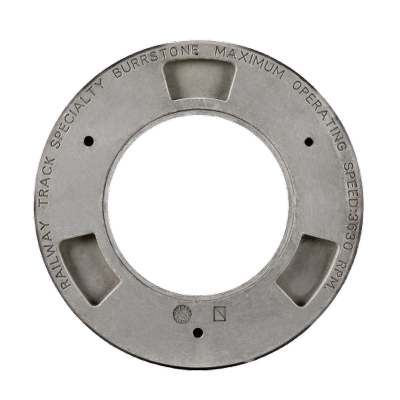
Applied to bonded abrasives, the first dimension is answerable in one document. Our own rail grinding wheels hold an EN 12413:2019 conformity certificate issued by UDEM, reference M.2026.206.C147949, valid to 20 September 2031, with the covered product list attached to the certificate. That is what the dimension is asking for: a named scope, not a claim of compliance in general. Buyers comparing any two manufacturers should insist on the same artefact, because a certificate whose product list does not include the item being purchased proves nothing about that item.
The second dimension is where most shortlists fail. "Decades of experience" is not evidence; a campaign report showing the profile measured before and after grinding, on a line comparable to yours, is. Ask for the millimetres removed and the class achieved, and ask which standard the measurement was taken to.
Where the equipment sits inside a wider scope, a railway maintenance equipment supplier's ability to join segments matters more than any single machine. That is the argument for buying plant alongside comprehensive rail maintenance solutions rather than as isolated items, and it is also the argument for buying the railway maintenance tools from the same source as the machine that sets the standard they must meet.
Total Cost of Ownership for Railway Maintenance Machinery
Total cost of ownership is often reduced to purchase price plus maintenance. Across railway maintenance equipment that model understates the two largest lines, which are the possession and the accept-or-redo outcome. A workable model has seven lines.
| Cost line | Driver | How to quantify it |
|---|---|---|
| Capital charge | Output required, not output available | Price divided by km per possession hour multiplied by usable hours per year |
| Consumables | Metal removed per MGT | Removal per set against the 0.2 mm per 25 MGT reference, then sets per campaign |
| Possession | Window length and frequency | Cost per hour of track occupancy, charged to the machine's actual throughput |
| Acceptance and rework | Length outside the specified class | Percentage of length outside class multiplied by the cost of a re-grind |
| Downtime | Spares lead time and service response | Days lost per event multiplied by possession cost |
| Training | Crew turnover | Days of instruction per new operator, times the crew you actually rotate |
| Residual value | Age, hours, and market for the class | Resale or redeployment value at the point you would replace it |
The model changes the ranking of suppliers more often than not. A machine with a 20% higher capital charge but one extra kilometre per possession hour usually wins on lines where access is scarce, because the possession line dominates. On a network with generous access and cheap occupancy, the same machine loses to a cheaper unit with better consumable life. Neither answer is general; that is precisely why the model has to be built against a named line rather than against an average.
The Malmbanan result is the best available check on the whole model. Cost of grinding plus renewal fell by almost 40% over two years while the asset condition improved — a combination that is only possible if the grinding line was charged against the renewal line it displaced. A total cost model that keeps grinding as an operating cost and renewal as a capital cost will never reproduce that arithmetic, which is why the two belong on the same page.
Where RailwayCare Fits
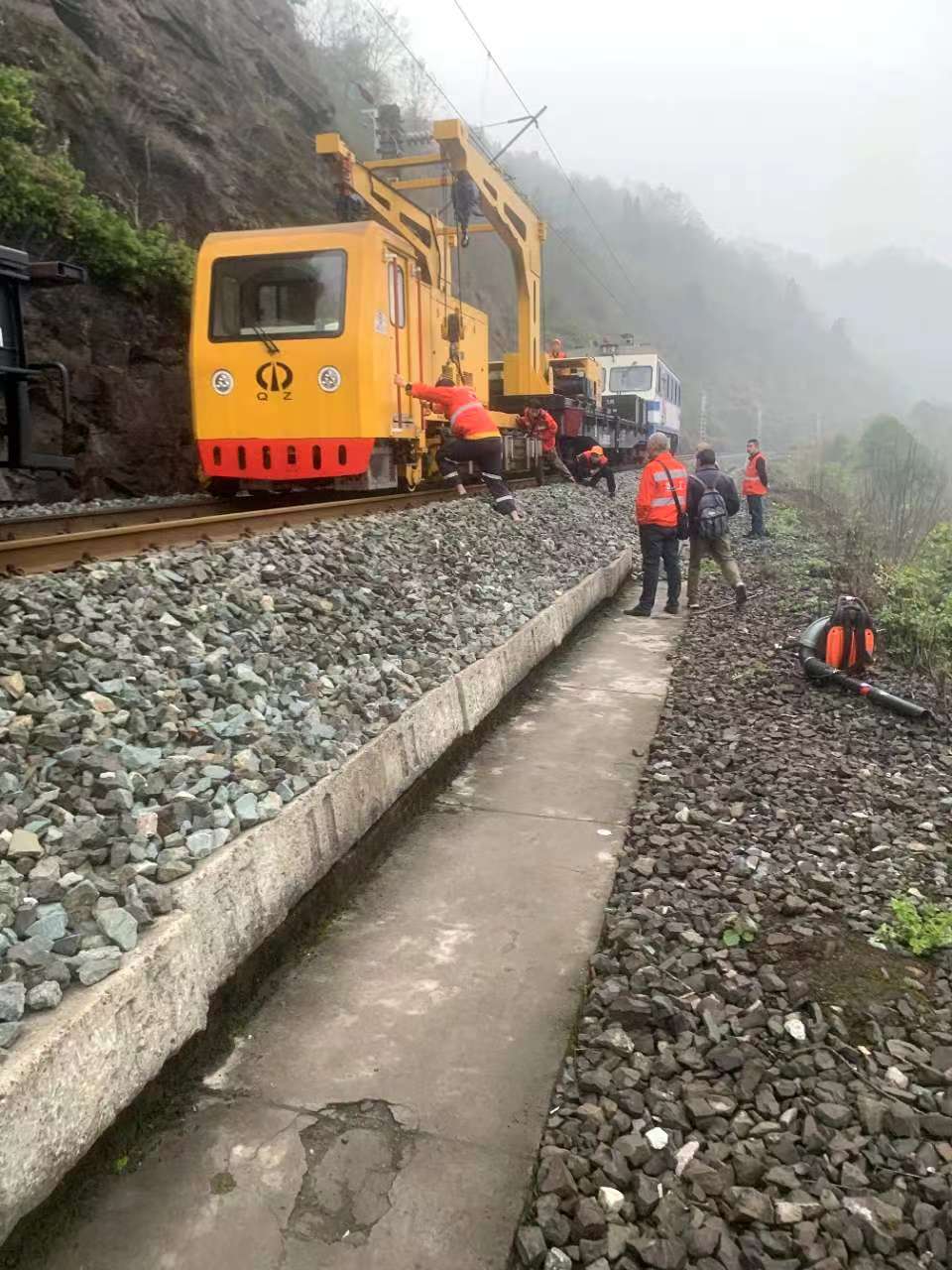
Everything above is written so that you can specify the work before you talk to anyone. If, having read it, you want the specification challenged rather than accepted, that is the conversation worth having.
Our part of this market is narrow by design. We supply rail grinding wheels and the smaller grinding machines that consume them, the measurement and inspection tools that confirm what was achieved, and the maintenance tooling that handles what a machine cannot reach. Because a grinding wheel's performance is decided by the rail it meets and the profile the operator is aiming for, we would rather see your track data first: rail section and grade, annual gross tonnage, curve content, the class you are required to achieve, and the possession length you can realistically hold. From those five inputs a removal schedule and a consumable estimate can be produced before any quotation exists.
For buyers assembling a wider scope — welding, renewal, stabilisation alongside grinding — the starting point is usually the division of risk rather than the price list, which is what railway maintenance project cooperation is designed to settle. If you already know the line, the tonnage and the target class, send them through and we will tell you what the work would take: send your track conditions and tonnage to our engineering team. If the honest answer is that you should contract the work rather than buy a machine, we will say so — the break-even arithmetic in this article cuts both ways. For the company behind these numbers, the standards we work to and the projects they were applied on, see about RailwayCare.
Frequently Asked Questions
How large is the railway maintenance machinery market?
No single figure is defensible, because published estimates count different things. An OEM revenue figure excludes consumables and contractor labour; an operator spend figure includes them; a services figure includes track access. Analysts can legitimately differ by a factor of three. For a business case, replace the headline number with operational data you can verify: route length, annual gross tonnage, removal rate per MGT and possession hours available. Those four numbers size your own addressable work far more accurately than any global total.
Which segment is growing fastest?
Growth rates quoted for this market are forecasts of an undefined boundary, so treat them with caution. What can be observed is where demand pressure is greatest. In 2026 that pressure sits on preventive work — grinding and measurement — because traffic is rising on networks that are adding less new line: UIC reports about 10,000 billion tonne-km of rail freight worldwide, while China commissioned 3,109 km of new line against 165,000 km already operating. Pressure on preventive maintenance rises before it shows up in any revenue figure.
Should we buy machines or contract the work?
Estimate the annual work your network actually generates, then compare the contractor's per-kilometre price multiplied by that volume against the machine's full annual cost including possession time, consumables and acceptance risk. Below the crossover, contracting keeps the cost variable, and a competitive railway maintenance service market is what keeps that option viable. Above it, ownership wins. The common error is buying at a volume that looks large in kilometres but is small in gross tonnes, which leaves the machine underused for most of its life.
How much metal does grinding remove, and how often?
Preventive work typically removes 0.1 mm or more per pass, corrective work 0.2 mm or more, and acceptance usually caps a single campaign well below that. Interval is set in tonnage. The Malmbanan programme removed about 0.2 mm per 25 million gross tonnes, grinding curves annually at about 27 MGT and tangent track every third year at about 80 MGT. On a network carrying 32 MGT per route-kilometre per year, that removal increment implies slightly more than one full campaign per year.
Which standards should a specification name?
For grinding, EN 13231-3:2012 governs acceptance of reprofiled rail and sets the four wavelength bands, the class allowance and the measurement deadline. For track geometry after tamping, EN 13848. For welding, EN 14587 for flash-butt and EN 14730 for aluminothermic. For bonded abrasives, EN 12413 covers safety, and a supplier should be able to produce a conformity certificate with the covered product list attached. Naming the standard is not enough; name the measuring instrument, the sampling interval and the deadline as well.
What should be verified before accepting a machine?
Three things. Output per possession hour, measured on a trial section rather than quoted. Consumable life expressed as metal removed per set. And a documented acceptance result on a line comparable to yours, showing the profile before and after and the class achieved. A machine that cannot demonstrate those three has only demonstrated that it exists.