Railroad Maintenance Vehicles and Hi-Rail Trucks: Mobile Track Repair
Most track owners start this procurement the wrong way round. They ask which hi-rail truck to buy, collect brochures, compare payloads, and end up with a vehicle that spends most of the year parked. The question that should come first is harder and much cheaper to answer: which of your work actually has to be done from a vehicle on the rail?
Direct answer
A railroad maintenance vehicle is any plant that puts a tool on the rail: road-rail trucks with retractable guide wheels, rail-bound machines such as tampers and grinders, inspection vehicles, and portable machines carried to site in an ordinary pickup. Only work that genuinely needs a vehicle on the rail justifies owning one.
That distinction decides almost everything downstream — the specification, the annual cost, the certification burden, and whether you should own a fleet at all. Railroad maintenance vehicles are a means of putting a tool at a defect, and the whole procurement only becomes tractable once you accept that framing. This guide works through it in the order a buyer should.
What Counts as a Railroad Maintenance Vehicle
The term covers four things that are bought by different people, for different reasons, under different rules. Lumping them together is the most common source of an expensive mistake.
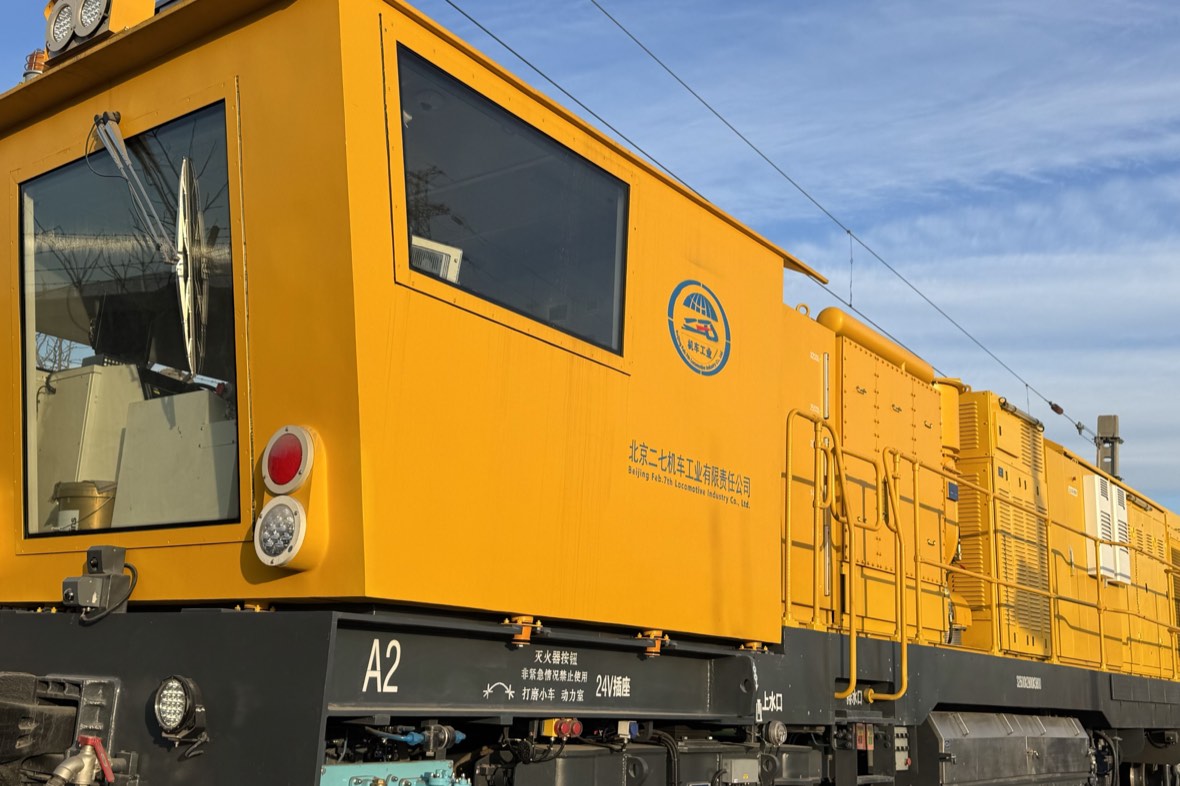
Road-rail vehicles. Trucks and vans fitted with retractable guide wheels, which can drive on a road and then be lowered onto the track. They carry people, tools, materials and small machines to a work site, and can tow a trailer. Their defining capability is not payload; it is the ability to arrive without a train.
Rail-bound maintenance machines. Tampers, ballast regulators, ballast cleaners, rail grinders built on rail chassis. These live on the track, are moved as trains, and are justified only by sustained work volume. A tamper that does a hundred kilometres a year is a very expensive shed.
Inspection vehicles. Purpose-built or converted vehicles carrying geometry or ultrasonic measurement systems. Their justification is measurement frequency, not work volume — an inspection vehicle that runs twice a year should be a trolley instead.
Portable machines with a road vehicle. Grinders, tamping picks, lifting and lining units that one or two people carry in a pickup, set on the rail, and remove at the end of the shift. No rail gear, no fleet, no certification of a vehicle as a train. This category is the reason many buyers do not need the first three.
The categories are not a ladder. A network can sensibly own portable machines and a single road-rail truck, and contract everything else — and that mix is a perfectly respectable answer to the question of what railroad maintenance vehicles it needs. What it cannot sensibly do is buy the vehicle first and then look for work to justify it, which is the sequence most failed purchases follow.
Chassis Classes of Railroad Maintenance Vehicles: What Each Can Actually Do
Within the road-rail category the chassis decides the vehicle's real capability, and the differences are larger than the brochures suggest. There are four classes in common service.
| Class | Typical chassis | Rail gear | Best for | Main limitation |
|---|---|---|---|---|
| Van conversion | Light commercial van | Drop-in, one axle set | Inspection, carrying a small gang, light material delivery | Small payload at rail speed; reverse working on rail is difficult |
| Light truck | 3.5 to 7.5 tonne | Rear-mounted steering gear | The district workhorse: crew, portable machines, fuel, shift material | Below the heavy class on payload and on-rail travel speed |
| Heavy truck | Above 7.5 tonne | Often all-wheel drive at both axles | Crane, lift platform, rail and component payload | Loaded weight approaches a small locomotive; bridge and structure restrictions |
| Specialist road-rail | Purpose-built body | Better integrated, body designed around it | One specific task — overhead line, welding, lifting | Bought for a task, not for general work |
Van conversions. A light commercial van with drop-in rail gear at one axle. The attraction is cost and road speed; the limitation is that the payload at rail speed is small and the guide assembly is usually a single axle set, which means reverse working on rail is difficult and the on-rail travel speed is low. These are legitimate for inspection, for carrying a small gang to a remote site, and for light material delivery. They are not work vehicles in any sense that involves a tool doing sustained work.
Light trucks. A 3.5 to 7.5 tonne chassis with rear-mounted steering rail gear. This is the workhorse class for a district: it carries a crew, a set of portable machines, fuel, and enough material for a shift, at a rail travel speed that makes it useful across a district rather than a single location. Most networks that own "a hi-rail truck" own one of these.
Heavy trucks. Chassis above 7.5 tonnes, often with all-wheel-drive rail gear at both axles. Capable of carrying a crane, a lift platform, or a substantial payload of rail and components. The trade-off is weight: a loaded heavy road-rail vehicle approaches the axle loading of a small locomotive, and the bridge and track structure it can legally cross shrinks accordingly. Buyers routinely discover this after purchase, when a route survey identifies bridges the vehicle cannot use.
Specialist road-rail machines. Purpose-built bodies on a road-rail chassis: overhead line platforms, rail welders, crane units. These are bought for a specific task, not for general work, and the rail gear is usually better integrated because the body was designed around it.
One practical point runs across all four classes. The vehicle's usefulness is set by the weakest link between the depot and the work site — a bridge rating, a tunnel clearance, a level crossing width, or an access road gradient. Mapping that route before choosing the class is more valuable than any specification comparison, and it is a morning's work.
The Part That Actually Makes It a Vehicle: The Road-to-Rail Transition
Everything that is difficult about a road-rail vehicle lives at the point where steel wheels meet steel rail. Payload and cab comfort are easy engineering. The transition is not.
The guide wheelbase sets the curve capability, not the road wheelbase. When the vehicle is on rail, the rear guide wheels steer it. Take a truck with a 4.5 m road wheelbase fitted with a rear guide assembly 3 m behind the rear axle, and the effective wheelbase on rail is 7.5 m. That number — not the one in the truck brochure — determines whether the vehicle will track a tight industrial curve without the flange climbing, and whether the outer rail of a small-radius curve will take damage every time it passes. Ask for the rail wheelbase explicitly, and then ask for the minimum curve radius at which the vehicle is rated. Suppliers who quote only road figures have not understood the question.
Curve capability matters more than it looks, because tight curves are exactly where the maintenance work tends to be. Side wear and gauge corner damage concentrate on small-radius curves, and so does the work to correct them. A vehicle that cannot reach the defect is not a maintenance vehicle; it is a road truck with ambitions. Our guide to managing side wear on curved track shows how much of the defect population sits in those locations.
The vehicle must be proven not to shunt the track circuit. This is the acceptance item that stops projects. A track circuit works by passing a low current through the rails and detecting the short that a train's wheelsets create. A steel-wheeled vehicle sitting on the rails does exactly the same thing. If the signalling system reads the vehicle as an occupying train, every movement in the section is blocked — and the vehicle may not be permitted on the line at all.
The remedies are established: insulated wheelsets, insulating bushes and axle-end insulation so the two sides of the vehicle do not bridge the rails electrically, plus proof that no part of the underside can foul the rails. What matters for a buyer is that this is verified against your signalling arrangements, not a generic statement. Track circuits, axle counters and jointless designs behave differently, and a vehicle accepted on one railway is not automatically accepted on the next. Put it in the tender as a documented deliverable with test results, not as a promise.
Rail gear type changes what the vehicle can do, not just how it attaches. Drop-in (also called portable) rail gear is fitted when needed and removed otherwise, which keeps the truck useful as a road vehicle but limits it to occasional work. Front-mounted gear guides the vehicle but cannot steer it out of a curve; rear-mounted gear steers and is the norm for anything doing sustained on-track work. All-wheel drive with rail gear at both axles gives the best traction and the worst turning circle. There is no best answer — there is a match to how often the vehicle goes on rail.
Fleet Sizing: The Denominator Nobody Checks
A road-rail truck costs the same standing still as it does working. That single sentence explains most of the poor returns in this category.
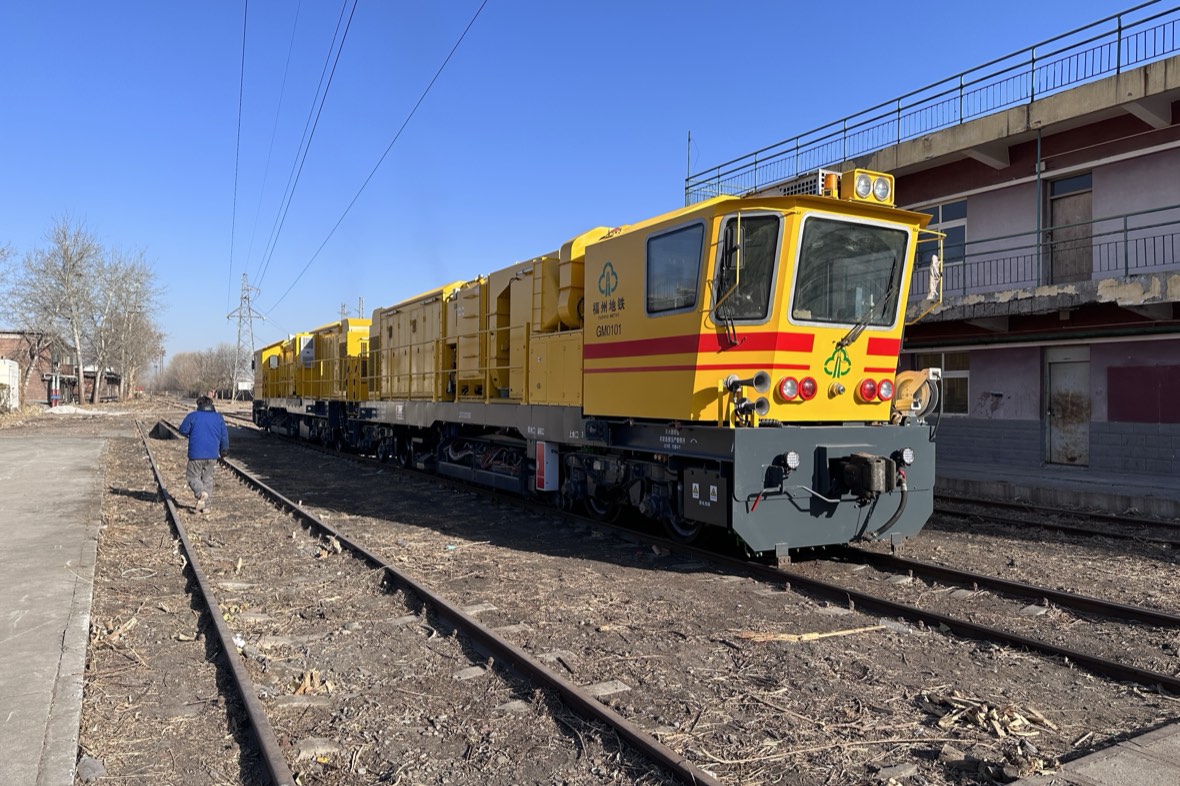
The honest calculation has two inputs and one division.
Numerator: annual on-track work hours that genuinely require a vehicle. Not all maintenance work. Only work that needs the vehicle on the rail — long-run grinding, ballast work, heavy component lifting, work spanning more than a shift's walk-in distance, and anything requiring a continuous work train.
Denominator, part one: productive hours per on-track day. This is set by the possession, not by the machine. A four-hour possession with forty minutes of setup and forty of recovery gives about three productive hours. If your possessions are fragmented, this number collapses, and the vehicle can never earn its capital cost.
Denominator, part two: usable days per year. Weather, possession availability, crew availability and the inspection and maintenance calendar all subtract. A vehicle available 200 days a year is doing well on a network with heavy traffic.
Divide, and you get the minimum fleet. A worked example makes the arithmetic concrete. Suppose a district has 900 hours a year of work that genuinely needs to be on rail, possessions that yield three productive hours per on-track day, and 180 usable days. That gives 900 ÷ (3 × 180) = 1.67 vehicles. Round up and you need two, which is a real fleet decision with real crew and depot implications.
Now change one input. Suppose the same district has the same 900 hours but possessions that yield only 1.5 productive hours, and 120 usable days. The answer becomes 900 ÷ (1.5 × 120) = 5 vehicles — which is obviously wrong, and reveals that the constraint is the possession structure, not the fleet. The value of the calculation is as much in what it exposes as in the number it produces. A figure that comes out impossibly high means you are trying to buy your way out of a scheduling problem.
The useful part is what happens next: compare the number with one. If the honest answer is 0.4 vehicles, you do not have a fleet problem, you have a contracting problem, and the correct purchase is a service contract plus portable machines.
Three thresholds worth applying to your own figures:
If annual on-track work is below roughly a few hundred vehicle-hours, ownership rarely beats contracting once depreciation, certification, insurance, crew training and standby maintenance are counted.
If work is concentrated into a short season, ownership is worse than the average suggests, because the fixed cost is annual and the work is not.
If the same vehicle is expected to cover inspection, grinding and heavy lifting, check whether that is real multi-role capability or three attachments and a compromise — the rail gear and the payload usually serve only one of those jobs well.
The Specification Sheet: What to Insist On, and How to Verify It
Most of the specification is standard. A handful of items decide whether the vehicle works on your railway, and each of them can be tested before you sign.
| Item | Why it decides the purchase | How to verify |
|---|---|---|
| Rail wheelbase and minimum curve radius | Sets whether the vehicle tracks your tightest curve without flange climb | Ask for both figures as rail figures, then check against your curve inventory |
| Track circuit compatibility | Without it the vehicle may be barred from the line, or block every movement in the section | Require insulation design plus test results against your signalling type |
| Axle load and bridge rating | A loaded road-rail truck is much heavier than the bare vehicle | Compare gross rail load with the weakest bridge and the lightest track structure it must cross |
| Guide wheel load path | Concentrated load at the guide wheels can damage fastenings and sleepers | Ask where the load goes into the chassis, and whether it is spread or point-applied |
| Payload at rail speed | Payload quoted for road use is not the payload allowed on rail | Get the rail-speed payload figure, not the road one |
| Transport speed and towed load | Determines whether one vehicle can serve a whole district | Confirm the permitted on-rail travel speed and the trailing load rating |
| Certification and acceptance route | The paperwork is often the longest lead time | Ask for the acceptance route in your jurisdiction, in writing, before ordering |
The last row is worth more attention than it usually gets. Vehicle acceptance is not a formality that follows delivery; it is a process that runs in parallel with manufacture and can stop the project. Buyers who ask for the acceptance route at tender stage routinely save months.
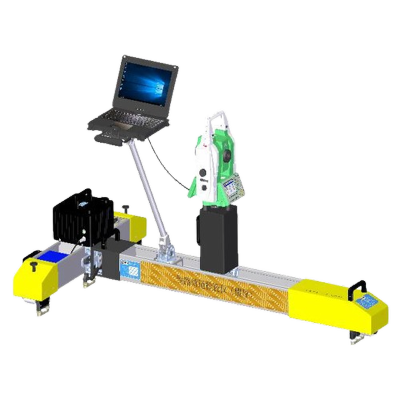
There is a second-order item that belongs on the list for any vehicle intended to carry measurement equipment: the vehicle's own suspension is not a reference surface. A geometry system mounted on a road-rail vehicle measures the vehicle's response as much as the track's, unless it is referenced to the axles in a way that compensates. This is why serious measurement is done from a dedicated inspection vehicle or a trolley, and why a van with a laser on the back is not an inspection vehicle. The distinction between measuring track and measuring the vehicle carrying the instrument is the same one that governs how track gauge and geometry should be measured at all.
Inspection Vehicles: The Case You Probably Should Not Make
Inspection is the most common excuse for buying a vehicle, and the weakest justification on the numbers.
The reason is that measurement is cheap to repeat and expensive to automate. A two-person crew with a trolley and a digital gauge can cover a district's inspection requirement in planned visits, at a fraction of the fixed cost of a vehicle, and can do it on days when a vehicle would be waiting for a possession. The trolley does not need rail gear, does not need certification as a train, and does not need a depot bay.
A vehicle becomes justified for inspection in three situations only. First, when the measurement must be continuous and fast — high-speed geometry recording over long route mileage, where the value is in frequency rather than in detail. Second, when the measurement requires power, shelter and operators working for hours — ultrasonic testing at volume, where the vehicle is a mobile workshop. Third, when inspection and work must happen in the same possession, so that a defect found is a defect corrected before the line reopens.
Outside those three, the arithmetic favours a trolley and a trained crew. The measurement chain that matters is inspection, measurement, planning, execution, verification and record — and only one link of it needs a vehicle. Our track geometry inspection trolleys exist for exactly this reason, and the rail inspection solutions overview explains how they fit together.
Where a Vehicle Wins, and Where It Quietly Loses
Vehicles win on continuity and on weight. A work train can grind or tamp for hours without stopping, carry ballast, lift a crossing, and keep a crew sheltered and supplied. Nothing portable competes with that. On a network with long possessions and sustained work volume, the vehicle is the correct answer and the arithmetic is not close.
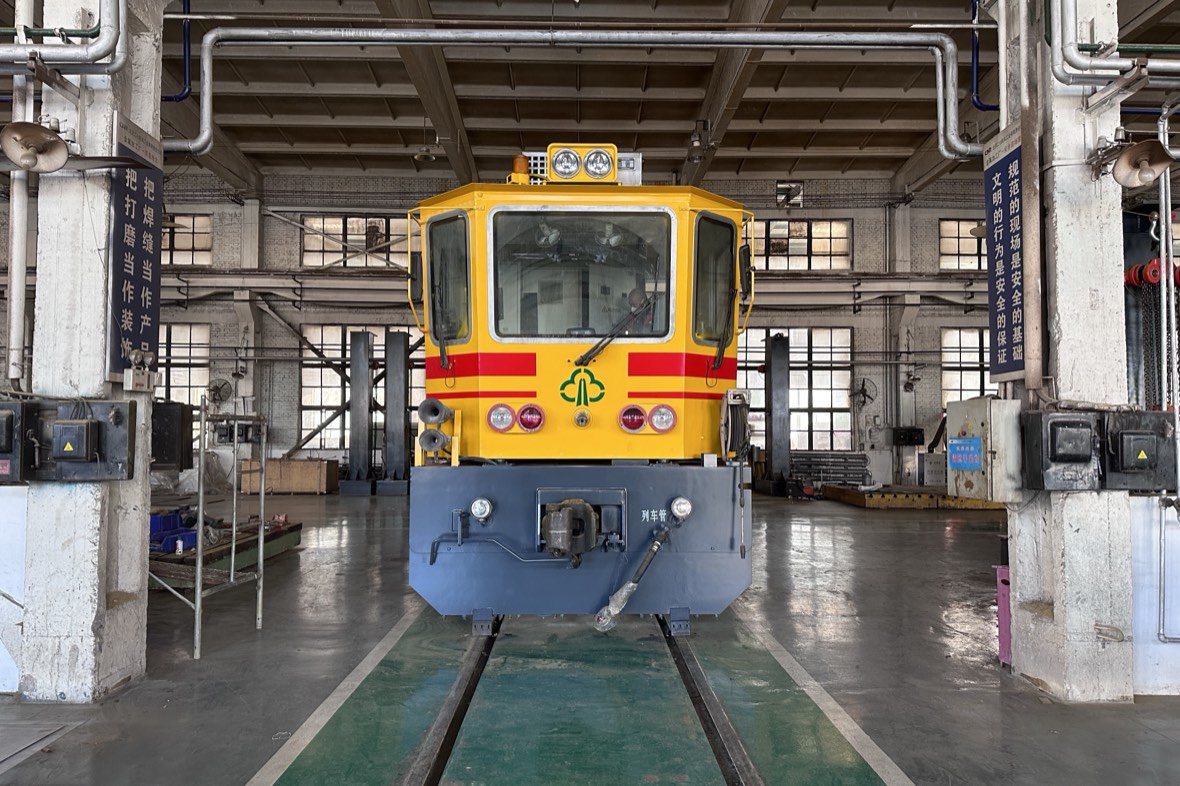
Vehicles lose on fragmentation. If your possessions are two hours long, in the middle of the night, in a location forty minutes from the access point, then the vehicle's advantage evaporates: most of the possession goes into getting it there and getting it off. This is where portable machines stop being a compromise and become the better engineering choice. A lithium-powered turnout grinder carried in a pickup, or a tamping pick two people can lift, does the work in the same window without the rail gear, the certification and the fleet.
The pattern that fails most often is the middle case: a network buys a road-rail vehicle for occasional work, discovers the possession structure will not support it, and ends up using it as a road truck with guide wheels. The capital was spent, the rail gear was never the constraint, and the work still gets done by portable machines or a contractor.
If you are uncertain which side of the line you are on, the tie-breaker is measurement rather than opinion. Log the actual on-track hours, the actual setup times and the actual possession lengths for three months. That record will answer the question more reliably than any specification comparison, and it costs nothing.
Own, Contract or Rent: The Third Option Usually Ignored
Procurement discussions around railroad maintenance vehicles tend to be binary — buy one or hire a contractor — and skip the option that fits the most networks in the middle: rent the vehicle, own the tools.
The rental and leasing market for road-rail vehicles is well developed in most mature markets, and it changes the arithmetic completely because it moves the fixed cost into the variable column. A network with 400 hours of genuine on-track vehicle work a year does not need to own anything: it needs a reliable supply of a vehicle for those 400 hours, with a driver, at a known day rate.
Renting makes sense when the work is irregular, when the possession pattern is unstable, or when the vehicle specification is not yet settled. It also de-risks the acceptance question, because a rental supplier already has vehicles accepted on the network.
Owning makes sense when the work is predictable, the volume is above the threshold, and — critically — when the vehicle is used often enough that crew familiarity becomes a safety asset rather than a training cost.
Contracting out makes sense when the work is specialised rather than merely occasional: grinding programmes, ballast cleaning, and anything where the contractor's process knowledge is worth more than the machine. For the grinding case specifically, the complete guide to rail grinding for track operators sets out what a programme actually involves, which is a useful reality check on whether it is a task to own at all.
| Route | Fits when | What it does to the cost model | Main exposure |
|---|---|---|---|
| Own | Work is predictable, volume is above the threshold, and crew familiarity has become a safety asset | Fixed cost, incurred annually whether the vehicle works or not | Idle capital; certification, insurance and training carried in-house |
| Rent | Work is irregular, the possession pattern is unstable, or the specification is not yet settled | Moves the fixed cost into the variable column | Availability at short notice; exposure to day rates |
| Contract | Work is specialised rather than merely occasional — grinding programmes, ballast cleaning | Per-unit price carries the contractor’s process knowledge | Less control of method; possession efficiency must be written into the contract |
The mistake in this dimension is treating the three options as a hierarchy of seriousness. They are three ways of buying the same thing — track time with a tool on it — and the correct choice is the one with the lowest total cost at your volume, not the one that looks most like a railway.
Organising the Work: A Vehicle on Rail Is a Train
The operational rule that catches new entrants is simple and unforgiving. Once a road-rail vehicle is on the rail, it is a train — and every railroad maintenance vehicle programme that has gone wrong on safety has gone wrong at this point. It must be protected as a train, it must be worked under a possession or a blockage, and it must be brought off the rail before the possession is given up, or accounted for as a vehicle occupying the line.
This has four practical consequences that belong in the plan, not in the risk register.
Protection comes before productivity. The time to establish protection is not available for work, and any scheduling that assumes otherwise will run late. Build it into the possession calculation.
The exit is part of the job. Bringing a vehicle off the rail — raising the guide wheels, clearing the track, confirming the section is clear — takes time and must be sequenced before the possession is handed back. A vehicle stranded by a possession overrun is a serious incident, not a delay.
Crew competence is a certification item. Driving a road-rail vehicle on rail is a different competence from driving it on a road, and it is separately regulated in most jurisdictions. The training and the record-keeping are part of the vehicle programme, not an afterthought. A crew that is competent on the road and untrained on rail is the most dangerous configuration available, because the vehicle behaves nothing like a truck once the guide wheels are down.
Recovery must be planned before it is needed. A road-rail vehicle that fails on rail blocks the line and cannot be towed by a road vehicle. Either a re-railing plan exists, or the failure becomes a network event. This is the single most neglected item in vehicle procurement, and the one operators remember longest.
Matching the Machine to the Defect, Not to the Catalogue
The deeper point about railroad maintenance vehicles is that they are means, not ends, and the defect is the only thing that should be driving the choice. A vehicle exists to put a tool at a defect. So the honest specification starts from the defect population, and works back.
If most of your defect population is surface and profile — corrugation, fatigue cracks, flowed metal at the gauge corner — then the vehicle that matters is a grinder, and a small one may do. If it is ballast and support, you need tamping and regulation, which is heavy and belongs on a rail chassis. If it is geometry, you need measurement, and the vehicle is a carrier for an instrument. If it is internal defects, you need ultrasonic testing, which is a slow process and rarely justifies a vehicle at all.
This is why two networks with the same track length and the same traffic can correctly buy completely different fleets. It is also why buying by catalogue comparison goes wrong: catalogue comparison assumes the work is the same.
The defect-to-tool mapping is worth doing properly before any vehicle decision, because it is the step that most often changes the answer. A field survey of what is actually failing, at what rate, and in what locations, will usually show that one or two defect families dominate — and that the fleet implied by those families is smaller and more specific than the general-purpose fleet a brochure would suggest. Our reference on rail defects and their solutions covers the taxonomy; the point here is only that the survey precedes the specification.
For a worked example of matching tool to defect at the smaller end, our guide to the complete hand tool list for track gangs sets out the task-by-task breakdown; for the machine selection decision itself, how to choose a rail grinder covers the specification logic in more depth than a vehicle article can.
The Alternative Worth Pricing Before You Buy
Before committing to a vehicle, price the alternative properly. In a surprising number of cases the portable route wins on total cost — not because it is cheaper per unit of work, but because it is cheaper per unit of irregular work, which is what most maintenance actually is.
A realistic portable package for a mid-sized district looks like this:
A turnout grinder for profile and surface work in confined locations — the RCG-L50 lithium turnout grinder or the RCG-V50 vertical-axis machine for the geometry that a full-size vehicle cannot reach.
Tamping and consolidation for localised support defects — the tamping machine series for sustained work, or a tamping pick where the defect is localised and the access is a footpath.
Lifting and lining for geometry restoration — the track lifting and lining machine for work at turnouts and level crossings.
Measurement to close the loop — the RCI track geometry inspection trolley and a digital gauge, so that each pass is verified rather than assumed.
That package fits in one or two vehicles of the ordinary road kind, requires no rail gear, and can be worked by a small gang in short possessions. What it does not do is replace a work train for sustained grinding or ballast work. The judgment is not which is better; it is which of your work falls on which side.
Where localised support defects are the dominant problem, the portable route is often not merely cheaper but technically better, because the correction can be made where the defect is rather than where the vehicle can stand. Our guide to precision inspection and efficient tamping for uneven tracks and loose ballast works through that case.
Our rail maintenance solutions are organised along exactly that split, and the maintenance tools range covers the portable end of it. Where a buyer wants the whole scope delivered rather than the equipment supplied, that is handled through project cooperation.
A Buying Sequence That Avoids the Usual Mistakes
Six steps, in this order. Each one is cheap and each one can stop a bad purchase before the money is committed.
1. Characterise the work, not the wish list. Defect population, possession lengths, access distances, annual volumes. Three months of records beats three weeks of meetings.
2. Decide which work requires a vehicle at all. Be strict. Support work and heavy lifting usually do; measurement and localised grinding usually do not.
3. Run the fleet arithmetic. Annual vehicle-hours divided by productive hours per day and usable days per year. Compare the result with one before going further, and treat an implausibly high result as a signal about your possessions rather than about your fleet.
4. Price all three routes honestly. Ownership, rental, and contractor — plus the portable package for the residual. Include the certification and crew-training cost of the vehicle side, which is routinely underestimated.
5. Specify the acceptance route before the specification. Especially track circuit compatibility and vehicle acceptance. If these are unresolved, the rest of the specification is decoration.
6. Verify the rail figures, not the road figures. Rail wheelbase, minimum curve radius, payload at rail speed, permitted on-rail travel speed. Every one of these is quoted differently by suppliers who are not being careful.
Where RailwayCare Fits
What we do is the portable end of mobile track repair — grinding, tamping, lifting and lining, and the measurement that closes the loop — together with the consumables that determine whether a pass actually removes the defect. That is a deliberate position: a buyer who has run the arithmetic above can see which half of the work they should own and which they should not.
For networks where the vehicle case does hold, our grinding trains and the programme around them sit on that side of the split, and the rail grinding solutions overview explains how the machine, the wheel and the pass plan are specified together.
If you are at step 2 or step 3 and want a second opinion on where your work falls, send us the records. Telling a buyer they do not need a vehicle is a perfectly acceptable outcome, and it is a considerably cheaper conversation than the one that follows a purchase.
If your work is fragmented, or your possessions are too short to justify a fleet, the portable package is worth pricing before anything else. Our engineers will read your records, tell you which half of mobile track repair you should own, and specify the machines and consumables for it. Send your defect population, possession lengths and annual volumes and we will come back with a recommendation rather than a catalogue.
Frequently Asked Questions
What is the difference between a hi-rail truck and a railroad maintenance vehicle?
A hi-rail truck is one type of railroad maintenance vehicle: a road vehicle fitted with retractable guide wheels so it can travel on both road and rail. The wider term also covers rail-bound machines such as tampers and grinders, inspection vehicles, and portable machines carried to site. The distinction matters because they are bought under different rules and justified by different volumes of work.
How much does a hi-rail truck cost to operate?
Operating cost is dominated by the fixed side: depreciation, certification and acceptance, insurance, crew competence training, and standby maintenance, all of which accrue whether the vehicle works or not. The variable side — fuel, wear, consumables — is small in comparison. That is why the useful question is not cost per hour but annual vehicle-hours of genuine on-track work.
Can a hi-rail vehicle be used without closing the line?
Only where the operating rules permit it and only with the protection arrangements that apply to a train, because on the rail the vehicle is treated as one. In most cases that means working under a possession or blockage. Where line closure is impossible, portable machines worked in short windows are usually the practical alternative.
Why does track circuit compatibility matter for railroad maintenance vehicles?
Because steel wheels on steel rails can electrically bridge the two rails and be read by the signalling system as an occupying train, blocking movements in the section. Insulated wheelsets and careful design prevent it, but the proof has to be against the specific signalling type on your railway — a generic statement is not sufficient for acceptance, and the test results should be a tender deliverable.
How many railroad maintenance vehicles does a network need?
Dividing annual on-track vehicle-hours by productive hours per on-track day and usable days per year gives the minimum fleet. If the answer is below one, ownership is unlikely to be justified and contracting plus portable machines is the better route. Networks with fragmented possessions often find the number is far lower than expected.
Should a network own, rent or contract its maintenance fleet?
Own when the work is predictable, above the volume threshold, and frequent enough that crew familiarity becomes a safety asset. Rent when the work is irregular or the specification is not yet settled, since it moves the fixed cost into the variable column. Contract when the work is specialised rather than merely occasional, such as a grinding programme where process knowledge matters more than the machine.
Do maintenance vehicles replace manual track work?
No. They change the economics of sustained work — long runs, heavy components, ballast. The defect population still determines the tool, and a large share of routine work is faster and cheaper with portable machines in short possessions. Treating a vehicle as a substitute for the tool decision is the most common planning error in this category.