Railroad Track Maintenance Tools: The Complete Hand Tool List for Track Gangs
A track gang's tool list is not a shopping list. It is a map from defect to remedy, and the thresholds written into the operating rules decide what has to be on the truck. Get the map wrong and the gang carries the wrong instruments, measures the wrong quantity, and corrects a defect that was never there.
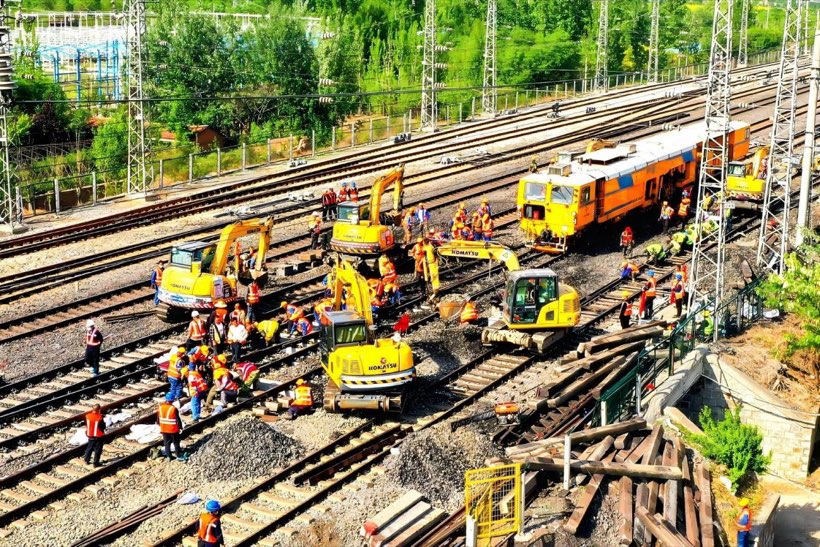
This guide sets out the full hand and small-power tool inventory used in railroad track maintenance, by task, with the weights and dimensions that matter, the regulatory thresholds that drive selection, and what has and has not been replaced by machinery.
What Counts as a Railroad Track Maintenance Tool
Maintenance of way — the North American term for the work, usually shortened to MOW — covers everything that keeps the track structure within its operating limits: inspection, surfacing, lining, tamping, fastening, rail replacement, joint work, drainage and vegetation. The tool list follows those work categories rather than the hardware catalogue, which is why two gangs with the same budget can carry completely different kits.
The vocabulary differs by railway tradition without changing the work. In Britain and much of the Commonwealth the track is the permanent way, and the gang is a permanent way gang; in North America it is maintenance of way, and the gang is a section gang, a track gang, or on smaller territories a single patrolman. The historical term for the manual track labourer — gandy dancer — survives as a description of a method, not a job. None of that changes the inventory: the same four measurements have to be taken and the same five corrections have to be made, whatever the paperwork calls them.
Two families sit inside the list, and confusing them is the most common buying mistake. The first family establishes what is true: gauges, levels, wear gauges, profile instruments, flaw detectors. The second family changes what is true: bars, jacks, mauls, wrenches, tamping picks, saws, drills, grinders.
The order matters. A gauging tool with a one millimetre error does not produce a one millimetre problem; it produces a decision problem, because every corrective action downstream is planned against a number that was wrong before anyone picked up a bar.
The two families, and why the order matters
Put the measuring family first in the budget and in the trailer. The correction family can be improvised on site — a crew that needs a bar can borrow one — but a misreading instrument cannot be improvised around, and its output is written down, signed and filed as the record of the track's condition.
The Core Railroad Track Maintenance Tool List, by Task
The railroad track maintenance tools listed below are the ones a section or track gang carries for routine work. It excludes machine-only items such as ballast regulators and track geometry cars, and it excludes the heavy plant used in renewal.
Inspection and measuring tools
- Track gauge (track gauge bar) — the primary instrument, and the one that decides whether anything else happens
- Cross level / track level — bubble or electronic, read against the design elevation
- Rail wear gauge — vertical and side wear at a defined section
- Rail profile gauge — the rail head cross-section, used before and after grinding
- Feeler gauge and straight edge — joint and weld alignment, fishplate gaps
- Torque wrench — verification of fastening torque after power bolting
- Ultrasonic flaw detector — internal rail defects, on a defined cycle
- Track inspection trolley — geometry recorded continuously rather than at points
- Measuring tape, chalk, paint marker and record forms — the least glamorous items on the list, and the ones that make the rest auditable
Lifting and lining tools
- Track jack (rail lifter) — vertical lift at a point, mechanical or hydraulic
- Lining bar — lateral shift, used in coordinated crew pulls
- Heel bar — leverage under the rail foot for spot lining and sleeper work
- Rail turning bar — rolling a rail section over without lifting it
- T-bevel or cant plate — establishing the required crosslevel before lifting
Fastening tools
The fastening family only makes sense against the components it holds. Elastic clips, cut spikes, tie plates and the tie itself each fail in a different way, and the tool list has to cover the failure you actually have — the components are set out in our guide to what railroad tracks are made of.
- Spike maul — driving cut spikes on timber ties
- Claw bar — extracting spikes and lifting rail
- Track wrench (fishplate spanner) — bolts at joints and fastenings
- Impact wrench — power bolting and unbolting
- Clip applicator and extractor — elastic fastening systems, system-specific
- Pad scraper — cleaning the tie plate seat before refastening
- Sleeper tongs and rail grab — handling ties and rail ends
Tamping and ballast tools
Ballast work is where a tool list most often meets a drainage problem wearing a surfacing problem's clothes. If the crib and shoulder will not hold the packing, no tamping tool will fix the geometry for long; the inspection logic that separates the two is set out in our guide to uneven track and loose ballast.
- Tamping pick or tamping bar — packing ballast under the tie
- Ballast shovel and ballast fork — crib and shoulder work, and clean-up
- Pick axe — breaking up compacted ballast and frozen shoulder
- Crib shovel and broom — finishing, and clearing the rail head before handing back
Rail cutting, drilling and handling tools
- Rail saw — abrasive or lithium-powered cut-off saw
- Rail drill — joint bar holes and bonding connections
- Rail tongs — carrying a rail section with two or four men
- Rail rollers — moving a rail along the shoulder without carrying it
- Fishplate spanner and joint bar tools — joint assembly
Safety and protection tools
- Flagging equipment and portable derails — protection of the work site
- Warning devices — audible and visual, per the rule book in force
- Insulated tools — mandatory wherever traction current or third rail is present
- Personal protective equipment — the only category where the specification is written for the individual, not the task
Weights and Dimensions: The Specifications That Actually Get Ignored
Hand tool weights are engineering values, not preferences. They come from the force a person can apply repeatedly across a shift, and from the geometry of the work.
| Tool | Typical specification | Why that number |
|---|---|---|
| Spike maul | 8–12 lb (3.6–5.4 kg), handle 30–36 in, head over 12 in long | Long head allows spiking on the far side of the rail without breaking the handle |
| Lining bar | 5–6 ft, 10–15 lb, high-carbon steel | Length sets the leverage a two-man pull can apply |
| Tamping bar | About 66 in, about 15 lb, flat head | Reaches under the tie end and packs without lifting the track |
| Claw bar | About 66 in, up to 25 lb | Extraction force at a spike or rail foot |
| Heel bar | About 7 kg | Leverage under the rail foot in confined space |
| Sledge hammer | About 7 kg | General striking and setting work |
| Fishplate spanner | About 5 kg | Bolt torque applied by hand at joints |
| Ballast shovel / fork | About 2.5 kg each | Weight per swing, not total load moved |
| Pick axe | About 4 kg | Breaking compacted ballast |
| Sleeper tongs (concrete) | About 6 kg | Two-man tie handling |
| Rail grab | About 6 kg | Controlled lift of a rail end |
| T-lifter | About 5 kg | Short lift and hold |
| Rail turning bar | About 5 kg | Rolling without lifting |
| Sleeper gauge | About 2 kg, adjustable | Tie spacing verification |
| Pad scraper | About 1.5 kg | Cleaning the plate seat |
Three of these numbers explain most of the practical behaviour you see on site.
The spike maul band is narrow. Below about 8 lb the head will not seat a cut spike in three blows; above about 12 lb the swing cannot be sustained for a shift. Because five — sometimes six to eight — spikes are driven per plate, with two plates per tie for each rail, on ties at roughly 16 inch centres, a single track mile carries close to eighty thousand spikes. The tool that drives them is used tens of thousands of times per mile of new or renewed timber track, which is why crews cut the handle down to about 28 in when the maul is only setting spikes ahead of a power spiker. That modification is a legitimate adaptation; the same instinct applied elsewhere is not.
The lining bar is a lever before it is a tool. Its 5–6 ft length is the reason a two-man crew can move a loaded track structure at all. Shorten it for convenience and the crew substitutes force for leverage, which is where back injuries come from.
The claw bar and tamping bar lengths are set by the ballast section, not by the man. About 66 in reaches from a standing position to the ballast under a tie end without the worker kneeling in the crib.
The Numbers the Tool List Has to Answer To
Track maintenance in the United States is governed by the Federal Railroad Administration's Track Safety Standards, 49 CFR Part 213. The class of track sets the permitted speed and, with it, the tolerance your tools have to resolve.
| Class of track | Max freight speed | Max passenger speed | Gauge may not exceed |
|---|---|---|---|
| Excepted | 10 mph | Not applicable | 4 ft 10¼ in (58¼ in) |
| Class 1 | 10 mph | 15 mph | 57¾ in |
| Class 2 | 25 mph | 30 mph | 57½ in |
| Class 3 | 40 mph | 60 mph | 57½ in |
| Class 4 | 60 mph | 80 mph | 57¼ in |
| Class 5 | 80 mph | 90 mph | 57¼ in |
The surface tolerances move with the class in the same way. Under §213.63, the deviation from zero crosslevel at any point on tangent, or reverse crosslevel elevation on curves, may not exceed 3 in on Class 1, 2 in on Class 2, 1¾ in on Class 3, 1¼ in on Class 4 and 1 in on Class 5. The permitted deviation from uniform profile on either rail, measured at the mid-ordinate of a 62 ft chord, runs from 3 in on Class 1 to 1¼ in on Class 5.
Two details in that paragraph are routinely missed, and both change the tool list.
A class 4 or 5 territory needs a different instrument than a class 1 or 2 yard. At a 1¼ in crosslevel limit, a pocket level that reads to a quarter inch leaves the inspector no margin for its own error. At 3 in, the same level is adequate. The tool specification follows the class the owner claims, not the size of the territory.
The measurement has to be taken under the same conditions as the rule assumes. §213.13 requires that when unloaded track is measured, any rail movement that occurs while the track is loaded must be added to the reading. A gauge reading taken on unloaded track is not the operating gauge unless that correction is made.
Penalties provide the commercial argument for the list. Under §213.15, each violation carries a civil penalty of at least $1,086 and up to $35,516, and a grossly negligent violation or a pattern of repeated violations that creates an imminent hazard can reach $142,063 per violation. A gauge and a torque wrench cost a small fraction of one finding.
Measuring Tools Decide What the Rest of the Gang Does
Every corrective action on the track is planned against a measurement. That makes the measuring family the highest-leverage part of the inventory, and the one where the cheapest option is most expensive.
There are three practical levels of instrument, and they are not interchangeable.
Point instruments read one quantity at one place: a track gauge, a cross level, a wear gauge. They are fast, cheap, and depend entirely on where the operator decides to stand. Used well they find the worst spot; used casually they confirm the inspector's assumption.
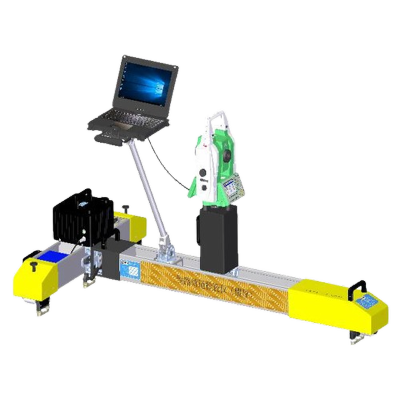
Recording instruments capture geometry continuously along the track — a track inspection trolley rather than a gauge bar. Our own GNSS-augmented trolley, for example, holds ±0.30 mm gauge accuracy at 4–5 km/h, which is a different order of resolution from a bar read by eye. Recording instruments change the decision from "is this spot defective" to "how long is the defective length", and those are different repair jobs.
Specialist instruments answer a single question that no general tool can: internal rail flaws, frog wear, rail head cross-section. An ultrasonic flaw detector finds defects that no amount of surface gauging will show, and a profile gauge shows the rail head shape that a gauge bar cannot.
The rule that ties them together: the instrument's error budget must be smaller than the tolerance being verified. A gauge that reads to ±1 mm against a tolerance band of a few millimetres consumes most of the band before the track has done anything wrong. The classification of these instruments and what each class is permitted to certify is set out in our guide to rail gauge and how track geometry is measured correctly, and the wear-specific instruments are covered in measuring rail wear and when to grind or replace.
What Power Replaced, and What It Did Not
The mechanisation of track maintenance replaced force, not judgement. That distinction is the most useful filter when deciding what a gang still needs to carry.
| Task | Hand tool | Power replacement | Where power wins |
|---|---|---|---|
| Driving spikes | Spike maul | Pneumatic or hydraulic spiker | New timber, high spike count per mile |
| Tamping | Tamping bar or pick | Tamping machine, portable or production | Long lengths, repeat cycles |
| Bolting | Track wrench | Impact wrench | Joint and fastening work at volume |
| Lifting | Track jack | Hydraulic lifting and lining machine | Continuous lift and lining over distance |
| Lining | Lining bar | Lifting and lining machine | Alignment over a length, not a spot |
| Cutting rail | Hacksaw, abrasive saw | Lithium rail saw | Any cut that has to hold a square face |
| Drilling rail | Hand drill | Lithium rail drill | Joint and bonding holes |
| Grinding | Hand stone | Profile grinder, rail grinder | Corrugation, profile restoration |
| Measuring | Gauge bar | Recording trolley | Length of defect, trend over time |
The bottom row is the one that did not resolve in power's favour in the same way. A recording trolley measures more, faster and more consistently, but a point gauge is still what a patrol carries, and it is still what the inspector uses to confirm a suspect spot. Power changed the sample rate; it did not remove the need to read.
What power did remove is the multi-man force operation. The historical section gang of ten to twenty men, working a few miles a week with bars, mauls and picks, was displaced by machines that do the same work with a crew of two or three and a set of instruments. The tools that survived are the ones that establish facts and the ones that work in the twenty metres a machine cannot reach — around a crossing, a switch, a bridge joint, or an insulated joint that has to come out.
Where power loses is not where the machine is too slow but where the possession is too short or the location too constrained. A single insulated joint, a crossing with traffic on the other track, a bridge with no access for a tamping machine, or a switch that a production tamper cannot line — these are the situations where the hand list is the whole plan, not the backup plan. On heavy haul and mining railways the same logic runs at the other end of the scale: the tonnage justifies production grinding, and the tools that survive are the inspection instruments and the hand tools for the locations the machine cannot enter, which is the pattern described in our guide to mining rail grinding.
The joint case is a good illustration. A hydraulic insulated joint separator is a small hand-portable tool, and there is no economic machine alternative for pulling one joint. Our own rail maintenance tools include that class of tool alongside the power equipment, for exactly this reason.
Three Railroad Track Maintenance Tool Kits for Three Kinds of Work
The single most useful way to organise a tool list is by the job the gang is actually going to do, because the carry weight and the vehicle requirement differ completely.
| Kit | For | Core contents | Constraint |
|---|---|---|---|
| Patrol kit | Daily inspection, on foot or hi-rail | Track gauge, cross level, wear gauge, tape, marker, record forms, flagging equipment | One person, carried all day |
| Section kit | Routine correction, spot work | Patrol kit plus lining bar, heel bar, claw bar, track jack, track wrench, tamping bar, shovel and fork | Trailer or truck bed, two to four people |
| Project kit | Renewal, joint work, grinding campaign | Section kit plus rail saw, rail drill, rail tongs, rollers, torque wrench, profile gauge, flaw detector | Dedicated vehicle, planned consumables |
The patrol kit is where most programs under-invest. It is also where a contractor's competence becomes visible: the same expectation of a qualified, documented inspection applies whether the gang is employed by the owner or by a contractor, and the qualification route is described in our guide to selecting a railroad construction company. It is the only kit that produces the record on which everything else is scheduled, and it is carried by the least supervised person in the organisation. A patrol kit without a calibrated gauge and a legible record form is a cost, not an investment.
Lithium Platforms and the Weight Budget
Battery tools have changed the arithmetic of the section kit, and the change is not mainly about output. It is about what one person can carry and start without a second man, a fuel can or a generator.
A lithium rail saw, a lithium rail drill and a battery tamping pick all remove the fuel logistics that used to define the vehicle. They also move the real constraint to two new places: batteries per shift, and the availability of the consumable — blades, bits, grinding wheels.
That second constraint is the one that catches programs out. A saw with no blade and a grinder with the wrong wheel are both dead weight, which is why the consumable specification belongs in the tool list rather than in the purchasing system. On the grinding side, the wheel has to match the machine and the duty: a production grinding train, a switch and crossing grinder and a hand-held machine take different wheels, and the specification work behind that is described in our rail grinding wheel range and in what rail grinding actually involves.
A cut is also a specification, not just a cut. The face has to be square enough for the joint or weld that follows, which is why the saw choice belongs to the replacement plan rather than the tool list — the workflow is set out in our guide to track replacement within a blockade window using a lithium rail saw and thermite welding.
Buying Railroad Track Maintenance Tools: Seven Checks
Most railroad track maintenance tools procurement fails on the second and fifth of these checks, not on price.
One — forged or cast. Bars, mauls and picks that see impact load should be forged. Cast heads and cast eyes fail without warning, and the failure mode is a detached head at swing speed.
Two — the handle is the tool. A maul with a poor handle is a poor maul, whatever the head costs. Ash, hickory and fibreglass all work; a handle that cannot be replaced with a standard eye size does not. Buy the handle supply, not just the heads.
Three — insulation where the traction current is. Any work on or near electrified track needs insulated bars, shovels, forks and picks. The specification is set by the traction system in use, not by the tool catalogue.
Four — calibration for anything that measures. Gauges, levels, wear gauges and torque wrenches need a calibration route and a record. An uncalibrated gauge is worse than no gauge, because its output is trusted.
Five — weight per person, not per tool. A kit is carried by people. Total carry weight, and the heaviest single item, decide whether the kit goes out or stays in the vehicle. A 25 lb claw bar and a 15 lb tamping bar are each reasonable; both plus a jack plus a saw is a two-person load before anything is fixed.
Six — consumables availability. Blades, bits, wheels, clips and pads decide whether the tool works next month. Check that the consumable is stocked locally and that the specification is written down, not remembered.
Seven — the standard the tool is measured against. Any tool used to demonstrate compliance should be traceable to the requirement it verifies: the class of track, the tolerance, and the clause. A tool list that names tools without naming the tolerance they serve cannot be audited, and cannot be defended.
How to Build a Railroad Track Maintenance Tool List for Your Territory
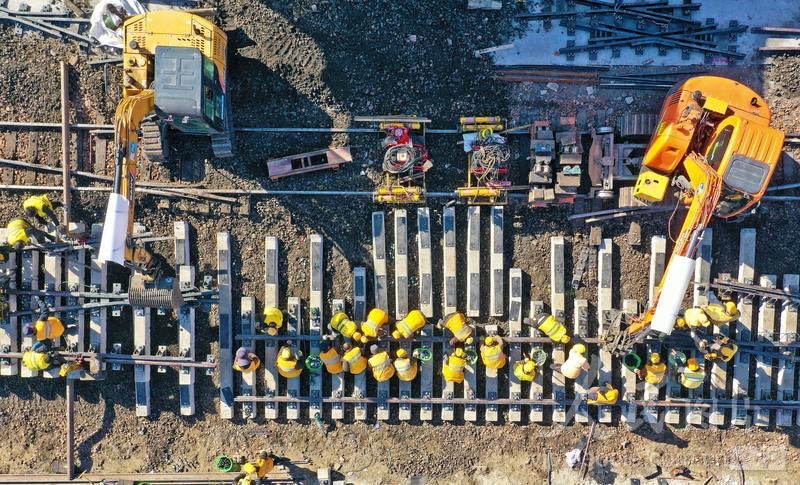
A railroad track maintenance tools list copied from another railway is a list for another railway. Building your own takes six steps, and they run in a fixed order because each one constrains the next.
Step one — write down the class you claim. Not the design speed, not the aspiration: the class the track actually meets on its worst day. A territory with two miles of Class 4 main and twelve miles of Class 2 yard track has two tool specifications, and pretending otherwise either over-equips the yard or under-equips the main.
Step two — convert the class into tolerances. Gauge, crosslevel and profile limits, from the rule book in force. This produces three or four numbers that every measuring tool must be able to resolve.
Step three — set the instrument error budget. The instrument's error must be a small fraction of the tolerance it verifies. If the permitted deviation is 1¼ in of crosslevel, a level that reads to a quarter inch is at the edge; if the permitted deviation is 3 in, the same level is comfortable. This is the step that decides whether the territory buys mechanical or electronic instruments, and it is the step most often skipped.
Step four — read your own defect history. The tool list should follow the defects the territory actually produces, not the defects in the textbook. A territory with timber ties on a wet formation spends its money on spike mauls, claw bars and ballast tools; a territory with elastic fastenings on concrete ties spends it on clip applicators, impact wrenches and pad scrapers. A heavy haul line spends it on wear gauges and grinding consumables.
Step five — set the carry weight and the kit boundary. List the tools by kit, weigh each kit, and check that the patrol kit can be carried by one person for a full shift. If it cannot, the kit will be left in the vehicle and the inspection record will be produced from memory.
Step six — write the consumable specification next to the tool. Blades, bits, wheels, clips and pads. A tool list without its consumables is a list that stops working at the first resupply.
The output of those six steps is not a purchasing order. It is a document that a supervisor can defend: this tool, because this tolerance, because this class, because this defect history. That is also the document an auditor or an insurer will ask for after an incident, and it is far easier to produce before the incident than after it.
Tool Care and Inspection: The Part Nobody Budgets
Every item on the list is a safety item, and the ones that hurt people are not the ones that look dangerous. A maul head that has been reground to remove metal flow may hide a crack; a fibreglass handle with a deep score fails at the worst point of the swing; a lining bar with a chipped end slips out of the ballast under load. The routine check is short and it belongs on the same sheet as the tool list.
Check the striking tools for a loose head, a split eye or a cracked handle before every shift, and replace rather than repair handles. Check bars for straightness, for a worn or mushroomed striking end, and for insulation damage where insulation is required. Check jacks for hydraulic leaks and for a functioning relief valve — a jack that holds a load it should not hold is more dangerous than one that fails. Check measuring tools against their calibration date before they leave the store, not after the record has been written.
Keep the record. A tool that is inspected has an inspection date; a tool that is not inspected has an assumption. Programs that keep the record find that the same two or three items account for most replacements, which turns a vague consumables budget into a forecast.
Matching the Tool to the Defect
The practical test of a tool list is whether a gang can go from a reported condition to a corrected one without coming back for equipment.
| Condition | Measure with | Correct with | Power option |
|---|---|---|---|
| Gauge wide or tight | Track gauge | Lining bar, gauge tie replacement | Lifting and lining machine |
| Crosslevel out | Track level, cant plate | Track jack plus tamping | Tamping machine |
| Alignment out | Track gauge, recording trolley, string line | Lining bar | Lifting and lining machine |
| Surface dip or hump | Track level, recording trolley | Track jack, ballast, tamping | Tamping machine |
| Loose or fouled ballast | Visual, ballast probe | Ballast fork, shovel, crib work | Ballast regulator, undercutter |
| Loose or missing fastening | Torque wrench, visual | Track wrench, impact wrench, clip applicator | Impact wrench |
| Worn rail head or profile | Rail wear gauge, profile gauge | Profile grinder | Rail grinder |
| Internal rail defect | Ultrasonic flaw detector | Rail replacement | Rail saw, rail drill, joint tools |
| Insulated joint failure | Visual, electrical test | Joint separator, joint kit | None — hand tool only |
| Frog or crossing wear | Frog wear gauge, profile gauge | Frog grinding | Switch and crossing grinder |
Two rows in that table carry most of the risk. The internal defect row is the one where a tool absence becomes a derailment risk, and the frog row is the one where the wrong tool produces a correct-looking but wrong profile — the geometry of turnout and crossing work is covered in our turnout grinding solution.
Where RailwayCare Fits
We make and supply the instruments and the small power equipment on this list, not the track itself. The measuring side includes a digital track gauge, portable rail profile gauge, frog wear gauge and portable ultrasonic flaw detector, together with track geometry trolleys; they are listed on our rail inspection tools page, and the inspection scope behind them is set out in our rail inspection solution.
The working side includes hydraulic lifting and lining machines, internal combustion and battery tamping picks, lithium rail drills, a lithium rail saw, a hydraulic insulated joint separator, and portable profile grinders — all on our rail maintenance tools page. The grinding wheels that go with the grinding machines are specified by machine platform, rail section and duty.
Our grinding wheels hold an EN 12413:2019 conformity certificate issued by UDEM. We also run grinding training for track teams and work through project cooperation where a program needs more than supply. More about us, and the wider maintenance scope is on our rail maintenance solution page.
If you are building or re-equipping a track gang and want the list matched to your class of track, your rail sections and your traction system, send the details and we will specify against them.
WhatsApp: +86 15072332788 Email: simon.wang@railwaycare.com
Frequently Asked Questions
What tools does a track gang need for routine inspection?
A patrol kit: a track gauge, a cross level, a rail wear gauge, a measuring tape, a marker, record forms and flagging equipment. Add a torque wrench where fastenings are being checked and a portable flaw detector where internal defects are on the inspection cycle. The kit has to be light enough for one person to carry all day, because the person carrying it is the one producing the record the rest of the programme depends on.
How much does a spike maul weigh, and why that range?
Typically 8–12 lb (3.6–5.4 kg), with a handle of 30–36 in and a head over 12 in long. Below about 8 lb the head cannot seat a cut spike in three blows; above about 12 lb the swing cannot be sustained across a shift. The long head lets the user drive spikes on the far side of the rail without striking the rail with the handle.
Can hand tools still hold a Class 4 track?
For measurement, yes — and they must, because the inspection record starts with a hand instrument. For correction at volume, no: 60 mph freight and 80 mph passenger limits on Class 4 mean the crosslevel tolerance is 1¼ in, and holding that over distance needs a tamping machine and a lifting and lining machine. The realistic answer is that hand tools hold the geometry in place between machine cycles and cover the places a machine cannot reach.
What is the difference between a track jack and a rail lifter?
In practice the terms overlap. A track jack lifts the track structure vertically at a point, usually to insert ballast or a cant plate before tamping. A rail lifter in the strict sense lifts a rail, and the same hydraulic machine is often described as a lifting and lining machine when it does both. What matters for procurement is the rated capacity at the point of lift and whether the machine can line as well as lift.
Which measuring tools need calibration?
Every instrument whose reading is used to demonstrate compliance: track gauges, cross levels, wear gauges, profile gauges, torque wrenches and flaw detectors. Each needs a defined calibration interval and a record. The rule is simple — if the number goes into the file, the instrument that produced it needs a calibration certificate.
Where should you buy railroad track maintenance tools?
Buy against the tolerance and the duty, not against the catalogue photograph. Three things make a supplier usable: the measuring instruments arrive with a calibration certificate and a stated calibration route, the power tools are specified for the rail section and the machine platform you actually run, and the consumables — blades, bits, wheels, clips — are stocked with the tool rather than after it. Ask for the specification in writing, and check that the tolerance the tool serves is named in it.
Are insulated tools required on electrified track?
Yes. Any bar, shovel, fork, pick or wrench used on or near electrified track should be insulated to the standard set by the traction system in force, and the insulation should be inspected as part of the tool's routine check. On third rail and overhead systems the requirement applies to tools that could bridge to the running rail, not only to tools that are lifted toward the conductor.