Rail Track Inspection Equipment MRO Services: Market Scope and Partner Selection
A track geometry trolley that reads 0.3 mm out of calibration is worse than no trolley at all. It produces numbers, those numbers go into an acceptance decision, and the decision is wrong in a way nobody questions because the instrument looked fine and the certificate was in date.
Direct answer
Rail track inspection equipment MRO covers four workstreams, not three: maintenance, repair, overhaul and calibration. The calibration workstream is what separates it from general plant maintenance, because an instrument that reads correctly but is out of tolerance produces numbers that cannot be defended.
That is the specific failure that equipment MRO exists to prevent. Not the dramatic breakdown — the quiet drift. And it is why MRO for rail inspection equipment is a different purchase from maintenance of any other track plant.
What Does MRO Mean in Rail Track Inspection?
MRO stands for maintenance, repair and overhaul, and in most industries the term implies the reactive half: something broke, fix it. Applied to inspection equipment it has to mean something wider, because the value of these tools is not that they work but that they measure correctly.
Four workstreams sit inside a defensible MRO scope, and a contract that covers only one of them is not an MRO contract:
| Workstream | What it covers | What fails if it is left out |
|---|---|---|
| Maintenance | Scheduled checks, firmware and software updates, battery and seal replacement, mechanical adjustment | The instrument drifts out of tolerance long before it fails outright |
| Repair | Fault diagnosis, module replacement, board-level repair, mechanical rebuild | Turnaround measured in months, because the only route is return to factory |
| Overhaul | Full strip-down, wear-part replacement, re-verification against specification | A tool that works but no longer meets its original accuracy class |
| Calibration | Comparison against a traceable reference, with a stated measurement uncertainty | Numbers that look precise and cannot be defended in a dispute |
The fourth workstream is the one that distinguishes this category from general plant maintenance. A tamper that is out of adjustment produces a visibly poor result. A gauge that is out of calibration produces a correct-looking number, and the error is discovered months later when the track fails a geometry inspection that the same gauge said was fine.
Rail Track Inspection Equipment MRO Services Market Explained
There is a definitional problem in this market that costs buyers money: the phrase "rail track inspection equipment MRO services" is routinely read as track inspection services. They are different purchases with different suppliers and different price bases.
Track inspection is a service performed on the track. It produces a report about the railway. Equipment MRO is a service performed on the instrument. It produces an instrument that is fit to inspect. One is bought per kilometre surveyed; the other per asset per year.
This matters in procurement because the two are bought by different budget holders, and when they are conflated the MRO scope gets written into a survey contract, where it is invisible and unpriced. The buyer then discovers at year three that nothing in the contract obliges anyone to calibrate the equipment.
Equipment MRO vs Railway Maintenance & Overhaul Services
The wider category is railway maintenance and overhaul services, which covers the maintenance of the railway system itself — track, signalling, rolling stock, and the plant that works on them. Equipment MRO for inspection tools is a narrow subset of that.
| Dimension | Railway maintenance & overhaul services | Rail track inspection equipment MRO |
|---|---|---|
| Object of the service | The railway asset — track, structures, vehicles | The measuring instrument |
| Buyer | Infrastructure manager, operator | The same, but through the engineering or quality function |
| Priced per | Track kilometre, possession, works package | Instrument, contract year, or intervention |
| Contract shape | Framework or works contract | Service agreement with SLA and calibration clause |
| Evidence of completion | Accepted works, measured to a standard | Calibration certificate with stated uncertainty, plus a repair record |
| Failure mode if absent | Degraded track condition | Wrong numbers, accepted as correct |
The distinction is not pedantry. A railway maintenance contract priced per kilometre has no line item that can carry a calibration obligation, so the obligation either disappears or gets absorbed into overhead and stops being managed.
Scope of Rail Maintenance Services for Inspection Equipment
What should actually be inside the scope depends on the instrument class. The categories below are the ones that behave differently enough in service to need separate treatment.
| Instrument class | Typical items | Calibration interval driver | Spares risk |
|---|---|---|---|
| Portable hand gauges | Rail wear gauges, gauge rulers, fishbolt and gap gauges | Handling damage and mechanical wear more than time | Low — mostly mechanical, often repairable locally |
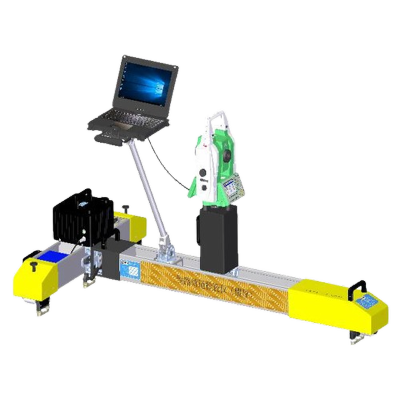
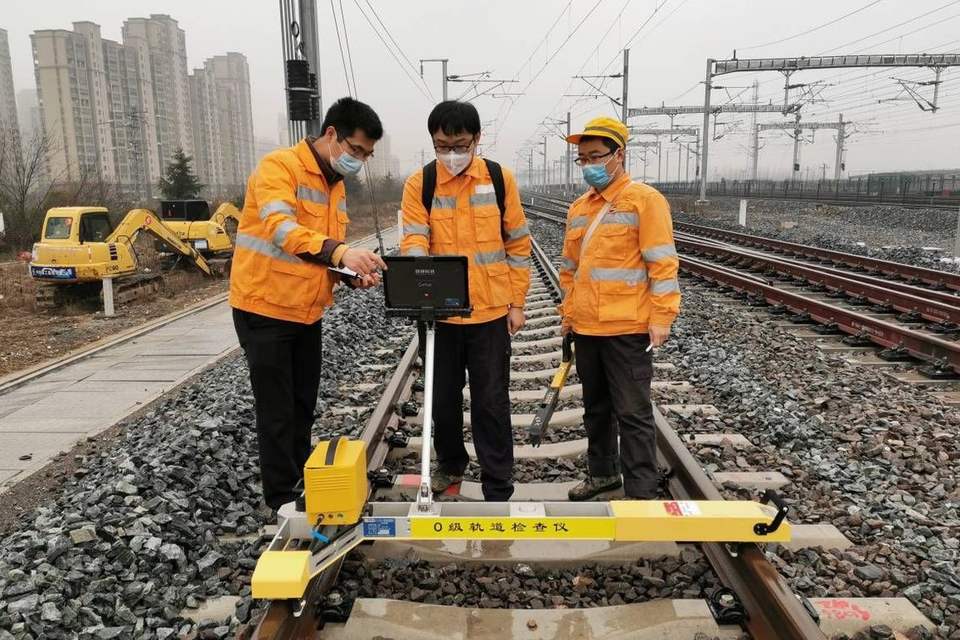
| Track geometry trolleys | Versine and alignment trolleys, superelevation and gauge recording | Drift in the transducer and encoder chain; software updates | High — custom boards and encoders with short production lives |
| Ultrasonic and eddy-current flaw detection | Probe sets, test blocks, flaw detectors | Reference block integrity — the block is the calibration | Medium — probes consumable, main unit long-lived |
| Profile and corrugation measurement | Laser profile devices, corrugation recorders | Optical alignment and reference artefact condition | High — optical modules and firmware are the obsolescence exposure |
| Laboratory and workshop equipment | Hardness testers, friction and wear machines, universal testers, balances | Scheduled intervals set by the standard or the accreditation scope | Medium — commercial instruments, widely supported |
The right-hand column is the one buyers underestimate. In rail inspection equipment, the mechanical parts rarely cause a write-off. The electronic and optical modules do, because their production lives are measured in years while the instrument's service life is measured in decades — the point the next section comes back to.
Calibration, Repair and Spare Parts Workstreams
The three workstreams interact, and the interaction is where cost surprises appear. A repair that replaces a sensor without re-calibrating afterwards returns an instrument that is mechanically sound and metrologically unknown. A calibration performed on an instrument with a failing encoder produces a certificate that is valid for a device already out of specification. Spare parts determine whether either can be done at all.
Calibration. The reference standard is ISO/IEC 17025:2017, which sets out requirements for the competence of testing and calibration laboratories. Two of its provisions decide whether a certificate is worth anything in a commercial dispute. The first is metrological traceability: every result must be linked through an unbroken, documented chain of calibrations to a national or international standard. The second is that measurement uncertainty must be determined and stated for each calibration — a certificate reporting a number without an uncertainty budget does not tell the buyer how much of the tolerance has already been consumed.
There is also a scope question that catches buyers out. A laboratory is accredited for the specific parameters, ranges and methods listed on its scope of accreditation, not for calibration in general. A lab accredited for torque wrenches is not thereby accredited for rail profile gauges. Checking the scope, rather than the certificate, is the only way to know the calibration is covered.
On intervals, the standard is deliberately not prescriptive. It expects intervals to be justified from manufacturer recommendations, drift history, frequency of use and criticality, rather than applying one fixed annual cycle to every instrument. That has a procurement consequence: a supplier who quotes "annual calibration, all instruments" is offering a schedule, not an interval derived from your equipment's behaviour.
Repair. The measure that matters is mean waiting time — the average time for a spare part to be made available to repair an item, which is zero if the part is held in stock, and approaches the repair turnaround time if it is not. IEC 60300-3-14, whose second edition was published in October 2024, defines both terms and treats them as supportability attributes rather than as repair-shop metrics. The same standard notes that the replacement rate, not the failure rate, should drive spare parts quantification, because it captures no-fault-found replacements and secondary failures that a failure-rate model ignores.
Spare parts. This is where the fifteen-year instrument and the five-year module collide. IEC 62402:2019 sets out requirements for obsolescence management across the whole life cycle, and its second edition was written as a standard with requirements rather than as guidance. It distinguishes reactive from proactive strategy: reactive means buying remaining stock or qualifying an alternative when a discontinuation notice arrives; proactive means standard components, multiple sources, stockholding agreements and planned modernisation before the shortage exists.
For a buyer, the practical consequence is that the spare parts clause and the calibration clause have to be negotiated together. A supplier who commits to a ten-year calibration service but cannot name a source for the encoder inside the device has committed to something it cannot deliver in year seven.
How to Evaluate Railway Maintenance Companies
Who Should Run the MRO: OEM, Third Party or In-House
Three supply models exist, and they are usually compared on price per intervention, which is the one dimension where the answer is predetermined. Compared on what actually differs — who holds the knowledge, who holds the parts, and who carries the compliance risk — the choice narrows considerably.
| Dimension | OEM MRO | Third-party MRO | In-house |
|---|---|---|---|
| Access to proprietary diagnostics | Full, including firmware and internal service bulletins | Usually limited to what the OEM releases | None beyond what the OEM publishes |
| Spare parts | Original parts, but subject to the OEM's own obsolescence cycle | Alternative and equivalent parts, faster for legacy items | Whatever is stocked locally |
| Calibration | Often bundled, but check that the scope covers the parameter | Subcontracted to an accredited lab — verify which one | Requires own accreditation to be defensible |
| Turnaround | Governed by the OEM's queue, which you do not control | Usually shorter, and negotiable per instrument class | Fastest for adjustments, slowest for module failure |
| Compliance risk | OEM carries the conformity position for its own work | Buyer must verify the lab's scope and traceability | Buyer carries it entirely |
| Data | Tends to sit in the OEM's system | Depends on the provider | Stays with the buyer |
| Best fit | Instruments still in production with firmware dependencies | Legacy fleets, mixed-manufacturer fleets, cost-sensitive high-volume work | Large fleets with dedicated metrology staff |
The mixed model is common in practice and worth writing down explicitly. Many operators keep adjustment and first-line checks in-house because they are quick and do not need accreditation, send module-level failures to a third party because the OEM queue is too long, and keep the OEM for anything that touches firmware or the conformity position. That split is defensible — but only if the contract states which workstream sits where, because the failure mode is an instrument that falls between three suppliers, each assuming another is calibrating it.
Supplier evaluation in this category tends to be run as a general vendor assessment, which measures the wrong things. Company age and turnover do not predict whether a rail profile gauge will come back within tolerance and within the window. These do.
| Criterion | Question to ask | Evidence that satisfies it |
|---|---|---|
| Calibration scope | Show the accreditation scope, including the parameters and ranges | A scope document that names the measurement type and range, not just a certificate |
| Traceability | Which national metrology institute terminates the chain, and through which accredited lab | A traceability diagram or the reference standard's own calibration certificate |
| Uncertainty | What is the measurement uncertainty at the tolerance limit we care about | A stated figure, comparable with the tolerance being verified |
| Turnaround | Median and worst-case turnaround, per instrument class, over the last two years | A record, not a target; ask for the distribution, not the average |
| Spares coverage | Which modules are held in stock, at which location, and what the support term is | Location and stock figure, plus a written support period |
| Obsolescence process | Show an obsolescence management plan for the instrument's critical modules | A plan naming the modules, their status and the planned action per module |
| Field support | The radius within which on-site attendance is offered, and the attendance commitment | A distance and a time, not "we support globally" |
| Data handling | Where measurement records are stored, who owns them, and what happens to them at contract end | A written data clause; this is the most commonly missing item |
The data row is the one that gets skipped and matters most. Modern inspection instruments produce measurement records, and those records become the basis of acceptance decisions, warranty claims and asset history. If the MRO supplier hosts that data, the buyer needs to know who owns it, where it sits and how it comes back at the end of the agreement. A calibration contract that quietly acquires the buyer's measurement history is a commercial risk that shows up years later.
Service Level Agreements for Rail Track Inspection Equipment MRO
An SLA written for IT or for general plant maintenance does not translate. The service being bought is not uptime of a machine; it is the availability of a trustworthy measurement capability. The difference changes which metrics belong in the document.
| Metric | Definition | Why it is in the SLA |
|---|---|---|
| Turnaround time | Calendar days from receipt to return, by instrument class | The number that decides whether the tool is available for the next possession |
| Mean waiting time | Average time for a spare part to become available | Distinguishes a slow workshop from a missing part — the two need different remedies |
| First-time fix rate | Proportion of repairs completed without a second intervention | Exposes a diagnosis-first, replace-second workshop |
| Calibration pass rate | Proportion of instruments returned within tolerance on first calibration | A low rate signals handling or wear problems upstream, not workshop failure |
| Out-of-tolerance rate | Proportion of instruments found out of tolerance at calibration | The leading indicator of a calibration interval that is too long |
| Availability | Proportion of the fleet fit for use on any given day | The only metric the track engineer cares about |
| Certificate completeness | Proportion of returns with uncertainty stated and traceability documented | The metric that decides whether the calibration is defensible |
Two of these are worth arguing about in negotiation. Mean waiting time separates a workshop problem from a supply-chain problem, and a supplier whose SLA only promises turnaround will meet it by holding the instrument longer rather than by holding the part. Out-of-tolerance rate is the metric that justifies shortening an interval — and therefore the metric a supplier has little commercial incentive to publish.
A workable agreement also fixes the reporting cadence and the consequence. Quarterly reporting of actual against target, with a defined remedy if the target is missed twice, is more useful than a monthly report nobody reads and a penalty clause nobody invokes.
Cost Models: Per-Call, Annual Contract or All-Inclusive
Three commercial shapes are offered, and the arithmetic that separates them is not the headline rate. It is the number of interventions per year that the fleet actually generates, which most buyers do not know until they have kept a service log for a full cycle.
| Shape | How it is priced | What it protects the buyer from | Where it costs more |
|---|---|---|---|
| Per-call | Fixed schedule of rates per instrument class and intervention type | Paying for work that does not happen | Volume — the unit rate carries the supplier's downtime risk |
| Annual contract | Fixed fee per instrument per year, covering a defined intervention count | Budget volatility, and the argument over whether a visit is chargeable | Under-use — a small fleet pays for capacity it does not consume |
| All-inclusive | Fixed fee per instrument, covering unlimited interventions and calibration | Everything, including the unplanned failure | Over-provisioning — you pay for the worst case every year |
The break-even point between per-call and an annual contract sits at the intervention count where the annual fee equals the sum of the rates actually consumed. That number is worth calculating rather than assuming, because it is usually lower than buyers expect when the fleet includes instruments that need adjustment between calibrations.
All-inclusive pricing is worth considering in one specific case: a fleet with a high proportion of legacy instruments where failure frequency is unknown. The premium being paid is effectively an insurance premium against a repair bill that cannot be forecast. Where the fleet is homogeneous and its failure rate is known from two years of records, that premium is usually not worth paying.
Contract Terms That Decide the Outcome
The clauses that generate disputes in equipment MRO are rarely about price. They are about the boundary: what counts as a repair, what counts as fair wear, and who pays when an instrument is found unrepairable.
| Clause | What to write | What it prevents |
|---|---|---|
| Scope boundary | Which instrument classes, which serial numbers, which workstreams | A contract that covers maintenance but silently excludes calibration |
| Calibration clause | Named standard, stated uncertainty, traceability requirement, scope check | A certificate that cannot be defended in a dispute |
| Interval basis | How intervals are set and how they are revised from drift data | An annual default applied to an instrument that drifts faster |
| Turnaround | Median and worst case, measured per class, with the reporting method | An average that hides the instruments that took three months |
| Spares commitment | Named modules, stock location, support term in years | Obsolescence discovered at the point of failure |
| Beyond-economic-repair | The threshold at which an instrument is written off rather than repaired | An open-ended repair bill on a device worth less than the repair |
| Data ownership | Who owns measurement records, where held, what happens at termination | A supplier that keeps the asset history |
| Loan equipment | Whether a replacement instrument is provided during repair, and at what cost | A two-week gap in inspection capability |
| Subcontracting | Which activities may be subcontracted and whether the buyer must approve | Calibration subcontracted to a lab outside the required scope |
| Exit | Return of instruments, records and software licences, and the notice period | A contract that cannot be left without losing the measurement history |
Two of these deserve to be negotiated hardest. Beyond-economic-repair is the clause that converts an open repair budget into a bounded one, and it is far easier to agree before the first unrepairable instrument arrives. Loan equipment is the clause that decides whether the SLA is about instrument availability or only about workshop performance; without it, a compliant supplier can meet every turnaround target while the buyer has nothing to measure with.
Where RailwayCare Fits
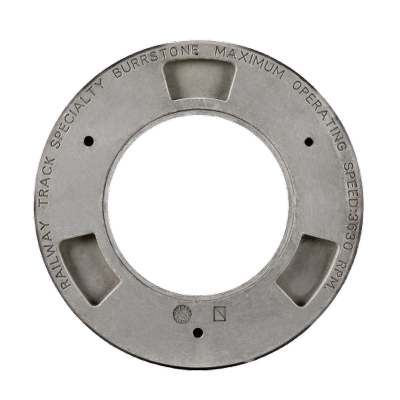
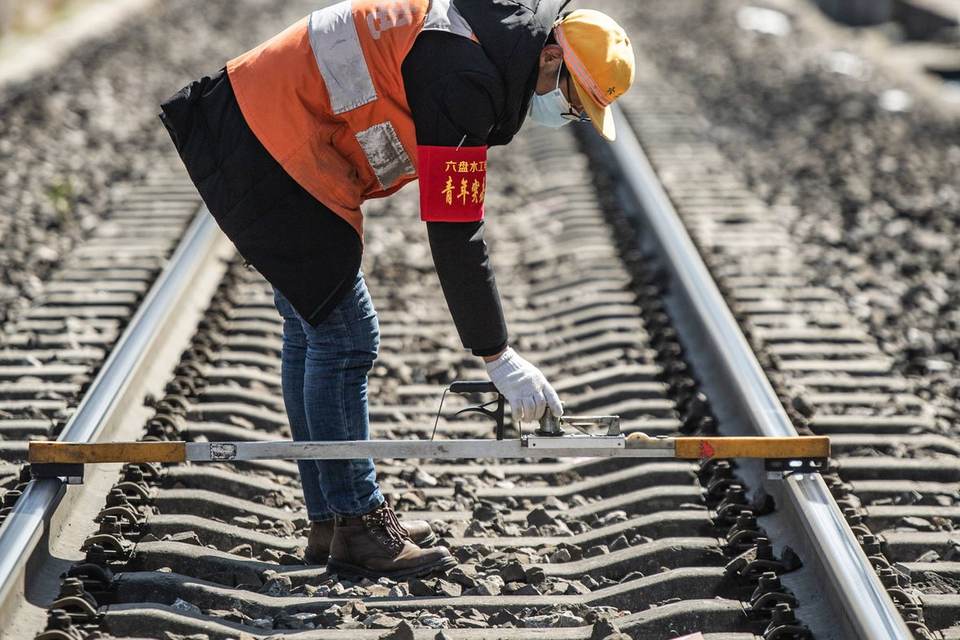
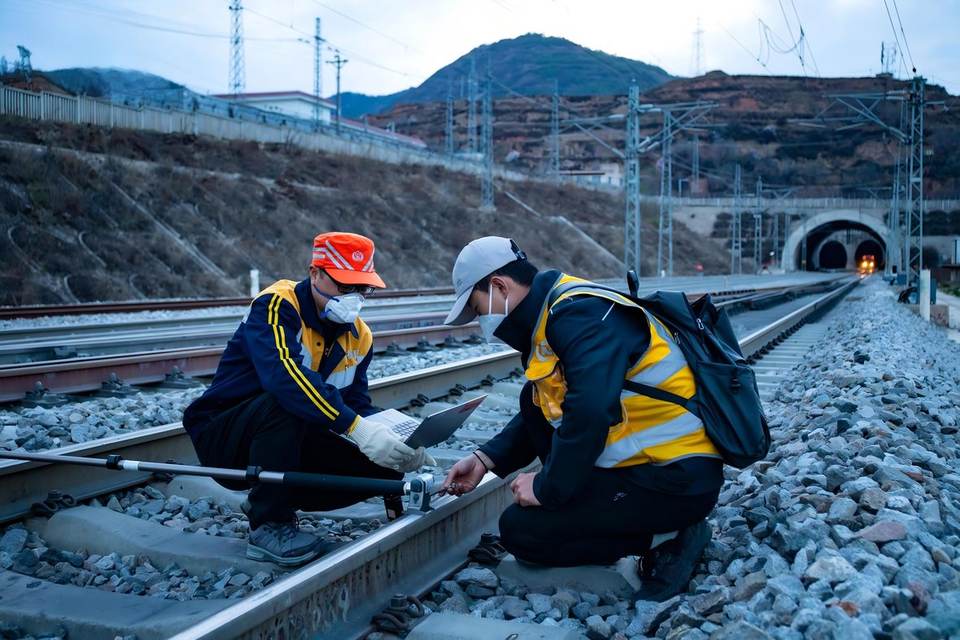
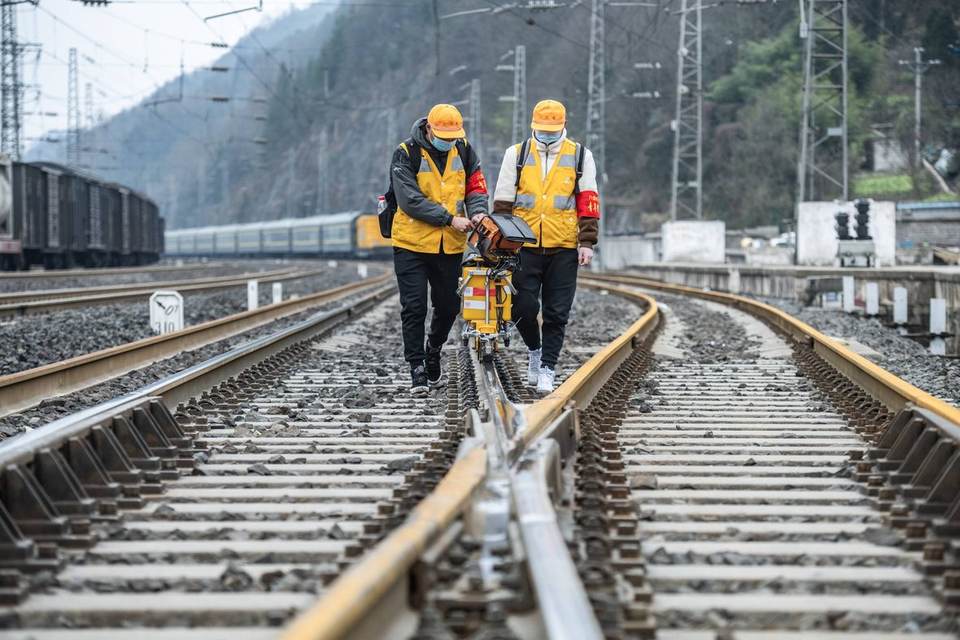
We supply rail inspection and measurement tools, track maintenance tools and rail grinding wheels, and we hold the calibration and test capability that supports them in our own laboratory — the instruments in the photographs above are our own, used for material and dimensional verification rather than for show.
That gives us a specific and limited position in an MRO discussion. We can tell a buyer whether the tools they already own are the right ones for the inspection task, what the consumables and reference items should be, and how the measurement chain should be specified so the acceptance decision holds up. We do not operate a third-party calibration laboratory for instruments we did not supply, and we are not going to present ourselves as one.
The part we can contribute is the boundary problem described above: making sure the instrument, the reference item and the acceptance criterion are specified against the same standard, so that a calibration certificate actually supports the decision it is being used for. The railway inspection tools range and the rail inspection solution overview set out how the measurement side is organised, with rail condition inspection tools and track geometry measurement tools covering the two workstreams that most often sit outside an MRO scope. Where a buyer needs a configuration that is not in the catalogue, project cooperation describes that route.
If you are writing the scope now and the calibration clause is still a placeholder, that is the point at which a conversation is worth having. Send us the instrument list, the tolerances you verify and the acceptance standard you must defend and we will tell you which parts of the scope need to be named explicitly — including, where it is the honest answer, that the instrument you have is not the one the standard requires.
Frequently Asked Questions
What does MRO mean for rail track inspection equipment?
MRO means maintenance, repair and overhaul, but for inspection equipment the scope has to include a fourth workstream that general plant maintenance does not: calibration. Maintenance covers scheduled checks and adjustments, repair covers fault diagnosis and module replacement, overhaul covers strip-down and re-verification, and calibration covers comparison against a traceable reference with a stated measurement uncertainty. A contract that omits calibration buys working instruments, not correct measurements, and the difference is only discovered when a number is challenged.
What is the difference between rail track inspection services and inspection equipment MRO?
Track inspection is a service performed on the track, priced per kilometre surveyed, and it produces a report about the railway. Equipment MRO is a service performed on the instrument, priced per asset per contract period, and it produces an instrument fit to inspect. They are bought by different budget holders and written into different contract types. When the two are conflated, the calibration obligation tends to disappear into a survey contract where it is invisible and unpriced.
How often should rail inspection equipment be calibrated?
There is no single answer, and a standard that gave one would be wrong. ISO/IEC 17025:2017 expects calibration intervals to be justified from manufacturer recommendations, drift history, frequency of use and the criticality of the measurement, rather than a fixed annual cycle applied uniformly. In practice that means starting from the manufacturer's interval and then shortening it if the out-of-tolerance rate at calibration is high. A supplier quoting one interval for every instrument is offering a schedule, not an interval derived from your equipment.
Can a third party calibrate rail inspection equipment?
It can, provided the laboratory's scope of accreditation covers the specific parameter and range, not just the instrument type. ISO/IEC 17025 accreditation is granted for listed parameters, ranges and methods, so a laboratory accredited for one measurement may not be accredited for another. The check is to read the scope document rather than the certificate, and to confirm that the stated measurement uncertainty is smaller than the tolerance being verified — a calibration whose uncertainty is comparable with the tolerance consumes most of the margin before any work is done.
How long should MRO turnaround take?
The honest answer is that it depends on whether the constraint is the workshop or the spare part, which is why the SLA should separate them. IEC 60300-3-14 defines mean waiting time as the average time for a spare part to be made available, which is zero if the part is a stock item and approaches the full repair turnaround time if it is not. A supplier holding the critical modules locally can return an instrument in days; one that has to order the module has a floor set by the supply chain, whatever the workshop promises.
What happens when rail inspection equipment becomes obsolete?
IEC 62402:2019 sets out requirements for obsolescence management across the full life cycle, and treats it as a managed process rather than an event. The distinction that matters commercially is reactive versus proactive: reactive means buying remaining stock or qualifying an alternative once a discontinuation notice arrives, proactive means standard components, multiple sources, stockholding agreements and planned modernisation before the shortage exists. For a buyer, the practical step is to require an obsolescence management plan that names the critical modules and states the planned action for each, at the point of purchase rather than at the point of failure.