Rail Cut-Off Wheel: Selection, Safety and Cut Quality on Rail
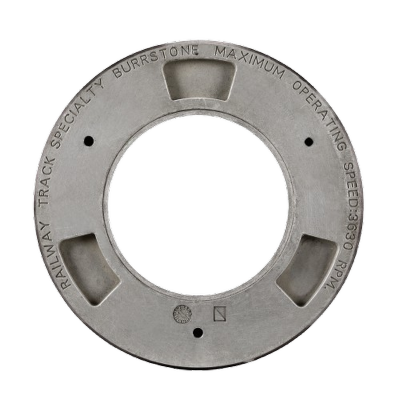
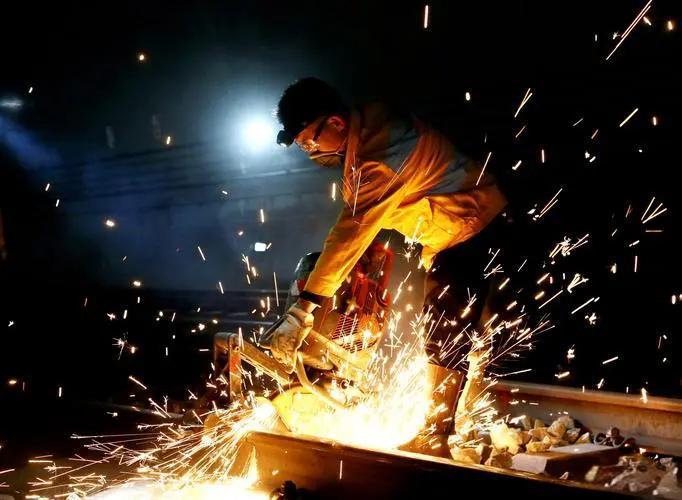
A rail cut-off wheel is the least expensive item on a rail replacement job and the one that decides whether the rest of the job runs smoothly. It is also the abrasive product most often misused on a railway, because it looks like a thin grinding wheel and is treated as one. It is not. A cut-off wheel for rail is a resin-bonded abrasive disc rated around twice the surface speed of any rail grinding wheel, running three to four millimetres thick on a machine whose whole purpose is to sever a 60 kg/m rail section in a couple of minutes. Get the wheel, the speed and the cut face right and the weld that follows behaves predictably. Get them wrong and the weld inherits the error. This guide covers what a rail cut-off wheel is, how it differs from a rail grinding wheel, how to read its specification and match it to a saw, what wet and dry cutting actually change, why cut quality is a welding issue rather than an efficiency issue, and the safety rules that apply when a thin disc is spinning at 100 m/s. In one sentence: a rail cut-off wheel is specified by three numbers and one rating — diameter, thickness and bore, plus the maximum surface speed — and it cannot be interchanged with a rail grinding wheel, because the cutting duty and the grinding duty load the disc in completely different ways. A rail cut-off wheel is a bonded abrasive disc designed to remove a narrow kerf through the full rail section — head, web and foot — in a single plunging cut. It is a consumable, not a machine part, and it is bought in classes rather than singly. On a railway it is used for four jobs: cutting out a defective rail length before replacement, trimming a new rail to length on site, cutting a rail during emergency recovery after a derailment or a break, and cutting scrap rail into transportable lengths. The distinction that matters at the point of purchase is that a cut-off wheel is not a small version of a rail grinding wheel and not a substitute for one. The two abrasives serve different operations carried out by different machines, and the standards, speeds and handling rules that apply to them are correspondingly different. For the grinding side of the same maintenance programme, the consumable families and how they are matched to machines are set out in our guide to what rail grinding is and where each wheel family is used. Rail cut-off wheels are made in diameters large enough to pass through a rail section in one plunge, because a 60 kg/m rail is roughly 176 mm tall and the disc has to clear both the rail foot and the machine's clamping arrangement. The Molaton cut-off range covers four sizes: Every size is resin-bonded. That is not a cost decision — it is a functional one, and the reasoning is the same one that keeps vitrified bond off rail grinding trains: a resin bond is elastic, so a thin disc can flex slightly instead of shattering when it meets a rail web that is not perfectly square to the saw, or a foot that is still under load from the fastening. On a river of steel under a 30-tonne axle load, that elasticity is the difference between a disc that finishes the cut and one that comes apart. This is the single most consequential thing to understand about the product, and it is the reason a cut-off wheel has its own rating, its own grit range and its own place in a consumable store. A grinding wheel removes material from the rail head with the face or the periphery of a thick body. The load is a combination of radial grinding force and modest side load, and the wheel is supported by a thick section that resists bending. A cut-off wheel removes material with the rim of a thin disc, cutting a slot. There is no thick section to resist bending, so the disc sees bending stress, thermal stress and centrifugal load all at the same time, concentrated in a body 3 to 4 mm thick. The differences that follow from that are not marginal: Two of these deserve explaining, because they look like inconsistencies. Why the cut-off wheel runs at 100 m/s when the grinding wheel runs at 50. A thin disc removes steel in a very narrow band, and the amount of material it can clear per second depends on how fast the abrasive grains pass through the cut. A thick wheel can afford to run slowly because it has a large contact area and a deep layer of grain behind it. A 3.6 mm disc has neither, so the surface speed is raised to keep the cut efficient. The higher rating is not a bonus — it is what the product needs to work at all, and it is the reason a cut-off wheel must never be mounted on a spindle governed by grinding-wheel logic. Why the abrasive is finer, not coarser. F30 brown alumina is a finer grain than the F16 zirconia alumina used on production grinding trains. Cutting does not require a high removal rate; it requires a clean, straight, narrow kerf and a disc that survives to the end of the cut. A coarser grain on a thin body would cut faster and wear the disc out before it finished, and would leave a rougher cut face. The finer grain trades cutting rate for kerf quality and disc life, which is the correct trade on this product. The practical conclusion is stated plainly in our own specification data: cutting wheels are a different duty from grinding wheels, they are thin, they run at higher surface speed, and they are not interchangeable with grinding wheels on the same arbor. Mixing the two — mounting a cut-off wheel on a machine whose spindle is set for a grinding wheel, or vice versa — is how a workshop creates an overspeed condition without anyone intending to. If you are selecting the grinding consumable rather than the cutting one, the cost drivers are a separate question and are treated in our analysis of what actually drives rail grinding wheel price. A rail cut-off wheel is specified in seven fields, and only three of them are in the size string. The three numbers. A size such as 305 × 3.6 × 22.2 mm means outside diameter 305 mm, thickness 3.6 mm, bore (centre hole) 22.2 mm. The bore is what actually decides whether the wheel will mount: a 22.2 mm bore will not fit a saw built for a 25.4 mm arbor, and opening it out is not an option — a bore that has been modified can no longer be balanced or safely retained. The relevant limit is always the machine, not the rail. The four fields that decide what the wheel does. These are printed with the size and are not optional: the abrasive, the grit, the bond, and the maximum working speed together with the balance grade. On the Molaton cut-off range they read brown alumina, F30, resin bond with glass-fibre reinforcement, and a working speed of 80–100 m/s. The equivalent explanation for a grinding wheel specification is set out in our note on what numbers like 260x90x154 mm mean, and the logic is the same: the size tells you how it mounts, everything else tells you what it does. The tolerances you are entitled to hold a supplier to. On bonded abrasives of this class, the dimensional and balance limits are what separate a disc that runs true from one that thumps and chatters through the cut: Parallelism and concentricity are the two that matter most on a cut-off wheel and are the two least often asked about. A disc that is 0.4 mm out of parallel does not cut a slot — it cuts a tapered slot, and the taper transfers straight into the rail end face. Concentricity error produces a once-per-revolution impact in the cut, which shows up as a wavy cut face and as a noise the operator usually hears before anyone measures anything. The one hard constraint on a cut-off wheel is the surface speed at the rim, and surface speed is not a fixed number you read off the wheel — it depends on the diameter fitted to the machine and the speed that machine turns. The relationship is: surface speed (m/s) = π × diameter (m) × spindle speed (rpm) ÷ 60 Run in reverse, the rated 100 m/s ceiling gives a maximum spindle speed for each cut-off size: Compare that with the same arithmetic applied to a rail grinding wheel rated 50 m/s, where the ceiling works out at 2,728 rpm on a 350 mm wheel, 3,673 rpm at 260 mm and 7,639 rpm at 125 mm — the arithmetic is set out in our answer to what the maximum operating speed for a rail grinding wheel actually is. A cut-off wheel of 305 mm is permitted roughly 1.7 times the spindle speed of a 350 mm grinding wheel while being a tenth of its thickness. That comparison, more than any other, is why the two are kept apart in the workshop. Two consequences follow from the fact that surface speed depends on diameter. A cut-off wheel slows down as it wears. Diameter falls, so at constant spindle speed the rim speed falls with it. A 400 mm disc worn down to 340 mm no longer runs at 100 m/s — it runs at about 85 m/s at the same rpm, and the operator feels that as a loss of cutting rate. The instinctive response is to lean on the machine. That is the wrong response, and it is the mechanism behind a large share of cut-off wheel failures: the disc is not cutting because it is too small for the machine's speed, and pushing harder loads a thin body that has less and less material left to absorb bending stress. The correct responses are to replace the disc at the wear limit and, where the machine is capable of it, to run the correct diameter for the speed available. Diameter is chosen by machine capability, not by ambition. Fitting the largest disc that will physically go on a saw, on the assumption that a bigger disc cuts deeper, is unsafe if the saw's spindle speed was set for a smaller one. The machine's rated speed and its guard are designed around a maximum wheel diameter; a disc larger than that runs above its rating the moment the machine is started. Whether a rail is cut wet or dry changes the disc life, the cut face and the working environment, and on most railways it is decided by what water you can get to the site rather than by preference. Dry cutting is the default for portable rail saws and for most emergency work. It needs no water supply, no containment and no freezing protection, and a battery machine can be carried anywhere. The costs are disc life and airborne dust: a dry cut runs hotter, the bond wears faster, and the fine steel and abrasive debris goes into the air rather than into a slurry. Wet cutting cools the contact zone and the disc, suppresses dust and generally produces a cleaner cut face with less discolouration. It requires a water supply or a pressurised tank, it produces a slurry that has to be contained, and in a cold climate it introduces a freezing risk on the rail and on the machine. Where the cut is being made for a weld and the end face has to be prepared to a tolerance, the cooler cut is worth the logistics. Dust control is not a detail on a railway. Cutting and grinding dust in a tunnel or an enclosed station is a respiratory hazard, a visibility problem and, on some networks, a compliance issue in its own right. The controls that work in a night possession — extraction, dust suppression, and a plan for where the debris ends up — are the same ones that apply to grinding in these environments, and they are set out in our guide to grinding metro and light rail track where the window is short and the tunnel is closed. Cut quality is usually discussed as if it were a finish issue. On a railway it is a process issue, because the cut face becomes one side of a welded joint or a mechanical joint, and whatever the cut face is out of tolerance becomes an error the welder has to absorb. Four characteristics of a cut matter downstream: Squareness. The cut face should be perpendicular to the rail axis. A disc that is worn unevenly, is out of parallel, or is being fed at an angle produces a raked face. On the rail that shows up as a joint whose gap is wider at the head than at the foot, or the reverse. The welder then has to work to a gap that is not uniform, and the resulting joint is more likely to need additional grinding to bring it back to profile. The relationship between cut face perpendicularity and the rest of the sequence is exactly what our case study on cutting and welding rail inside one blockade window documents — the saw's all-steel construction exists to hold the cut face perpendicular, because everything after it depends on that. Burns and burrs. A dull or glazed disc pushes metal rather than cutting it, and displaced steel has to go somewhere. It ends up as a burr on the exit side and as work-hardened material around the kerf. For a welded joint that hardened layer has to be removed before the weld is made, which is another operation in a possession window that is already tight. Discolouration and the heat-affected layer. A cut that has been allowed to run hot leaves a blue or straw-coloured band on the cut face. That colour is an oxide layer over steel whose microstructure has been altered by the heat, and it is not a surface that a weld should be made against without removal. It is also a diagnostic: a face that has blued tells you the cutting parameters are wrong — too much pressure, too little speed, a worn disc, or a disc of the wrong specification for the rail. Cracks in the rail end. On rail that is already at the end of its fatigue life, cutting forces can propagate existing defects at the end face. This is one of the reasons a rail cut is followed by inspection of the exposed end rather than by an immediate weld. Cut quality is also, in the end, a work-sequencing question. The cut does not stand alone; it sits at the front of a chain that runs cut → end preparation → weld → grind → inspect. How the later stages of that chain are controlled, and what a finished joint has to meet, is set out in our guide to the complete rail welding and grinding workflow. A cheap cut-off wheel that saves a few cents and costs the programme an hour of extra preparation inside a possession is not a saving. A cut-off wheel is the abrasive product with the highest consequence of failure, because it is thin, it runs faster than any other bonded abrasive on a railway, and it is frequently used by hand or on a semi-portable machine. A 400 mm disc that comes apart at 4,775 rpm releases fragments with more than enough energy to injure anyone in the arc of the wheel. The industry controls this with four lines of defence, and all four have to hold. Design margin. A disc rated at 100 m/s must survive 1.5 times that speed for 30 seconds without bursting. This is a proof requirement, not a design aspiration: it is verified by test on the finished product, under GB/T 2493, and it is the reason a bonded abrasive can be used at a rated speed at all. Individual proof testing. Every wheel that leaves a plant producing to this class should carry an individual rotation test record. On the Molaton line every wheel is inspected piece by piece — appearance, mated surfaces, dimensions, static balance and rotation strength — before it leaves the plant. The framework for what that protection is meant to achieve on a rail wheel, and how the four lines of defence fit together, is set out in our explanation of how cracks in a rail grinding wheel are prevented rather than detected after failure. The machine guard, and the speed it was designed for. A cut-off wheel guard is a speed-rated component. It is designed around a maximum disc diameter and a maximum surface speed, and it is not a universal guard. Fitting a larger disc than the guard was designed for, or running a machine above its rated speed, defeats the guard at the same moment it defeats the disc. Handling and mounting discipline. A thin disc is far more vulnerable to physical abuse than a 90 mm-thick grinding wheel. It must not be dropped, it must not be carried with the rim bearing load, it must not be stored on a damp floor or in a stack where a wheel above rests on a wheel below, and it must be checked before every mounting. On any bonded abrasive that check includes a visual inspection of the face, the bore, the glass-fibre wrap and the mounting surfaces, and a ring test on wheels of the relevant class — a wheel that has been wet, frozen or struck should not be put into service on the strength of having been new. Beyond the wheel itself, three rules are absolute: never apply side load to a cut-off wheel, never use it as a grinding wheel, and never mount a wheel with a bore, thickness or diameter that does not match the machine's specification. Each of those three errors removes one of the defences above, and each of them is common enough in field practice that they are worth stating in the pre-shift briefing. The useful life question for a rail cut-off wheel is not how many cuts a disc makes in a workshop test. It is how many cuts it makes on your rail, with your operators, on your machines. The variables that actually move cut-off wheel life are, in rough order of influence: The right way to buy is to convert all of that into cost per cut rather than price per disc: disc price divided by the number of cuts achieved, plus the cost of changing the disc, plus the cost of any extra work the cut face forces downstream. A disc that is 20 per cent cheaper and delivers 30 per cent fewer cuts is more expensive at the point where it matters, and on a possession window the labour and access cost of a disc change usually dwarfs the difference in the disc price itself. The same logic applied to the grinding side of the budget is worked through in our note on what operators actually pay per kilometre of rail grinding. Nearly every cut-off wheel failure on a railway traces back to one of a short list of errors, and most of them are procedural rather than a defect in the product. Using the cut-off wheel to grind. A cut-off wheel is not built to take side load. Holding it against the rail and moving it sideways destroys the disc's structure in a way that inspection cannot detect until it fails. If the job is to remove material from a surface, it needs a grinding wheel on a grinding machine. Running a disc above its diameter or speed rating. Normally the result of fitting the largest disc that will physically mount, or of a machine whose spindle speed has been altered. The published speed on the disc label is the limit for that disc, not a target to be approached. Continuing to cut with a disc worn past its usable diameter. The cut slows down, the operator compensates with force, and the disc — thinner than it has ever been and running below its efficient speed — is now taking bending load it was not designed for. Skipping the pre-mount check. A ring test and a visual inspection take under a minute. Omitting them after the wheel has been transported, stored over winter or dropped is the most avoidable cause of a catastrophic failure in the list. Cutting a rail that is not properly restrained. A rail that moves or springs as the cut approaches the web loads the disc sideways and can trap it. Clamping the rail and relieving load before the final pass is not optional. Working the disc continuously without a break. A dry cut that runs from start to finish without letting the disc cool runs the bond hotter than it was designed for and shortens life on every subsequent cut, not just the one that was rushed. Assuming the rail end is acceptable because the cut looks straight. The face is what the weld will be made against. It should be measured or checked against a square, not judged by eye, before the sequence moves on. If you are buying cutting or grinding services rather than consumables, the same discipline applies in reverse: the questions to ask, the evidence to demand and the warning signs to act on are set out in our guide to how to evaluate and select rail grinding companies, and the commercial basis on which quotations are structured is covered in our note on getting a rail grinding quote that can actually be compared. A cut-off wheel is a low-value, high-consequence item, which makes it exactly the kind of purchase where buyers accept less evidence than they should. Six things are reasonable to ask of any supplier, and each is checkable. The standard the product was made and tested to, named specifically. Not "international quality standards" — the actual designation, and for bonded abrasives on rail that means the product standard for rail wheels together with the dimensional and balance standards. A supplier that cannot name them is not working to them. Rotation strength and balance evidence at the batch level. The 1.5 × rated speed proof and the balance class are the two safety-critical characteristics of a thin disc. Ask what is measured per individual wheel and what is measured per batch, and ask to see a record. Dimensional conformance, including parallelism and concentricity. These are the tolerances that determine whether the disc cuts a square slot or a tapered one, and they are rarely quoted on a price sheet. Ask for the figures. Confirm the match to your machine, not to the rail. The correct question to put to a supplier is not "do you have a cut-off wheel for 60 kg/m rail" but "what disc do you supply for this saw, at this spindle speed, with this bore and mounting". The rail sets the diameter you need; the machine sets everything else. Traceability from the cut back to the wheel. Batch or lot identification allows a poor cut to be linked to a specific production run rather than discussed in generalities. On safety-critical consumables, traceability is the mechanism by which a defect gets contained rather than repeated. A straight answer about what the product is not for. A supplier worth buying from will tell you that its cut-off wheel must not be used for grinding, must not be mounted outside its speed rating and is not interchangeable with its grinding wheels. If the answer to a technical question is always yes, the specification is being written by the sales conversation rather than by the engineering. RailwayCare manufactures bonded abrasives for rail in its own plant and has done so since 2004. We drafted the Chinese industry standard for rail grinding wheels, JB/T 11431, and every wheel we make is inspected piece by piece — appearance, mated surfaces, dimensions, static balance and rotation strength — before it leaves the plant. Our rail grinding wheels are covered by a third-party attestation of conformity to EN 12413:2019, the European safety standard for bonded abrasive products, issued by the notified body UDEM under certificate number M.2026.206.C147949. Our cut-off wheels sit in the same manufacturing discipline, in the sizes that portables and larger abrasive rail saws actually take: 305 × 3.6 × 22.2 mm, 356 × 4 × 25.4 mm, 400 × 4 × 32 mm and 180 × 3 × 22.2 mm, all resin-bonded brown alumina at F30 with a working speed of 80–100 m/s. They are one of four families we build alongside grinding-train wheels, turnout and switch wheels and portable-machine wheels — the full range, its sizing logic and the machine each family belongs to are set out in our answer to what the RailwayCare and Molaton rail wheel range covers. Alongside the abrasives we supply the machines the consumables run on, including the RCS-L50 lithium-powered rail saw and the TWS thermite welding system, and the measurement instruments that prove the finished geometry — the range is on our rail maintenance equipment page, and the abrasives themselves are on our rail grinding wheel page. What that means in practice is that we can do the matching work rather than hand you a catalogue. Tell us the saw, its spindle speed and its bore, the rail section and steel grade, and whether you are cutting wet or dry, and we will specify the disc and the cutting parameters against that. If your requirement is a grinding wheel rather than a cutting wheel, say so and we will point you at the right family instead of selling you the one we have in stock. For distributors, agents and OEM enquiries outside China, supply runs through our global partnership network, with project-based work handled through project cooperation and the wider service offering described on our rail maintenance solution page. Our manufacturing and qualification background is on our about us page. WhatsApp: +86 15072332788 Email: simon.wang@railwaycare.com No. A cut-off wheel is designed for a plunging cut with the rim of a thin disc, and it is not built to take side load. Applying it to a surface, or moving it laterally in the cut, loads a 3 to 4 mm body in a way it was never dimensioned for and damages its structure in a manner that inspection will not detect before it fails. Surface removal on rail requires a grinding wheel on a grinding machine — the two are not interchangeable on the same arbor. Because the geometry of the two operations is different. A grinding wheel is 25 to 154 mm thick and removes material across a broad contact area, so a moderate surface speed clears enough steel per second. A cut-off wheel is 3 to 4 mm thick and has to clear a narrow kerf, so the only way to achieve useful cutting rate is to pass the abrasive grains through the cut faster. The higher speed is what makes the product work at all, and it is the reason the two products must never share a spindle setting. Use the surface speed formula in reverse: rpm = surface speed (m/s) × 60 ÷ (π × diameter in metres). A 305 mm disc rated at 100 m/s is therefore limited to about 6,262 rpm, a 356 mm disc to about 5,365 rpm and a 400 mm disc to about 4,775 rpm. The 180 mm disc in the Molaton range carries a 7,000 rpm ceiling on the standard sheet even though the arithmetic would allow more, because that size is limited by the machine class it fits rather than by the disc itself. Always use the machine's own rating if it is lower. Yes, and it is the most common reason an operator starts forcing a cut. Surface speed depends on diameter, so as a disc wears its rim speed falls at constant spindle speed — a 400 mm disc worn to 340 mm runs at roughly 85 m/s instead of 100 m/s. The cut feels slower, the instinct is to push harder, and a thin body with less material than it started with is then asked to absorb more bending stress. Replace the disc at its wear limit rather than compensating with force. Wet cutting cools the contact zone and the disc, suppresses dust and generally produces a cleaner cut face with less discolouration, so it does extend disc life and improve cut quality. The trade is logistics: a water supply or pressurised tank, a contained slurry, and in cold conditions a freezing risk on the rail and the machine. On a portable saw in an emergency cut, dry cutting is usually the practical answer; where the cut is being made for a weld and the face has to meet a tolerance, the cooler cut is worth arranging. Feed force and technique, by a wide margin. A disc run at its rated speed with a controlled feed lasts far longer than the same disc forced through the section to save a few seconds, and forcing also runs the bond hotter and roughens the cut face. After that come running the disc past its usable wear diameter — which drops the rim speed and invites even more force — followed by rail section and steel grade, wet versus dry cutting, machine rigidity and arbor condition, and the storage and handling history of the disc.What a Rail Cut-Off Wheel Actually Is
Size (OD × thickness × bore) Abrasive and grit Maximum surface speed Typical duty 305 × 3.6 × 22.2 mm Brown alumina (ZA/F30), 30 grit 80–100 m/s Standard portable abrasive rail saws 356 × 4 × 25.4 mm Brown alumina (ZA/F30), 30 grit 80–100 m/s Heavier saws and continuous welded rail work 400 × 4 × 32 mm Brown alumina (ZA/F30), 30 grit 80–100 m/s Large-diameter saws, deep or obstructed cuts 180 × 3 × 22.2 mm Brown alumina (ZA/F30), 30 grit 70–100 m/s (7,000 rpm ceiling on the standard sheet) Light machines and confined work Why a Rail Cut-Off Wheel Is Not a Grinding Wheel
Property Rail grinding wheel Rail cut-off wheel Thickness 25–154 mm 3–4 mm Rated surface speed 50 m/s 80–100 m/s Abrasive and grit Zirconia alumina, F16–F20 Brown alumina, F30 Bond Resin, glass-fibre reinforced Resin, glass-fibre reinforced Load on the disc Radial grinding force plus side load Bending, thermal and centrifugal load Interchangeable? No No Reading a Rail Cut-Off Wheel Specification
Characteristic Limit Standard Outside diameter ± 2.0 mm JB/T 7992 Thickness ± 1.5 mm JB/T 7992 Parallelism ≤ 0.4 mm JB/T 7992 Concentricity ≤ 0.5 mm JB/T 7992 Static unbalance k = 0.4; G1 ≤ 30 g, G3 ≤ 34 g GB/T 2492 Rotation strength 1.5 × rated speed held for 30 s without bursting GB/T 2493 Matching the Wheel to the Saw and the Spindle Speed
Wheel diameter Maximum spindle speed at 100 m/s Notes 180 mm 10,610 rpm — but 7,000 rpm on the standard sheet The 180 mm disc is limited by the machine class, not by the disc 305 mm 6,262 rpm Standard portable abrasive rail saws 356 mm 5,365 rpm Heavier saws 400 mm 4,775 rpm Large-diameter machines Wet Cutting, Dry Cutting and Dust on Site
Cut Quality: The Part That Decides the Weld
Safety: Burst Protection, Guards and Handling
Wheel Life and the Real Cost per Cut
The Mistakes That Break Wheels and Ruin Cut Faces
What to Demand from a Cutting Wheel Supplier
Working with RailwayCare as a Rail Abrasives Manufacturer
Can a cutting wheel be used to grind instead of to cut?
Why does a cutting wheel run at 100 m/s when a grinding wheel runs at 50 m/s?
How do I work out the maximum spindle speed for a cut-off wheel?
Does a cut-off wheel get slower as it wears?
Is wet cutting better for cut-off wheel life?
What shortens cutting wheel life most on site?