
Rail Carriage Maintenance Market: Wheelsets and Depots
Ask four research houses what the rail carriage maintenance and repair services market was worth in 2025 and you will get four numbers that differ by more than five times: about 8.8 billion dollars, about 27.9 billion, about 38.5 billion, and about 49.1 billion. None of them is wrong. Each counts a different set of activities, and the difference between the smallest and the largest is not a forecast disagreement but a definition of what maintenance includes.
That matters more than it sounds, because the same confusion runs through procurement. A buyer who budgets from a headline market size learns nothing about whether their own depot can turn a vehicle in four days. A supplier who quotes against "the market" has not yet said which of the four markets they are in.
Direct answer
The number that actually governs a rail carriage programme is not a market size at all. It is capacity: how many stands a depot has, how many hours a stand is genuinely available, and how long the critical path through a wheelset takes. This guide works from the market definitions down to that constraint, because that is the order in which the money is decided.
What Is the Rail Carriage Maintenance and Repair Services Market?

The term covers everything done to a rail vehicle to keep it available, compliant and safe, short of replacing it. In North America the vehicle is usually a railcar, a freight wagon or a passenger coach; in Britain and much of Europe the passenger vehicle is a carriage, and the freight equivalent is a wagon. The vocabulary shifts by country, the work does not.
What the market includes is reasonably settled: scheduled inspections, preventive maintenance, corrective repairs, component overhaul, heavy overhaul and refurbishment or modernisation. What it excludes is where definitions diverge, and the usual dividing lines are locomotive heavy maintenance, track and infrastructure work, signalling, and the manufacture of new vehicles.
The practical consequence is that any figure quoted without a scope is unusable. A number that includes locomotives will be far larger than one that does not, and a number that counts only third-party spend will be a fraction of one that counts work done in-house by operators.
The Scope Problem: Four Numbers for One Market
The four widely cited estimates for 2025 are worth setting side by side, because the pattern they form is more useful than any single figure.
| Estimate for 2025 | Publisher's scope | CAGR | Horizon | What it most likely counts |
|---|---|---|---|---|
| About 8.77 billion dollars | Railcar maintenance and overhaul services | 3.18% | To 2035, 12.0 billion | A narrow service-market view, weighted to contracted overhaul |
| About 27.90 billion dollars | Rolling stock refurbishment and maintenance | 5.3% | To 2035, 46.8 billion | All rolling stock, including locomotives and metro fleets, with refurbishment as a service line |
| About 38.45 billion dollars | Railcar repair | 5.15% | To 2032, 54.7 billion | Repair activity by railcar type, heavy on freight, including parts |
| About 49.07 billion dollars | Railcar maintenance services | 5.12% | To 2032, 69.6 billion | The widest net: heavy maintenance and overhaul plus routine inspection and preventive work |
Read the CAGR column and something reassuring appears: three of the four cluster at 5.1 to 5.3 percent. The fourth, at 3.18 percent, is the narrowest scope and the slowest, which is what you would expect of a market limited to contracted overhaul rather than all maintenance labour.
Read the segmentation and the structure becomes clearer still. In the widest estimate, heavy maintenance and overhaul took about 40 percent of 2025 revenue and freight wagons about 45 percent. In the rolling-stock view, passenger trains held 38 percent, bogies and running gear 29 percent, and Europe 32 percent of global revenue. Those shares are more dependable than the totals, because they describe how the work divides rather than how big anybody thinks the pool is.
How to Use These Numbers Without Being Misled
Three rules cover most of the risk.
Use the shares, not the totals. A planning assumption that bogies and running gear are roughly three tenths of maintenance spend, or that heavy overhaul is around two fifths, survives the definitional argument in a way that a headline total does not.
Check whether the figure is a service market or an activity market. If in-house work by a national operator is inside the number, the addressable market for an outside supplier is much smaller than the headline.
Check the region. Europe leading at 32 percent and Asia Pacific leading in a different report is not a contradiction: one counts revenue, the other counts growth rate, and the two can point at different regions without either being wrong.
Railcar Maintenance and Overhaul Scope
The work divides into four levels, and almost every commercial disagreement about a maintenance contract is really a disagreement about which level a task sits in.
| Level | Typical content | Interval driver | Who usually does it |
|---|---|---|---|
| Running maintenance | Brake and running-gear checks, defect rectification, cleaning | Service interval and daily examination | Depot, in-house |
| Preventive maintenance | Scheduled inspection, lubrication, adjustment, consumable replacement | Mileage or calendar | Depot, often under contract |
| Component overhaul | Wheelset reprofiling, bogie strip and rebuild, brake valve overhaul | Condition plus fixed interval | Specialist shop, or a dedicated bay |
| Heavy overhaul and refurbishment | Full strip, structural repair, interior and system renewal, life extension | Fleet age and mid-life point | OEM, or a major contractor |
The distinction that carries the most commercial weight is between component overhaul and heavy overhaul. Component overhaul is repeatable, priced per unit, and driven by wear limits. Heavy overhaul is project work, priced per vehicle or per fleet, and driven by a decision to extend life rather than buy new.
The economics behind that distinction are worth stating plainly. A heavy overhaul on a vehicle with half its design life remaining spreads a large cost over years of further service, and it competes directly against a new-build price that is several times higher. That is why refurbishment grows faster than any other service line in the published segmentation: on an ageing fleet, life extension is not a compromise, it is the cheaper option by a wide margin.
What heavy overhaul cannot fix is a vehicle whose structure has reached the end of its fatigue life or whose systems are obsolete beyond the point where parts can be sourced. The decision point between overhaul and replacement is therefore usually a parts-availability question disguised as a financial one.
Demand Drivers: Age, Distance, Regulation and Labour
Demand for rail carriage maintenance is not cyclical in the way freight volume is, because the work is driven by the fleet rather than by the load it carries. But the composition of that work shifts, and four drivers explain almost all of the shift.
| Driver | What it does to demand | What it changes in the composition |
|---|---|---|
| Fleet age | Raises total demand | Moves spend from preventive work to structural repair and component replacement |
| Distance run | Raises wear-driven demand | Shortens wheelset and bogie intervals in proportion |
| Regulatory cycle | Fixes a floor under demand | Makes inspection and brake testing non-deferrable regardless of condition |
| Spares and labour | Limits what can be delivered | Turns a planned overhaul into a queue for a part or a certified trade |
The first two are the ones forecasters model. The third is the one that protects a maintenance business in a downturn. The fourth is the one that ruins a schedule.
Age does not simply add cost; it changes its shape. An old fleet spends proportionally more on structural repair, corrosion, wiring and obsolete electronics, and proportionally less on the routine inspections that dominated its first decade. A workshop organised for routine work will find itself doing project work in bays designed for inspections.
Regulation fixes intervals that condition cannot extend. Brake testing at a statutory interval applies whether the vehicle has run a hundred thousand kilometres or none, and an annual safety inspection applies to every car in service. This is the part of the market that behaves like an annuity, and it is why maintenance revenue holds up when traffic falls.
Spares availability is the least modelled and most binding constraint. A vehicle can be fully resourced in labour and stand space and still wait weeks for a bearing, a valve body or a wiring harness. Fleets with a long service life and a short supplier tail are the ones most exposed, and the standard mitigations — strategic stockholding, donor vehicles, reverse engineering of obsolete parts — each carry a cost that belongs in the overhaul budget rather than in the stores budget where it usually lands.
Wheelset, Bogie and Brake Workstreams
Three workstreams absorb most of the technical effort and almost all of the schedule risk. Their intervals are set by different authorities, which is why a depot plan that treats them as one cycle always overruns.
Wheelsets. Inspection intervals are commonly set between 100,000 and 500,000 km depending on duty and jurisdiction, with non-destructive testing by ultrasonic and magnetic particle methods and profile measurement by laser gauge. Reprofiling restores the tread profile once wear passes a limit, with hollow wear commonly limited around 2.5 mm, and a typical reprofiling interval of the order of 500,000 km on freight duty. The wear limits themselves are worth knowing because they define when a wheelset stops being repairable: on the UIC 510-1 basis, flange thickness falls from about 32.5 mm new to a 22.0 mm minimum, flange height rises from about 28 mm to a 36 mm maximum, the qR dimension must stay above 6.5 mm, and a wheel that starts around 920 mm is scrapped at about 840 mm. A wheelset may see 500,000 to 1,000,000 km before replacement, and bearings are commonly scheduled at 1.2 million km or ten years, whichever comes first.
Bogies. Running gear is the single largest subsystem in the maintenance spend, at roughly 29 percent in the rolling-stock estimate, and it is the one where a strip and rebuild consumes floor space for days rather than hours. Frame inspection, bearing renewal, damper replacement and geometry restoration all want the same bay at the same time.
Brakes. Brake work is governed by test rules rather than by wear, which makes it predictable and easy to under-resource. Under the US framework, a single car air brake test is required when a car is on a repair track and has not had a manual test within twelve months, an automated test within twenty-four months, or a four-pressure test within forty-eight months; no car goes longer than five years, or eight years from build or rebuild, and certain component replacements and wheel defects trigger a test immediately. The acceptance criterion is tight: with a 10 psi brake pipe reduction, brake cylinder leakage over four minutes must stay under 1 psi.
| Workstream | What usually fails | Interval set by | What a rebuild consumes |
|---|---|---|---|
| Wheelset | Tread hollow, flange wear, flats, surface defects | Wear limits plus NDT cycle | Wheel lathe hours, NDT bay, pressing capacity |
| Bogie | Bearings, dampers, frame cracks, bushings | Mileage and condition | Floor space for days, lifting capacity, alignment |
| Brake | Valve leakage, gasket degradation, piston seals | Regulatory test interval | Test bench, calibrated equipment, qualified tester |
Locomotive Maintenance Market vs Railcar Overhaul
The two get bundled in market reports and separated in practice, and the separation is structural rather than cosmetic.
A locomotive fleet is small in unit count and high in value per unit. Maintenance is dominated by the OEM, the diagnostic content is proprietary, and a single unscheduled event can remove a meaningful share of fleet power. A railcar fleet is large in unit count, relatively standardised, and served by a broad network of shops that compete on turnaround.
| Attribute | Locomotive maintenance | Railcar overhaul |
|---|---|---|
| Unit count | Small | Large |
| Value per unit | High | Moderate |
| Technical control | OEM, proprietary diagnostics | Workshop and standards based |
| Competitive structure | Concentrated, often OEM-led | Fragmented, many independent shops |
| Buyer's main lever | Availability and warranty | Turnaround time and unit price |
| Where the constraint sits | Specialist knowledge and spares | Stands, wheelset capacity and parts |
The practical implication for a supplier is that capability does not transfer. A shop that can overhaul a wagon bogie profitably may have nothing to offer on a traction converter, and a company that wins locomotive maintenance on OEM relationships will not automatically win railcar overhauls that are awarded on price and turnaround.
Depot Capacity and Turnaround Time
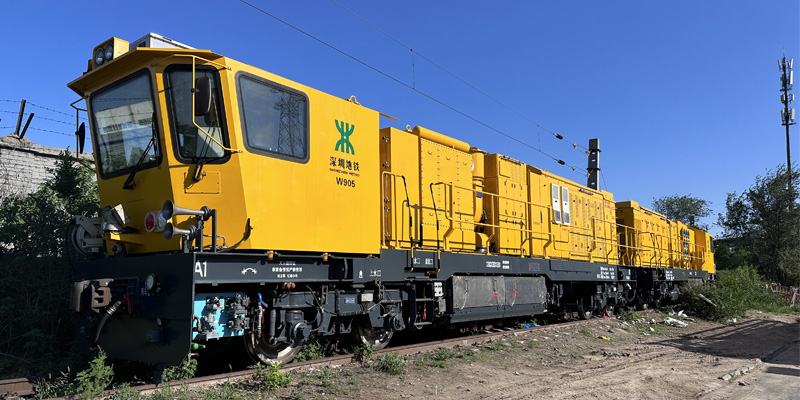
Capacity is the constraint that decides whether a maintenance programme is affordable, and it is usually computed wrongly. The common error is to count stands and stop.
A workable capacity model has four factors. The number of productive stands, after removing bays used for storage or blocked by equipment. The hours a stand is genuinely available, after shifts, breaks and planned outages. The utilisation you can actually sustain, which on a depot with variable arrivals is well below one. And the standard hours a given work package consumes, measured rather than assumed.
Multiply the first three and divide by the fourth and you have a theoretical throughput. It will overstate reality, because it ignores the critical path.
Why Turnaround Is a Critical Path, Not a Sum
A vehicle's time in a depot is set by its longest dependency chain, not by the total labour content. On most overhauls that chain runs through the wheelset: the vehicle cannot leave until its wheelsets are reprofiled and passed, and the wheelset cannot be turned until it is removed, cleaned, inspected and released for machining.
A typical decomposition looks like this, and the shape matters more than the exact days.
| Stage | What happens | What it waits for |
|---|---|---|
| Reception and examination | Defect confirmation, work scope agreed | A stand, and an examiner |
| Strip and clean | Components removed, vehicle cleaned | Lifting and cleaning capacity |
| Wheelset route | Removal, NDT, reprofiling, re-pressing | Wheel lathe and NDT bay availability |
| Bogie and brake route | Strip, inspect, renew, reassemble, test | Parts, test bench |
| Reassembly and test | Refit, brake test, functional checks | All routes complete |
| Release | Documentation, acceptance | Inspector and records |
Two consequences follow. Adding stands without adding wheel lathe capacity moves the queue rather than shortening it. And a programme planned on labour hours rather than on the critical path will commit to a turnaround it cannot hold.
The Utilisation Trap
Depots face a demand profile that is not flat: vehicles arrive in batches after timetable changes, seasonal peaks and incident clusters. A depot sized for the average will fail in the peaks, and a depot sized for the peak will be half empty most of the year.
The usual resolutions are worth naming because each has a cost. Keep a surge bay that is only opened in peaks, which costs capital and sits idle. Contract out the overflow, which costs margin and control. Or smooth arrivals by planning the fleet's maintenance calendar around the timetable rather than around the workshop, which costs planning effort and is almost always the cheapest of the three.
Spares, Logistics and the Parts Constraint
A depot plan that models labour and stands and stops there will miss the constraint that stops most overhauls: parts.
Three kinds of parts behave differently, and confusing them is how a bay ends up blocked. Consumables are predictable and can be stocked against a plan. Repairable components come back from an overhaul shop on a cycle, so the constraint is the float of exchange units in circulation rather than the purchase budget. Long-lead proprietary parts are the dangerous category, because a single item with a twelve-week lead time can hold a vehicle for a quarter regardless of how well the workshop is organised.
The practical controls are unglamorous and effective. Hold a defined float of exchange units for the high-volume repairables, sized to the overhaul rate rather than to the fleet size. Separate the parts kit for a scheduled overhaul from the reactive stores, so an unplanned repair cannot consume the kit for a planned one. And record the lead time of every long-lead item against the vehicles that need it, so the overhaul date is set by the longest lead rather than by the workshop's availability.
Logistics matters most where the depot is not at the fleet. A vehicle that must travel to a workshop loses availability twice, on the way and back, and the journey has to be inside the possession plan. That is one reason operators with dispersed fleets tend to favour mobile or on-site capability for anything that can be done without a wheel lathe.
What Stays In and What Goes Out
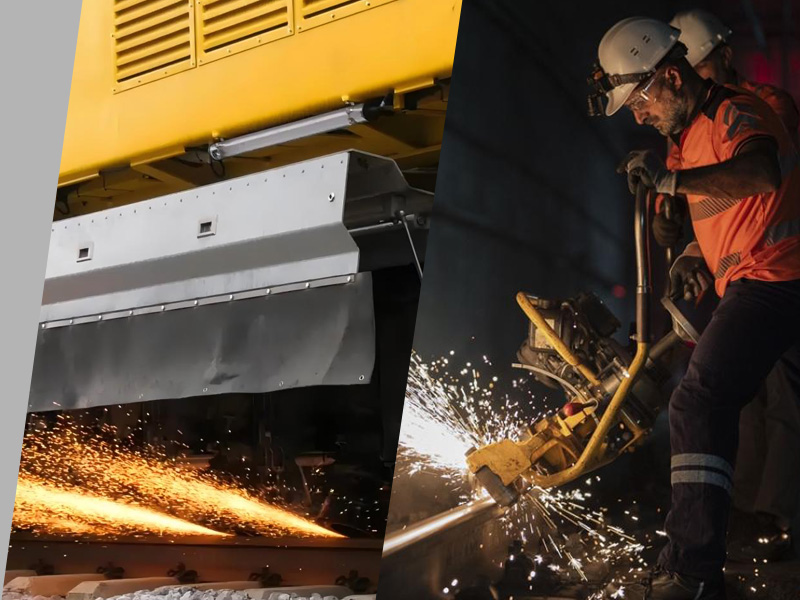
Outsourcing decisions in rail vehicle maintenance are usually argued on cost and should be argued on capability. Two questions settle most cases: does the task need capital equipment that would sit idle, and does it need a certification the operator does not hold?
| Work package | Capital intensity | Certification need | Typical decision |
|---|---|---|---|
| Running and preventive maintenance | Low | Low | In-house |
| Wheelset reprofiling | High, underfloor lathe | NDT personnel and equipment | Outsource, or a dedicated shared wheel shop |
| Wheelset NDT | Moderate | Certified inspectors and procedures | Outsource or accredited in-house |
| Brake valve overhaul | Moderate, test bench | Calibrated bench and qualified tester | Specialist, whether in-house or contracted |
| Bogie strip and rebuild | Moderate, floor space and lifting | Process control | Mixed: in-house with contracted specialisms |
| Heavy overhaul and refurbishment | High, project management | Varies | Competitive tender, often multi-year |
| Interior refurbishment | Low | Low | Competitive tender |
The pattern in the table is that certification, not capital, is what pushes work out of a depot that would otherwise keep it. A wheel lathe is expensive but comprehensible; an NDT capability with certified personnel, written procedures and records that survive an audit is a different kind of undertaking.
The Contract Shape That Follows
If the constraint is the critical path, the contract should be written against it. A per-unit price for wheel reprofiling says nothing about whether the wheelsets come back before the vehicle is due out, and a turnaround commitment without a wheel lathe inside it is a promise about somebody else's capacity.
The clauses that carry weight are the turnaround commitment by work package rather than by vehicle, the definition of what starts the clock, the remedy when the clock is missed, and the evidence package that comes back with each component. Buyers who specify those four get a workable contract; buyers who specify a unit price and a warranty get an argument.
Where Vehicle Maintenance Meets Track Maintenance
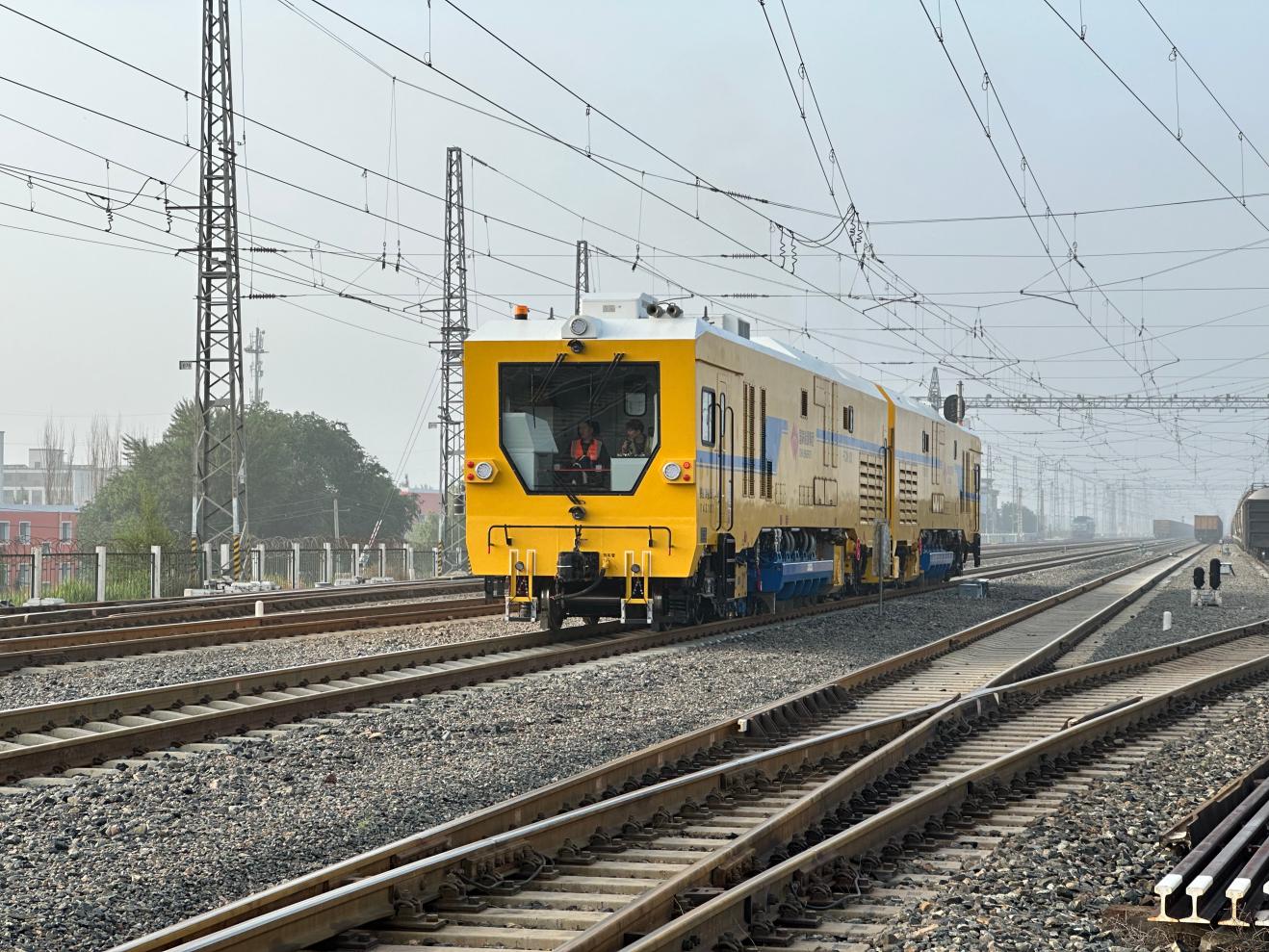
This is the part of the market that gets least attention in market reports and most attention in a maintenance budget, because the vehicle and the track damage each other.
A wheel that is out of profile damages the rail, and a rail that is out of profile damages the wheel. The mechanisms are well understood and expensive. Gauge face wear on the high rail of a curve is driven by flange contact, and in tight curves the flange can form a lip on the rail head that then becomes an impact for every following wheel. A wheel flat, produced by a single heavy braking event, delivers an impact once per revolution into a rail that may have very little resilience to absorb it. Rolling contact fatigue and corrugation both grow from the same interface, and a wheel burn from slip during acceleration becomes a corrugation seed.
The commercial point is that the cheapest intervention is frequently on the other side of the interface. Reprofiling a fleet's wheels to a better profile can slow rail side wear measurably, and grinding a rail back to profile can slow wheel flange wear. Neither shows up in the budget that owns the problem, which is why both get deferred until the damage is structural.
The data point that makes this actionable is correlation rather than any single measurement. If wheel condition records and rail profile records are held by the same organisation and reviewed together, a rise in tread hollow across a fleet can be read against the rail side wear that follows it two to three months later on the curves that fleet works hardest. The organisations that can do that are the ones where a rail intervention gets approved because it is cheaper than the wheel intervention it prevents.
How Providers Are Evaluated
Five criteria separate a provider who can be given a fleet from one who can be given a work package.
| Criterion | What to ask for | What a weak answer looks like |
|---|---|---|
| Approval and certification | Accreditation for the specific work, with the certificate scope | A quality certificate that does not name the process |
| Turnaround evidence | Actual achieved turnarounds by work package, last twelve months | A standard turnaround that is not measured |
| Wheelset and NDT capability | Lathe capacity, NDT personnel certificates, procedure approvals | Subcontracted wheelsets with no visibility of the sub-tier |
| Traceability | Component history by serial number, records retention period | Records held per vehicle, not per component |
| Warranty and remedy | What is covered, for how long, and what happens at the boundary | A warranty that excludes the interface between trades |
Two of those deserve emphasis. Traceability by component rather than by vehicle is what lets a bad batch of bearings be traced across a fleet; a records system organised per vehicle cannot answer the question. And a warranty that excludes the boundary between two trades is where most claims die, because the failure almost always sits at that boundary.
The Questions That Actually Separate Suppliers
Tender documents tend to ask the same twenty questions, most of which every credible supplier answers in the same way. Six questions do more work than the rest.
Ask what their achieved turnaround was last quarter, by work package, and whether that figure includes vehicles that missed their date. A supplier who reports only the average is reporting a number that hides the tail.
Ask who does the wheelsets. If the answer is a named subcontractor, ask for that subcontractor's lathe capacity and NDT approvals, because the wheelset is where the turnaround is decided and it now sits outside the contract you are signing.
Ask how a component is traced. A serial number against a vehicle over a ten-year retention is the answer you want; a vehicle-level file is not.
Ask what happens when a vehicle arrives with a defect outside the agreed scope. The answer tells you whether the supplier has a process or a negotiation.
Ask what their rejection rate is on wheelset NDT, and what they do about it. A supplier with no measurement has no control.
Ask who signs the release. If the same person inspects and releases, the independence that the acceptance criteria assume does not exist.
None of those questions requires technical expertise to ask. All of them require a supplier to have been measuring for years to answer well, which is exactly the filter a buyer wants.
Market Outlook: What Changes by 2028
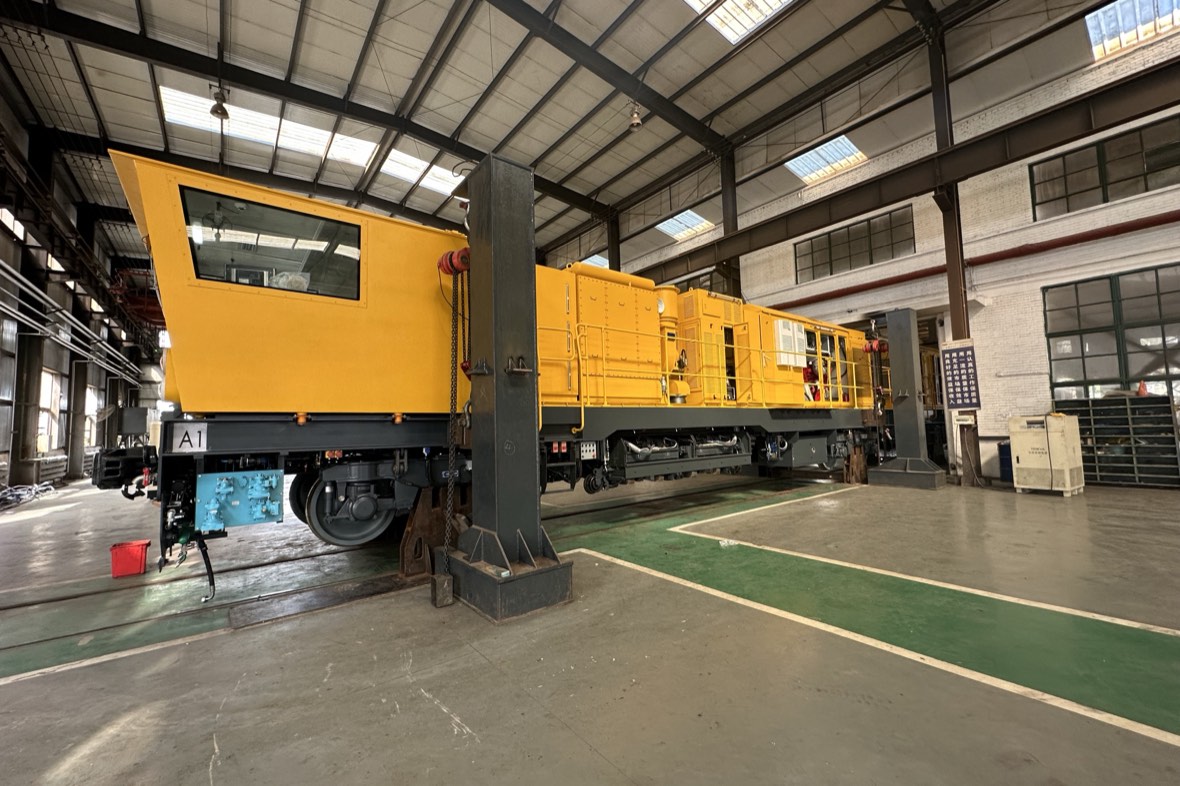
Three trends are visible in the published segmentation and they point in the same direction.
Refurbishment is the fastest-growing service line. Where a new train costs far more capital than a life-extension programme, operators renew bogies, traction equipment and interiors rather than replace vehicles. The rolling-stock estimate puts refurbishment and modernisation at the fastest CAGR through 2035 while passenger trains hold the largest share, which is the signature of fleets being kept rather than replaced.
Fleets are old and getting older. The average North American freight car reached about 26.5 years, against annual safety inspection requirements that apply regardless of age. Ageing fleets do not reduce maintenance demand; they change its composition, from preventive work towards structural repair and component replacement.
Independent providers are growing faster than the incumbents. In the rolling-stock view, independent service providers show the fastest CAGR. That is consistent with operators separating asset ownership from maintenance, and it means the competitive pressure on turnaround and price is going to increase rather than ease.
The counterweight is capacity. Every one of those trends raises the demand for stands, wheel lathes and certified inspectors, and none of them can be delivered by a contract alone.
For a buyer, the practical reading is that the next few years will be a seller's market for capacity and a buyer's market for craft. Welding, fitting, electrical work and interior refurbishment are contestable and will stay competitive. Wheel lathe time, NDT slots and certified brake test benches are not contestable, because they are scarce and cannot be created quickly.
That asymmetry should shape how a maintenance contract is written. Price the contestable work competitively and secure the scarce work on terms that guarantee access, even at a premium. A contract that wins a few percent on the labour rate and has no wheel lathe commitment behind it has bought the wrong thing.
Rail Carriage Maintenance FAQ
What does the rail carriage maintenance and repair services market include?
Scheduled inspections, preventive and corrective maintenance, component overhaul such as wheelsets, bogies and brakes, heavy overhaul, and refurbishment or modernisation. Definitions differ mainly on whether locomotive heavy maintenance, in-house operator work and parts supply are counted, which is why published market sizes vary so widely.
Why do published market sizes for this sector differ so much?
Because they measure different scopes. A narrow view limited to contracted overhaul produces a figure under 9 billion dollars for 2025, while the widest view, covering all railcar maintenance services, produces around 49 billion. The growth rates converge far more than the totals do, which is a useful signal that the underlying demand is real and the disagreement is definitional.
How often do wheelsets need reprofiling?
It depends on duty load, but a reprofiling interval of the order of 500,000 km is typical on freight duty, with inspection intervals between 100,000 and 500,000 km. The trigger is wear rather than distance: hollow wear beyond about 2.5 mm, flange thickness approaching the minimum, or flange height approaching the maximum will force the work earlier.
What limits a depot's throughput?
Usually the wheelset, not the stand count. A vehicle cannot be released until its wheelsets are reprofiled and accepted, so wheel lathe capacity and NDT bay availability set the real turnaround. Adding stands without adding wheelset capacity moves the queue rather than shortening it.
Which maintenance work should be outsourced?
Work that needs capital equipment which would sit idle, or a certification the operator does not hold. Wheelset reprofiling and NDT are the classic examples, because a wheel lathe is expensive and an accredited NDT capability is a standing commitment. Running maintenance and most preventive work stays in-house on almost every network.
Why does vehicle maintenance affect rail maintenance budgets?
Because the wheel and the rail damage each other. A wheel out of profile accelerates rail side wear and can form a flange lip on the rail head; a rail out of profile accelerates wheel flange wear; and a wheel flat delivers an impact into the rail once per revolution. The cheapest fix is often on the other side of the interface, which is why the two budgets should be reviewed together.
Bringing Wheelsets and Rails Into One Programme
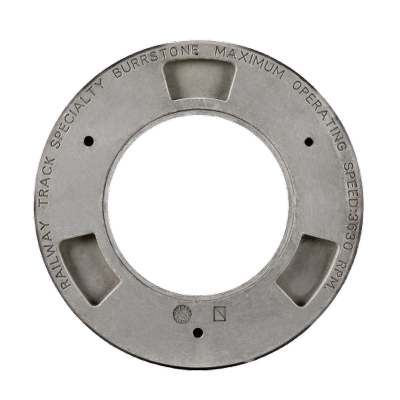
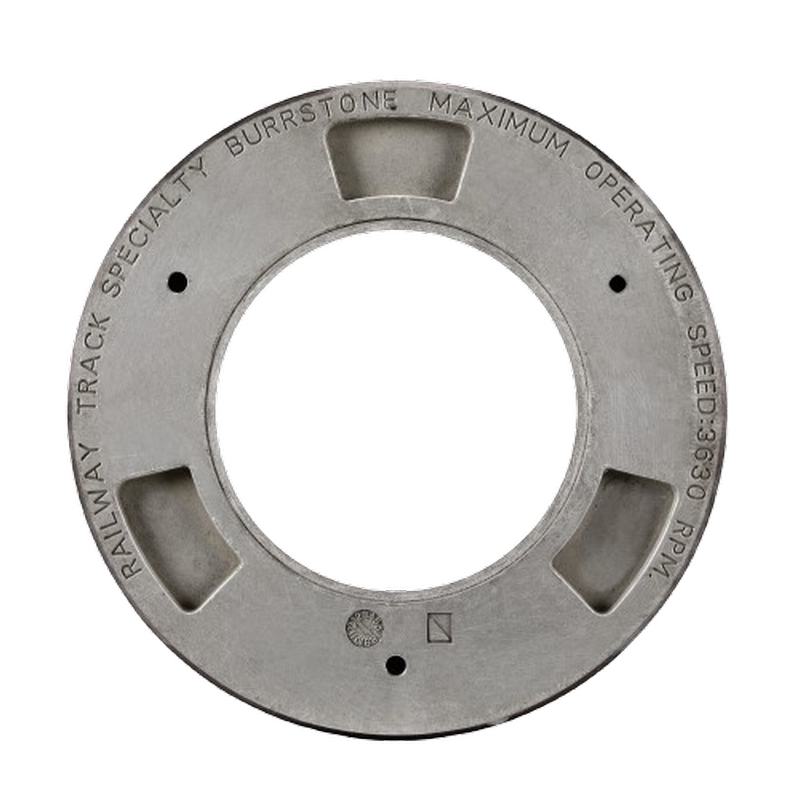
Most operators manage the vehicle and the track in separate budgets, and the interface between them is where avoidable cost accumulates. Our work sits on the track side of that interface: grinding and maintenance equipment for the rail, and the abrasives that decide whether a reprofiled rail holds its shape.
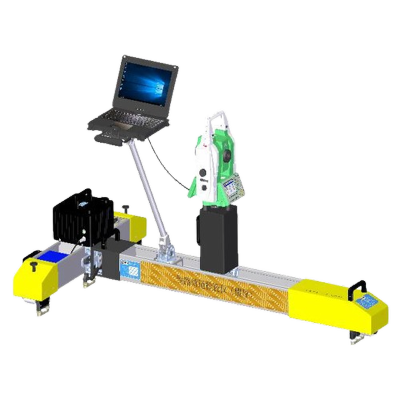
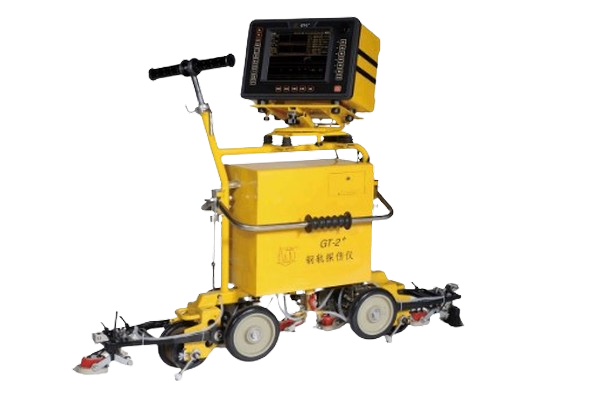
The rail maintenance solution page sets out how inspection, grinding and repair fit into one cycle, and the railway maintenance tools range carries the instruments a wheel-rail interface programme depends on. Where a project needs the whole sequence rather than a single product, our global partnership network and project cooperation routes are the places to start, and a rail maintenance project case shows how that has worked in practice.
If the question is where to begin, begin with the measurement: the same discipline described in our guide to rail wear measurement applies to the vehicle side of the interface, and the guide to railway maintenance vehicles and hi-rail trucks covers the mobile plant that keeps both sides of the interface in service away from a depot.