
Rail Welding: Thermite vs Flash Butt Welding for Rail Joints
Every network that has moved past fishplated track has made this choice twice: once as policy, and again at every single joint. Flash butt welding produces the better joint. Thermite welding produces a joint almost anywhere. Nearly every real decision between them is about access and rail length, not about which weld is stronger.
That is worth stating plainly, because most comparisons start with strength and stop there. Both processes clear the strength bar when they are done properly. What separates them is what the machine needs in order to work, what happens to the rail when it does, and how the joint behaves after a hundred million tonnes.
Direct answer
The rail welding thermite vs flash butt question resolves into five constraints: whether the rail can be moved, whether the machine can reach the joint, how many joints there are, how long the possession is, and what traffic will run over it. Work through those five and the method usually picks itself. This guide works through them in that order.
The Short Answer: What Each Process Is Built For
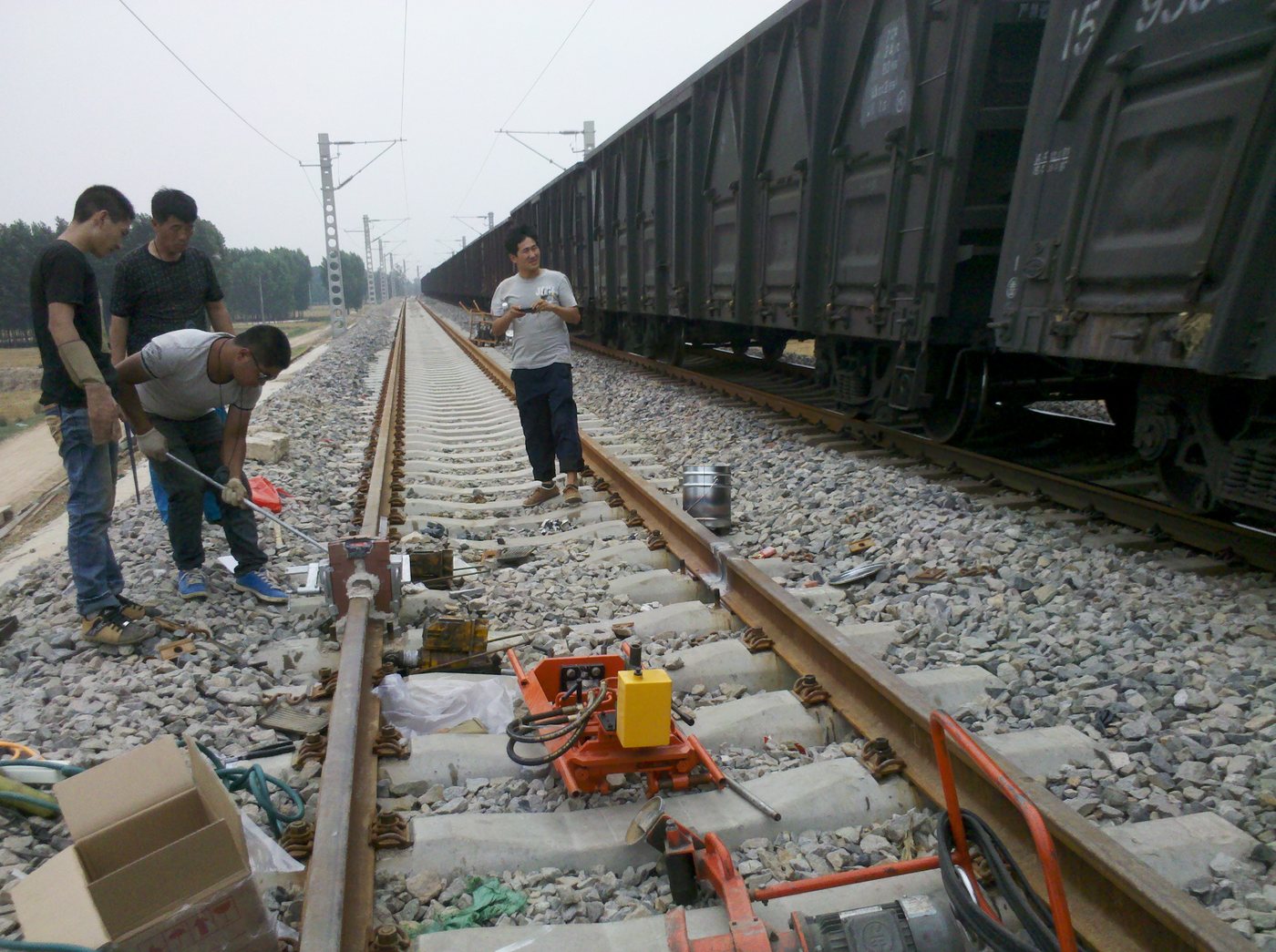
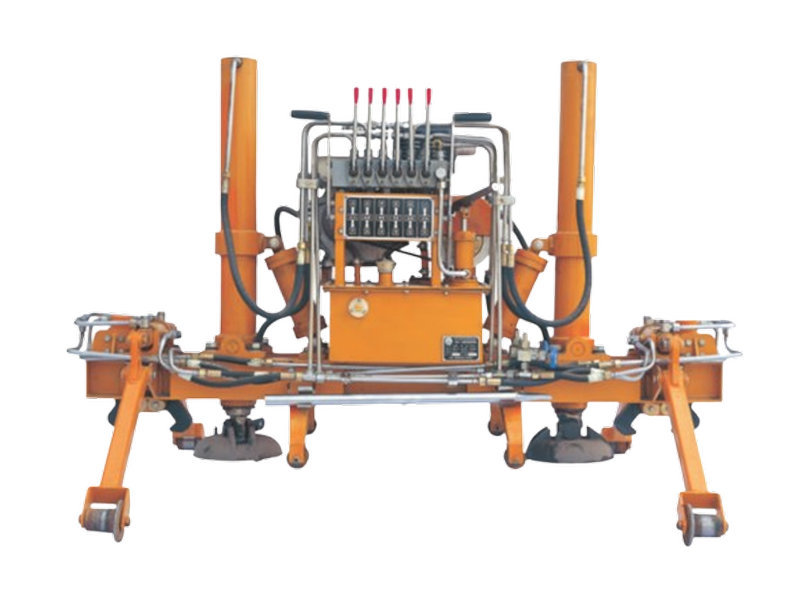
Flash butt welding is a solid-state forge weld. The two rail ends are clamped, brought together under current until the contact faces flash and burn away, then forged by hydraulic upset. No filler metal is added, and the metal that was molten is squeezed out of the joint rather than left in it. The process runs from a program, records its own parameters, and produces the same joint on the first weld of a campaign and the four-hundredth.
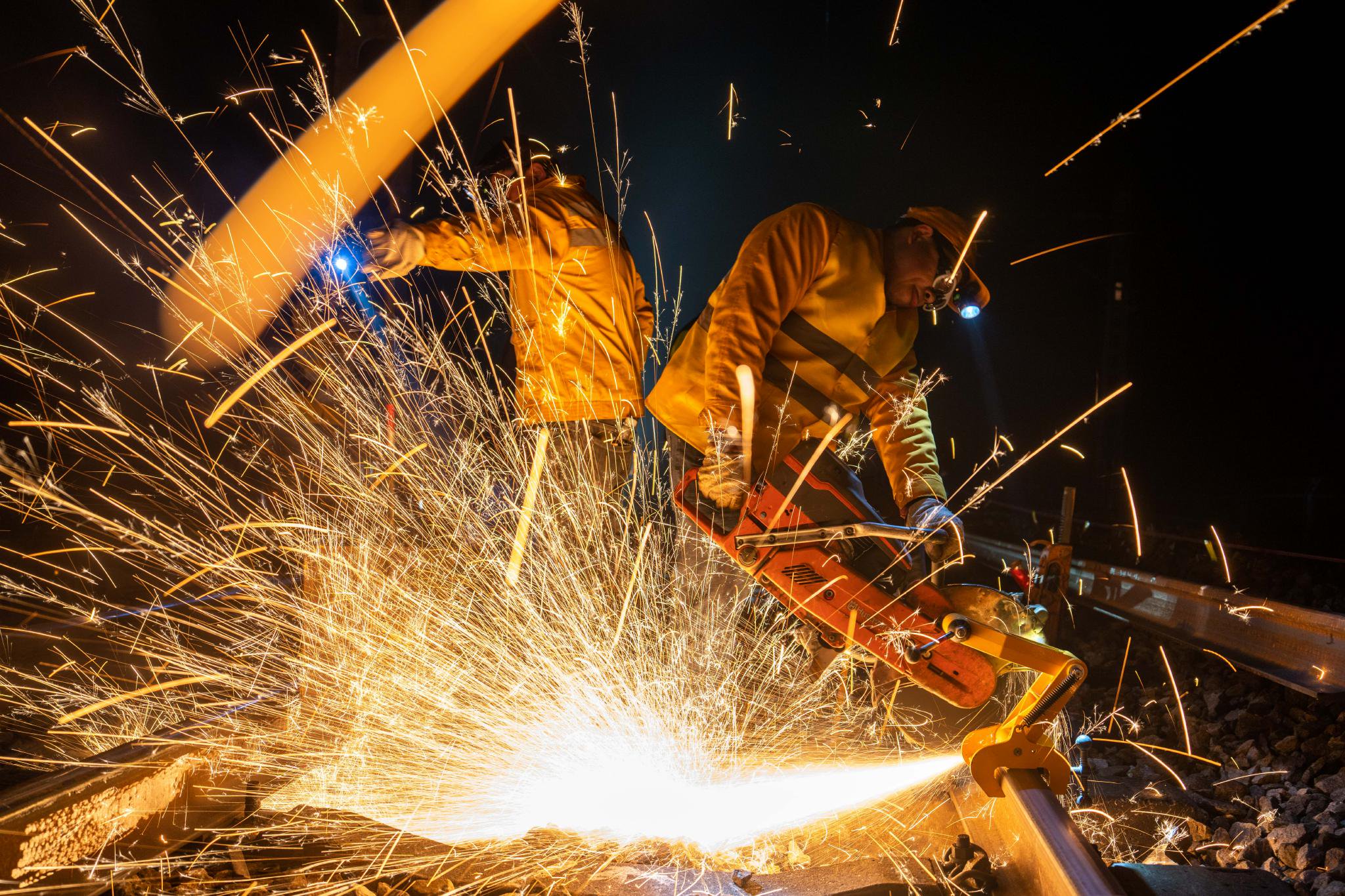
Thermite welding is a cast fusion weld. A single-use crucible of iron oxide and aluminium is ignited above a sealed sand mould, and the steel it produces fills the gap between the two rail ends and fuses with them. There is no machine to record anything, no program to hold the parameters, and no way to inspect the result until it has cooled. The process is portable in a way no flash butt machine will ever be: a two-person crew, a cutting tool, a straightedge, a burner and a box of consumables.
| Attribute | Flash butt | Thermite (aluminothermic) |
|---|---|---|
| Bond type | Solid-state forge weld | Cast fusion weld |
| Heat source | Electrical resistance, machine controlled | Chemical reaction at roughly 2,000 to 2,200 °C |
| Filler metal | None | Steel from the reaction, matched to the rail grade |
| Heat-affected zone | Typically 20 to 45 mm, symmetric | Limited to 40 mm on non-heat-treated rail, 60 mm on heat-treated |
| Joint strength | Essentially parent rail | Roughly 85 to 95% of parent rail, depending on the measure |
| Time per weld | 4 to 8 per hour with a mobile machine | 2 to 4 per hour with parallel crews, one crew per joint |
| Equipment | Road-rail machine, high power demand | Hand tools and consumables |
| Can it move the rail | Yes, and it must | No |
| Where it is normally used | Plant strings, plain line relaying | Closure welds, switches, repairs, embedded track |
Where Each Method Is the Default
On plain line, in a relaying campaign, with a machine on site and the rail free to move, flash butt is the default and thermite is the exception. In a turnout, at the closing joint of a string, after a defect has been cut out at 02:00, on embedded track, or on a short industrial siding, thermite is the default and nobody asks the question.
The interesting cases sit between those two. A renewal with 40 scattered joints across six kilometres. A metro depot with grooved rail. A heavy-haul line where the possession is four hours and the ballast is frozen. Those are the ones where the choice is usually made badly, because it is made by whoever owns the machine rather than by whoever owns the asset.
How Flash Butt Welding Actually Joins Two Rails
The rail ends are cut square, cleaned to bright metal, and clamped in the jaws of the welding head with a small gap between them. Current is switched on and the ends are driven together slowly. Contact happens at microscopic high spots, the current density there vaporises the metal, and the resulting shower of sparks is the flashing phase doing two jobs at once: heating the ends and burning impurities and oxide out of the interface.
When enough heat has gone in, the flashing stops and the upset begins. The two ends are forced together under high pressure, expelling the remaining liquid metal and closing the joint as a forge weld, with grains recrystallising across the interface. The expelled metal forms the burr that is sheared off while still hot.
Three consequences follow from that sequence, and they explain most of what flash butt is good and bad at. There is no filler, so there is no cast structure in the joint. The parameters are held by a processor, so the outcome does not depend on the operator's judgement at the moment of welding. And the process consumes rail length.
What the Machine Brings to Site
A modern mobile flash butt welder is a road-rail vehicle carrying its own transformer, hydraulic power pack, welding head and shear. The published capability of the current generation is worth knowing because it defines the ceiling of what is achievable in a possession: at least four welds per hour guaranteed, up to eight under favourable conditions; operation from minus ten to plus fifty-five degrees Celsius; working altitude up to 3,000 m.
Two numbers in that list matter more than they appear to. The temperature range means flash butt is not automatically excluded by a cold climate, which was true of earlier generations. And the guaranteed rate is a floor, not an average, so a ten-hour possession with 20 joints is a realistic plan rather than an optimistic one.
What It Costs in Rail Length
This is the constraint that decides most projects, and it is routinely left out of the comparison.
Each weld consumes rail: roughly 15 to 25 mm burned off in flashing plus 5 to 8 mm taken up by the upset, so 25 to 35 mm per joint disappears. That is harmless in a string being welded from the end, where the rail can slide through its fastenings. It is fatal at the closing joint of a string, where both ends are already anchored and there is nothing left to feed in.
The machine also has to be able to pull the rail. A mobile welder needs the rail end free to move along its own axis for metres behind the joint, which means releasing fastenings and, on some track forms, lifting the rail out of its seats. Where the rail cannot move, the machine cannot weld, and no amount of planning changes that.
How Thermite Welding Actually Joins Two Rails
The reaction, the mould system, the eight-step sequence and the defect families are covered in our guide to aluminothermic welding, and there is no value in repeating them here. What matters for this comparison is the shape of the process rather than its details.
A thermite weld is made by a crew standing at the joint, working from a kit, with no power supply and no machine. Everything that determines the outcome is set by hand: the squareness of the cut, the gap, the alignment, the seal on the mould, the preheat flame, the moment of ignition, the cooling time before the mould comes off, and the finish on the running surface. The process is completely indifferent to whether the rail can move, which is exactly why it survives in every application that flash butt cannot reach.
The Cost of Human Variability
The same kit in two crews' hands produces two different quality levels, and this is the honest core of the thermite trade-off. It is also why the European framework regulates aluminothermic welding so heavily on the people rather than only on the process: an approved process, a qualified contractor, a permitted welder and an independent inspector are four separate controls, because the process itself has no automatic correction when a step is done badly.
That variability is measurable at network level. Network Rail recorded roughly 30,000 maintenance and 10,000 to 15,000 renewal aluminothermic welds in 2016/17, with a national rejection rate of about 2.3%. A rejection rate of that size is not a scandal; it is the cost of a manual process run at scale, and it is a number a planner should carry into a comparison rather than assume away.
Why Flash Butt Cannot Close a String
Put the two constraints together and the boundary becomes exact.
Flash butt needs rail to consume and rail to pull. A closing joint has neither: both rails are anchored, the gap is fixed by the geometry already built, and there is nothing on either side to feed into the weld. So the last joint in a welded string is thermite, always, on every network. It is not a compromise on quality that operators tolerate; it is the only process that physically fits the situation.
The same logic rules flash butt out of turnouts. Inside a switch, the rails are short, restrained by the crossing and the blade geometry, and often cannot be moved at all. Network Rail's practice is explicit that welding of modular switches and crossings is limited to aluminothermic for this reason. Grooved rail in embedded track falls out for a different reason: the welding head cannot accommodate the profile.
| Situation | Why flash butt cannot do it | What is used instead |
|---|---|---|
| Closing joint of a welded string | No rail left to consume, nothing free to pull | Thermite |
| Turnout and crossing work | Rails short and restrained, no axial freedom | Thermite, with specialist processes at manganese crossings |
| Repair after a defect is cut out | Both sides anchored in track | Thermite |
| Embedded and grooved rail | Welding head cannot accept the profile | Thermite |
| Short siding or industrial track | Mobilisation cost exceeds the whole job | Thermite |
| Plain line relaying | Nothing in the way | Flash butt, mobile machine |
| Plant string production | Controlled length, controlled handling | Flash butt, fixed plant |
The Closure Weld Is Not a Second-Class Joint
There is a persistent assumption that the thermite joint holding a string closed is the weak point of an otherwise excellent installation, and that assumption leads to some poor decisions: excessive grinding, unnecessary ultrasonic coverage, or a maintenance regime built around a single joint type.
A correctly made closure weld meets the same acceptance criteria as any other weld. What it does not have is the statistical support of a production run, because it is one joint made once. That is an argument for inspection discipline, not for treating the joint as defective from the day it is made.
Where Neither Process Is a Clean Fit
Both standards are written around new rail of the same profile and the same steel grade, and the work that gives maintenance engineers the most trouble is precisely the work that falls outside that description.
Welding a worn rail to a new one, joining two different sections, or bridging a grade change all sit outside both EN 14587 and EN 14730. That does not mean they cannot be done; it means the process approval does not cover them, and the joint needs a specific engineering decision rather than a standard one. In practice these joints are made aluminothermically, with a transition machined or forge-welded first, because the geometry cannot be pulled through a flash butt machine and the gap is rarely a nominal one.
The hardest case on any network is the manganese crossing. Austenitic manganese steel and carbon rail have different compositions, different thermal expansion and different heat treatment, and welding them directly produces a joint that cracks. The standard solution is an intermediate insert that bonds to each parent metal in turn, isolating the two chemistries, which is a specialist operation and not a variation on ordinary thermite work. It is also the reason crossing welds have their own standard history rather than a paragraph in a general one.
Weather, Rail Temperature and the Envelope
A mobile flash butt welder has a stated climatic envelope, and the current generation works from minus ten to plus fifty-five degrees Celsius at altitudes up to 3,000 m. Inside that envelope the process is largely indifferent to weather, because the welding head encloses the joint.
Thermite is not. Wind displaces the preheat flame and cools one side of the section more than the other. Rain and standing water put hydrogen into the mould. High rail temperature in direct sun changes how the joint cools under restraint. Every one of those conditions is covered by an ambient envelope in a competent procedure, and every one of them stops work when the envelope is breached.
The scheduling consequence is asymmetric and often forgotten. A flash butt campaign can be planned against a calendar. A thermite programme has to be planned against a season as well, and a wet autumn can put a welding programme behind in a way a machine-based programme never is.
The Strength Gap, and Where It Matters
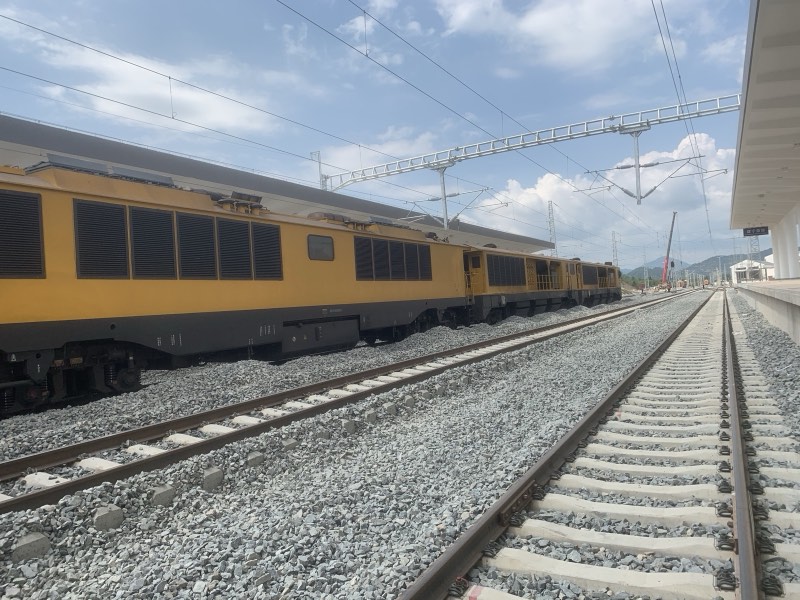
Flash butt welds reach essentially parent-rail strength in bending and fatigue. Thermite welds reach roughly 85 to 95% depending on which property is measured, with fatigue the larger shortfall. On a 60E1 profile the published difference in bending force between the two processes is of the order of 500 kN, which sounds decisive until it is set against the loads the joint actually sees.
Both figures pass the acceptance tests in their respective standards. A thermite weld that fails its bend test does not fail because the process is inherently too weak; it fails because something in the execution went wrong. That distinction matters, because it means the strength gap is a statistical statement about populations of joints, not a verdict on any individual one.
The tests themselves make the difference concrete. A flash butt joint on a 60E1 profile of ordinary carbon grade has to carry a minimum bending force of the order of 1,500 kN at a deflection of 15 mm, rising to about 1,600 kN and 20 mm on the head-hardened grades, demonstrated on five as-welded and four finished specimens per grade and profile. A thermite process is approved through a slow bend on a joint that is deliberately opened afterwards so the fracture face can be read, which measures the same property in a different way and on a different population size.
Fatigue Is the Number That Decides
For a joint in track, fatigue matters more than static strength. Rail is loaded in bending millions of times, and a weld that is 10% weaker in a single overload test can still be the joint that initiates a crack after fifteen years if its transition geometry is poor.
This is where the processes diverge most in service. A recent study of more than 2,000 welds over twenty years found that initial quality was similar for both methods, but that thermite welds developed battering, the dip at the weld that grows under traffic, roughly 25 times faster than flash butt welds. Battering is not a strength failure; it is a geometry failure that then becomes a dynamic load problem, and it is the mechanism behind a large share of the maintenance cost attributed to thermite joints.
The practical consequence is a placement rule rather than a process ban: thermite welds belong where the alternative does not fit, and where the traffic is severe, they belong with closer geometry surveillance than the rest of the line gets.
What the Standards Ask You to Prove
The two processes are governed by separate European series, and the acceptance values are not interchangeable.
| Flash butt | Thermite | |
|---|---|---|
| Fixed plant | EN 14587-1:2018 | EN 14730-1:2017 (process), -2:2021 (people) |
| Mobile or on-track | EN 14587-2:2024 | EN 14730-1:2017, -2:2021 |
| Switch and crossing work | EN 14587-3:2012 | EN 14730 series plus specialist practice |
| Hardness scale | Vickers HV30 | Brinell HB, with Vickers where specified |
| Heat-affected zone | 20 to 45 mm by macro examination | Not more than 40 mm plain, 60 mm heat-treated |
| Straightness, best class | Plus 0.3 to 0 mm vertical, plus or minus 0.3 mm horizontal, 0.10 mm over a 200 mm straightedge | Vertical deviation 0.3 mm and 600 mm grinding length for Class A |
| Production testing | Bend test at least monthly per machine, plus after repairs or parameter changes | Sampling set by the infrastructure manager |
| Record retention | Five years | Ten years |
Two things in that table are worth pulling out. EN 14587-2 was revised in 2024 and is the harmonised edition cited in the Official Journal, with the 2009 edition's presumption of conformity withdrawn in March 2025 — a contractor still working to the older edition has a documentation problem that will surface at audit. And the traceability requirement differs by a factor of two: flash butt records are held for five years, thermite records for ten, which reflects how much of the thermite joint's quality is only knowable through its paperwork.
Speed, Output and Possession Time
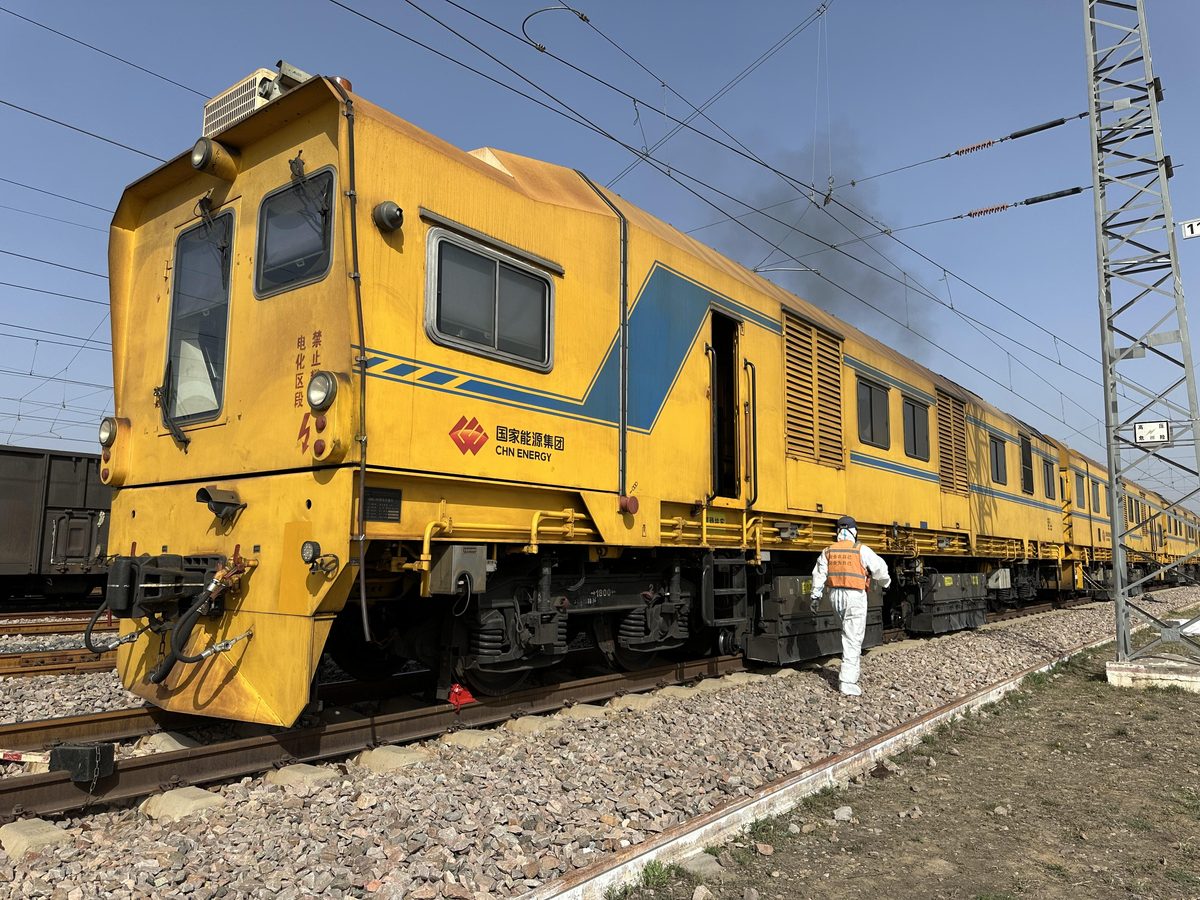
Raw weld time is the least useful productivity metric in this comparison, because nobody is paid per weld.
Network Rail's own comparison puts an aluminothermic weld at a minimum of 90 minutes including grinding, against 30 to 45 minutes for a flash butt or induction weld. That is a real difference and it is the number that gets quoted. But a possession is not spent welding. It is spent getting to the joint, setting up, welding, cooling, finishing, and getting clear before the line reopens, and the two processes distribute that time very differently.
Flash butt concentrates the work in one machine and one crew, and the machine is a serial resource: it does one joint at a time, and every joint waits for it. Thermite distributes the work across crews, and crews are a parallel resource: six crews can pour six joints at once, at six locations, without interfering.
| Flash butt | Thermite | |
|---|---|---|
| Welds per hour, one unit | 4 guaranteed, up to 8 | 2 to 4 per crew, including cooling and finishing |
| Scaling method | More shifts, longer campaigns | More crews |
| Best fit | Many joints in one place | Many joints spread out |
| Mobilisation | Road-rail machine, delivery and set-up | Van and kit |
| Weather sensitivity | Low, within a stated envelope | High: wind, rain and rail temperature all bite |
| Possession length needed | Moderate, but rigid | Short per joint, but weather dependent |
The output question therefore has a shape. Twenty joints in a two-kilometre stretch of plain line is a flash butt job; twenty joints scattered across a junction layout is not, even though the number is the same. Forty joints spread over five kilometres with a four-hour possession is genuinely difficult for either method, and is usually solved by doing the plain-line joints with a machine on one shift and the rest with crews on another.
Cost: Capex, Consumables and the Break-Even
Cost comparisons between these processes go wrong in the same way every time: someone compares the price of a consumable kit against the price of a weld and concludes that flash butt is ten times cheaper, without counting the machine.
| Cost element | Flash butt | Thermite |
|---|---|---|
| Equipment capital | Two orders of magnitude above a thermite kit; a road-rail machine with its own power and hydraulics | Hand tools, burner, straightedge, mould clamps |
| Consumable per weld | Electrodes and power; a small fraction of a thermite portion | Portion, mould, luting, crucible, preheat gas |
| Published rate per weld | Lower | Roughly 2.5 to 3 times the flash butt rate in published comparisons |
| Labour per weld | Machine crew, plus rail-release labour | Two-person crew, one joint at a time |
| Rework and rejection | Lower and less variable | Around 2 to 3% rejection on a large network |
| Site preparation | Rail must be freed to move | None beyond the joint itself |
| Hidden cost | Mobilisation; the machine earns nothing while it is being transported | Weather days; a rained-off pour is a lost possession |
The conclusion most operators reach is not to buy the machine. Mobile flash butt welding is increasingly bought as a service, because the capital is only justifiable against a workload that a single infrastructure manager rarely controls — and because a contractor running the machine every week has better operators than a maintenance depot running it twice a year.
For the smaller end of the market the arithmetic is even clearer. On the order of tens of thousands of joints would be needed to repay a mobile flash butt welder out of consumable savings alone, which means that for a metro depot, an industrial network or a port railway, thermite is not a compromise but the only sensible answer, and the money is better spent on welder qualification and grinding quality than on a machine that sits idle.
What a Tender Rate Actually Contains
Two welding rates quoted per joint are rarely measuring the same thing, and the gap is usually in what has been left out rather than in what has been priced.
A flash butt rate normally includes the machine, its operators, the welding consumables and the shear, and it may or may not include mobilisation, rail release and reinstatement, ultrasonic testing and grinding. A thermite rate normally includes the consumables and the crew, and may or may not include preheat gas, moulds, inspection, grinding and the cost of a rejected joint.
Putting the two side by side requires a common scope, and the fastest way to build one is to ask, for each rate, what happens if the joint fails its inspection. On a machine-based contract that is usually the contractor's risk inside a defined rejection allowance. On a crew-based contract it is frequently the asset owner's, which changes the comparison well beyond the headline difference in rate.
Where the Cheap Option Gets Expensive
There are three ways thermite work turns out to cost more than the quotation, and all three are avoidable.
The first is grinding. A thermite collar is large, and finishing it to an acceptance class takes a wheel and a machine that can hold the class. Cutting that step short saves minutes per joint and produces exactly the battering problem described above, which then appears as a maintenance cost three years later.
The second is rejection. A 2 to 3% rejection rate on a large programme is a budget line, not an accident, and it includes the cost of cutting the joint out and welding again, inside a possession that has already been used.
The third is documentation. Because the thermite joint's quality is largely invisible after the fact, an operation without disciplined records ends up re-inspecting joints it already knows the history of, or accepting joints it cannot defend. Both are expensive in different ways.
The Grinding Side: What Each Joint Demands
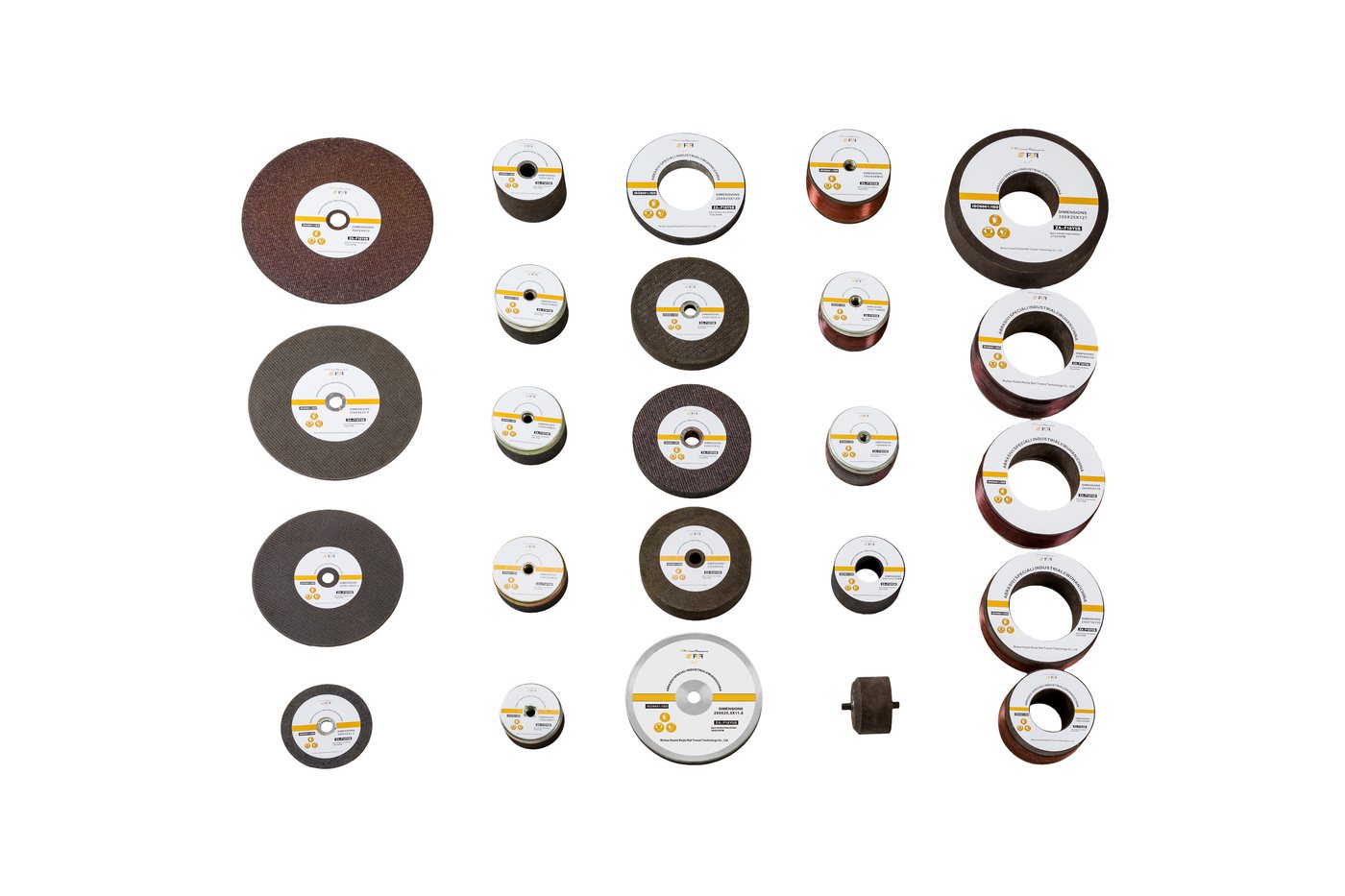
The two processes hand over to grinding in completely different conditions, and this is where a welding decision quietly becomes a wheel decision.
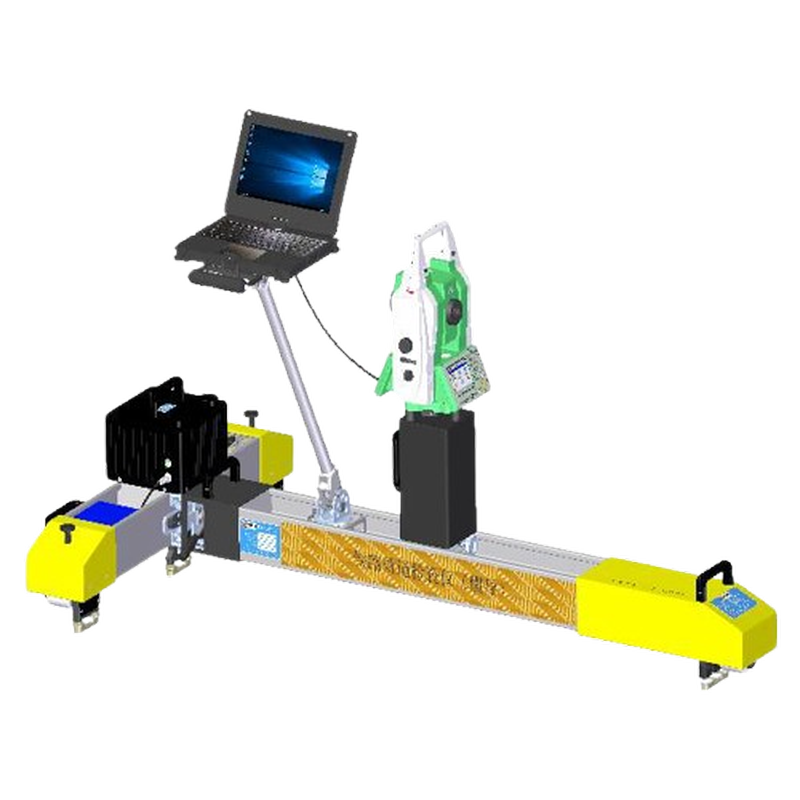
A flash butt joint arrives at the finishing stage with its burr sheared off by the machine and a narrow, symmetric heat-affected zone. The grinding job is profile restoration: remove the residual upset metal, blend the transition, restore the running surface. The volume of metal to remove is small, and the tolerance is tight — a tenth of a millimetre over a 200 mm straightedge in the best geometry class.
A thermite joint arrives with a cast collar around the head and foot, a hardened zone that extends well beyond the visible weld, and a transition that has to be shaped rather than merely blended. The grinding length is set by the acceptance class, 600 mm for Class A and 900 mm for Class B, and the vertical deviation by the same class. That is a far larger abrasive job per joint, and it is the step where a cheap wheel shows up as burning, as a hollow, or as a surface the inspector rejects. The wheel specification has to match the zone being cut, not the rail being restored.
The interface is covered in more depth in our guides to grinding length at weld seams and the weld-to-grind workflow. What belongs in this comparison is the cost consequence: the process with the lower weld cost per joint also carries the larger finishing cost per joint, so a cost model that stops at the weld is not a cost model.
A Decision Framework: Five Questions
Five questions, in this order, resolve nearly every case.
| Question | If yes | If no |
|---|---|---|
| Can the rail be pulled and consumed at this joint? | Flash butt is possible | Thermite |
| Can a road-rail machine reach the joint and stand? | Flash butt is possible | Thermite |
| Are there enough joints in one place to justify mobilisation? | Flash butt | Thermite |
| Will traffic be heavy haul or above 200 km/h? | Prefer flash butt where possible | Either |
| Is the possession too short for a serial machine to clear the list? | Parallel thermite crews | Flash butt |
The Questions in Order
The order matters because the first two are hard constraints and the last three are economics.
If the rail cannot move, the decision is made and the remaining questions are only about doing the thermite work properly. If the machine cannot reach the joint, the same. Only when both constraints are satisfied does the comparison become a real comparison, and that is where the annual joint count, the traffic and the possession plan decide it.
There is one more criterion that rarely appears in a tender document but decides a great deal in practice: who is available to do the work. A flash butt machine arrives with its own operators. A thermite programme depends on welders the organisation either employs or hires, and a shortage of permitted welders will constrain a thermite programme long before the consumables budget does.
When the Answer Is Both
Almost every mature network runs both processes, and the useful question is not which one wins but how to sequence them.
The pattern that works is to let the machine do what only the machine can do, and let crews do what only crews can do, in the same possession if possible. Plain-line joints in the middle of a relaid section go to the mobile welder, working from one end. The closure joints at each end, the joints inside the turnouts, and anything the machine cannot reach go to thermite crews working in parallel at the other end of the site. The machine sets the pace of the plain line; the crews clear the constraints.
The failure mode of a mixed programme is not technical but organisational: two sets of records, two inspection regimes, two acceptance classes and two subcontractors, with nobody accountable for the whole installation. That is worth solving before the possession, because after it the only thing that distinguishes the joints is the paperwork.
Where Each Method Fails in Service
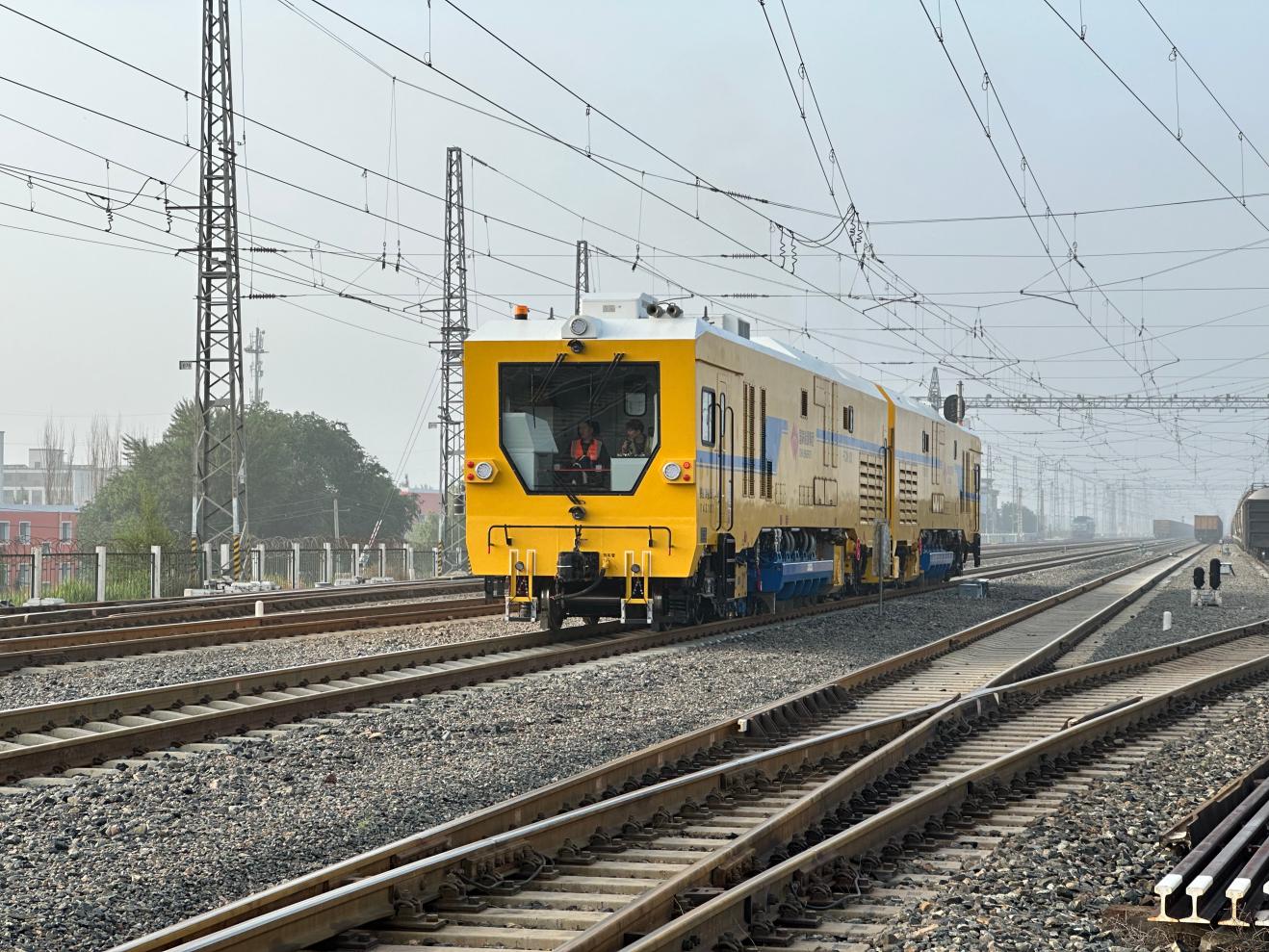
The two processes fail from different causes, and inspecting them the same way wastes effort.
Flash butt welds fail from flat spots: a brief interruption in the flashing, an oxide patch that was not expelled, a dull spot on the fracture face that becomes a fatigue origin. They also fail on head-hardened rail when the cooling after upset is not controlled, because the heat-affected zone softens below the parent hardness and then deforms under load. Straightness is the third mode: a joint that is out of line by a few tenths becomes a dynamic load amplifier rather than a static defect.
Thermite welds fail from porosity, slag and sand inclusions, and lack of fusion at the web and foot transition, all of which trace back to moisture, mould sealing, gap or preheat. Then they fail slowly, through battering and through softening in a heat-affected zone that is both wider and less symmetric. The case for treating the finishing of a thermite joint as half the job is set out in our guide to thermite welding rail joints.
| Failure mode | Flash butt | Thermite | Where it originates |
|---|---|---|---|
| Flat spot or dull patch | Characteristic | Rare | Flashing interruption, oxide not expelled |
| Porosity | Rare | Characteristic | Moisture in mould or consumable |
| Slag or sand inclusion | Not applicable | Characteristic | Mould handling and sealing |
| Lack of fusion at foot | Rare | Characteristic | Preheat and gap control |
| Heat-affected zone softening | On head-hardened rail without controlled cooling | General, and wider | Thermal cycle and cooling rate |
| Battering under traffic | Slow | Roughly 25 times faster | Geometry at the transition |
| Straightness deviation | Possible, and measurable to a tenth | Possible, and larger | Alignment before welding |
Inspecting the Right Thing
Because the mechanisms differ, the inspection emphasis differs too. Flash butt inspection leans on straightness and on detecting flat spots, with ultrasonic testing aimed at planar defects at the interface. Thermite inspection leans on geometry and on volumetric defects in a cast structure, and on the records that show the pour was controlled.
Using a thermite inspection philosophy on flash butt joints finds nothing and costs money. Using a flash butt philosophy on thermite joints misses the defect families that actually occur. Both mistakes are common where a network has switched its dominant welding method and not its inspection plan.
Frequently Asked Questions
Is flash butt welding stronger than thermite welding?
Yes, on both bending and fatigue, and the gap is larger in fatigue. Flash butt reaches essentially parent-rail strength because the joint is forged from the parent metal itself. Thermite reaches roughly 85 to 95%, and the shortfall shows up over time as faster battering rather than as an immediate failure.
Can thermite welding be used on high-speed lines?
It can, but the conditions tighten. UIC guidance treats aluminothermic joints on lines at 300 km/h and above as requiring additional quality controls, and in practice high-speed networks minimise their number rather than banning them, because closure welds and turnout work still have to be done somehow.
Why can flash butt welding not be used in switches?
Because the process consumes rail length and needs the rail to move. Inside a turnout the rails are short, restrained by the crossing and blade geometry, and anchored at both ends, so there is neither rail to feed in nor freedom to pull. The same constraint rules it out at the closing joint of a welded string.
Which is cheaper per joint?
Per weld, flash butt is cheaper by a factor of roughly 2.5 to 3 in published rate comparisons, and its consumable cost is a small fraction of a thermite portion. Per project, it is usually more expensive unless the joint count is high and concentrated, because the machine has to be mobilised and paid for.
Does a flash butt weld need grinding?
Yes, but much less. The machine shears the burr while the joint is hot, so grinding is profile restoration rather than collar removal, and the tolerance is measured in tenths of a millimetre over a 200 mm straightedge in the best geometry class.
Rail welding: thermite vs flash butt, which lasts longer?
On a like-for-like basis, flash butt. The evidence is in the geometry rather than the strength: a twenty-year study of more than 2,000 welds found thermite joints developed battering roughly 25 times faster, and battering is what converts a sound weld into a dynamic load problem. A well-made thermite joint in the right location still gives decades of service; it just needs its geometry watched.
Choosing the Method, the Consumables and the Finish
The decision framework above settles the method. What it does not settle is the finishing, and that is where the cost and the ride quality actually land.
We supply rail replacement and welding systems alongside the abrasives that finish the joint, which means the acceptance class in your procedure can be matched to a wheel and a machine that will hold it. For flash butt joints that means profile restoration with a narrow transition; for thermite joints it means collar removal over 600 or 900 mm to a vertical deviation of 0.3 or 0.5 mm, with the wheel chosen for the hardened zone rather than for the parent rail.
If the question is which process to specify, our guide to rail welding procedure qualification sets out what each standard requires you to prove before the first weld, and the full aluminothermic welding guide covers the process itself. Where a project needs the whole sequence — method selection, procedure, crew, consumables and finishing — the rail maintenance solution page sets out how the pieces fit into one maintenance cycle, and project cooperation is the place to start a conversation about a specific line. Teams moving from collar removal to acceptance-class finishing will find the practical side in our grinding training.