Heavy Rail Operating Company Maintenance: KPIs and Structure
A heavy rail operating company does not choose a maintenance model from a catalogue. The model is decided by four things it cannot change: axle load, cumulative tonnage, line standard and its regulator. Everything else — how many track gangs, whether to outsource grinding, which KPIs go to the board — follows from those four.
That is why copying another operator's structure rarely works. A 40-tonne-axle iron ore line and a 25-tonne coal corridor are both called heavy haul, and their maintenance organisations look nothing like each other. The first treats rail as a consumable; the second treats it as an asset with a thirty-year life.
Direct answer
This guide is written for the people who have to make that choice: the permanent way engineer, the asset manager, the executive who has to sign the outsourcing business case. It sets out what defines a heavy rail operator, how maintenance is typically organised, which KPIs actually discriminate between a functioning programme and a busy one, and where the boundary between in-house and contracted work should sit.
It deliberately does not re-explain what track maintenance is or how to buy it in the abstract. That ground is covered in our railroad track maintenance guide, which sets out the intervention families, the two clocks that set intervals, and four measures that resist gaming. What follows is the layer above it: the organisational question.
What Defines a Heavy Rail Operating Company
The industry has a working definition, and it is worth knowing precisely because it is looser than most people assume. The International Heavy Haul Association defines a heavy haul railway as one meeting at least two of three criteria, and the word "two" matters.
Table 1 sets out the criteria and what each one actually tests.
| IHHA criterion | What it measures | Why it is the wrong one to rely on alone |
|---|---|---|
| Regularly operates or plans unit or combined trains of at least 5,000 metric tons | Train size | A 6,000-tonne train on gentle, well-drained track is a much lighter maintenance problem than a 5,000-tonne train on a 1-in-60 grade with tight curves |
| Hauls at least 20 million gross tons per year over a line segment of at least 150 km | Cumulative tonnage per route length | The single most useful criterion, because tonnage is what consumes rail. But it says nothing about axle load, which drives fatigue |
| Regularly operates equipment with axle loads of 25 tonnes or more | Peak load per wheel | The most damaging criterion, because fatigue damage scales non-linearly with axle load. Says nothing about how many trains pass |
The reason the three-part test matters is that it explains why the label "heavy haul" carries so little operational information. A network meeting criteria one and two but running 25-tonne axles has a wear problem. A network meeting criteria two and three at 40 tonnes has a fatigue and rail-life problem. Their maintenance budgets, grinding intervals and rail procurement strategies diverge completely.
There is a fourth distinction that the IHHA criteria do not capture and that operators care about more: what else shares the track. A dedicated heavy-haul corridor can be closed for a twelve-hour possession and grind forty passes. A heavy-haul line that also carries passenger services cannot, and its maintenance organisation is shaped by the passenger timetable as much as by the tonnage.
Table 2 puts the four network types side by side, because the differences are what make a maintenance structure transferable or not.
| Network type | Axle load | Typical rail section | Dominant degradation | What constrains the maintenance model |
|---|---|---|---|---|
| Dedicated heavy haul | 25–40 t | 60–75 kg/m, wear-resistant grades | Wear, gauge face, corrugation at high tonnage | Rail life economics; possession is cheap relative to rail cost |
| Mixed heavy freight and passenger | 22–25 t | 60 kg/m | RCF, squat, geometry deterioration | Passenger timetable; short windows; ride quality standards |
| High-speed passenger | 14–17 t | 60 kg/m, head-hardened | Micro-corrugation, short-pitch defects | Line speed; strict geometry tolerance; no tolerance for surface defects |
| Urban transit | 14–20 t | 50–60 kg/m | Corrugation, tight-curve side wear | Two-hour night windows; residential noise limits |
The practical use of that table is diagnostic. When an operator's maintenance structure stops working, the cause is usually that the network has drifted from one row to another — a freight line taking on more passenger paths, or a mixed line converting to dedicated heavy haul — while the organisation stayed where it was.
Why Heavy Haul Forces a Different Organisation
Three forces push heavy-haul maintenance organisation away from the pattern used on mixed-traffic networks. Understanding them explains most of the structural differences that follow.
Rail is a much larger share of the asset base. On a 14-tonne-axle high-speed line, the dominant maintenance cost is geometry — tamping, lining, ballast. On a 40-tonne-axle ore line, the dominant cost is rail replacement, and grinding exists to defer it. An organisation optimised for geometry work is structured around tamping machines and possession planning. One optimised for rail life is structured around wear measurement, grinding intervals and rail procurement forecasting. These are different departments with different skills.
Damage scales faster than tonnage. Fatigue damage from axle load is strongly non-linear, which means a modest increase in axle load produces a disproportionate increase in defect rate. The organisational consequence is that heavy-haul operators cannot manage by exception. A mixed-traffic network can inspect, find defects and fix them. A heavy-haul network at 35 tonnes has to predict, because the defect population grows faster than the inspection cycle can find it.
Possessions are either abundant or scarce, rarely in between. A dedicated corridor can usually get long windows, which makes train-based grinding economic. A heavy-haul line sharing track with passenger services gets short windows, which makes portable and compact machines economic instead. The same tonnage can produce two completely different equipment strategies depending on this single variable.
The result is that heavy-haul operators tend to concentrate scarce engineering skill in a central function and distribute execution widely. That is the opposite of how mixed-traffic networks often organise, where the depot holds the knowledge and the centre holds the budget.
How Heavy Rail Operators Organise Track Maintenance
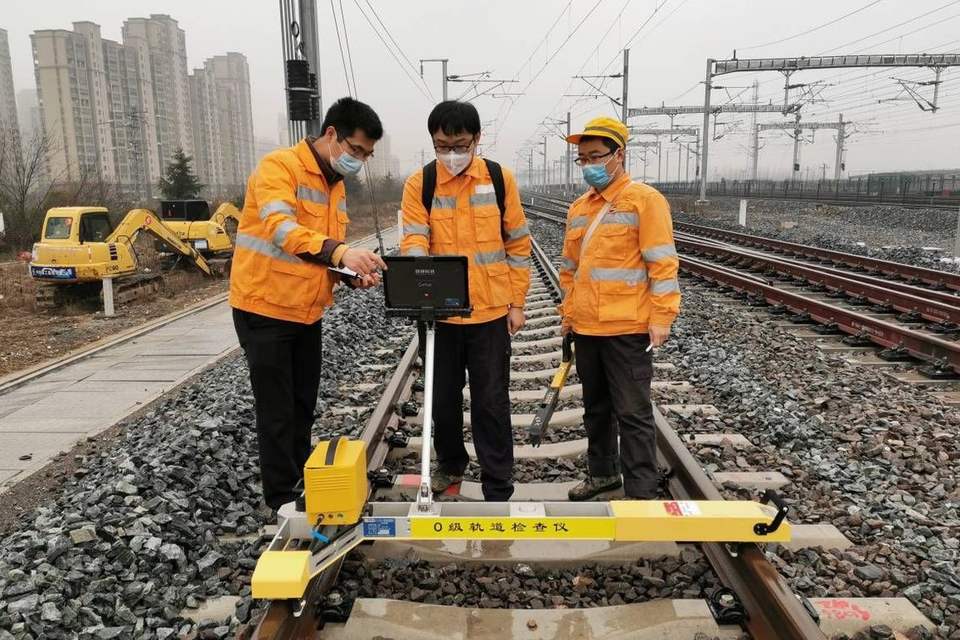
Most heavy rail operators converge on a four-function split, and the differences between companies are mostly about where the boundaries sit rather than what the functions are.
Table 3 maps the four functions, what each owns, and the most common sourcing pattern.
| Function | What it owns | Typical sourcing pattern | What goes wrong when it is mis-sourced |
|---|---|---|---|
| Permanent way (track) | Geometry, rail, sleepers, fastenings, ballast, turnouts | In-house core, contracted peaks | Contracting the inspection but keeping the repair splits the data from the decision |
| Signalling and communications | Interlockings, train control, cable | In-house or long-term framework | Rarely a heavy-haul bottleneck, except where track work disturbs cables |
| Rolling stock | Locomotives, wagons, wheelsets | Often separate business unit or contracted | Wheelset condition drives rail damage; a silo here hides the cause of track defects |
| Inspection and measurement | Track geometry cars, rail flaw detection, wear measurement | Mixed; increasingly contracted | Contracting measurement without owning the baseline means the contractor defines the standard |
Two structural patterns recur across heavy-haul operators, and both are worth understanding before deciding what to keep.
The central engineering function is small and senior. It sets standards, owns the asset model, decides grinding intervals and approves deviations. It does not run gangs. On a 3,000 km network it might be a dozen people. When operators get into difficulty, this is usually the function that has been hollowed out — and the symptom appears years later as a maintenance programme that is busy, expensive and unable to explain its own intervals.
Regional delivery centres hold the machines and the crews. They execute the central plan, adjust within tolerances, and report. The interface between centre and region is where most organisational friction lives: the centre wants standardisation, the region knows that section 47 behaves differently from section 12.
A third element is increasingly common on heavy-haul networks: a dedicated measurement group that sits between the centre and the regions and owns the data. Its value is that it removes the incentive to report favourable numbers — the group that measures is not the group whose performance is being measured.
In-house teams, regional centres and the interface with contractors
The question "should we outsource maintenance" is really three questions, and treating it as one produces bad decisions.
The first is who holds the asset knowledge — the understanding of how this specific network degrades, where its weak points are, what the last three interventions achieved. That should almost never be outsourced, because it is the only durable competitive asset a railway maintenance function has.
The second is who executes the work — crews, machines, possession management. This is a capacity question and can be outsourced freely, provided the first question has been answered.
The third is who measures the result. This can be outsourced to an accredited body, but the operator must retain the baseline and the acceptance criteria, or it will find itself buying work against a standard set by the seller.
When operators get into trouble with outsourcing, it is nearly always because they outsourced the first and third alongside the second. The work got cheaper for two years and then became unmanageable.
Maintenance-of-Way KPIs for Heavy Rail Providers
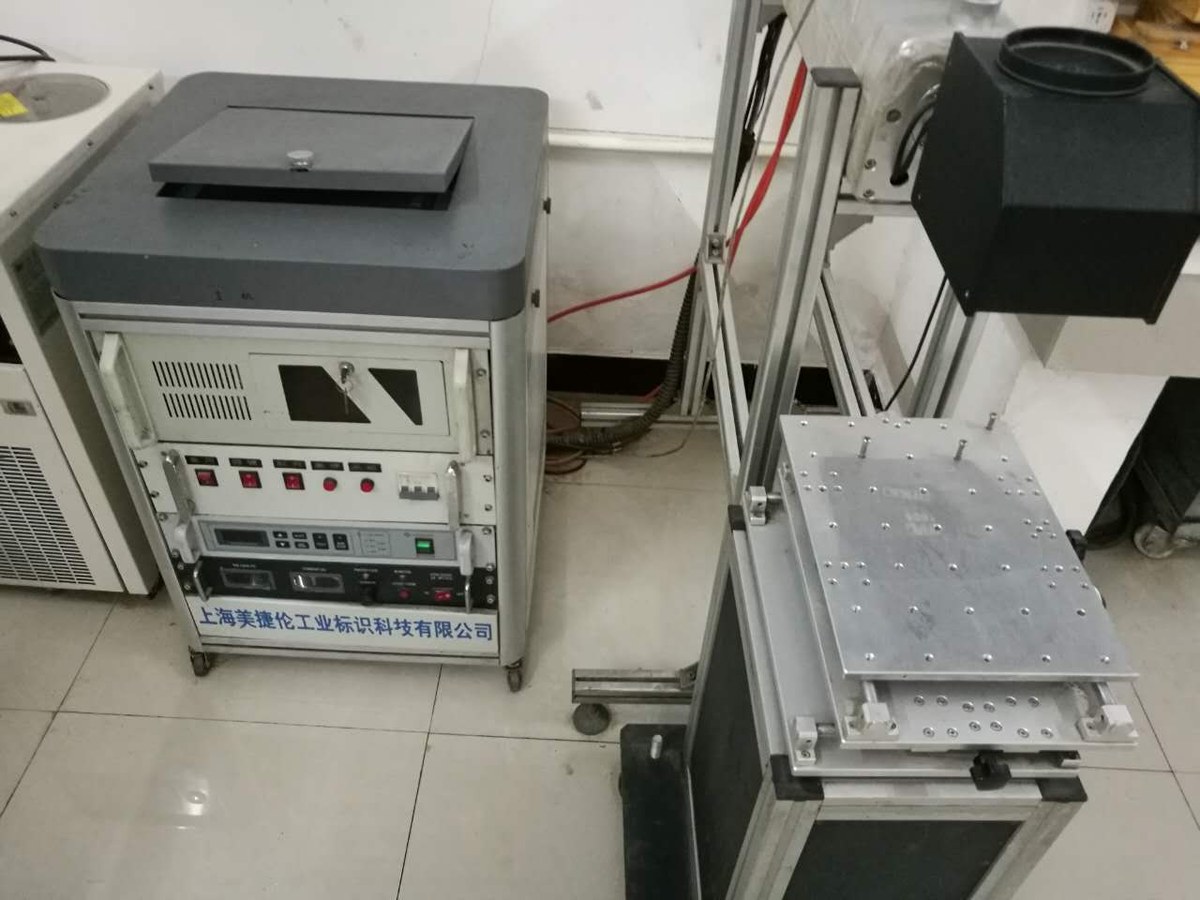
Most maintenance KPI sets fail for a simple reason: they measure activity and call it outcome. Kilometres ground, tonnes of ballast placed, defects closed — all can be maximised while the track deteriorates. Four measures resist that failure because each has a denominator tied to the asset, and those are set out in the same guide; they apply unchanged to heavy haul.
What heavy-haul operators need on top of those four is a second layer that reflects their specific exposure. Table 4 sets out the three layers, because the most common KPI error on a heavy-haul network is not choosing the wrong measure — it is reporting the same measure to three audiences that need different ones.
| Layer | Audience | Measures that belong here | Reporting cadence |
|---|---|---|---|
| Board and regulator | Executive, safety authority | Rail break rate per million train-km; derailment precursor count; asset condition index trend; unit cost per gross tonne-km | Quarterly to annual |
| Asset management | Permanent way manager, finance | Rail life consumed versus plan; grinding interval adherence; defect recurrence rate; possession utilisation; percentage of rail replaced before condemning limit | Monthly |
| Work execution | Regional engineers, gangs | Pass-km achieved per shift; profile conformance after grinding; weld rejection rate; machine availability; backlog by defect class | Weekly or per possession |
The value of the split is that it stops the wrong conversation. A board that asks about pass-km is asking an execution question it cannot act on. An execution team measured on asset condition index has no lever it can pull within a week.
Three measures deserve special attention on heavy haul because they are where the gap between a functioning and a performing programme shows up.
Rail life consumed versus plan. Not kilometres replaced — how much of each rail's finite metal budget has been spent. A programme that grinds reactively consumes rail faster than its replacement forecast assumes, and the divergence appears three to five years before the budget breaks. Measuring it requires a wear baseline and repeatable measurement, which is why it is rarely done.
Grinding interval adherence measured in tonnage, not dates. An interval expressed as "every 18 months" cannot be adhered to on a network whose tonnage varies by section. An interval expressed as "every 25 MGT" can. The KPI is the percentage of the network ground within tolerance of its tonnage trigger — a number that exposes both under-grinding and the wasteful habit of grinding a section because the machine was nearby.
Percentage of rail replaced before its condemning limit. This is the inverse of failure-driven replacement, and it is the clearest single indicator of whether a heavy-haul operator is managing rail as an asset or reacting to it. Operators that track it typically find a bimodal distribution: a large group replaced at the right time and a tail replaced in emergency.
The KPI Calibration Trap: Why Numbers Do Not Travel
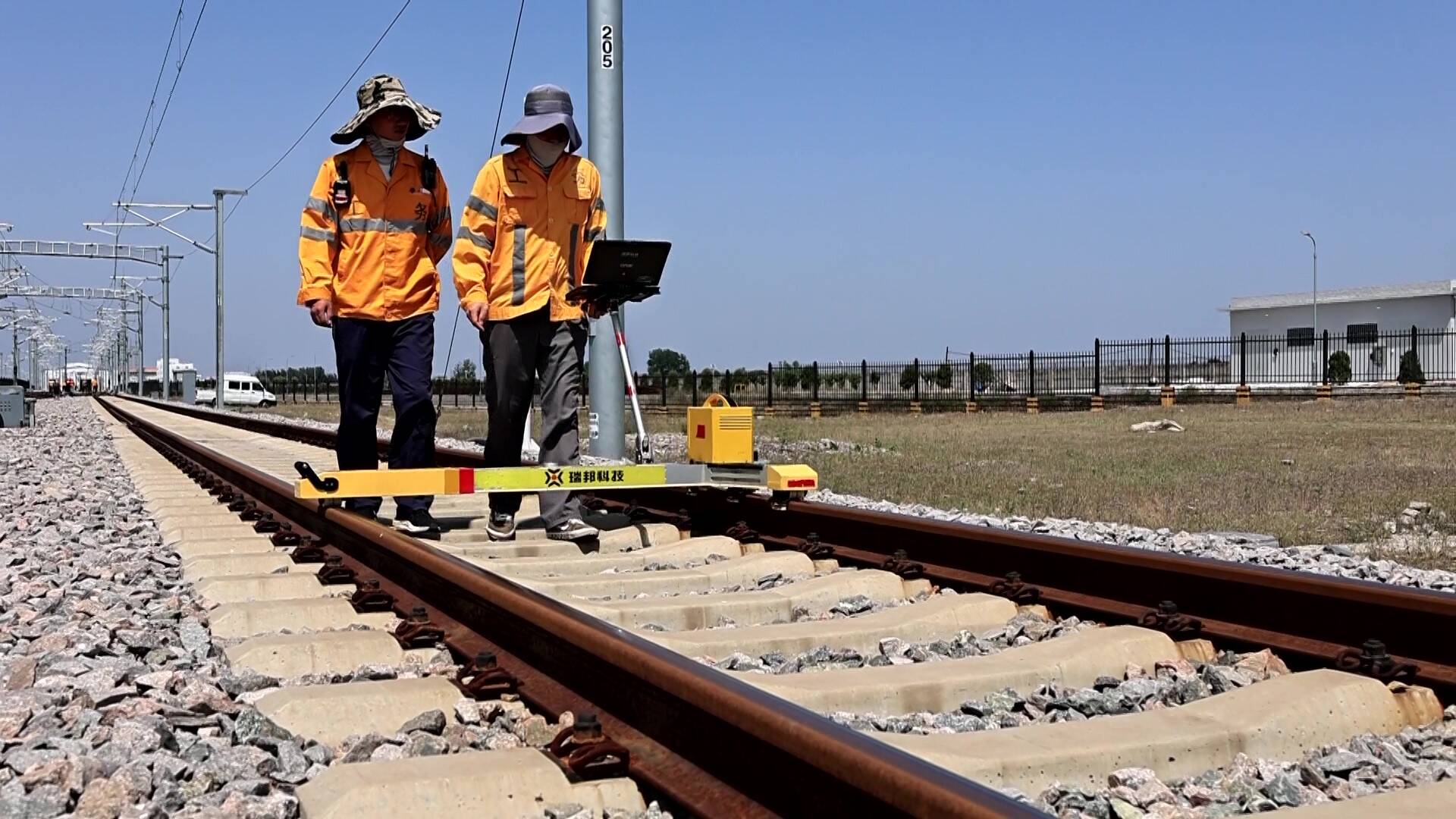
There is a failure mode in heavy-haul benchmarking that costs operators real money, and it has nothing to do with choosing the wrong measure. It is comparing a number from one network with a number from another when the two are computed differently.
Track quality is the clearest case. Table 5 gives the Chinese TQI structure, which is the most widely exported geometry index and the basis of the international standard published in 2022.
| Characteristic | How TQI is defined |
|---|---|
| What it measures | Sum of the standard deviations of seven geometry parameters |
| The seven parameters | Left and right longitudinal level, left and right alignment, gauge, cross-level, twist |
| Evaluation unit | 200 m |
| Sampling | Four measurements per metre, so 800 samples per 200 m unit |
| Wavelength filter | Level and alignment computed from the 1.5 m to 42 m wavelength band |
| Formula | TQI = sum of the seven single-parameter standard deviations, in millimetres |
| Interpretation | Lower is better; a higher value means a more dispersed, less uniform track |
The index is sensitive to overall dispersion rather than to the single worst point, which is exactly the opposite of how North American practice has historically worked. FRA track class is a peak-value system: it asks whether any individual deviation exceeds a threshold, and assigns a class from the answer. TQI asks how tightly the whole 200 m section clusters.
Both are defensible, and they answer different questions. A peak-value standard is a safety instrument: it identifies locations where a vehicle might not be guided safely. A dispersion index is an asset-management instrument: it predicts where geometry will require intervention. An operator that adopts one and expects the behaviour of the other will misallocate its tamping.
Table 6 sets out the Chinese management values by speed band, which is useful precisely because it shows that the number is meaningless without the speed attached.
| Line speed (km/h) | TQI management value (mm) |
|---|---|
| 100 or below | 15 |
| 100 to 200 | 12 |
| 200 to 250 | 8 |
| 250 to 300 | 6 |
| 300 to 350 | 5 |
The trap is straightforward. A heavy-haul operator running at 80 km/h with a TQI of 11 is inside its management value and may still have a rail-life problem, because TQI describes geometry and heavy-haul degradation is often wear and surface damage that geometry barely registers. Conversely a 350 km/h line at TQI 5 is at its limit and healthy.
There are two further reasons numbers do not travel, and both are documented in the standards literature rather than invented here. National standards still differ on where gauge is measured, on the base length used for twist, on the wavelength bands and chord definitions used for level and alignment, and on how the standard deviation itself is computed. ISO 23054-1:2022 was published specifically to unify these definitions — it builds on the Chinese industry standard and incorporates European and Japanese practice — but adoption is uneven, so two operators quoting "TQI" in 2026 may still be quoting different quantities.
The practical rule for a heavy-haul operator is therefore: when a benchmark is presented to you, ask three questions before accepting it. Which parameters are in the index? What wavelength band and evaluation length? What was the measurement system — inertial or chord? A number without those three answers is a number without a meaning.
The Rail Asset Model: What Heavy Haul Operators Track and Most Do Not
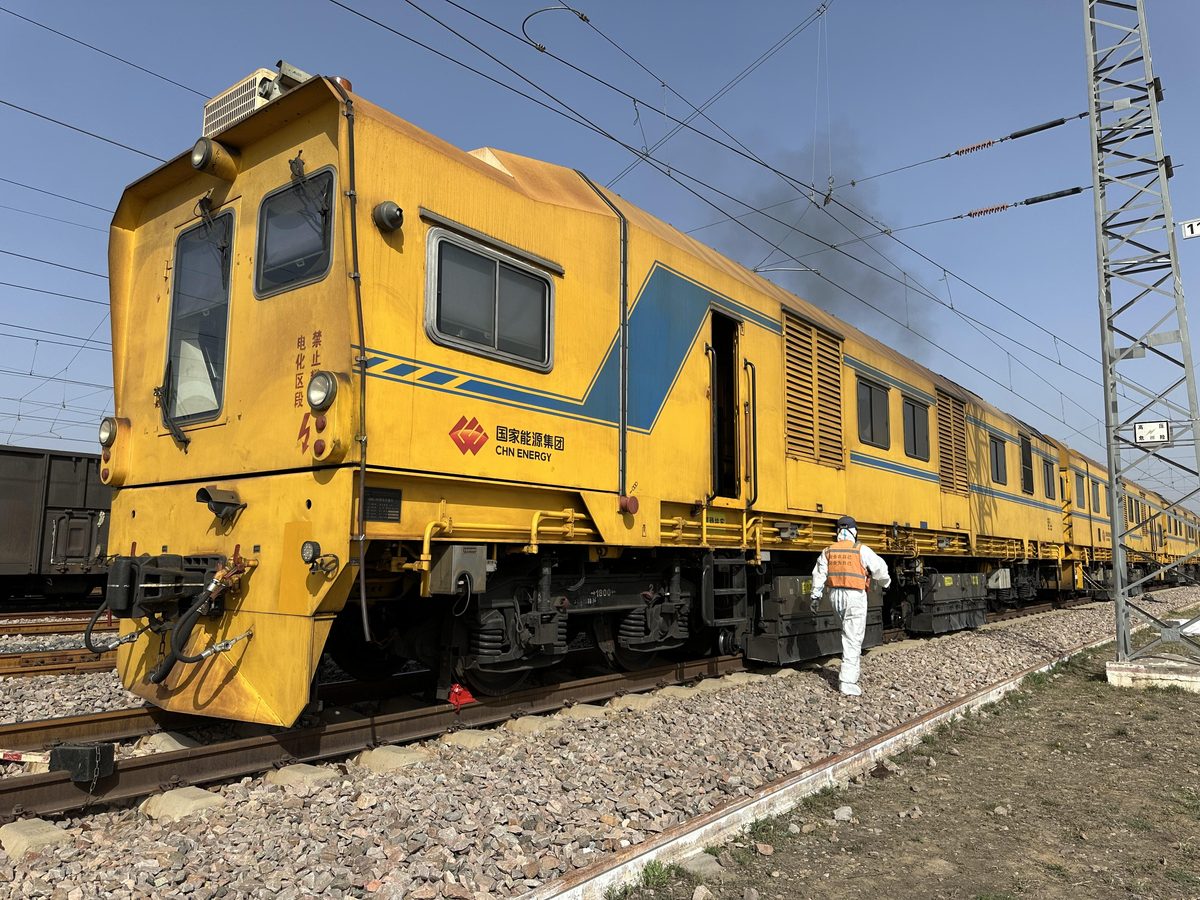
A heavy-haul network spends more on rail than on every other track component combined. Yet it is common to find operators who can state their ballast tonnage to the nearest thousand but cannot say how much of any given rail's metal budget has been consumed. That gap is the single largest avoidable cost in heavy-haul maintenance.
A rail asset model is not software. It is a set of records, one per rail length, held against a stable location reference, updated from repeatable measurement. Table 7 lists what it has to contain to be useful, and what happens without each element.
| Record | Why it is needed | What its absence produces |
|---|---|---|
| Installation date and rail grade | Establishes the design life and the wear-rate expectation | Replacement forecasts that are really guesses, renewed annually |
| Cumulative tonnage carried | The actual consumption clock, not calendar age | Sections ground or replaced on a schedule unrelated to duty |
| Wear and profile history | The trend that predicts remaining life | Replacement decided at the condemning limit, in emergency |
| Grinding history with metal removed | Whether the interval is delivering or over-cutting | A programme nobody can defend when challenged on rail consumption |
| Defect history by weld and by location | Where fatigue initiates on this network | Repeat defects repaired repeatedly at the same spot |
| Maintenance interventions and their outcome | Whether an intervention worked | Interventions repeated because nobody recorded that they failed |
The value of the model is not the records themselves but the questions it makes answerable. Three in particular change decisions.
Which sections will need rail in the next three years, and is that known early enough to buy well? Rail is a long-lead item, and emergency purchase carries a premium that operators rarely attribute to rail wear management. A model that forecasts replacement two to three years ahead converts an emergency buy into a planned one.
Is the grinding interval consuming the right amount of metal? The test is simple arithmetic — metal removed per pass multiplied by passes per interval, compared with the wear budget between interventions. Most operators have the first two numbers in different departments and have never multiplied them.
Are the repeat defects actually repeats? Weld-originated defects cluster at specific locations, often the same locations, and a defect history keyed to position exposes the clustering. Without it, each recurrence is treated as a new event and repaired with the same technique that failed last time.
Two practical notes on building this. First, start with one line segment and one year, not with the network. A partial model that is used beats a comprehensive model that is not. Second, the model's unit of analysis should be the location that maintenance can act on — a curve, a turnout, a weld — not the kilometre. Kilometre-based records average away exactly the concentration that makes heavy-haul maintenance difficult.
In-House versus Outsourced: A Decision Matrix
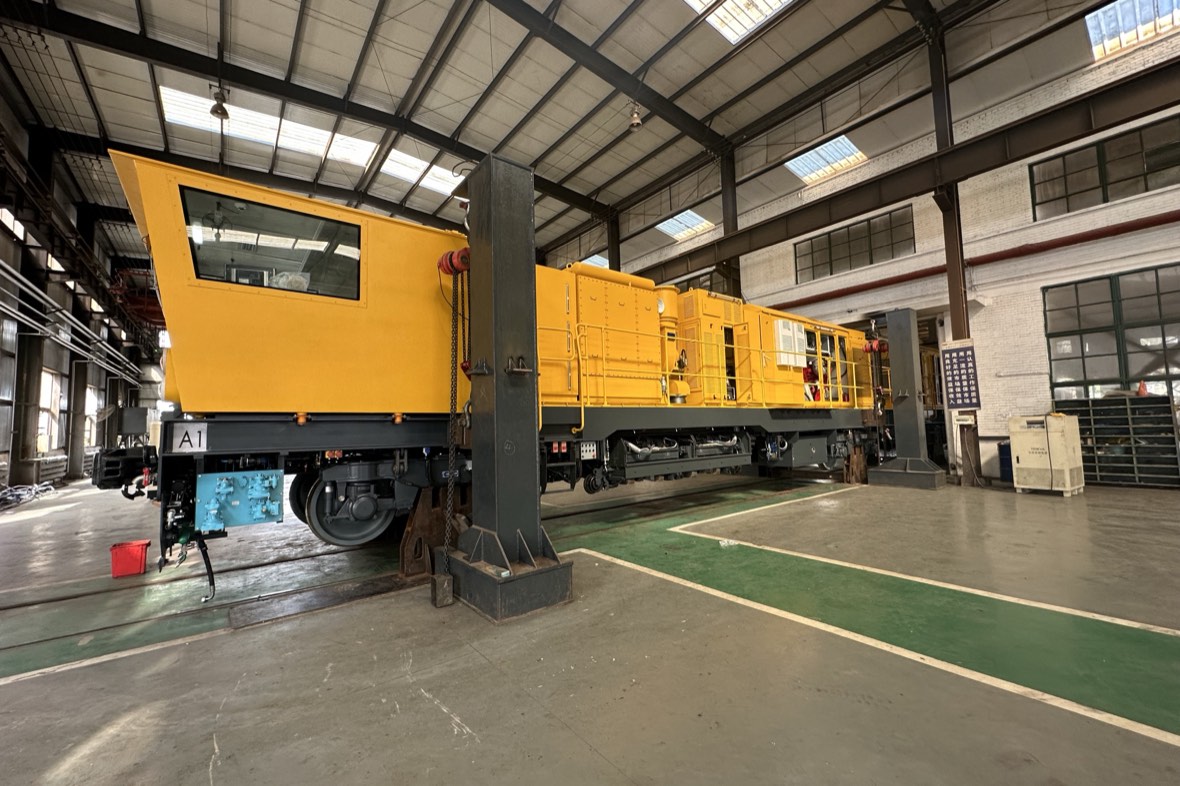
The outsourcing debate is usually framed as a cost question, and that framing produces the wrong answer roughly half the time. The right framing is: which parts of this work, if performed badly, would we not discover until it was expensive?
Table 8 sets out five dimensions that predict the answer better than cost does.
| Dimension | Favours in-house | Favours outsourcing | Why it matters |
|---|---|---|---|
| Asset criticality | Degradation here affects safety or the whole network | Localised, recoverable, low consequence | High consequence work needs an accountable owner, not a contract manager |
| Skill scarcity | The skill exists only here or takes years to build | The skill is widely available and commoditised | Grinding parameter knowledge is scarce; vegetation control is not |
| Peak workload shape | Flat, predictable | Spiky, seasonal or campaign-based | Owning capacity for a two-month peak is expensive |
| Data sensitivity | The work generates data that informs the asset model | The work consumes data the operator already holds | Never outsource the generation of your own baseline |
| Safety and regulatory responsibility | The operator carries the legal duty regardless | The duty can be transferred contractually | The duty never transfers in practice; only the blame does |
Applying the matrix to a typical heavy-haul network produces a recognisable pattern.
Keep in-house: the standard-setting function, the measurement baseline, the rail wear model, the decision on grinding intervals, and the acceptance judgement. These are the parts where the operator's own knowledge compounds.
Outsource freely: production grinding where the tonnage justifies a train, rail replacement campaigns, ballast and formation work, and specialised welding. These are capacity purchases with measurable outputs.
The hard cases are turnout maintenance, isolated defect repair and inspection. Each has a plausible case both ways, and the deciding factor is usually the shape of the workload rather than the skill. A network with 400 turnouts and a steady defect rate should keep turnout work in-house. A network with 40 turnouts and a spiky rate should not.
One warning that is worth stating plainly, because it is the most expensive mistake in this area. Grinding is the function most often outsourced and the one where outsourcing most often goes wrong. It looks like a service with a clear output — kilometres ground — and it is in fact a parameter-setting problem. A contractor paid per pass-km has an incentive to pass often at shallow depth, which is cheap for the contractor and expensive in rail life. The contract must be written on the outcome (profile conformance, metal removed within a band, no burn) rather than on the activity, and the operator must be able to measure the outcome independently.
Heavy Haul versus Mixed Traffic: Where Priorities Diverge
A heavy-haul operator that inherits a maintenance plan written for mixed traffic will spend money in the wrong order. Table 9 sets out the four main intervention families and how their priority shifts.
| Intervention | Priority on dedicated heavy haul | Priority on mixed heavy freight | Reason for the shift |
|---|---|---|---|
| Grinding | High, frequent, tonnage-triggered | High but calendar-constrained | Wear control dominates on heavy haul; on mixed track every window competes with passenger paths |
| Rail wear measurement | Highest — it is the asset model | High on curves, lower on tangent | Rail life is the dominant cost driver at high axle load |
| Welding and joint control | High — welds are the fatigue initiators | High, and higher if jointed track remains | At 30 tonnes and above, a poor weld becomes a defect within months |
| Tamping and geometry work | Moderate — geometry is not usually the limit | High — geometry is often the trigger | Heavy wear does not always show in geometry; mixed traffic ride quality does |
Two more differences are worth flagging because they are counter-intuitive.
Grinding on heavy haul is not mainly a geometry tool. On a high-speed line, grinding exists to hold the profile within tight geometric tolerance. On a 35-tonne-axle line, grinding exists to control surface fatigue and gauge-face wear, and to defer rail replacement. Judging a heavy-haul grinding programme by its geometry outcome alone will conclude that it is doing nothing.
Corrugation behaves differently with tonnage. The wavelengths and growth rates that matter on a heavy-haul line are not the same as on a high-speed line, and the acceptance criteria differ accordingly. Our analysis of the grinding acceptance standards covers the profile and surface criteria; the point here is that a mixed-traffic acceptance specification applied to heavy haul will pass work that is not doing its job.
Equipment and Maintenance-of-Way Attachments
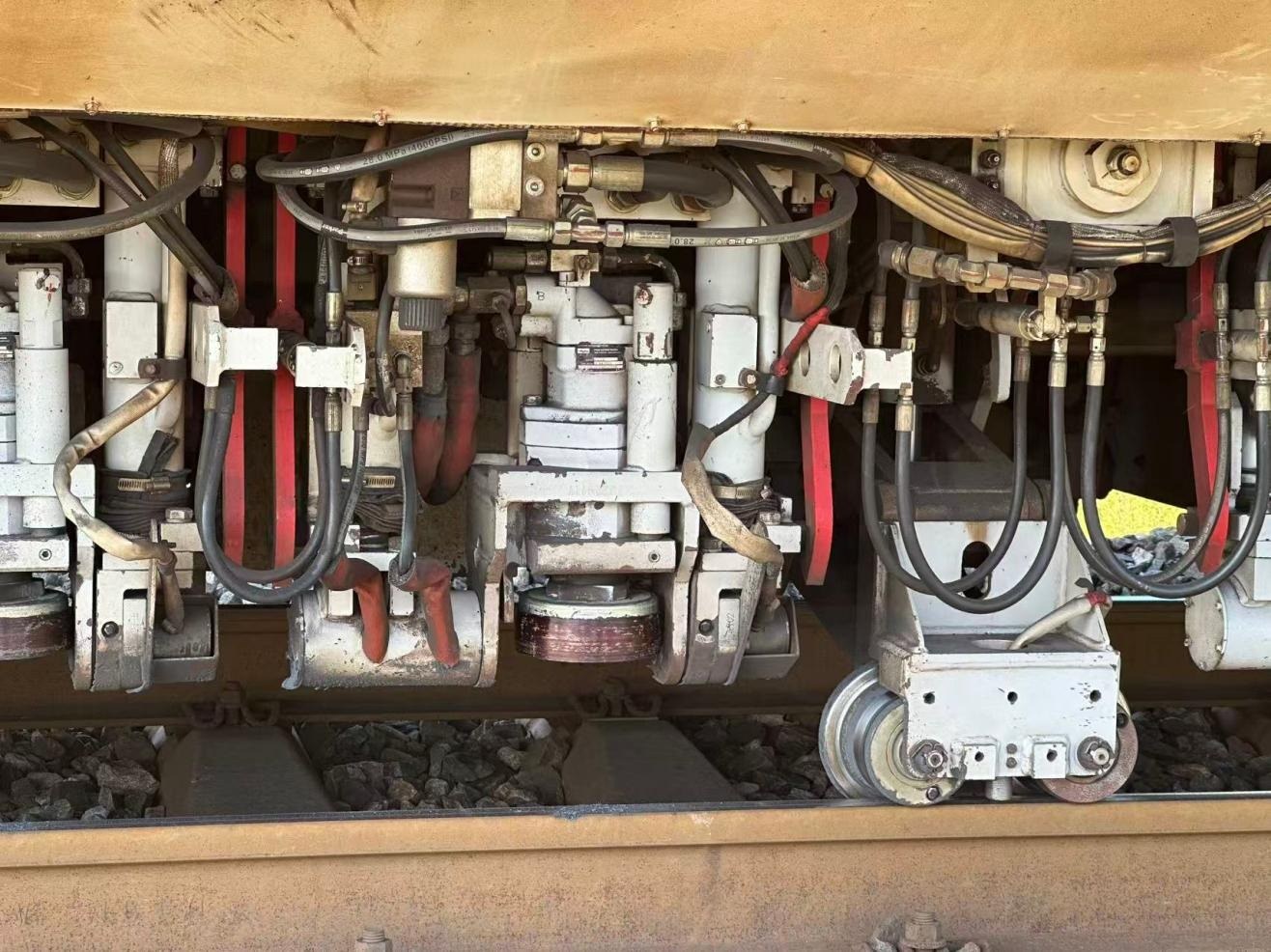
The phrase covers everything between a hand tool and a track machine, and on a heavy-haul network the configuration question is more consequential than it looks, because attachments must match machines the operator may keep for thirty years.
Three principles govern the decision.
Match the attachment to the machine class, not to the task. A hydraulic attachment designed for one carrier will not necessarily fit another of the same nominal size, and the interface — mounting pattern, hydraulic flow, control protocol — is where incompatibility hides. Buying on task description alone is how depots end up with an attachment that fits nothing they own.
Standardise the interface across the fleet. Operators with mixed machine ages typically find they are carrying three or four incompatible mounting standards. Consolidating on one costs money once and saves it every time procurement is asked for another attachment.
Carry stock for the items whose failure stops a possession. A spare bucket tooth can wait. A fitting that prevents the rail handler from working has a possession cost attached to every hour of delay, which is usually one or two orders of magnitude above the part price. The stocking policy should follow the possession economics, not the part price.
For the hand-tool layer — the spanners, gauges, bars and clamps that a track gang actually carries — the constraint is different: weight and compatibility with the tasks the gang performs. Our railroad track maintenance tools guide sets out the tool lists by task and the weight budgets that make them workable.
There is a fourth principle that applies specifically to heavy haul and is usually learned the expensive way. Attachments fail faster at high axle load, and the failure mode is not the one the specification anticipates. A tool rated for the load will still wear out prematurely if the duty cycle is shorter than assumed, and on a heavy-haul network the duty cycle is almost always shorter than the catalogue assumes. The specification question to ask is not "what load is it rated for" but "at what inspection interval was that rating obtained" — and then to compare that interval with the one the operator's own regime can sustain.
Finally, the stores question also determines how much of the fleet is available on any given night. An operator with a well-chosen attachment set and no stock of the two items that fail most often has an availability problem that looks like a procurement problem and is actually a stocking policy problem.
Supplier Qualification for Heavy Rail Operating Companies
Qualification on a heavy-haul network differs from qualification elsewhere in one respect: the consequence of a bad supplier lasts longer, because the interventions are further apart and harder to reverse. A grinding programme that removes too much metal cannot be undone.
Table 10 sets out the qualification criteria in the order that eliminates fastest.
| Priority | Criterion | What a strong answer contains |
|---|---|---|
| 1 | Safety and regulatory record | Incident history, safety management system, insurance levels, ability to work under the operator's rulebook |
| 2 | Technical evidence, not brochures | Third-party test reports with conditions stated; named field trials on comparable duty |
| 3 | Certification and its scope | Certificate number, issuing body, expiry, and the exact scope — a certificate covering a product family is not a certificate covering your format |
| 4 | Reference on comparable duty | Operators running similar axle load and tonnage, contactable without the supplier present |
| 5 | Emergency response | Named engineers, distance, contractual response times by failure class |
| 6 | Data ownership | Who owns the measurement data the supplier generates, and in what format it will be handed over |
| 7 | Commercial terms | Warranty by component, remedies, and ownership of tooling and drawings |
Criterion four is where most qualifications fail in practice, because "comparable duty" is the part suppliers most often stretch. A trial on a 22-tonne mixed-traffic line is not evidence for a 35-tonne heavy-haul line, and the difference is not incremental — it is the difference between wear control and fatigue control.
Criterion six deserves more attention than it usually gets. On a heavy-haul network, the measurement data generated during a contract is the raw material of the asset model. A supplier that retains that data in a proprietary format has effectively taken a hostage, and extracting it later costs more than the contract saved.
Frequently Asked Questions
What qualifies a railway as heavy haul?
The International Heavy Haul Association definition requires at least two of three criteria: unit or combined trains of 5,000 metric tons or more, annual revenue freight of 20 million gross tons over a segment of at least 150 km, or axle loads of 25 tonnes and above. The three-part structure is deliberate, because networks meeting different pairs have very different maintenance problems.
How is heavy rail maintenance organised?
Most heavy-haul operators converge on four functions — permanent way, signalling, rolling stock and measurement — with standards held centrally by a small senior engineering group and execution distributed to regional centres. The recurring structural question is where the measurement function sits, because the group that measures should not be the group whose performance is being measured.
Which KPIs matter most for a heavy rail provider?
Layer them. Boards and regulators need rail break rate per million train-km and asset condition trend. Asset managers need rail life consumed versus plan, grinding interval adherence in tonnage, and defect recurrence. Execution teams need pass-km per shift, profile conformance, weld rejection rate and backlog by defect class. Reporting one layer to all three audiences is the most common KPI error.
Can we compare our TQI with another railway's?
Only after checking three things: which parameters are in the index, what evaluation length and wavelength band were used, and whether the measurement system was inertial or chord-based. National standards still differ on these points despite ISO 23054-1:2022, so two operators quoting "TQI" in 2026 may be quoting different quantities. The index is also speed-dependent, so a value without a line speed carries no information.
What should a heavy haul operator keep in-house?
The standard-setting function, the measurement baseline, the rail wear model, grinding interval decisions and the acceptance judgement. These are the parts where knowledge compounds and where outsourcing transfers the definition of quality to the seller. Execution — crews, machines, possession management — can be outsourced freely once those are secure.
Is it better to own a grinding train or contract the service?
It depends on tonnage and possession regime rather than on size. Networks with high annual tonnage and long windows usually justify ownership. Networks with short windows or moderate tonnage usually do better contracting, because a contractor spreads utilisation across several networks. Either way the contract must be written on outcomes — profile conformance, metal removed within a band, no burn — not on pass-kilometres.
How often should a heavy haul line be ground?
In tonnage, not calendar. Intervals are typically expressed in millions of gross tons and set so that grinding removes the fatigue damage layer before surface-initiated defects form. The exact figure depends on axle load, rail grade, curve density and lubrication practice, and it should be recalibrated from wear measurement rather than inherited from another network's published figure.
Why does grinding matter more on heavy haul than on high-speed lines?
Because it is controlling a different problem. On high-speed track, grinding holds geometric tolerance. At 30 tonnes axle load and above, grinding controls surface fatigue and gauge-face wear and defers rail replacement, which is the largest single cost on the network. Judging a heavy-haul grinding programme by its geometry outcome alone will understate what it is doing.
Talk to Us About Heavy Haul Maintenance
Tell us your axle load, annual tonnage, line standard, possession pattern and the defect families you are seeing — our engineers will work through the grinding interval, wheel specification and measurement baseline that fit that combination, and set up a supervised trial on your own track.
If the question is how maintenance sits inside a wider asset strategy, the rail maintenance solution pages cover the programme-level view; for equipment, the railway maintenance tools range is the starting point. Project and partnership enquiries go through project cooperation or the railway maintenance project case pages, and our background is set out in about RailwayCare.
WhatsApp: +86 15072332788 Email: simon.wang@railwaycare.com
RailwayCare (Wuhan Huatie Ruijie Rail Transit Technology Co., Ltd.) — your professional partner in rail grinding, with Molaton grinding wheels field-proven on high-speed, heavy-haul and metro lines since 2004.