How do track stabilization and alignment systems work?
How do track stabilization and alignment systems work?
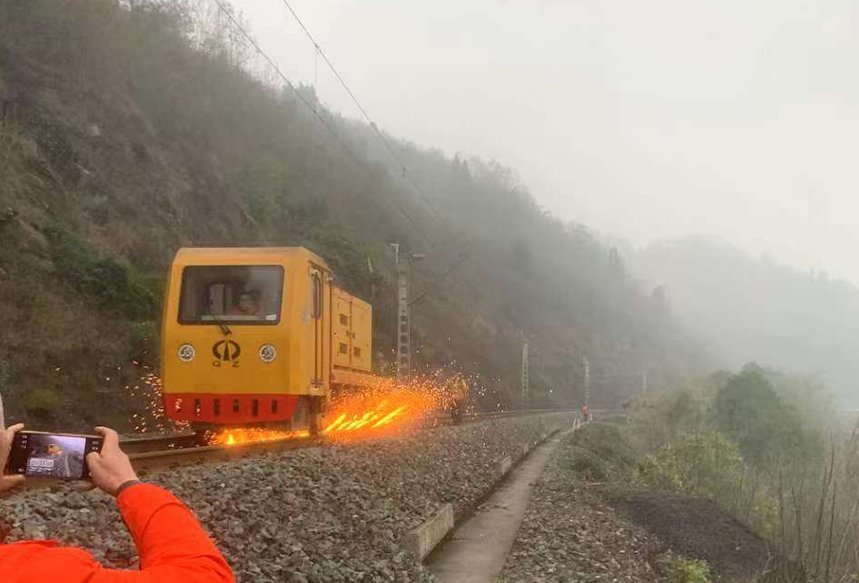
They work as a single closed loop, not as separate machines. A measurement system records the track's actual geometry and computes the correction. A planning layer turns that correction into lift, slew and tamp values. Lifting, lining and tamping execute it and compact the ballast under the sleepers. Stabilization then pre-loads the freshly tamped ballast so the alignment does not settle away again in the first weeks of traffic — and a re-measurement proves the result against an acceptance index.
The three subsystems, and what each one actually controls
| Subsystem | What it controls | Typical output or limit |
|---|---|---|
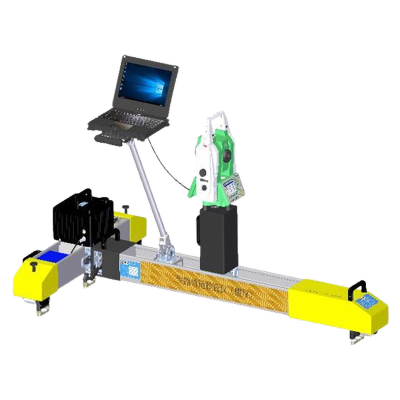
| Measurement — track geometry system, inertial or relative trolley, or static total-station system | Gauge, cross-level, twist, alignment and longitudinal level, plus the deviation from the design alignment based on the control network | Gauge and cross-level ±0.30 mm, twist ±0.50 mm, alignment and level ±0.70 mm on 10 m and 30 m chords, versine ±1.00 mm, mileage ±0.10%; survey rates of 1.5–3 km/h inertial, 4–5 km/h GNSS, 1–2 km/h dual-sensor, 4–6 km/h relative |
| Planning — alignment and smoothing software | How much to lift each sleeper, how far to slew the alignment, and where to keep fixed points so the correction does not simply move the error | Output at 2 m, 2.5 m and 5 m intervals as ALC/AGC or TGCS files loaded directly into the tamping machine's computer; on ballastless track, a fastener-level adjustment plan resolved sleeper by sleeper |
| Execution and stabilization — tamping machine and stabilizer | Lift and cross-level, lateral alignment, ballast compaction under the sleeper, and the settling the new geometry will take under the first trains | Tamping restores level and alignment and packs the ballast at each sleeper; stabilization applies controlled vibration and load so the ballast consolidates before revenue traffic does it uncontrolled |
Why stabilization is the step that decides whether the correction lasts
On ballasted track the rail, sleepers and fastenings rest on a granular bed, and the ballast is the component that resists the sleeper moving. Two resistances matter: the longitudinal resistance that opposes sleepers moving along the track, and the lateral resistance that opposes them moving sideways. The material, thickness and cross-section of the ballast all change the track's elasticity, and its profile directly controls how stable the track is. Tamping lifts and lines the track and compacts the ballast, but it also loosens the bed in the process. Without a stabilization step, the first trains after a possession re-consolidate the ballast themselves and the geometry drifts back toward the pre-work state.
On continuous welded rail there is a second stability problem entirely: the locked rail temperature. A scientifically determined locked rail temperature is the key to CWR stability, and it is bounded in practice — the difference between adjacent welded strings must not exceed 5 °C, the spread between the highest and lowest locked temperature in one section must not exceed 10 °C, and the difference between the two rails of the same track must not exceed 5 °C at design speeds of 160 km/h and below or 3 °C above that. Line built with a maximum rail-temperature range above 100 °C requires separate design and track reinforcement. Alignment work that disturbs lateral resistance without respecting those limits is how a geometry correction turns into a buckling risk.
The measured loop, from survey to acceptance
- The geometry system surveys the line and produces the deviation from the design alignment.
- The software converts it into an optimised work plan and exports the correction file for the tamping machine.
- The machine lifts, lines and tampers to the plan, following a fixed-point structure so the correction is absolute and not relative to the existing error.
- The stabilizer consolidates the ballast and locks the new geometry in.
- A re-survey exports alignment, level, gauge, cross-level and TQI reports, and the section is accepted on a static TQI report.
Two quality indices usually appear at this point. TQI summarises the track's irregularity, and the grinding side of the same handover uses GQI, the Grinding Quality Index, which measures how closely the measured profile matches the design profile on a 0–100 scale, calculated over four zones of the rail head with tolerances of +0.2/−0.4 mm at the crown and ±0.2 mm in the other three zones; a section is graded excellent at GQI ≥ 85 with a standard deviation of 8 or less. Geometry work and profile work are judged by separate numbers, and a section hands over properly only when both are met.
Case and data — what the loop is worth when it is closed
On the Taiyuan railway administration's Taizhong down line, a measured campaign of digital tamping across 15.28 km in nine work sections cut the average static TQI from 7.19 to 4.52 and the average dynamic TQI from 7.64 to 4.67. Individual sections moved further: one 1.000 km section went from 8.84 to 5.27 static and 8.42 to 4.88 dynamic. Those are the numbers that a plan-driven, re-measured loop produces; a machine tamping to its own reference rather than to a survey plan cannot reproduce them section after section.
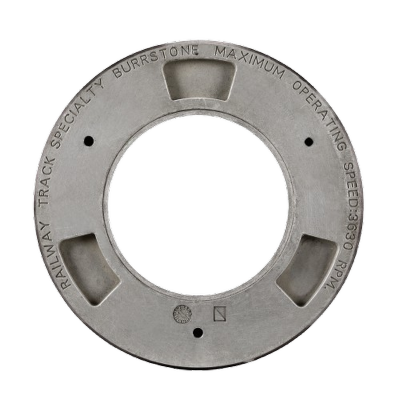
Stabilization carries the same logic at the component level. Correcting and verifying the profile in turnouts cut car-body lateral acceleration from about 0.20 m/s² to 0.04–0.08 m/s², which is the running-stability gain that comes from the wheel-rail interface rather than from the ballast. The Molaton range covers the grinding consumables for that half of the work — wheels for grinding trains and for hand-held machines — while RailwayCare has manufactured rail grinding wheels since 2004, drafted the industry standard JB/T 11431, and holds ISO 9001, ISO 45001 and CRCC certification, so both halves of the handover can be delivered against one acceptance package.
Related questions you may also ask
How is track geometry measured in railway maintenance? Which railway track maintenance machine measures geometry? What is track maintenance and what does it include?Line up measurement, correction and grinding on one handover
Send us the line type, control-network basis, radii, design speed and the acceptance index you have to prove. We will map the geometry work to a Molaton grinding specification so the level, alignment and profile targets are met in the same possession.
Get a Track Maintenance PlanThe measurement and correction equipment referenced here is listed under railway maintenance tools, the high-precision geometry trolley used for the alignment survey under the RCI GJY class-relative track geometry inspection trolley, and the wider workflow under the rail maintenance solution.
Are you looking for a reliable manufacturer of railway grinding and track maintenance equipment?
We can quickly provide customers with market analysis, technical support and customized services.
Safe Tracks Proven by China
- Name
- Phone
- *Title
- *Content